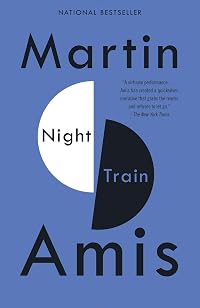
Night Train
by Martin Amis
On This Page
Description
NATIONAL BESTSELLER • Fusing brilliant wordplay with all the elements of a classic whodunit, "Amis has created a quicksilver narrative that grabs the reader and refuse to let go” (The New York Times). "Dazzling.... Whistles into the police-procedural structure only to blow it to bits." —Wall Street Journal Detective Mike Hoolihan has seen it all. A fifteen-year veteran of the force, she's gone from walking a beat, to robbery, to homicide. But one case—this case—has gotten under her show more skin. When Jennifer Rockwell, darling of the community and daughter of a respected career cop—now top brass—takes her own life, no one is prepared to believe it. Especially her father, Colonel Tom. Homicide Detective Mike Hoolihan, longtime colleague and friend of Colonel Tom, is ready to "put the case down." Suicide. Closed. Until Colonel Tom asks her to do the one thing any grieving father would ask: take a second look. Not since his celebrated novel Money has Amis turned his focus on America to such remarkable effect. Amis exposes a world where surfaces are suspect (no matter how perfect), where paranoia is justified (no matter how pervasive), and where power and pride are brought low by the hidden recesses of our humanity. show lessTags
Recommendations

























Member Recommendations

Member Reviews
John Updike criticized Amis's stab at American vernacular in Night Train, I'd say rightly, but overall this is a cold-bloodedly insistent rearranging of the traditional police procedural, good for a couple of hours of reflection on the unpleasantness of being. It doesn't quite close the deal, though--the ending presents cheap nihilism as though it were profound, a teenage move,and makes you want to sit Amis down, but him a drink, compliment him on his book, argue with him about how hope is amoral necessity because despair is a self-fulfilling prophecy, and then get up, knocking over your chair, gesture inarticulately at some babies or sunflowers, storm out and go read some magic realism or something.
NB having read some other reviews show more since writing this one, it strikes me that a lot depends on whether we are to read Mike as offing herself at the end with drink or not. I understood not, and rated it accordingly--if I was intended to understand so, that makes this novel even bleaker and uglier and more heavy-handed and therefore worse. show less
NB having read some other reviews show more since writing this one, it strikes me that a lot depends on whether we are to read Mike as offing herself at the end with drink or not. I understood not, and rated it accordingly--if I was intended to understand so, that makes this novel even bleaker and uglier and more heavy-handed and therefore worse. show less
When I read Patti Smith's M Train I was amused by how much time Patti spent watching Law and Order and other police procedurals. It seems so out of character for the godmother of punk. Still that knowledge and her straightforward depiction of her viewership was charming. Apparently Martin Amis was spending his evenings exactly the same way as Patti, That seems even more out of character for this pretentious and oh-so-literary bad boy. I just assumed that he spent every evening drinking too much scotch with Christopher Hitchens and stumbling out of New York and London bars in the wee hours to bang MFA students rather than writing. The things we don't know.
There is no question that Amis can write, but he clearly knows nothing about police show more or about women that he has not seen on network television. The novella stars two women, one the cop investigating the murder and the other the victim. To say that both are objectified and crafted to suit a very binary view of women is an understatement. I will say that if he were alive someone could tell Amis that hot women are not all happy and that women who choose to to not marry or have children do not turn into Dirty Harry.
You have to go a long way for a criticism of America to piss me off and an especially long way for a criticism of American policing to piss me off, but here we are. I want to believe that he meant this as a criticism of American police procedurals, which is fine, but if he did intend that he failed. I get that the "I'm the job" view of law enforcement is a popular myth, and I get that he was trying to write noir, but his stab at noir was C+ work and so insufficient to support this comic book depiction of police behavior and prowess.
What we have here is a shodily crafted book based upon zero research, or knowledge of the subject matter, or any attempt at nuanced characterization that appears to have been tossed off while sitting in a Lazyboy with a tin of split pea soup and a remote control. So disappointing. show less
There is no question that Amis can write, but he clearly knows nothing about police show more or about women that he has not seen on network television. The novella stars two women, one the cop investigating the murder and the other the victim. To say that both are objectified and crafted to suit a very binary view of women is an understatement. I will say that if he were alive someone could tell Amis that hot women are not all happy and that women who choose to to not marry or have children do not turn into Dirty Harry.
You have to go a long way for a criticism of America to piss me off and an especially long way for a criticism of American policing to piss me off, but here we are. I want to believe that he meant this as a criticism of American police procedurals, which is fine, but if he did intend that he failed. I get that the "I'm the job" view of law enforcement is a popular myth, and I get that he was trying to write noir, but his stab at noir was C+ work and so insufficient to support this comic book depiction of police behavior and prowess.
What we have here is a shodily crafted book based upon zero research, or knowledge of the subject matter, or any attempt at nuanced characterization that appears to have been tossed off while sitting in a Lazyboy with a tin of split pea soup and a remote control. So disappointing. show less
In his ninth publication, Amis presents the reader with a tightly constructed, hyper focused, somber short novel. Night Train deftly upends the conventions of the crime procedural novel and noir itself. The shimmering darkness of reality is present, along with dialogue that is both punchy and mellifluous, but Amis refuses to tie together the strands of mystery at the end of his novel. Instead, he let's them unravel and become as chaotic as the nexus between human motivation and action.
The novel centers around a female detective, Mike Hoolihan's, inquest into the apparent suicide of her commanding officer and paternal figure's daughter Jennifer, our femme fatale who had seemingly everything to live for. Typical of the genre, we have show more smoke lit diners, brutal autopsies and hard tac dialogue, but Amis probes further into the depths of what motivates human behavior. Hoolihan not only investigates not just intelligible unhappiness, but the vast cosmic space where human joy and pain are ultimately rendered trivial. Night Train, at its core, is a meditation on post modernity, for which there is no solution for the problems presented.
Along with exploring mortality, the inexorable presence of death, Amis also succeeds in making trenchant observations about modern American culture. Present throughout the novel are claims that media informs and in turn creates a reality where everyone seeks some form of sterilized closure. A critique of this sociological condition, Night Train does the exact opposite, leaving the reader with gaping wounds and lingering questions. show less
The novel centers around a female detective, Mike Hoolihan's, inquest into the apparent suicide of her commanding officer and paternal figure's daughter Jennifer, our femme fatale who had seemingly everything to live for. Typical of the genre, we have show more smoke lit diners, brutal autopsies and hard tac dialogue, but Amis probes further into the depths of what motivates human behavior. Hoolihan not only investigates not just intelligible unhappiness, but the vast cosmic space where human joy and pain are ultimately rendered trivial. Night Train, at its core, is a meditation on post modernity, for which there is no solution for the problems presented.
Along with exploring mortality, the inexorable presence of death, Amis also succeeds in making trenchant observations about modern American culture. Present throughout the novel are claims that media informs and in turn creates a reality where everyone seeks some form of sterilized closure. A critique of this sociological condition, Night Train does the exact opposite, leaving the reader with gaping wounds and lingering questions. show less
One time I met British novelist Margaret Drabble and when I made mention of her fellow scribe Martin Amis, she bristled! I had said the wrong thing! Furthur research into Mr Amis revealed that this enfant terrible of British letters (he has up to now written 14 novels) has always been somewhat of a provocateur. But the man can write! The New Yorker called him a "Style Supremist." Night Train is a noirish detective story set in America. Our hero is a police woman and she must decide if a suicide was really a murder. Her investigation is a study of the human soul and its predicaments. This dark story is a bitter pill of a book, suffused with suffering. I liked it very much. Why? As Amis himself once said, "only in art will the lion lie show more down with the lamb, and the rose grow without thorn." show less
Amazing book. One of those that makes you really look at people and wonder and, at times, avoid their eyes completely. It may be a temporary effect but it's powerful. I loved Amis' The Information for its clever language and plot. But I'm appreciating his range now. Night Train appears to be merely an effective detective novel but becomes an intense psychological suspense story as well. Another bonus is that Night Train doesn't have you searching for your dictionary as is sometimes the case with Amis.
A short book, and within the Amis canon, relatively minor, this is still a must-read. A promising astrophysicist commits suicide by way of three shots to the head. Apparently it can take up to seven. A defeated, jaded detective investigates - was it murder?
Somehow this just doesn't read like genre fiction. When Amis does small, he has the power to make it big, and here is a prime example. The book works so well, and so effortlessly; when, after a little time it ends, there's a hole where once lay your heart.
Somehow this just doesn't read like genre fiction. When Amis does small, he has the power to make it big, and here is a prime example. The book works so well, and so effortlessly; when, after a little time it ends, there's a hole where once lay your heart.
Nihilism tastes bad to me, and love's topping doesn't make it any sweeter.
SPOILER ALERT!!!!
Martin Amis' Night Train tracks a heroine, a deep-voiced, incredibly sensitive, female cop, who works around mean, unhappy men. Amis' heroine speaks in first person as she unravels the mystery of the death of one of her sort-of friends. That friend was a beautiful, let me stress that she was breathtakingly beautiful, brilliant, but depressed young woman, who dies by gunshot to the head in the book's opening scenes. She speaks in the second person.
It seems that these two disparate creations are yoked to one another, as the heroine investigates who killed the beauty. Eventually (it's not a huge suprise), you find out that the beauty offed herself. show more Why? Because the world is such and ugly place, you're better being part of it, even if that means you're an alcoholic cop. Perfection and sophistication can't save you. Even perfection itself is mortal. But, beauty leaves a roadmap for her investigator. Being inexorably tied to the cop, she lays a roadmap leading to her killer: herself.
Why would a brilliant, beautiful woman, with no apparent problems kill herself? This was the toughest part of the story for me to feel comfortable with. She kills herself because she can. She's sad because there isn't anything out there. Her family doesn't provide her comfort and can't sheild her from nothingness, from death itself. The world has nothing to offer her (so she thinks). It holds no secrets, no mystery, no pot 'o gold at the end. She's a physicist for whom there are no mathmatical questions she can't answer. She starts making up the numbers to her experiments, perhaps because everything is too predictable to her. There's simply no point to continuing, since the end is the same. Whether she meets her end 90 years from now, or at the barrel of a gun, "Black holes mean oblivion. Mean death."
Yuck. How sad. The whole book exudes sadness, grief. The only glimmer of hope is that the heroine wrestles with oblivion and wins. It's a small triumph if you ask me, because she takes no happiness in the defeat.
This creates a paradox: the dead girl's love and care which leads her to leave clues for the detective is what saves the detective from devaluing human life. The dead girl kills herself. Amis in the heroines first person, metallic voice says "Suicide is the night train...speeding your way into darkness...this train takes you into the night, and leaves you there" except that isn't what the beauty's death does. It sheds light on everything. It wasn't without purpose, at least to the heroine. And what does the beauty care, she's dead. Her life and her death must have had some purpose, or she would have left clues for the heroine to discover. She knew her death would provide insights into life. Love, something which nihilism says does exist, is what drives her to care.
It's the Neitzche effect on a detective novel. God is dead. Don't think about the afterlife. Think about the now. Be earthly. Be like the heroine. Worship no absolute, enjoy the grit. God, the beauty, perfection, afterlife, it can't save you and it can't offer you anything earthy (EXCEPT HERE IT INSPIRES THE HEROINE TO SAVOR LIFE). Don't look for life's purpose, you wont find one, and, if you do, then you're just lying to yourself, trying to make yourself feel better by clasping tightly to the chimeric rags of a ghost.
I'm not a nihilist if that isn't obvious already. I get it, but I just don't agree, nor do I like it. The book was well-written. I enjoyed it (in a twisted way), but I just don't like the suicide theory that drives this Night Train. show less
SPOILER ALERT!!!!
Martin Amis' Night Train tracks a heroine, a deep-voiced, incredibly sensitive, female cop, who works around mean, unhappy men. Amis' heroine speaks in first person as she unravels the mystery of the death of one of her sort-of friends. That friend was a beautiful, let me stress that she was breathtakingly beautiful, brilliant, but depressed young woman, who dies by gunshot to the head in the book's opening scenes. She speaks in the second person.
It seems that these two disparate creations are yoked to one another, as the heroine investigates who killed the beauty. Eventually (it's not a huge suprise), you find out that the beauty offed herself. show more Why? Because the world is such and ugly place, you're better being part of it, even if that means you're an alcoholic cop. Perfection and sophistication can't save you. Even perfection itself is mortal. But, beauty leaves a roadmap for her investigator. Being inexorably tied to the cop, she lays a roadmap leading to her killer: herself.
Why would a brilliant, beautiful woman, with no apparent problems kill herself? This was the toughest part of the story for me to feel comfortable with. She kills herself because she can. She's sad because there isn't anything out there. Her family doesn't provide her comfort and can't sheild her from nothingness, from death itself. The world has nothing to offer her (so she thinks). It holds no secrets, no mystery, no pot 'o gold at the end. She's a physicist for whom there are no mathmatical questions she can't answer. She starts making up the numbers to her experiments, perhaps because everything is too predictable to her. There's simply no point to continuing, since the end is the same. Whether she meets her end 90 years from now, or at the barrel of a gun, "Black holes mean oblivion. Mean death."
Yuck. How sad. The whole book exudes sadness, grief. The only glimmer of hope is that the heroine wrestles with oblivion and wins. It's a small triumph if you ask me, because she takes no happiness in the defeat.
This creates a paradox: the dead girl's love and care which leads her to leave clues for the detective is what saves the detective from devaluing human life. The dead girl kills herself. Amis in the heroines first person, metallic voice says "Suicide is the night train...speeding your way into darkness...this train takes you into the night, and leaves you there" except that isn't what the beauty's death does. It sheds light on everything. It wasn't without purpose, at least to the heroine. And what does the beauty care, she's dead. Her life and her death must have had some purpose, or she would have left clues for the heroine to discover. She knew her death would provide insights into life. Love, something which nihilism says does exist, is what drives her to care.
It's the Neitzche effect on a detective novel. God is dead. Don't think about the afterlife. Think about the now. Be earthly. Be like the heroine. Worship no absolute, enjoy the grit. God, the beauty, perfection, afterlife, it can't save you and it can't offer you anything earthy (EXCEPT HERE IT INSPIRES THE HEROINE TO SAVOR LIFE). Don't look for life's purpose, you wont find one, and, if you do, then you're just lying to yourself, trying to make yourself feel better by clasping tightly to the chimeric rags of a ghost.
I'm not a nihilist if that isn't obvious already. I get it, but I just don't agree, nor do I like it. The book was well-written. I enjoyed it (in a twisted way), but I just don't like the suicide theory that drives this Night Train. show less
Members
- Recently Added By
Published Reviews
Sonst reden die "Detectives" in einem autistisch anmutenden Polizeislang, der schon im Englischen unglaubwürdig und künstlich wirkt. Joachim Kalkas grobschlächtige Übersetzung verschlimmert das Original noch. Zwar ist das Gemisch aus ungrammatikalischer Polizei-Fachsprache, abkürzenden Benennungen von Einrichtungen, die es in Deutschland nicht gibt, und sprachlichen Klischees nur schwer show more ins Deutsche zu retten; doch verschwendet Kalka seine Erfindungskunst daran, passende deutsche Worte zu ignorieren (aus "plainclothes" macht er "Detective in Zivil" statt "Zivilfahnder"), den Ton des Buches zu mißachten, Sätze wegzulassen, die Kapitel-Einteilung zu verändern. Und der Titel des Romans war wohl auch nicht des Nachdenkens wert. Aber wenn Martin Amis - wie der von Mike konsultierte Autor des Ratgebers "Den Selbstmord begreifen" - ein "lausig geschriebenes, außerdem selbstgefälliges" Buch schreiben wollte, hat er in Kalka einen kongenialen Übersetzer gefunden. show less
added by Indy133
Lists

living room bookshelf
150 works; 1 member
Author Information

58+ Works 29,753 Members
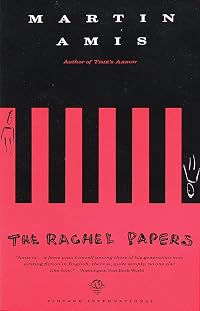
Martin Amis, son of the novelist Kingsley Amis, was born August 25, 1949. His childhood was spent traveling with his famous father. From 1969 to 1971 he attended Exeter College at Oxford University. After graduating, he worked for the Times Literary Supplement and later as special writer for the Observer. Amis published his first novel, The Rachel show more Papers, in 1973, which received the prestigious Somerset Maugham Award in 1974. Other titles include Dead Babies (1976), Other People: A Mystery Story (1981); London Fields (1989), The Information (1995), and Night Train (1997). Martin Amis has been called the voice of his generation. His novels are controversial, often satiric and dark, concentrating on urban low life. His style has been compared to that of Graham Greene, Philip Larkin and Saul Bellow, among others. He is currently Professor of Creative Writing at the Centre for New Writing at the University of Manchester. In 2008, The Times named him one of the 50 greatest British writers since 1945. (Bowker Author Biography) show less
Some Editions
Awards and Honors
Distinctions
Notable Lists
Series
Belongs to Publisher Series
Work Relationships
Has the adaptation
Common Knowledge
- Canonical title*
- Tren nocturno
- Original title
- Night train
- Original publication date
- 1997
- People/Characters
- Mike Hoolihan; Col. Tom Rockwell; Jennifer Rockwell
- Related movies
- Out of Blue (2018 | IMDb)
- Dedication
- to Saul and Janis
- First words
- I am a police.
- Last words
- (Click to show. Warning: May contain spoilers.)I want to call Trader Faulkner and say goodbye but the phone's ringing again and the night train's coming and I can hear that dickless sack of shit bending the stairs out of joint and let him see what happens if he tries to stand in my way or just gives me that look or opens his mouth and says so much as one single word.
- Blurbers
- Kakutani, Michiko; Faulks, Sebastian; Grant, Steve; Gleick, Elizabeth; Pearson, Allison
- Original language
- English
*Some information comes from Common Knowledge in other languages. Click "Edit" for more information.
Classifications
Statistics
- Members
- 1,621
- Popularity
- 13,935
- Reviews
- 34
- Rating
- (3.12)
- Languages
- 15 — Catalan, Chinese, Czech, Danish, Dutch, English, Finnish, French, German, Greek, Italian, Portuguese, Russian, Spanish, Swedish
- Media
- Paper, Audiobook, Ebook
- ISBNs
- 45
- ASINs
- 8