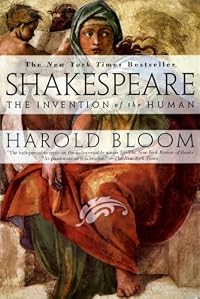
Shakespeare: The Invention of the Human
by Harold Bloom
On This Page
Description
The author offers an analysis of some of the central work of the Western canon, and of the playwright who not only invented the English language, but who also arguably created human nature as we know it today. Before Shakespeare there was characterization; after Shakespeare, there were characters, men and women capable of change, with highly individual personalities. In this book, the author outlines why Shakespeare has remained a popular and universal dramatist for more than four centuries.Tags
Recommendations
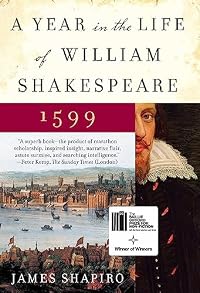
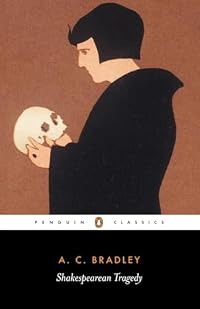
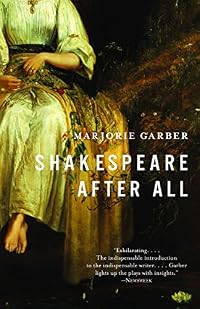
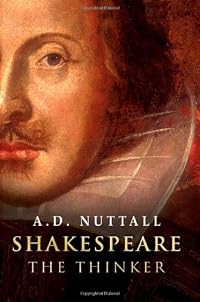
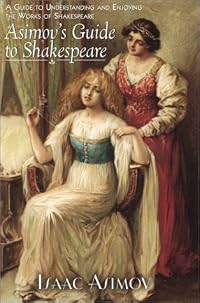
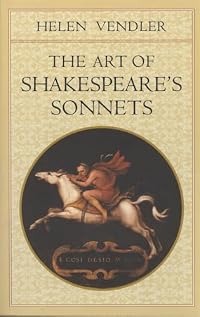

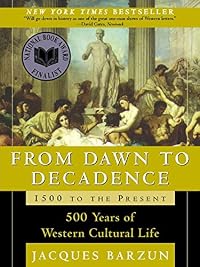
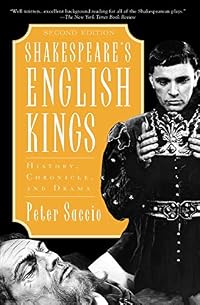
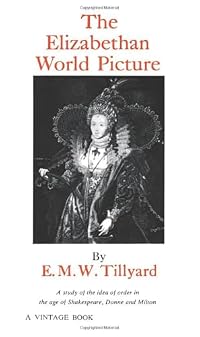
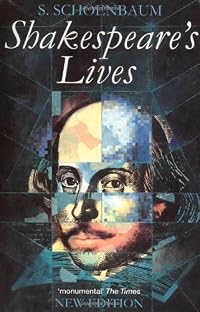
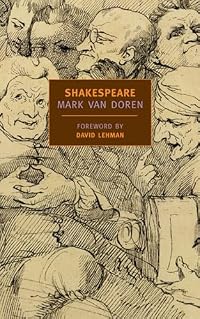
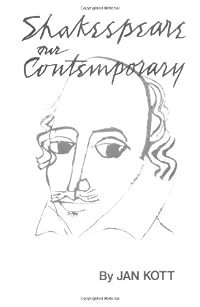
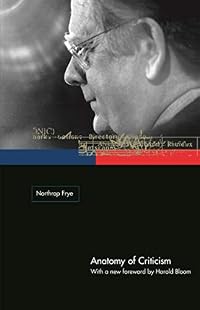
Member Recommendations

anonymous user A much better discussion of Shakespeare's plays than Bloom's overblown alternative. Goddard is not without his own quirks and fetishes, but he is a fine writer and, sometimes, an original and stimulating thinker.
anonymous user Another great Shakespearean critic from the past in whose footsteps Bloom professes to follow.

anonymous user Since Bloom worships Dr Johnson's Shakespearean criticism, it's good to have some idea what this amounts to. A nice edition, containing Johnson's "Proposals" (1756), "Preface" (1765), selection from his notes to the plays and a fine introduction by Walter Raleigh, is available online. Check also Johnson's notes to the comedies and the tragedies.
Member Reviews
En este extraordinario libro -la culminación de toda una vida consagrada a leer, enseñar y escribir sobre Shakespeare- Bloom demuestra una vez más que es el más eminente crítico literario de nuestro tiempo. Shakespeare. La invención de lo humano es un completo, ambicioso, apasionado y convincente análisis de la obra literaria más importante del canon occidental, y del autor teatral que no sólo inventó la lengua inglesa, sino que también -tal como argumenta Bloom- inventó la naturaleza humana tal como la conocemos actualmente. Antes de Shakespeare había arquetipos; después de Shakespeare hubo personajes, hombres y mujeres capaces de cambiar, con personalidades absolutamente individualizadas. Bloom nos propone una minuciosa show more lectura de cada una de las obras teatrales de Shakespeare, empezando por el original o Ur-Hamlet-que, en contra de la línea oficial de los especialistas actuales, él atribuye a Shakespeare- y acabando con el misterioso abandono de su arte por parte de Shakespeare tras Los dos nobles parientes. Bloom sigue cada avance en la caracterización humana de los personajes, empezando con Faulconbridge, el bastardo de El rey Juan, Mercucio en Romeo y Julieta, y Bottom en El sueño de una noche de verano, y culminando con las inigualables creaciones de Falstaff, Hamlet, Yago, Cleopatra, Macbeth, Rosalinda y Lear. A medida que tomamos conciencia de los rasgos diferenciales de los más logrados personajes shakesperianos -el ingenio de Falstaff, la extraordinaria inteligencia de Hamlet, la perturbada imaginación de Macbeth, la capacidad de afecto de Lear, la teatralidad de Cleopatra, el genio de Yago para manipular la vida de los demás- logramos penetrar en las propias obsesiones de Shakespeare, y emerge antes nosotros un retrato perspicaz y emocionante del enigmático autor teatral que, según la tesis de Bloom, nos creó a todos nosotros. Este volumen es una brillante guía de la obra de Shakespeare, y también una indagación en lo que significa ser humano. Nos explica por qué Shakespeare sigue siendo nuestro más popular y universal autor dramático después de cuatro siglos y, al ayudarnos a entendernos mejor a nosotros mismos a través de Shakespeare, restaura la destacada importancia del papel del crítico literario de nuestra cultura. show less
This is the best book on Shakespeare's plays I have ever read, but it left me with a strange sensation. After reading the book, I felt like a professor who has just read a term paper that - even though the student wrote it in two days - is better than any paper on the subject he had ever read. Like the professor I was amazed and disappointed at the same time and, like him, I will always wonder what the paper would have been like had the student spent the whole semester writing it. I may be doing Mr. Bloom a grave injustice by saying this and he may very well have 'spent the whole semester' writing the book, but I just cannot shake the feeling that there is a great deal more in the mind of Mr. Bloom and I long to see it.
The book is worth show more much more than whatever was paid for it. If you love Shakespeare, read it; if you just kind of like Shakespeare, you really should read it; and if you do not like Shakespeare - you must read it. show less
The book is worth show more much more than whatever was paid for it. If you love Shakespeare, read it; if you just kind of like Shakespeare, you really should read it; and if you do not like Shakespeare - you must read it. show less
Bloom's unique take on the work of Willaim Shakespeare is always entertaining. Yet it is also egocentric in the way that so much of Bloom's criticism is. I enjoy reading his opinions of Shakepeare's oeuvre while I also require reference to other les outre readers.
The eminent critic Harold Bloom explores Shakespeare in this large book. Bloom’s argument is that before Shakespeare we didn’t have human characters as we know them except on rare occasions. Of course, there was Marlowe and Chaucer, but with Marlowe, it seems that a lot of his characters were hyperbolic parodies. I read “Tamburlaine,” “Dido, Queen of Carthage,” “Doctor Faustus,” and I think the Jew of Malta. Therefore, I am somewhat familiar with Marlowe. As for Chaucer, I believe I read most of Canterbury Tales. Now when I say I read them, I mean that I passed over them once or twice. I didn’t go and study the plays and stories extensively. This might be to my detriment in this case.
Bloom goes through each play that show more is accepted in the Shakespeare Canon and discusses how these characters act in a believable manner that makes them good characters. So you get a summary of each play along with some of the more important lines. It explores those lines and tells you what those lines mean. Even in his earliest plays, Shakespeare had a faint glimmer of genius. Of course, a lot of his works borrow a great deal from Marlowe, which is why I mentioned him. Eventually, Shakespeare took off the training wheels and makes his own characters.
It is a great new take on the plays of Shakespeare. Even though I had to read Shakespeare in school, examining his works in this light brings a whole new dimension of meaning to what is said. Even Romeo and Juliet becomes interesting again since he explores it in a way that was not acceptable when I read it in high school. Take the character of Mercutio. It might have been revealed to me that he was a bawdy sort that only cared about sex and whatnot, but I think I would have remembered that, especially as a hormone-ridden teen. Even Bloom’s favorite Shakespearean character, John Falstaff, was someone I never encountered when I was younger. I only read Romeo and Juliet, Othello, Hamlet, and Macbeth when I was in school. I also read some of the sonnets, but those are not included in this book. So I never met Rosalind either, since I didn’t cover any of his comedies or histories.
I don’t really have any issues with this book. It flows really well and the book is organized in a manner that makes it easy to find what you need. It might be a bit of a hassle if you don’t know the order of the Shakespeare Canon, but that is what a Table of Contents is for. It is quite informative and a great resource. If you only read one book on Shakespeare let this one be it. show less
Bloom goes through each play that show more is accepted in the Shakespeare Canon and discusses how these characters act in a believable manner that makes them good characters. So you get a summary of each play along with some of the more important lines. It explores those lines and tells you what those lines mean. Even in his earliest plays, Shakespeare had a faint glimmer of genius. Of course, a lot of his works borrow a great deal from Marlowe, which is why I mentioned him. Eventually, Shakespeare took off the training wheels and makes his own characters.
It is a great new take on the plays of Shakespeare. Even though I had to read Shakespeare in school, examining his works in this light brings a whole new dimension of meaning to what is said. Even Romeo and Juliet becomes interesting again since he explores it in a way that was not acceptable when I read it in high school. Take the character of Mercutio. It might have been revealed to me that he was a bawdy sort that only cared about sex and whatnot, but I think I would have remembered that, especially as a hormone-ridden teen. Even Bloom’s favorite Shakespearean character, John Falstaff, was someone I never encountered when I was younger. I only read Romeo and Juliet, Othello, Hamlet, and Macbeth when I was in school. I also read some of the sonnets, but those are not included in this book. So I never met Rosalind either, since I didn’t cover any of his comedies or histories.
I don’t really have any issues with this book. It flows really well and the book is organized in a manner that makes it easy to find what you need. It might be a bit of a hassle if you don’t know the order of the Shakespeare Canon, but that is what a Table of Contents is for. It is quite informative and a great resource. If you only read one book on Shakespeare let this one be it. show less
A deeply interesting book that analyzes each and every one of Shakespeare's plays showing how the Bard "invented" the human as we know it. In terms of a being capable of self reflection and self evolution.
At times it is heavy going, but the parts about Falstaff, Hamlet and Macbeth are really enjoyable, of course much depends also from which plays you like most.
It definitely sits between a reading book and a reference volume, it's for you to decide.
At times it is heavy going, but the parts about Falstaff, Hamlet and Macbeth are really enjoyable, of course much depends also from which plays you like most.
It definitely sits between a reading book and a reference volume, it's for you to decide.
If you are a student who is new to Shakespeare and are having difficulty with the language, my first suggestion to you is to go to see the play in the theatre, that will make most of it make sense. Read the play through from start to finish and see if you can make sense of it. But then read the chapter in this book by Harold Bloom about that particular play. Once you have gotten the basic plot and characters of a play, Bloom can help you to start thinking about what the play means, and about what is interesting about it as compared to other literary works. It's true what mmckay says about Bloom going on and on. I agree with mmckay that if anybody should be allowed to go on and on, it would be Harold Bloom. I am sure that I can learn a show more lot from him.
Just to give one example, please look at the description on pages 252-253, when he describes the poetic utterances of Richard II in the play of which he is the central character: "When Richard, in Act V, begins to sound a little like a proleptic parody of Hamlet, we distrust the king as much as ever, and yet we also come to realize that he has been dazzling us since Act III, Scene ii, though with a purely verbal brilliance."
This should give you an idea of the flavour of the prose in the book. At first glance it seems a bit on the heavy side, but I think this would be unfair, because the sentiments expressed are fairly complex, and there are no extraneous words. I have no complaints. After reading or attending a performance of a Shakespeare play, I am just overwhelmed with the drama, and I think I can benefit from the reasoning and insights that Bloom brings. I feel like I'm not as smart as him, and his wisdom can rub off on me. show less
Just to give one example, please look at the description on pages 252-253, when he describes the poetic utterances of Richard II in the play of which he is the central character: "When Richard, in Act V, begins to sound a little like a proleptic parody of Hamlet, we distrust the king as much as ever, and yet we also come to realize that he has been dazzling us since Act III, Scene ii, though with a purely verbal brilliance."
This should give you an idea of the flavour of the prose in the book. At first glance it seems a bit on the heavy side, but I think this would be unfair, because the sentiments expressed are fairly complex, and there are no extraneous words. I have no complaints. After reading or attending a performance of a Shakespeare play, I am just overwhelmed with the drama, and I think I can benefit from the reasoning and insights that Bloom brings. I feel like I'm not as smart as him, and his wisdom can rub off on me. show less
A scholarly, yet not pretentious look at Shakespeare's works as a reflection of human nature. A very good reference work. Read Bloom's take on any play before reading/seeing it, and you will surely get much more out of it.
Members
- Recently Added By
Lists

Works concerning William Shakespeare
75 works; 4 members

My 100 Favorite Books of All Time
57 works; 2 members

In Our Time books
4,934 works; 2 members
Author Information

1,219+ Works 39,418 Members
Harold Bloom was born on July 11, 1930 in New York City. He earned his Bachelor of Arts from Cornell in 1951 and his Doctorate from Yale in 1955. After graduating from Yale, Bloom remained there as a teacher, and was made Sterling Professor of Humanities in 1983. Bloom's theories have changed the way that critics think of literary tradition and show more has also focused his attentions on history and the Bible. He has written over twenty books and edited countless others. He is one of the most famous critics in the world and considered an expert in many fields. In 2010 he became a founding patron of Ralston College, a new institution in Savannah, Georgia, that focuses on primary texts. His works include Fallen Angels, Till I End My Song: A Gathering of Last Poems, Anatomy of Influence: Literature as a Way of Life and The Shadow of a Great Rock: A Literary Appreciation of The King James Bible. Harold Bloom passed away on October 14, 2019 in New Haven, at the age of 89. (Bowker Author Biography) show less
Some Editions
Awards and Honors
Awards
Distinctions
Series
Belongs to Publisher Series
Mary Flexner Lectures (1990)
Work Relationships
Is abridged in
Is a commentary on the text of
Common Knowledge
- Original title
- Shakespeare: The Invention of the Human
- Original publication date
- 1998
- People/Characters
- Sir John Falstaff; Hamlet
Classifications
Statistics
- Members
- 3,140
- Popularity
- 5,501
- Reviews
- 26
- Rating
- (3.91)
- Languages
- 5 — English, German, Italian, Portuguese, Spanish
- Media
- Paper, Audiobook, Ebook
- ISBNs
- 21
- UPCs
- 1
- ASINs
- 7