
The Complete Illustrated Works of Lewis Carroll
by Lewis Carroll 
On This Page
Description
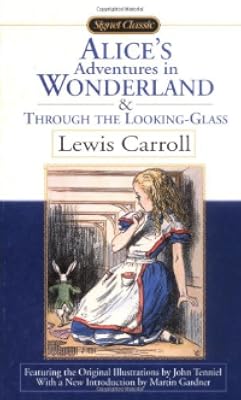
Lewis Carroll (Charles Lutwidge Dodgson) is famed for his magical stories, Alice in Wonderlandand Through the Looking-Glass, here illustrated throughout the inner pages by Sir John Tenniel's much loved drawings. However, inspired by the insatiable Victorian appetite for party games, tricks and conundrums, this eccentric and polymathical Englishman also wrote many other works of a humorous, witty, whimsical and nonsensical nature such as the mock-heroic nonsense verse 'The Hunting of the show more Snark', as well as dozens of other verses, stories, acrostics and puzzles, all of which are included in this volume. Oxford scholar, Church of England Deacon, University Lecturer in Mathematics and Logic, academic author of learned theses, gifted pioneer of portrait photography, colourful writer of imaginative genius and yet a shy and pedantic man, Lewis Carroll stands pre-eminent in the pantheon of inventive literary geniuses. show lessTags
Recommendations















Member Recommendations
waltzmn A "complete works" of an author is most meaningful when one understands the author. Understanding Charles Dodgson is very difficult; he was a strange, reclusive, highly intelligent man (very likely an autistic). Of all the many biographies, this one seems to come closest to telling who he really was, although it is surely not the last word.
Member Reviews
(Original Review, 1994-08-10)
I’ve always interpreted “Alice’s Adventures in Wonderland” as a (modern) Fairytale.
In a way most of modern commercial movies are more like classical fairytales: very elemental stories set in a simplistic moral universe, with stereotypical characters. The movies may seem to be more complex but that is mostly 'effect'. Movies are very good at the dazzle part of the story telling business. Complexity of story: very much less so.
It is an interesting point though: the differences between stories that were only meant to be told and the kind of stories we have invented and/or developed the moment we could write them down. It is, for instance, suggested that the flowery & repeated descriptors in Homer show more (rose-fingered dawn, wine-coloured sea et cetera) were part aide-memoirs and part moments that the storyteller didn't have to think about the next word. They were, in other words, part of the mechanics/structure of the story. Something that was no longer needed when people could write the stories down.
So, stories from the oral age have, by necessity, a different shape than later stories like Alice’s. Come to think of it, in a way it's similar to watching a movie in a theatre or a DVD at home. In the theatre you can't pause or rewind: you have to follow the 'story' in the moment. Same with oral and written stories. Around the campfire both storyteller and audience are engaged in a live stream event. You can't have your audience interrupting you, asking you to explain who is who again and wasn't X killed by that cyclops or was that Y...? A written story can have more complexity, because readers can take a break. Try to do “Shogun” as an oral story...
Still, fairytales are probably among the first type of story told and lots of modern stories still carry that DNA. Yes, some modern literature has as much in common with fairytales as birds with dinosaurs but they are still related. More to the point, we wouldn't have birds without those dinos. You could argue we wouldn't have either James Clavell or Marcel Proust without those old oral stories (and fairytales) too...
I think we can discount the druggie and Freudian interpretations as modern fantasies*. But otherwise it is clearly satirical at different levels (the boring schoolroom, linguistic philosophy) while alluding to events and places and presumably people in Alice's life. In a way it's the sort of story that we all make up for our children and grandchildren, but cleverer than most.
(*) So here's mine: There is a convincing theory that Carroll emphasized his relations with little girls (which in the Victorian mindset were necessarily innocent and asexual) to distract attention from his numerous relationships with young (20ish) women which the Victorians would have thought improper for a clergyman. So he sends Alice off down a hole and prattles on about her adventures while having it away with Dinah on the surface. Mind you, it’s just a theory… show less
I’ve always interpreted “Alice’s Adventures in Wonderland” as a (modern) Fairytale.
In a way most of modern commercial movies are more like classical fairytales: very elemental stories set in a simplistic moral universe, with stereotypical characters. The movies may seem to be more complex but that is mostly 'effect'. Movies are very good at the dazzle part of the story telling business. Complexity of story: very much less so.
It is an interesting point though: the differences between stories that were only meant to be told and the kind of stories we have invented and/or developed the moment we could write them down. It is, for instance, suggested that the flowery & repeated descriptors in Homer show more (rose-fingered dawn, wine-coloured sea et cetera) were part aide-memoirs and part moments that the storyteller didn't have to think about the next word. They were, in other words, part of the mechanics/structure of the story. Something that was no longer needed when people could write the stories down.
So, stories from the oral age have, by necessity, a different shape than later stories like Alice’s. Come to think of it, in a way it's similar to watching a movie in a theatre or a DVD at home. In the theatre you can't pause or rewind: you have to follow the 'story' in the moment. Same with oral and written stories. Around the campfire both storyteller and audience are engaged in a live stream event. You can't have your audience interrupting you, asking you to explain who is who again and wasn't X killed by that cyclops or was that Y...? A written story can have more complexity, because readers can take a break. Try to do “Shogun” as an oral story...
Still, fairytales are probably among the first type of story told and lots of modern stories still carry that DNA. Yes, some modern literature has as much in common with fairytales as birds with dinosaurs but they are still related. More to the point, we wouldn't have birds without those dinos. You could argue we wouldn't have either James Clavell or Marcel Proust without those old oral stories (and fairytales) too...
I think we can discount the druggie and Freudian interpretations as modern fantasies*. But otherwise it is clearly satirical at different levels (the boring schoolroom, linguistic philosophy) while alluding to events and places and presumably people in Alice's life. In a way it's the sort of story that we all make up for our children and grandchildren, but cleverer than most.
(*) So here's mine: There is a convincing theory that Carroll emphasized his relations with little girls (which in the Victorian mindset were necessarily innocent and asexual) to distract attention from his numerous relationships with young (20ish) women which the Victorians would have thought improper for a clergyman. So he sends Alice off down a hole and prattles on about her adventures while having it away with Dinah on the surface. Mind you, it’s just a theory… show less
For me, the great benefit of having the collected works is that besides having the Alice stories and the Snark, which are readily available elsewhere, this collection includes Sylvie and Bruno and Sylvie and Bruno Conluded, parts of which I like very much, though it is uneven, partly because it alternates between a fairly conventional this-world romance and a fairytale adventure. Overall, I tend to say the fairytale adventure is better, but there are good parts in th this-word story (the concept of a ghost wallowing in bread sauce, for example) and weak parts in Sylvie and Bruno (notably when the two children get just too unbearably cute or sentimental.)
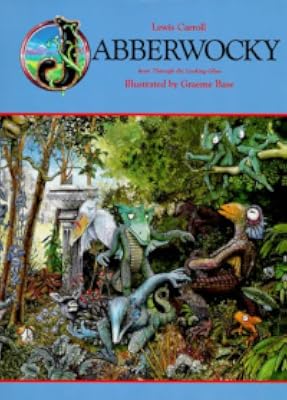
The bet of part of S&B is the Mad Gardener's Song, which has been done very well as show more a separate picture book (though that version loses a few references to the story, notably the double rule of three). show less
The bet of part of S&B is the Mad Gardener's Song, which has been done very well as show more a separate picture book (though that version loses a few references to the story, notably the double rule of three). show less
Very victorian, in both pleasant and ennoying ways. Of course, Alice is Alice, a timeless masterpiece. The rest of the book is a miscellanea of children rhymes, plain plays on words with awkwardly moralistic aims, and dreamy tales. I enjoyed it, most of all the fairy story "Sylvie and Bruno" with its religious sermons disguised as conversations at the picnic, and with its sugar-sweet fairy children. Only for expert classic readers :)
I will not venture to comment on Alice as myriads of better minds than mine have already done so. Except of course to acknowledge and delight in the work of genius that it is.
I assumed that all of Carroll's works would be on the same level as "Alice." I have been stunned to find, in the Sylvie and Bruno section of this, that Carroll could and did write dreadful Victorian dreck. Saccharine, schmaltzy, bathetic pathos. Deliberate icky children's vocabularly - the repeated use of "oo" for you and "welly" for very.
Stock characters and images - the lovely innocent little girl who is entirely self-sacrificing, the mischievous little boy who is being taught to be a man...
I was appalled at insipidity of this sort from the Alice author.
show more However, of much interest are his most definitive opinions about social issues which he incorporates shamelessly into these "children's stories." He disapproves of hunting, for instance.
Also, he has quite strong opinions about what true Christianity is, and puts these in too. He discusses Jesus quite naturally and has his characters not only quote the Bible but discuss scriptural and spiritual questions.
After "Slyvie and Bruno" came "Letters to Child Friends." I did not care for these very much either.
Heavy-handed attempts at humor, and, it appears, little comprehension of the fears one can evoke in children. They rather reminded me of those unpleasant occasions in public places when you hear parents or caretakers saying awful things to children.
I have learned that "Slyvie and Bruno" was one of the last things he published, so I am not certain why it appears where it does in the book.
"The Hunting of the Snark" is delightful. He struck on just the right combination of rhythm, rhyme and subject, and the nonsense aspect is very well done. I loved the 10 characters all beginning with "B", and their various subplots. And I can see how a number of phrases from this unusual work have entered the lexicon. show less
I assumed that all of Carroll's works would be on the same level as "Alice." I have been stunned to find, in the Sylvie and Bruno section of this, that Carroll could and did write dreadful Victorian dreck. Saccharine, schmaltzy, bathetic pathos. Deliberate icky children's vocabularly - the repeated use of "oo" for you and "welly" for very.
Stock characters and images - the lovely innocent little girl who is entirely self-sacrificing, the mischievous little boy who is being taught to be a man...
I was appalled at insipidity of this sort from the Alice author.
show more However, of much interest are his most definitive opinions about social issues which he incorporates shamelessly into these "children's stories." He disapproves of hunting, for instance.
Also, he has quite strong opinions about what true Christianity is, and puts these in too. He discusses Jesus quite naturally and has his characters not only quote the Bible but discuss scriptural and spiritual questions.
After "Slyvie and Bruno" came "Letters to Child Friends." I did not care for these very much either.
Heavy-handed attempts at humor, and, it appears, little comprehension of the fears one can evoke in children. They rather reminded me of those unpleasant occasions in public places when you hear parents or caretakers saying awful things to children.
I have learned that "Slyvie and Bruno" was one of the last things he published, so I am not certain why it appears where it does in the book.
"The Hunting of the Snark" is delightful. He struck on just the right combination of rhythm, rhyme and subject, and the nonsense aspect is very well done. I loved the 10 characters all beginning with "B", and their various subplots. And I can see how a number of phrases from this unusual work have entered the lexicon. show less
I found this in a bookstore in Myrtle Beach and was ecstatic. It had "The Hunting of the Snark", which I h ad heard of, but never read, and the Sylvie and Bruno books, which I had never even heard about, with a other stuff that was all bonus.
Sylvie and Bruno are nothing like Alice. They are, frankly, very sweet.
I particularly dug the Sillygisms after I had taken Logic in college, five years later.
I have had to buy a second copy and it is pretty beat up, but I'm not willing for it to be absent from my bookshelf.
Sylvie and Bruno are nothing like Alice. They are, frankly, very sweet.
I particularly dug the Sillygisms after I had taken Logic in college, five years later.
I have had to buy a second copy and it is pretty beat up, but I'm not willing for it to be absent from my bookshelf.
I found this volume in a used book shop (McIntyre & Moore, how I love thee...) There is nothing particularly amazing about the edition- it does not have the definitive annotation of the Annotated Alice, certainly. It does, however, have EVERYTHING. Anagrams, poems, puzzles, published letters, both Alice stories, and Sylvie and Bruno. For that alone, any Carroll-phile would love it.
I found this in a bookstore in Myrtle Beach and was ecstatic. It had "The Hunting of the Snark", which I h ad heard of, but never read, and the Sylvie and Bruno books, which I had never even heard about, with a other stuff that was all bonus.
Sylvie and Bruno are nothing like Alice. They are, frankly, very sweet.
I particularly dug the Sillygisms after I had taken Logic in college, five years later.
I have had to buy a second copy and it is pretty beat up, but I'm not willing for it to be absent from my bookshelf.
Sylvie and Bruno are nothing like Alice. They are, frankly, very sweet.
I particularly dug the Sillygisms after I had taken Logic in college, five years later.
I have had to buy a second copy and it is pretty beat up, but I'm not willing for it to be absent from my bookshelf.
Members
- Recently Added By
Lists

Favorite Childhood Books
1,651 works; 519 members

Philip Ward's Lifetime Reading Plan
592 works; 22 members

Harold Bloom - The Western Canon: C. The Democratic Age
336 works; 15 members

Books
85 works; 1 member

Books We Loved As Children
603 works; 252 members
Author Information

1,474+ Works 108,616 Members
Charles Luthwidge Dodgson was born in Daresbury, England on January 27, 1832. He became a minister of the Church of England and a lecturer in mathematics at Christ Church College, Oxford. He was the author, under his own name, of An Elementary Treatise on Determinants, Symbolic Logic, and other scholarly treatises. He is better known by his pen show more name of Lewis Carroll. Using this name, he wrote Alice in Wonderland and Through the Looking Glass. He was also a pioneering photographer, and he took many pictures of young children, especially girls, with whom he seemed to empathize. He died on January 14, 1898. (Bowker Author Biography) show less
Lewis Carroll has a Legacy Library. Legacy libraries are the personal libraries of famous readers, entered by LibraryThing members from the Legacy Libraries group.
All Editions
Some Editions
Awards and Honors
Notable Lists
Series
Belongs to Publisher Series
Work Relationships
Is contained in
Contains
Common Knowledge
- Canonical title
- The Complete Works of Lewis Carroll; The Complete Illustrated Works of Lewis Carroll
- Original title
- The Complete Ilustrated Works of
- Original publication date
- 1845 - 1897
- People/Characters
- Alice in Wonderland; Mad Hatter; Caterpillar; Dormouse; White Queen; Red Queen (show all 87); White Rabbit; Sylvie; Bruno; Cheshire Cat; Queen of Hearts; March Hare; Dinah; Tweedledee; Tweedledum; William the Conqueror; Mouse; Dodo; Bill the Lizard; Father William; Fish-Footman; Frog-Footman; Duchess' Cook; Duchess; Lory; Eaglet; Duck; Knave of Hearts; King of Hearts; Gryphon; Mock Turtle; Kitty (Alice in Wonderland's black kitten); Snowdrop; Alice's Sister; Nobody; Somebody; Jabberwocky; Lion (opponent of the Unicorn); Unicorn (opponent of the Lion); Walrus (friend of the Carpenter); Carpenter (friend of the Walrus); Humpty Dumpty; Red Knight; White Knight; Red King; Professor Balbus; Mad Mathesis; Ghost King; Knight Mayor; Phantom; Inspector Kobold; Warden; Lord Chancellor; Professor; Arthur Forester; Sub-Warden; Uggug; Lady Muriel Orme; Mad Gardener; Baron Doppelgeist; Earl of Ainslie; Beggar; Other Professor; Nero (the King of Dogland); Eric Lindon; Bessie; Willie; Matilda-Jane; Mein Herr; Sibimet; Tabikat; Bellman; Boots; Bonnet-Maker; Barrister; Broker; Billiard-Marker; Banker; Butcher; Baker; Beaver; Snark; Boojum; Bandersnatch; Tortoise; Achilles; Gertrude Chataway
- Important places
- Wonderland; Looking-Glass Land; London, England, UK; Kgovjni; The Library; Fayfield Junction (show all 17); Elfland; Elveston; Fairyland; Dogland; the Ivory Door; the Earl's Hall; India; Hunter's farm; the Golden Lion; Outland; the Saloon
- First words
- After lunch on July 4, 1862, Charles Ludwidge Dodgson, a thirty-year-old Oxford mathematics don and clergyman (later to become universally known as Lewis Carroll) met the three daughters of the dean of his college, Christ Chu... (show all)rch, for a boating excursion, up the river Isis.
- Last words
- (Click to show. Warning: May contain spoilers.)Elves were made for gladness!
- Original language*
- Anglais (Royaume-Uni) (Royaume-Uni)
- Disambiguation notice
- In addition to the works listed under "work-to-work relationships", this work includes "Early Verse", "Puzzles from Wonderland", "Prologues to Plays", "College Rhymes and Notes by an Oxford Chiel", "Acrostics, Inscriptions, a... (show all)nd Other Verse", "Stories", and "A Miscellany".
The edition of Carroll's works edited by Roger Lancelyn Green (1965) has the following contents, which are not identical with those of other collected editions: Alice's Adventures in Wonderland -- Through the Looking-Glass --... (show all) A Wonderland Miscellany -- Bruno's Revenge, and Other Stories -- Sylvie and Bruno -- Sylvie and Bruno Concluded -- Letters to Child-Friends -- The Hunting of the Snark -- Rhyme? And Reason? -- Verses and Acrostics -- Three Sunsets, and Other Poems -- Notes by an Oxford Chiel -- Journal of a Tour in Russia in 1867 -- Original Games and Puzzles -- Feeding the Mind: Essays and Addresses.
*Some information comes from Common Knowledge in other languages. Click "Edit" for more information.
Classifications
Statistics
- Members
- 4,920
- Popularity
- 2,857
- Reviews
- 33
- Rating
- (4.32)
- Languages
- 6 — Czech, English, French, German, Italian, Portuguese
- Media
- Paper, Ebook
- ISBNs
- 58
- UPCs
- 1
- ASINs
- 86