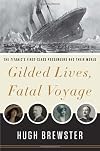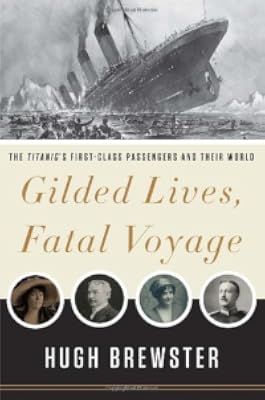
Gilded Lives, Fatal Voyage: The Titanic's First-Class Passengers and Their World
by Hugh Brewster
On This Page
Description
Brewster, who created several bestselling books on the "Titanic," uses original research to intertwine, for the first time, the lives of the rich and famous within the powerful arc of the ship's dramatic demise to convey the poignance of this epochal disaster.Tags
Recommendations
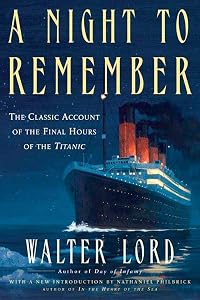
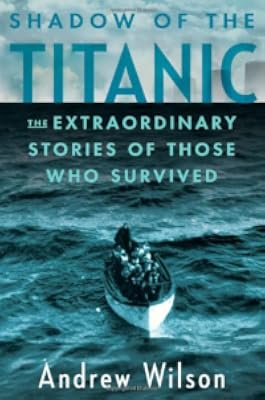
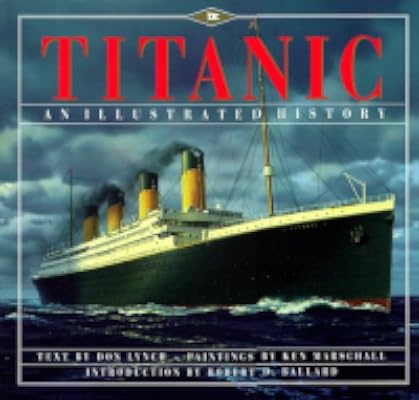








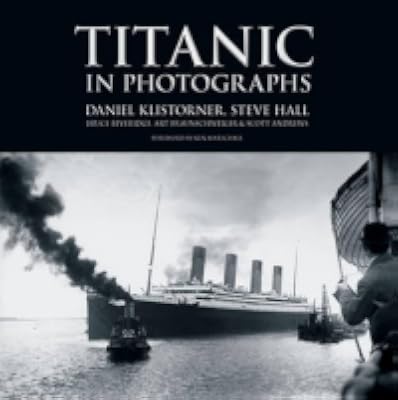

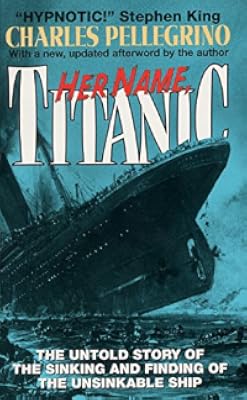
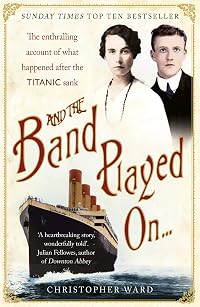
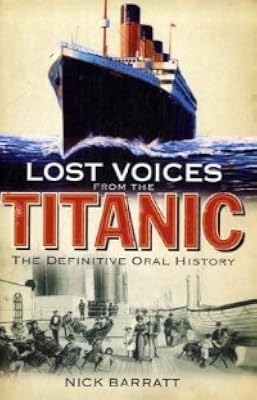


Member Recommendations
briandrewz a wonderful book about an iconic pair of first class passengers from the Titanic...

Member Reviews
Hugh Brewster in his book, Gilded Lives, Fatal Voyage, brilliantly introduces us to the passengers in First Class in such a way that you feel you know them as individual flesh-and-blood human beings before they came on board, and then allows you to see them move about the ship and face the maritime challenge in their own fashion. The Titanic's passenger list included not just wealthy people but people who were famous on the basis of their work in politics, theater, fashion and business. Some of them had encountered significant challenges in their lives as they ascended the status of first-class. I had no idea of who Lady Lucille Duff-Gordon had been *before* she became one of the world's most notable designers of women's fashions. show more Neither had I much of an idea of what the travelling of that time might entail for Edwardian-era "jet-setters". One passenger came aboard with fourteen (14) steamer trunks, four suitcases and three packing crates as well as a quarter of a million dollars in jewelry. And finally, I'd no idea of the Americans who were aboard that ship, several of whom were from Main Line Philadelphia families. We always assume the wealthy of that time were from New York families or from Washington DC. Yet there was one family returning on the Titanic for the funeral of their college age son who had been killed in a motoring accident. That mother lost her husband and a second son on the night of April 14, 1912. Hugh Brewster managed to bring all of these people to life for me. And before I was done with the book, I had to put it down because I knew their ending and it was too painful to read what was going to happen to people who had been made real to me. Let's be honest; modern life has caused many of us to be made jaded and numb to the worst of historical events. It takes a strong author to revive those sensitivities.
The book is a relatively quick read (just about 300 pages), liberally illustrated with photos of the passengers in happier days. It begins with the boarding of a percentage of the passengers at the Cherbourg Quay on Wednesday afternoon, April 10th and closes with the arrival of the survivors on the Carpathia in New York on Thursday, April 18th. There are some pages given over to the investigations following, but that element is minimized in the greater narrative about the people.
This is popular history, not terribly dense or academic, but an excellent example of the educational value of such non-fiction. There are about 50 pages of supplemental materials as well, including a nice bibliography. If you have an interest in the topic, you should certainly read this book. show less
The book is a relatively quick read (just about 300 pages), liberally illustrated with photos of the passengers in happier days. It begins with the boarding of a percentage of the passengers at the Cherbourg Quay on Wednesday afternoon, April 10th and closes with the arrival of the survivors on the Carpathia in New York on Thursday, April 18th. There are some pages given over to the investigations following, but that element is minimized in the greater narrative about the people.
This is popular history, not terribly dense or academic, but an excellent example of the educational value of such non-fiction. There are about 50 pages of supplemental materials as well, including a nice bibliography. If you have an interest in the topic, you should certainly read this book. show less
Book Description: "Gilded Lives, Fatal Voyage takes us behind the paneled doors of the Titanic’s elegant private suites to present compelling, memorable portraits of her most notable passengers. The intimate atmosphere onboard history’s most famous ship is recreated as never before.
The Titanic has often been called “an exquisite microcosm of the Edwardian era,” but until now, her story has not been presented as such. In Gilded Lives, Fatal Voyage, historian Hugh Brewster seamlessly interweaves personal narratives of the lost liner’s most fascinating people with a haunting account of the fateful maiden crossing. Employing scrupulous research and featuring 100 rarely-seen photographs, he accurately depicts the ship’s brief show more life and tragic denouement, presenting the very latest thinking on everything from when and how the lifeboats were loaded to the last tune played by the orchestra."
***********************************************
"It was a brilliant crowd...a rare gathering of beautiful women and splendid men." ---Lily May Futrelle
This quote at the very beginning of the book is probably why so many of us love Titanic stories: we are sad that these beautiful people had to experience such horrible tragedy. We are also the tiniest bit reassured when we are reminded that tragedy is not a respecter of persons and is often left to chance. Horrible things can happen no matter how rich and famous one is.
Books like this take me forever to read, not because they're dull but because I usually can't go two pages without finding a reason to stop and research something. I really enjoyed reading the mini biographies constructed around an in depth look at high society before WWI destroyed the Gilded Age of America and Great Britain. show less
The Titanic has often been called “an exquisite microcosm of the Edwardian era,” but until now, her story has not been presented as such. In Gilded Lives, Fatal Voyage, historian Hugh Brewster seamlessly interweaves personal narratives of the lost liner’s most fascinating people with a haunting account of the fateful maiden crossing. Employing scrupulous research and featuring 100 rarely-seen photographs, he accurately depicts the ship’s brief show more life and tragic denouement, presenting the very latest thinking on everything from when and how the lifeboats were loaded to the last tune played by the orchestra."
***********************************************
"It was a brilliant crowd...a rare gathering of beautiful women and splendid men." ---Lily May Futrelle
This quote at the very beginning of the book is probably why so many of us love Titanic stories: we are sad that these beautiful people had to experience such horrible tragedy. We are also the tiniest bit reassured when we are reminded that tragedy is not a respecter of persons and is often left to chance. Horrible things can happen no matter how rich and famous one is.
Books like this take me forever to read, not because they're dull but because I usually can't go two pages without finding a reason to stop and research something. I really enjoyed reading the mini biographies constructed around an in depth look at high society before WWI destroyed the Gilded Age of America and Great Britain. show less
Gilded Lives, Fatal Voyage: The Titanic's First-Class Passengers and Their World, by Hugh Brewster, is, as the title suggests, a study of those first-class passengers who boarded the ill-fated Titanic on April 10, 1912, in Cherbourg, France, and their lives aboard the ship until it struck the iceberg on April 14 and sank. There are also chapters concerning the aftermath of that event, including what happened to the survivors afterwards. Hugh Brewster worked with explorer Robert Ballard, who found the sunken vessel in 1986, and had extensive access to artifacts, journals, letters and other sources to flesh out his story, making this volume both accurate about the actual events and personal in terms of individual stories, albeit focusing show more primarily on the stories of the very wealthy elite and mostly ignoring those in "steerage," many of whom died in the disaster. There are fascinating bits of information here: for example, the first several lifeboats carried at best only half the number of passengers that they could have carried because nobody thought the situation was as serious as it proved to be, and of the 425 women on board, some 74% survived whereas only about 20% of the 1,667 men lived. Whether or not the orchestra played "Nearer My God to Thee" as the ship sank is moot, although Brewster uncovers the fact that this hymn was probably played at some point during the night of April 14-15. Brewster does a good job of describing the individuals with whom he deals, and more importantly, in enabling the reader to keep each profile separately in mind without mixing them up, and his writing style is both respectful of the subject matter and easy to comprehend. Really interesting stuff, especially if like me the reader knew only the broad outlines of the disaster prior to finding this book. Recommended! show less
I loved the idea of this extremely well-researched novel, but the actual reading experience fell short for me.
In the beginning the author did a good job of introducing the illustrious passengers, giving for each a short history of who they were and what they had accomplished, and then describing what their shipboard activities were likely to have been and who they probably hung out with. I also appreciated the many photographs included in the book. The chapters often included a picture of the person who was described, and I had not seen many of these before. Like many (most?) people I am endlessly fascinated by the Titanic and this section was very effective for me, giving me a real sense of the passengers as living breathing people show more with lives outside the context of the iconic disaster.
But eventually my interest level waned. For some reason the author felt compelled to devote a substantial chunk of time to a boring and unnecessary outing of many of the passengers; the chapter could have been subtitled "The following people, in addition to the interesting accomplishments I have already described, were probably or certainly gay, and here is the evidence."
In other ways as well - and this is probably more a fault of my aging brain than the author's technique - it was a case of too much information. There was so much detail. By the time the sinking happened I could no longer remember who was who and whether or not a person whose earlier story caught my fancy was one of those who made it. The author closed with a brief description of the post-Titanic lives of some of the key survivors; which again would have been more interesting to me if I could have kept their stories straight.
Note: It's not exactly new information, but one thing that struck me powerfully in this account is what an awesome lady Margaret Brown was. I am off to Amazon to see if I can find a biography. show less
In the beginning the author did a good job of introducing the illustrious passengers, giving for each a short history of who they were and what they had accomplished, and then describing what their shipboard activities were likely to have been and who they probably hung out with. I also appreciated the many photographs included in the book. The chapters often included a picture of the person who was described, and I had not seen many of these before. Like many (most?) people I am endlessly fascinated by the Titanic and this section was very effective for me, giving me a real sense of the passengers as living breathing people show more with lives outside the context of the iconic disaster.
But eventually my interest level waned. For some reason the author felt compelled to devote a substantial chunk of time to a boring and unnecessary outing of many of the passengers; the chapter could have been subtitled "The following people, in addition to the interesting accomplishments I have already described, were probably or certainly gay, and here is the evidence."
In other ways as well - and this is probably more a fault of my aging brain than the author's technique - it was a case of too much information. There was so much detail. By the time the sinking happened I could no longer remember who was who and whether or not a person whose earlier story caught my fancy was one of those who made it. The author closed with a brief description of the post-Titanic lives of some of the key survivors; which again would have been more interesting to me if I could have kept their stories straight.
Note: It's not exactly new information, but one thing that struck me powerfully in this account is what an awesome lady Margaret Brown was. I am off to Amazon to see if I can find a biography. show less
This is a superb installment in the story of the Titanic. Hugh Brewster has presented us with a marvelous telling of the stories of those passengers in first class who have become household names as a result of the tragedy. The lives of these people captivates and the author is to be commended for a job well-done. I especially enjoyed the section at the end of the book that told of the fates of those first class survivors.
This book looks at the lives of some of the 1st class passengers who were on the Titanic, as well as their time on the Titanic and the aftermath.
I really enjoyed this. I have to admit that I was more interested in the happenings on the ship vs. their lives before and after, so the second half of the book was a bit more interesting, I thought - as soon as the ship hit the iceberg. Overall, though, I still really enjoyed it.
I really enjoyed this. I have to admit that I was more interested in the happenings on the ship vs. their lives before and after, so the second half of the book was a bit more interesting, I thought - as soon as the ship hit the iceberg. Overall, though, I still really enjoyed it.
This is a retelling of the basic details of the Titanic disaster, but focused on the first class passengers who were an interesting microcosm of the gilded age. I found it an interesting way to think about the disaster. Knowing enough about this group of passengers to get attached to them, and in some cases not knowing which survived and which did not, put a human face on the disaster.
Members
- Recently Added By
Author Information

A longtime editor of books for both children and adults, Hugh Brewster is also the author of some acclaimed works for young readers. Born in London in 1950, Brewster was an editor for both Scholastic Books and Scholastic Canada before becoming editorial director for Madison Press Books in Toronto in 1984. Brewster's book Anastasia's Album (1996), show more was about the youngest daughter of Nicholas II and Alexandra, the last tsar and tsarina of Russia, who were killed along with their children by Bolsheviks in 1918. Brewster researched the work in Moscow's state archive, where he found Anastasia's translated diaries and hand-colored letters among the papers and photo albums of the tsar's family. Brewster has also written Inside the Titanic (1997), a lavishly illustrated book which uses the story of two young passengers to explore the doomed ocean liner. (Bowker Author Biography) show less
Common Knowledge
- Original title
- Gilded Lives, Fatal Voyage: The Titanic's First-Class Passengers and Their World
- Original publication date
- 2012-03-27
- People/Characters
- John Jacob Astor IV; Madeleine Astor; Isidor Straus; Ida Straus; Molly Brown; Lucy, Lady Duff-Gordon (show all 24); Sir Cosmo Duff-Gordon, 5th Baronet; George Widener; Benjamin Guggenheim; Noël Leslie, Countess of Rothes; J. Bruce Ismay; Archie Butt; Captain Edward J. Smith; Thomas Andrews, shipbuilder; Eleanor Widener; Archibald Gracie IV; Leontine "Ninette" Aubart; John B. Thayer; Marian Thayer; Jack Thayer; Charles Herbert Lightoller; Harold Lowe; Frederick Fleet; Dorothy Gibson
- Important places
- Titanic
- Important events
- Sinking of the Titanic (1912)
Classifications
- Genres
- History, Nonfiction, General Nonfiction, Travel, Biography & Memoir
- DDC/MDS
- 910.9163 — History & geography Geography & travel modified standard subdivisions of Geography and travel Explorers & Travelers Geography of and travel in areas, regions, places in general Air And Water Atlantic Ocean
- LCC
- G530 .T6 .B73 — Geography, Anthropology and Recreation Geography (General) Adventures, shipwrecks, buried treasure, etc.
- BISAC
Statistics
- Members
- 348
- Popularity
- 90,382
- Reviews
- 18
- Rating
- (3.77)
- Languages
- English, Spanish
- Media
- Paper, Ebook
- ISBNs
- 11
- ASINs
- 3