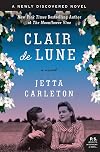
Clair de Lune
by Jetta Carleton
On This Page
Description
"A novel of small-town love by Jetta Carleton, the author of the recently republished classic The Moonflower Vine"--Tags
Recommendations
























Member Reviews
Appearances, propriety, morality, and the restrictions placed on women. Although Jetta Carleton wrote Clair de Lune in another era, the issues of acceptibility, expectations, and obligations still dog us today.
Set in 1941 during the spring before Pearl Harbor when there was still some hope that the US would not get involved in the war in Europe, Clair de Lune is the story of a young woman named Allen Liles. Having grown up on a farm, Allen earned her masters degree so that she could teach college on the way to her ultimate dream of being a writer in New York City. Her debts and her mother's desire for her railroad her into accepting a job teaching English at a small community college in a Missouri city even as she keeps a tentative show more grasp on her dream of becoming a writer herself. And although teaching is not her dream, Allen is quite a dedicated teacher, interested in her subject matter and desirous of challenging her students. She is much younger than most of her colleagues and so her personal life is quiet, unremarkable, and lonely, even boring.
Then Allen, thanks to her mother's idea, decides to add a class for those students who are motivated and intelligent. And in this class she discovers two students, George and Toby, with whom she becomes friendly, inviting them back to her apartment for impromptu literary salons of a sort. Because they are so close in age, the three of them quickly lose their prescribed roles of students and teacher. This is problematic both ethically and socially and could cost Allen her job. But none of this occurs to her as she enjoys an almost carefree friendship with the two young men, roaming the streets of the city with them after dark, exporing their town, drinking and playing about, until word gets out about her inappropriate friendship. And then Allen must decide what it is she really wants out of her life.
Allen as a character is both sad and admirable. She knows that the constrained life of women in the early 1940's, marriage and motherhood, is not her goal even though this isolates her from her peers and co-workers. Her only young female colleague, Maxine, lives out the engagement and marriage role concurrently with Allen's innocent cavorting and Allen watches clinically, knowing that Maxine's choices won't be hers. But the courage to strike out counter to society's expectations remains cloaked throughout most of the narrative.
As America slowly wakes from its pre-war innocence, so too does Allen Liles. While the narrative itself is fairly quiet, mirroring Allen's life, it builds a narrative tension that is both expected and unavoidable but right and necessary to Allen's becoming her true self. The writing is lovely and poetic and while Allen is the only character fully developed, this is pitch perfect reflecting her solitary life and the superficial way that she never really fully knows those around her, colleague, acquaintances, and even George and Toby. Carleton has written a thoughtful and deep examination of what it means to settle and the courage it takes to break free of the obligations and expectations that led to the settling in the first place. This novel depicts its time beautifully but it makes us stop and reflect on these same questions now. show less
Set in 1941 during the spring before Pearl Harbor when there was still some hope that the US would not get involved in the war in Europe, Clair de Lune is the story of a young woman named Allen Liles. Having grown up on a farm, Allen earned her masters degree so that she could teach college on the way to her ultimate dream of being a writer in New York City. Her debts and her mother's desire for her railroad her into accepting a job teaching English at a small community college in a Missouri city even as she keeps a tentative show more grasp on her dream of becoming a writer herself. And although teaching is not her dream, Allen is quite a dedicated teacher, interested in her subject matter and desirous of challenging her students. She is much younger than most of her colleagues and so her personal life is quiet, unremarkable, and lonely, even boring.
Then Allen, thanks to her mother's idea, decides to add a class for those students who are motivated and intelligent. And in this class she discovers two students, George and Toby, with whom she becomes friendly, inviting them back to her apartment for impromptu literary salons of a sort. Because they are so close in age, the three of them quickly lose their prescribed roles of students and teacher. This is problematic both ethically and socially and could cost Allen her job. But none of this occurs to her as she enjoys an almost carefree friendship with the two young men, roaming the streets of the city with them after dark, exporing their town, drinking and playing about, until word gets out about her inappropriate friendship. And then Allen must decide what it is she really wants out of her life.
Allen as a character is both sad and admirable. She knows that the constrained life of women in the early 1940's, marriage and motherhood, is not her goal even though this isolates her from her peers and co-workers. Her only young female colleague, Maxine, lives out the engagement and marriage role concurrently with Allen's innocent cavorting and Allen watches clinically, knowing that Maxine's choices won't be hers. But the courage to strike out counter to society's expectations remains cloaked throughout most of the narrative.
As America slowly wakes from its pre-war innocence, so too does Allen Liles. While the narrative itself is fairly quiet, mirroring Allen's life, it builds a narrative tension that is both expected and unavoidable but right and necessary to Allen's becoming her true self. The writing is lovely and poetic and while Allen is the only character fully developed, this is pitch perfect reflecting her solitary life and the superficial way that she never really fully knows those around her, colleague, acquaintances, and even George and Toby. Carleton has written a thoughtful and deep examination of what it means to settle and the courage it takes to break free of the obligations and expectations that led to the settling in the first place. This novel depicts its time beautifully but it makes us stop and reflect on these same questions now. show less
This book charmed the pants off of me. Not literally, but you get what I'm saying.
I found an instant connection with Allen Liles -her love of reading, her passion for teaching. Set in a time period that boasts of innocence we've lost today, Clair de Lune also deals with adult themes that threaten the charming atmosphere of the book in a way that provides just the right amount of tension without overpowering the story.
Honestly, I felt like I was transported back into the world of my grandparents. Jetta Carleton, having lived through this time period, was so vivid in her descriptions and her characters had such an incredible voice that I couldn't help but get lost in the story. I devoured this one so quickly and as soon as I put it down, show more knew that it was a keeper.
It's not often I want to re-read books again as soon as I finish them, but I wanted to with Clair de Lune. If time had allowed... but perhaps it will another day soon. show less
I found an instant connection with Allen Liles -her love of reading, her passion for teaching. Set in a time period that boasts of innocence we've lost today, Clair de Lune also deals with adult themes that threaten the charming atmosphere of the book in a way that provides just the right amount of tension without overpowering the story.
Honestly, I felt like I was transported back into the world of my grandparents. Jetta Carleton, having lived through this time period, was so vivid in her descriptions and her characters had such an incredible voice that I couldn't help but get lost in the story. I devoured this one so quickly and as soon as I put it down, show more knew that it was a keeper.
It's not often I want to re-read books again as soon as I finish them, but I wanted to with Clair de Lune. If time had allowed... but perhaps it will another day soon. show less
Bittersweet. That's the lingering taste of this book, rich and redolent, and when I finished, I kind of wanted to spend the rest of my Sunday in a Claire de Lune-stupor, rereading the lovely passages and wallowing in the satisfyingly sad/happy mood of the novel.
Hope, optimism, and innocence are themes of this book, along with passion, delight in literature, and the joy of finding kindred souls. Barbara Allen Liles -- called Allen -- becomes a teacher at a junior college in an unnamed town in southwestern Missouri. ("It is an orderly town, bred of the mines, nurtured by agriculture and some manufacture, a blend of Southern gentility and Western enterprise, firmly set in the conservatism of Middle America.", p3) A lonely young woman with show more aspirations of becoming a poet or novelist in Greenwich Village, Allen finds herself captivated, enamored of, and charmed by two of her students, George and Toby. Surrounded by the shadow of the war in Europe, Allen's constrained life as a teachers seems somewhat bearable with George and Toby in her life.
I really expected a basic love triangle with this story, but Carleton sets up something even more challenging to navigate through: male-female friendship and teacher-student relationships. In an era when women were held up to a different standard than men, Allen's actions are judged without interest or concern in her feelings or motivations. Her colleagues and acquaintances see and expect one thing from Allen, who has the mantle of 'teacher', and with that, some perception of power. It was fascinating, frustrating, and heartbreaking to read -- I so empathize and liked Allen -- and made even more nuanced by the fact that there isn't a clear and handy villain in all this.
I don't know if this is a historical novel; while set in 1941, I don't know when Carleton wrote this novel. It was recently discovered and published by Harper Perennial, and will include their P.S. section with interviews, 'insights', and more.
This is a skinny novel -- just about 300 pages -- and it can read fast or slow, depending on whether you have the patience to linger or (like me) rush through to the giddy, glorious, delicious end. I think fans of WWII novels will enjoy this not-quite-war novel, and anyone who enjoys a good heroine and ambiguous moral situations will find much to chew on in this book. show less
Hope, optimism, and innocence are themes of this book, along with passion, delight in literature, and the joy of finding kindred souls. Barbara Allen Liles -- called Allen -- becomes a teacher at a junior college in an unnamed town in southwestern Missouri. ("It is an orderly town, bred of the mines, nurtured by agriculture and some manufacture, a blend of Southern gentility and Western enterprise, firmly set in the conservatism of Middle America.", p3) A lonely young woman with show more aspirations of becoming a poet or novelist in Greenwich Village, Allen finds herself captivated, enamored of, and charmed by two of her students, George and Toby. Surrounded by the shadow of the war in Europe, Allen's constrained life as a teachers seems somewhat bearable with George and Toby in her life.
I really expected a basic love triangle with this story, but Carleton sets up something even more challenging to navigate through: male-female friendship and teacher-student relationships. In an era when women were held up to a different standard than men, Allen's actions are judged without interest or concern in her feelings or motivations. Her colleagues and acquaintances see and expect one thing from Allen, who has the mantle of 'teacher', and with that, some perception of power. It was fascinating, frustrating, and heartbreaking to read -- I so empathize and liked Allen -- and made even more nuanced by the fact that there isn't a clear and handy villain in all this.
I don't know if this is a historical novel; while set in 1941, I don't know when Carleton wrote this novel. It was recently discovered and published by Harper Perennial, and will include their P.S. section with interviews, 'insights', and more.
This is a skinny novel -- just about 300 pages -- and it can read fast or slow, depending on whether you have the patience to linger or (like me) rush through to the giddy, glorious, delicious end. I think fans of WWII novels will enjoy this not-quite-war novel, and anyone who enjoys a good heroine and ambiguous moral situations will find much to chew on in this book. show less
I loved this book almost as much as I loved the Moonflower Vine. I have to admit that the setting is almost exactly where I live and I can imagine the college as one of the state colleges near by. That in itself gives a comfortable feel about the book. However, that is where the comfort ends. The early 1940's are a long way from here. Allen, the protagonist, is such an innocent with big dreams it is almost hard to fathom that she is real, but she comes across as very real. In actuality, the 1940's aren't all that long ago, but what great strides our culture has made in the choices, hopes and dreams of women. Ok, there may be some backstepping for the choices of women today, but the restrictions that bright capable women lived under in show more those times is almost heartbreaking. Today's culture does provide some choices; the culture of a small college in rural America during that time provided only a very narrow track for women, and often it was other women who made that track so narrow.
The colleague who is marrying the "catch" of the town is especially interesting as is all the wedding preparation and the wedding itself. Carlson has great ability to put the reader right in the middle of the setting; one could almost hear the organ music and smell the flowers while sweat trickled down the back from heat. I do feel Carlson does a slightly better job in constructing her female characters than the "average" males. My only complaint might be that George and Toby, Allen's students and "soul mates" don't have the depth that most of the other characters do. Dr. Ansel, her colleague who lives with his mother, could come straight out of the Andy Griffin show. But, that does provide some comic relief in a sad way (if there is such a thing). In short, good story, believable characters, and a chance to walk in the shoes of a talented young woman who could be one of those women who helped pave the way for those of us that were able to appreciate more choices in our lives. show less
The colleague who is marrying the "catch" of the town is especially interesting as is all the wedding preparation and the wedding itself. Carlson has great ability to put the reader right in the middle of the setting; one could almost hear the organ music and smell the flowers while sweat trickled down the back from heat. I do feel Carlson does a slightly better job in constructing her female characters than the "average" males. My only complaint might be that George and Toby, Allen's students and "soul mates" don't have the depth that most of the other characters do. Dr. Ansel, her colleague who lives with his mother, could come straight out of the Andy Griffin show. But, that does provide some comic relief in a sad way (if there is such a thing). In short, good story, believable characters, and a chance to walk in the shoes of a talented young woman who could be one of those women who helped pave the way for those of us that were able to appreciate more choices in our lives. show less
I really, really wanted to love this book instead of merely liking it. It is set in my neck of the woods of Southwest Missouri and is about a teacher in the 1940s. All pluses in my reading world that were offset by the three strikes against it: too sentimental, too dramatic, and a disappointing ending.
The moon cast its spell on the main character, Barbara Allen Liles, known by her middle name in honor of her deceased father. She was away from home for the first time and made some bad decisions. I wavered between forgiving her inappropriate behavior and wanting to shake some sense into her! Hope of redemption for the book came in the middle when her "lunacy" was overtaken by the growing awareness of World War II and the threat of show more American involvement. Too little, too late, however, to raise it out of its mediocrity.
In Ms. Carleton's defense, this manuscript (in draft form) was discovered after her death. She had been working on it for over twenty years. Perhaps it was unfair to publish a work in progress that had to be tweaked by an editor. It certainly didn't measure up to the excellence of The Moonflower Vine, which garnered a rare 5-star rating from me. show less
The moon cast its spell on the main character, Barbara Allen Liles, known by her middle name in honor of her deceased father. She was away from home for the first time and made some bad decisions. I wavered between forgiving her inappropriate behavior and wanting to shake some sense into her! Hope of redemption for the book came in the middle when her "lunacy" was overtaken by the growing awareness of World War II and the threat of show more American involvement. Too little, too late, however, to raise it out of its mediocrity.
In Ms. Carleton's defense, this manuscript (in draft form) was discovered after her death. She had been working on it for over twenty years. Perhaps it was unfair to publish a work in progress that had to be tweaked by an editor. It certainly didn't measure up to the excellence of The Moonflower Vine, which garnered a rare 5-star rating from me. show less
One-book-wonder Jetta Carleton was actually a two-book wonder, as it turns out. A draft manuscript for Clair de Lune (then called The Back Alleys of Spring), was discovered in the custody of an old friend of Carleton’s and published in 2012 by Harper Perennial after some “cleaning up.”
It’s a slighter work than The Moonflower Vine, but for me more enjoyable to read, simply because I identified with the main character, Allen, a community college instructor, and her desire to escape the small-minded philistines of rural America and pursue a life of learning and art. I liked how Carleton played with the teacher-student relationship and challenged the reader to defend traditional notions of propriety. (Carleton wrote two novels and show more both involve inappropriate student-teacher relationships…what’s that about?). As I said, I enjoyed it, but at the end of the day, my impression of the book was that it was a hair jejune, maybe a little self-serving, definitely of its time – not timeless. show less
It’s a slighter work than The Moonflower Vine, but for me more enjoyable to read, simply because I identified with the main character, Allen, a community college instructor, and her desire to escape the small-minded philistines of rural America and pursue a life of learning and art. I liked how Carleton played with the teacher-student relationship and challenged the reader to defend traditional notions of propriety. (Carleton wrote two novels and show more both involve inappropriate student-teacher relationships…what’s that about?). As I said, I enjoyed it, but at the end of the day, my impression of the book was that it was a hair jejune, maybe a little self-serving, definitely of its time – not timeless. show less
It's 1941, and Allen Liles is beginning her first teaching job at a junior college in a small southwest Missouri town. She has dreams of going to New York, but for now, this is where she's at. She's twenty-five, and a bit of a free spirit, and this leads her, in innocence, to put her job and entire career in jeopardy.
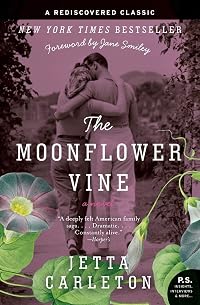
Jetta Carleton's Moonflower Vine is one of my very favorite books of all time, so it goes without saying that this one did not hit the standard. It was enjoyable enough, and well-written, but it just didn't come together for me. The impending war, which tries to be a bit player, falls flat in the face of Allen's behavior (really? she didn't know that what she was doing was improper?). There is redemption in the end, when show more Allen finally realizes that she is "the gambler's daughter" and that sometimes taking a chance beats security.
Worth reading for Carleton's wonderful way with language, but a weak story. show less
Jetta Carleton's Moonflower Vine is one of my very favorite books of all time, so it goes without saying that this one did not hit the standard. It was enjoyable enough, and well-written, but it just didn't come together for me. The impending war, which tries to be a bit player, falls flat in the face of Allen's behavior (really? she didn't know that what she was doing was improper?). There is redemption in the end, when show more Allen finally realizes that she is "the gambler's daughter" and that sometimes taking a chance beats security.
Worth reading for Carleton's wonderful way with language, but a weak story. show less
Members
- Recently Added By
Lists

Books Set in Missouri
29 works; 4 members
Talk Discussions
Past Discussions
June 2012: Clair de Lune in Missouri Readers (June 2012)
Author Information

3+ Works 742 Members
Common Knowledge
- Canonical title
- Clair de Lune
- Original publication date
- 2012-03-06
- People/Characters
- Allen Liles; George; Toby
- Important places
- Missouri, USA; Ozark Mountains, Missouri, USA
- Important events
- World War II
Classifications
- Genres
- Fiction and Literature, General Fiction, Romance, Historical Fiction
- DDC/MDS
- 813.54 — Literature & rhetoric American literature in English American fiction in English 1900-1999 1945-1999
- LCC
- PS3553 .A68893 .C53 — Language and Literature American literature American literature Individual authors 1961-
- BISAC
Statistics
- Members
- 73
- Popularity
- 431,411
- Reviews
- 13
- Rating
- (3.58)
- Languages
- English, German
- Media
- Paper, Ebook
- ISBNs
- 8
- ASINs
- 2