
War with the Newts
by Karel Čapek
On This Page
Description
One of the great anti-utopian satires of the twentieth century, an inspiration to writers from Orwell to Vonnegut, at last in a modern translation. Man discovers a species of giant, intelligent newts and learns to exploit them so successfully that the newts gain skills and arms enough to challenge man's place at the top of the animal kingdom. Along the way, Karel Capek satirizes science, runaway capitalism, fascism, journalism, militarism, even Hollywood.Tags
Recommendations
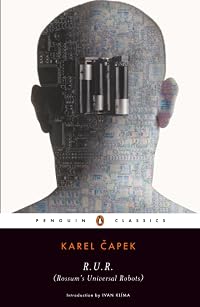
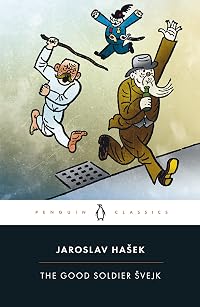
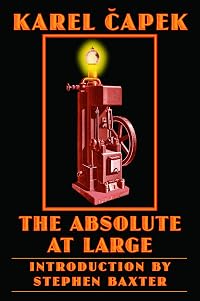
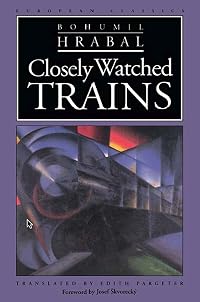













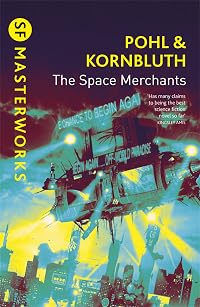







Member Recommendations

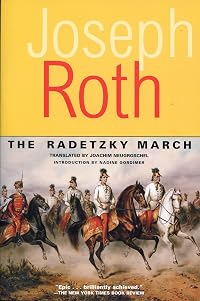
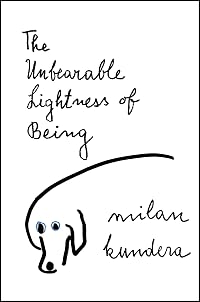
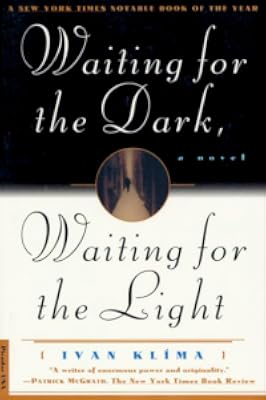
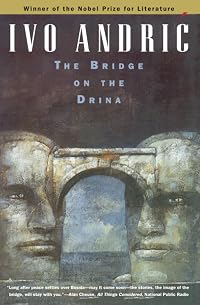
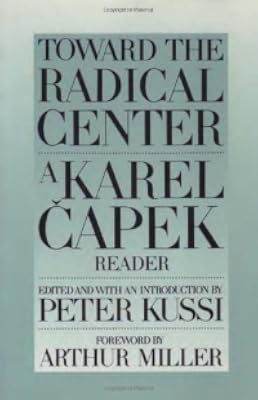
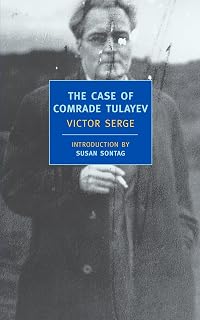
chrisharpe A similar kind of dystopian novel written on the verge of WWII, both are fantasies, reminiscent of H.G. Wells, with a puzzling (to me at least) element of satire on contemporary events. Definitely of their time - black-and-white Sunday afternoon early sci-fi.


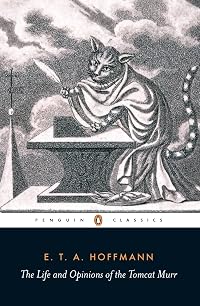
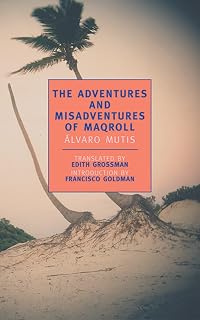
HelgeM Die Marsianer treffen auf der Erde auf Gestalten der griechischen Mythologie. Die Menschen sind anfangs gegen die neue Herrschaft, verhalten sich aber mehr und mehr opportunistisch, schließlich wollen die Invasoren nur Magensaft…
Member Reviews
A first-rate satire, on a par with Mark Twain or Kurt Vonnegut. There are jabs at fascism, sure, given that it was written in late-1930s Czechoslovakia, but also communism, capitalism, and just about any ‑ism people in their benighted self-interest and ideological blinders can invent. It could have ended with the penultimate chapter and been perfectly satisfying, but the final chapter, the metafictional “The Author Talks to Himself,” is the icing on the cake.
“The world will probably disintegrate and become inundated—but at least it will do so for universally accepted political and economic reasons, at least it will do so with the aid of science, engineering and public opinion, with the application of all human ingenuity!”
“The world will probably disintegrate and become inundated—but at least it will do so for universally accepted political and economic reasons, at least it will do so with the aid of science, engineering and public opinion, with the application of all human ingenuity!”
This is a very dark satire of the political and ecological situation in the Czech republic before WWII. A colony of newts is discovered, newts that can not only learn to talk, but also to use tools. As mankind discovers their abilities, they start to exploit the new found species. These animals can do work humans can't and they can fight our wars for us. But of course all goes wrong and the newts, lead by the Great Salamander (Hitler?) starting to take over, the consequences of the actions nearly destroy the world.
This story is wonderful. Dark, humorous, absurd and brilliant and end s with a dialogue between the author and himself about a possibly better ending (or not) which in itself is a fantastic bit of writing.
The political show more events in the years leading up to the writing of the novel (it was published in 1936) do shine through the fiction as a dark foretelling of a future. This book is a very good mirror of the society in Europe as it was then but it's also a amazing story, full of colour and beautiful prose. show less
This story is wonderful. Dark, humorous, absurd and brilliant and end s with a dialogue between the author and himself about a possibly better ending (or not) which in itself is a fantastic bit of writing.
The political show more events in the years leading up to the writing of the novel (it was published in 1936) do shine through the fiction as a dark foretelling of a future. This book is a very good mirror of the society in Europe as it was then but it's also a amazing story, full of colour and beautiful prose. show less
War With the Newts by Czech author Karel Capek is both a satire based on mankind’s trait to exploit any new found life-form that we find and also, due to his concern over what was happening in Europe at that time, a rather obvious dig at the rise of National Socialism that was occurring in Germany. Originally published in 1936 this work of science fiction concerns the discovery of a race of intelligent sea-dwelling lizards on a remote Pacific Island.
The book starts with a much lighter tone than that which develops later. A sea captain stumbles upon these creatures on an island near Sumatra and quickly learns to utilize them for collecting pearls. Eventually this operation is expanded and then the lizards are put to work on many show more different projects. As the men control and direct these lizards, teaching them to use tools and even weapons, they in turn are watching and learning. All too soon these enslaved creatures are being mistreated and the tension between humans and lizards builds until fights break out and then escalates into a full scale war.
War With The Newts deftly shows how our human habit of exploitation leads to bigotry, greed, cruelty and ultimately to our own downfall. Although written over eighty years ago, it is very sad and very obvious that not much has changed in today’s world. The author manages to skewer religion, capitalism, fascism and even social reform during the course of this short book, making War With the Newts a fascinating and unusual read. show less
The book starts with a much lighter tone than that which develops later. A sea captain stumbles upon these creatures on an island near Sumatra and quickly learns to utilize them for collecting pearls. Eventually this operation is expanded and then the lizards are put to work on many show more different projects. As the men control and direct these lizards, teaching them to use tools and even weapons, they in turn are watching and learning. All too soon these enslaved creatures are being mistreated and the tension between humans and lizards builds until fights break out and then escalates into a full scale war.
War With The Newts deftly shows how our human habit of exploitation leads to bigotry, greed, cruelty and ultimately to our own downfall. Although written over eighty years ago, it is very sad and very obvious that not much has changed in today’s world. The author manages to skewer religion, capitalism, fascism and even social reform during the course of this short book, making War With the Newts a fascinating and unusual read. show less
As with all good science fiction, this brilliant book from 1936 by Czech author Karel Čapek holds a mirror up to mankind while telling the story. In this one, evolved, three-foot-high newts have been discovered in the South Pacific, and man quickly begins exploiting them. Čapek is brilliant at following this idea through to its logical conclusions in a world where the strong have always preyed on the weak, and ‘humanity’ is at odds with capitalism and often foreign to those in power. He also has a very creative and post-modern way of telling the story, through different characters, newspaper articles, scientific reports, and occasional inner dialogue. Chapters 6 and 7, ‘The Yacht on the Lagoon’, with a few young people show more vacationing who spontaneously want to use the newts in a movie, are fabulous, as is the report from Hamburg scientist in the second book dispassionately outlining his cruel experiments.
1936 was an extraordinary time for this novel, with Hitler’s rise to power and Czechoslovakia increasingly at risk. Čapek makes his views about Germany known so well that he would be named “public enemy number two” by the Gestapo, and Nazi intimidation of the Nobel committee may have denied him the prize he was nominated seven times for, which I find tragic. However, this is not a book about Germany, it’s a book about man, and Čapek also points out unsavory things about other nations, such as the lynching of blacks in America, and the extreme cultural arrogance of England. Despite how serious all of that is, the book does have a certain lightness to it, and Čapek has a deft touch.
I also really appreciated the outstanding introduction in this edition by Ivan Klíma, which explains Čapek’s views on life beyond the book, and which frame it perfectly. In an age of great turmoil and political movements, Čapek was leery of generalizations and simplifications, and leery of those seeking power. Most of all, he was acutely aware of the paradox within those wanting to lead mankind and professing great love for it, but at the same not being tolerant or even loving individual men. This is best revealed in the quote Klíma includes from another work by Čapek’s, ‘The Factory of the Absolute’:
“In The Factory of the Absolute everyone believes he has found the true god and that he will save others by bringing them his god and inculcating his own faith and concept of love. People are filled with messianic idealism, but their ideals are contradictory and lead to disputes; the disputes grow into wars. While professing lofty intentions, they overlook other people and justify their own intolerance. At the end of the book one of the heroes confesses ‘A person might think that another belief is the wrong belief, but he mustn’t think that the fellow who holds it is bad, or common, or stupid.’ And later, ‘You know, the greater the thing somebody believes in, the more passionately he despises those who don’t believe in it. But the greatest belief would be to believe in people…Everybody’s just great at thinking about mankind, but about one single person – no. I’ll kill you, but I’ll save mankind…It’ll be a bad world until people believe in people…’
Indeed. And consider these passage in light of Donald Trump’s successful bid for the presidency:
“Čapek doubted that anything posed a greater threat to mankind than uncontrolled Faustian desire. A man who feels equal to the creator labors under the delusion that he can and should make the world conform to his own idea. In reality, he simply ceases to perceive its complexity, disturbs one of its subtle, imperceptible structures, and triggers calamity.”
“A culturally leveled intelligentsia ceases to fulfill certain obligations on which most higher values depend…If culture breaks down, the ‘average’ person – the simple, ordinary man, the farmer, the factory worker, the tradesman, with his normal thoughts and moral code – will not be heard, and will go off in search of something that is far beneath him, a barbaric and violent element … Destroy the hierarchical supremacy of the spirit, and you pave the way for the return of savagery. The abdication of the intelligentsia will make barbarians of us all.”
A couple of other quotes:
On recurrence:
“Perhaps our history has already been played too, and we shift our figures with the same moves to the same checks as in times long past.”
On human progress and machines, actually from Čapek’s article, ‘Rule by Machines’:
“Isn’t our admiration for machines, that is, for mechanical civilization, such that it suppresses our awareness of man’s truly creative abilities? We all believe in human progress; but we seem predisposed to imagine this progress in the form of gasoline engines, electricity, and other technical contrivances…We have made machines, not people, our standard for the human order…There is no conflict between man and machine…But it’s another matter entirely when we ask ourselves whether the organization and perfection of human beings is proceeding as surely as the organization and perfection of machines…If we wish to talk about progress, let’s not rave about the number of cars or telephones but point instead to the value that we and our civilization attach to human life.” show less
1936 was an extraordinary time for this novel, with Hitler’s rise to power and Czechoslovakia increasingly at risk. Čapek makes his views about Germany known so well that he would be named “public enemy number two” by the Gestapo, and Nazi intimidation of the Nobel committee may have denied him the prize he was nominated seven times for, which I find tragic. However, this is not a book about Germany, it’s a book about man, and Čapek also points out unsavory things about other nations, such as the lynching of blacks in America, and the extreme cultural arrogance of England. Despite how serious all of that is, the book does have a certain lightness to it, and Čapek has a deft touch.
I also really appreciated the outstanding introduction in this edition by Ivan Klíma, which explains Čapek’s views on life beyond the book, and which frame it perfectly. In an age of great turmoil and political movements, Čapek was leery of generalizations and simplifications, and leery of those seeking power. Most of all, he was acutely aware of the paradox within those wanting to lead mankind and professing great love for it, but at the same not being tolerant or even loving individual men. This is best revealed in the quote Klíma includes from another work by Čapek’s, ‘The Factory of the Absolute’:
“In The Factory of the Absolute everyone believes he has found the true god and that he will save others by bringing them his god and inculcating his own faith and concept of love. People are filled with messianic idealism, but their ideals are contradictory and lead to disputes; the disputes grow into wars. While professing lofty intentions, they overlook other people and justify their own intolerance. At the end of the book one of the heroes confesses ‘A person might think that another belief is the wrong belief, but he mustn’t think that the fellow who holds it is bad, or common, or stupid.’ And later, ‘You know, the greater the thing somebody believes in, the more passionately he despises those who don’t believe in it. But the greatest belief would be to believe in people…Everybody’s just great at thinking about mankind, but about one single person – no. I’ll kill you, but I’ll save mankind…It’ll be a bad world until people believe in people…’
Indeed. And consider these passage in light of Donald Trump’s successful bid for the presidency:
“Čapek doubted that anything posed a greater threat to mankind than uncontrolled Faustian desire. A man who feels equal to the creator labors under the delusion that he can and should make the world conform to his own idea. In reality, he simply ceases to perceive its complexity, disturbs one of its subtle, imperceptible structures, and triggers calamity.”
“A culturally leveled intelligentsia ceases to fulfill certain obligations on which most higher values depend…If culture breaks down, the ‘average’ person – the simple, ordinary man, the farmer, the factory worker, the tradesman, with his normal thoughts and moral code – will not be heard, and will go off in search of something that is far beneath him, a barbaric and violent element … Destroy the hierarchical supremacy of the spirit, and you pave the way for the return of savagery. The abdication of the intelligentsia will make barbarians of us all.”
A couple of other quotes:
On recurrence:
“Perhaps our history has already been played too, and we shift our figures with the same moves to the same checks as in times long past.”
On human progress and machines, actually from Čapek’s article, ‘Rule by Machines’:
“Isn’t our admiration for machines, that is, for mechanical civilization, such that it suppresses our awareness of man’s truly creative abilities? We all believe in human progress; but we seem predisposed to imagine this progress in the form of gasoline engines, electricity, and other technical contrivances…We have made machines, not people, our standard for the human order…There is no conflict between man and machine…But it’s another matter entirely when we ask ourselves whether the organization and perfection of human beings is proceeding as surely as the organization and perfection of machines…If we wish to talk about progress, let’s not rave about the number of cars or telephones but point instead to the value that we and our civilization attach to human life.” show less
This was a pleasant surprise! And a total satire, too!
1935 and lambasting fascism in a very funny and totally SF way. Little 4 ft lizards as smart as us who can breed like CRAZY, who are totally literal, and who (mostly) follow orders like good soldiers.
Of course, quickly outnumbering the human race at 20 billion, things get a bit hairy despite how much all the leaders of industry love their huge workforce. :)
It was funnier than anything, but the SF concept was nothing to sneeze at. I loved how much humans mistook all their actions and their intelligence, how souls, self-consciousness... even sexiness is so much more important than asking a simple little question... "Is this really a good idea?"
We all miss the point. It's damn fine show more satire. show less
1935 and lambasting fascism in a very funny and totally SF way. Little 4 ft lizards as smart as us who can breed like CRAZY, who are totally literal, and who (mostly) follow orders like good soldiers.
Of course, quickly outnumbering the human race at 20 billion, things get a bit hairy despite how much all the leaders of industry love their huge workforce. :)
It was funnier than anything, but the SF concept was nothing to sneeze at. I loved how much humans mistook all their actions and their intelligence, how souls, self-consciousness... even sexiness is so much more important than asking a simple little question... "Is this really a good idea?"
We all miss the point. It's damn fine show more satire. show less
Starts out hilarious, never would have guessed it's going on a century old, very progressive ideas expressed as satire of those holding regressive ideas. Even satirizes other science fiction, especially BEMs of course, but also actually mentions Aldous Huxley, H.G. Wells, and Paul Adam (?I don't know that name.).
I've hit halfway through, the newspaper clippings, and it's a bit harder to read what with footnotes etc. And it looks like it's going to get darker....
---
Ok done. Did get darker. Still funny in a bleak way, though.
I love the way the author had an internal dialogue with the writer about how to end the story.
A few book darts:
The reactions to the questions of whether the Newts have a soul are 'published' and it's very funny how show more Čapek wrote up what G.B. Shaw, Mae West, and others would have opined.
I like the reaction of a journalist to the learned experimental scientists, basically a very well said "I'd like to conduct these abusive experiments on *them*."
But of course none of the science, or defense, or anything else matters. Plenty of individuals meant no harm, and even advocated for compassion, education, civic rights... but the Newts need what they need, and humankind has not proven itself worthy of protection.
Btw, I read a nice crisp edition from Gregg Press, 1975, borrowed from the university system. There is enough artwork and variety of fonts to justify a clear printing, and I hope you get a chance to read a quality edition of this, too. show less
I've hit halfway through, the newspaper clippings, and it's a bit harder to read what with footnotes etc. And it looks like it's going to get darker....
---
Ok done. Did get darker. Still funny in a bleak way, though.
I love the way the author had an internal dialogue with the writer about how to end the story.
A few book darts:
The reactions to the questions of whether the Newts have a soul are 'published' and it's very funny how show more Čapek wrote up what G.B. Shaw, Mae West, and others would have opined.
I like the reaction of a journalist to the learned experimental scientists, basically a very well said "I'd like to conduct these abusive experiments on *them*."
But of course none of the science, or defense, or anything else matters. Plenty of individuals meant no harm, and even advocated for compassion, education, civic rights... but the Newts need what they need, and humankind has not proven itself worthy of protection.
Btw, I read a nice crisp edition from Gregg Press, 1975, borrowed from the university system. There is enough artwork and variety of fonts to justify a clear printing, and I hope you get a chance to read a quality edition of this, too. show less
Although in 1936 it clearly wasn't written as such, 'War with the Newts' is a fantastic allegory for climate change. This struck me especially when I read this, near the end of the book:
The plot commences with a sea captain coming across some strange new creatures on an obscure island. He learns to communicate with them, then trains them to collect pearls. show more From this beginning, a new industrial revolution based on the labour of these creatures is launched, with inevitably terrible consequences for humanity. The style reminded me very much of John Brunner (in 'Stand on Zanzibar' for example), as there was little continuity of characters and much of the tale was told through documentary sources, such as newspaper articles. This contributed to the enjoyably ironic and darkly satirical tone. Capek evidently had a very jaded view of human nature.
I enjoyed this novel a lot more than expected and found it still has a striking relevance, as well as being an interesting insight into the tense years immediately before the second world war. show less
The earth will probably sink and drown; but at least it will be the result of generally acknowledged political and economic ideas, but at least it will be accomplished with the help of the science, industry, & public opinion, with the application of all human ingenuity! No cosmic catastrophe, nothing but state, official, economic, and other causes. Nothing can be done to prevent it.
The plot commences with a sea captain coming across some strange new creatures on an obscure island. He learns to communicate with them, then trains them to collect pearls. show more From this beginning, a new industrial revolution based on the labour of these creatures is launched, with inevitably terrible consequences for humanity. The style reminded me very much of John Brunner (in 'Stand on Zanzibar' for example), as there was little continuity of characters and much of the tale was told through documentary sources, such as newspaper articles. This contributed to the enjoyably ironic and darkly satirical tone. Capek evidently had a very jaded view of human nature.
I enjoyed this novel a lot more than expected and found it still has a striking relevance, as well as being an interesting insight into the tense years immediately before the second world war. show less
Members
- Recently Added By
Lists

Best Science Fiction Novels
816 works; 426 members

1001 Books You Must Read Before You Die
1,448 works; 1,132 members

Best Science Fiction Originally Published in a Language Other Than English
449 works; 34 members
Survey of Classic Science Fiction
171 works; 48 members

Recommended Apocalyptic Novels
53 works; 24 members

Recommend the 20 best books you've read in the last five years
2,168 works; 606 members

S.F. Masterworks (Complete)
229 works; 15 members
SF & Fantasy in Translation
95 works; 18 members

Nonhuman Protagonists
235 works; 34 members

Significant works of postmodern fiction
86 works; 25 members

Best of World Literature
432 works; 51 members

XB-1: Osobnosti zanru doporucuji
67 works; 1 member

Dishonourable Mentions of 2014
80 works; 23 members

Harold Bloom - The Western Canon: D. The Chaotic Age
833 works; 24 members

Books Read in 2015
3,299 works; 126 members

My TBR
371 works; 3 members
Speculative Fiction from around the World
610 works; 16 members

Books Read in 2019
4,052 works; 109 members

1930s
262 works; 5 members
Author Information

254+ Works 7,151 Members
Karel Capek is best known abroad for his plays, but at home he is also revered as an accomplished novelist, short-story writer, essayist, and writer of political articles. His bitingly satirical novel The War with the Newts (1936) reveals his understanding of the possible consequences of scientific advance. The novel Krakatit (1924), about an show more explosive that could destroy the world, foreshadows the feared potential of a nuclear disaster. In his numerous short stories he depicts the problems of modern life and common people in a humorous and whimsically philosophical fashion. The plays of Karel Capek presage the Theater of the Absurd. R.U.R. (Rossum's Universal Robots) (1921) was a satire on the machine age. He created the word robot from the Czech noun robota, meaning "work" for the human-made automatons who in that play took over the world, leaving only one human being alive. The Insect Comedy (1921), whose characters are insects, is an ironic fantasy on human weakness. The Makropoulos Secret (1923), later used as the basis for Leos Janacek's opera, was an experimental piece that questioned whether immortality is really desirable. All the plays have been produced successfully in New York. Most deal satirically with the modern machine age or with war. Underlying all his work, though, is a faith in humanity, truth, justice, and democracy, which has made him one of the most beloved of all Czech writers. (Bowker Author Biography) show less
Some Editions
Awards and Honors
Awards
Notable Lists
Series
Belongs to Publisher Series
Colecção Mamute (2)
Caminho de Bolso (13)
Work Relationships
Common Knowledge
- Canonical title*
- Oorlog met de salamanders
- Original title
- Válka s mloky
- Alternate titles
- War with the Salamanders
- Original publication date
- 1936
- People/Characters
- Captain Jan van Toch; Mr. Gussie H. Bondy; Mr. Povondra; Frantík; Jens Jensen; Gudmundson (show all 14); Golombek; Valenta; Pat Dingle; Lily Valley; Fred; Judy; Thomas Greggs; Sir Charles
- Important places
- Tanahmasa Island, South Nias Regency, North Sumatra, Indonesia; Jevíčko, Pardubice Region, Czech Republic; Marseille, Bouches-du-Rhône, Provence-Alpes-Côte d'Azur, France; Nové Strašecí, Central Bohemian Region, Czech Republic; New Iberia, Louisiana, USA; Vaduz, Liechtenstein (show all 7); Prague, Czech Republic
- First words
- If you were to look for the little island of Tanah Masa on the map, you would find it right on the equator, a bit to the west of Sumatra; but if on board the ship Kandong Bandoeng you were to ask Captain J. van Toch wh... (show all)at is this Tanah Masa before which he has just dropped anchor, he would curse for a while, and then tell you that it is the dirtiest hole in all the Straits, even worse that Tanah Bala and at least as damned as Pini, or Banjak; that the only---I beg your pardon---man who lives there---not counting, of course, those lousy Bataks---is a drunken commercial agent, a cross between a Cuban and a Portuguese, and a bigger thief, heathen, and swine than a pure Cuban and a pure white man put together; and if there is anything damned in this world, then it is the damned life on this damned Tanah Masa, sir.
- Quotations
- Nowadays we simply cannot wait for a few hundred years for something good or bad to happen in the world. Take the migration of peoples which used to drag on over several centuries: today, with our present organisation of tran... (show all)sport, it could be accomplished in three years; otherwise there would be no profit in it. The same is true of the liquidation of the Roman Empire, the colonisation of the continents, the extermination of the Red Indians, and so on. All these things could have been accomplished incomparably more speedily if they had been put in the hands of entrepreneurs with a lot of capital behind them.
- Last words
- (Click to show. Warning: May contain spoilers.)‘ . . . I don’t know how it goes on.’
- Original language
- Czech
*Some information comes from Common Knowledge in other languages. Click "Edit" for more information.
Classifications
- Genres
- Science Fiction, Fiction and Literature
- DDC/MDS
- 891.8635 — Literature & rhetoric Literatures of other languages East Indo-European and Celtic literatures West and South Slavic languages (Bulgarian, Slovene, Polish, Czech, Slovak, Serbo-Croatian, and Macedonian) Czech Czech fiction 1900–1989
- LCC
- PG5038 .C3 .V33 — Language and Literature Slavic languages and literatures. Baltic languages. Albanian language Slavic. Baltic. Albanian Slavic Czech
- BISAC
Statistics
- Members
- 2,230
- Popularity
- 9,028
- Reviews
- 58
- Rating
- (4.07)
- Languages
- 25 — Bulgarian, Catalan, Czech, Danish, Dutch, English, Esperanto, Finnish, French, German, Hebrew, Hungarian, Icelandic, Italian, Japanese, Lithuanian, Norwegian (Bokmål), Norwegian, Polish, Portuguese, Russian, Slovak, Spanish, Swedish, Turkish
- Media
- Paper, Audiobook, Ebook
- ISBNs
- 111
- ASINs
- 45