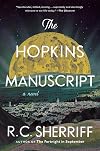
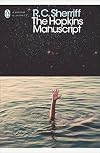
The Hopkins Manuscript
by R. C. Sherriff
On This Page
Description
"For fans of the popular and award-winning Netflix movie Don't Look Up, a prescient, rediscovered speculative novel about how a small English village prepares for the end of the world. Edgar Hopkins is a retired math teacher in his mid-fifties with a strong sense of self-importance, whose greatest pride in life is winning poultry breeding contests. When not meticulously caring for his Bantam, Edgar is an active member of the British Lunar Society. Thanks to that affiliation, Edgar becomes show more one of the first people to learn the moon is on a collision course, headed towards Earth. Members of the society are sworn to secrecy but eventually the moon looms so large in the sky that the government can no longer deny the truth. It's during these final days that Edgar befriends two young siblings and writes what he calls The Hopkins Manuscript-a testimony juxtaposing the ordinary and extraordinary as Edgar and the villagers dig trenches and play cricket before the end of days. First published in 1939, as the world was teetering on the brink of global war, R.C. Sherriff's classic speculative novel is a timely and powerful warning from the past that captures the breadth of human nature in all its complexity"-- show lessTags
Recommendations






















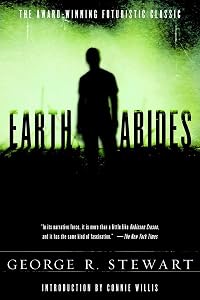










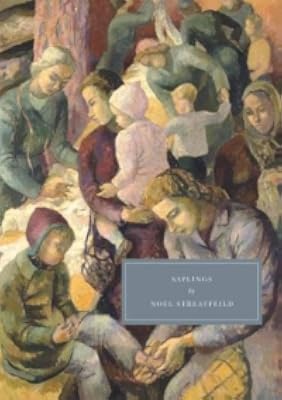


Member Recommendations

chrisharpe A similar kind of dystopian novel written on the verge of WWII, both are fantasies, reminiscent of H.G. Wells, with a puzzling (to me at least) element of satire on contemporary events. Definitely of their time - black-and-white Sunday afternoon early sci-fi.

sunking47 anti-war post-apocalyptic story of pastoral survival, envisioning an alternate WW2
Member Reviews
The expedition from the Royal Society of Abyssinia was tremendously excited to discover what becomes known as the 'Hopkins Manuscript' hidden in a vacuum flask behind bricks in the ruins of what had once been London. After all, very little written text had survived from the island of Great Britain apart from an inscription on an iron tablet 'deciphered by Dr Shangul of Aduwa University as 'KEEP OFF THE GRASS'', and a rectangular column of stone inscribed 'PECKHAM 3 MILES'. London, and indeed the British Isles as a whole, clearly did not come to a happy end:
The scholars excitement is reduced when they realise that Edgar Hopkins, the author of the aforesaid Manuscript, was a man of 'unquenchable self-esteem and limited vision', obsessed with the breeding of prize-winning poultry, but still the Manuscript is the only eye witness document that exists to the feelings of an Englishman in the days of the 'Cataclysm'.
And what had caused the Cataclysm soon becomes clear as Edgar Hopkins begins his narrative. As a member of the British Lunar Society Mr Hopkins is one of the first people to hear the alarming news that the distance between the Earth and the Moon is rapidly reducing, and that the Moon is expected to strike the Earth in a few months time, rather precisely calculated to be the 3rd May 1946, at about 8 o'clock. (The book was published in 1939, before the outbreak of WWII). Once this becomes known to the general public, the panic is rather less than might be expected. Some people don't believe the scientists, many people have a rather hazy idea of the moon's size, and others are too involved in their day to day lives to read the papers. But the Moon gets bigger and bigger in the night sky and the fateful day approaches...
This isn't a book to read expecting a scientific explanation of why the moon's orbit changes, or of what eventually happens on the 3rd May. The reader just has to go with the flow on that. Rather, it's a novel about human nature in the event of unspeakable circumstances. Written in the 1930's, it's also a commentary on the populist and fascist political leaders of its time, and rather more worryingly seems to be quite appropriate for today's political climate as well.
A science-fiction novel written by a male author isn't the normal Persephone Books offering, but it's an interesting bridge between H.G.Wells and John Wyndham in the world of British science-fiction. Just don't be expecting too much of a cozy catastrophe - this is rather darker. show less
For nearly a thousand years, since its last wretched inhabitants starved to death amidst the ruins of their once noble cities, the Island remained a deserted ghost-haunted waste - itsshow more
towns and villages buried ever deeper beneath encroaching forest and swamp
The scholars excitement is reduced when they realise that Edgar Hopkins, the author of the aforesaid Manuscript, was a man of 'unquenchable self-esteem and limited vision', obsessed with the breeding of prize-winning poultry, but still the Manuscript is the only eye witness document that exists to the feelings of an Englishman in the days of the 'Cataclysm'.
And what had caused the Cataclysm soon becomes clear as Edgar Hopkins begins his narrative. As a member of the British Lunar Society Mr Hopkins is one of the first people to hear the alarming news that the distance between the Earth and the Moon is rapidly reducing, and that the Moon is expected to strike the Earth in a few months time, rather precisely calculated to be the 3rd May 1946, at about 8 o'clock. (The book was published in 1939, before the outbreak of WWII). Once this becomes known to the general public, the panic is rather less than might be expected. Some people don't believe the scientists, many people have a rather hazy idea of the moon's size, and others are too involved in their day to day lives to read the papers. But the Moon gets bigger and bigger in the night sky and the fateful day approaches...
This isn't a book to read expecting a scientific explanation of why the moon's orbit changes, or of what eventually happens on the 3rd May. The reader just has to go with the flow on that. Rather, it's a novel about human nature in the event of unspeakable circumstances. Written in the 1930's, it's also a commentary on the populist and fascist political leaders of its time, and rather more worryingly seems to be quite appropriate for today's political climate as well.
A science-fiction novel written by a male author isn't the normal Persephone Books offering, but it's an interesting bridge between H.G.Wells and John Wyndham in the world of British science-fiction. Just don't be expecting too much of a cozy catastrophe - this is rather darker. show less
'At midnight on the 12th February this year the moon had drawn nearer to the earth by 3583 miles, July 7, 2014
This review is from: The Hopkins Manuscript (Paperback)
I don't normally read sci-fi, but was tempted by this being a Persephone publication - and I really enjoyed it.
Set in the 1930s, it's narrated by Edgar Hopkins, a pompous little ex-schoolmaster, whose life revolves around his poultry and membership of the Lunar Society. When he and a few select others are made privy to the fact that the moon is approaching the earth, and will collide in 7 months, life is set to change forever...
The first half of the novel was to my mind the most interesting, covering the lead-up to the Event. When the government finally announce it to the show more population at large, there's a general sense of cameraderie and team-spirit, as people undertake the building of a dug-out - yet there's an underlying feeling that it won't be too dreadful, as shown in the debate on rules for the dug-out:
"A lady asked whether knitting or needlework would be allowed, and the Committee, after a brief discussion, agreed to the loose, handy type but forbade tapestry frames, etc"
What happens after the collision, and how the Earth rallies, forms the second half of the novel...
Very much influenced by world events at the time of publication (1939), this is extremely readable, entertaining, and quite scary at times:
'I thought of it no longer as the moon; it hung like a great amber pock-marked lamp above a billiard-table, so vast and enveloping that the little white-clad cricketers moved without shadows.' show less
This review is from: The Hopkins Manuscript (Paperback)
I don't normally read sci-fi, but was tempted by this being a Persephone publication - and I really enjoyed it.
Set in the 1930s, it's narrated by Edgar Hopkins, a pompous little ex-schoolmaster, whose life revolves around his poultry and membership of the Lunar Society. When he and a few select others are made privy to the fact that the moon is approaching the earth, and will collide in 7 months, life is set to change forever...
The first half of the novel was to my mind the most interesting, covering the lead-up to the Event. When the government finally announce it to the show more population at large, there's a general sense of cameraderie and team-spirit, as people undertake the building of a dug-out - yet there's an underlying feeling that it won't be too dreadful, as shown in the debate on rules for the dug-out:
"A lady asked whether knitting or needlework would be allowed, and the Committee, after a brief discussion, agreed to the loose, handy type but forbade tapestry frames, etc"
What happens after the collision, and how the Earth rallies, forms the second half of the novel...
Very much influenced by world events at the time of publication (1939), this is extremely readable, entertaining, and quite scary at times:
'I thought of it no longer as the moon; it hung like a great amber pock-marked lamp above a billiard-table, so vast and enveloping that the little white-clad cricketers moved without shadows.' show less
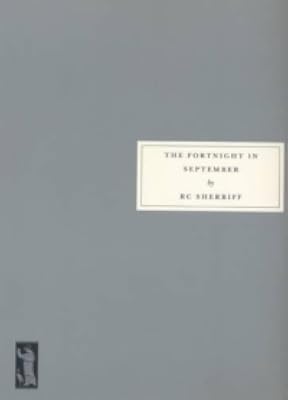
There are plenty of dove grey covered books which are synonymous with the kind of output we have come to expect from the divine Persephone books, works by the likes of Dorothy Whipple, D E Stevenson, Mollie Panter Downes and Marghanita Laski. The Hopkins Manuscript is not that kind of book – on paper it isn’t the kind of novel I would read, but prompted by Kaggsy’s superb review I put it on my Persephone wishlist. Although I received it for Christmas in 2013 it has taken me till now to get around to reading it – and it proved absolutely unputdownable. A Sci-Fi novel by the author of the famous World War I play Journey’s End and another superb novel re-issued by Persephone books A Fortnight in September, The Hopkins Manuscript show more is a brilliant imagining of the moon’s collision with the earth, and the eventual end of western civilisation. Sci-fi novels vary in type, and I have read only a few over the years, but the only kind of Sci-fi I have any interest in, is the type which is set in a recognisable world, where unexpected, unworldly or fantastic events impact seriously upon that world and the people in it.
The novel opens with a foreword in which an Abyssinian scientist explains how the Hopkins Manuscript was discovered inside a flask by explorers examining the ruins of Notting Hill; working to understand the last days of that dead western civilisation. The document was written in the days before the death of that civilisation, and hidden away for men of the future to discover.
The Manuscript begins seven years after the cataclysm; the world of Western Europe is dying.
“I am writing by the light of a piece of string which I have pushed through a fragment of bacon fat and arranged in an egg-cup. I shall write by night, partly because I can no longer sleep through these ghastly, moonless chasms, and partly because by day I must search for food, and the days are short.”
the hopkins manuscriptThe narrator, Edgar Hopkins a quiet former school master, member of the British Lunar Society, was living in a small house in the Hampshire village of Beadle in October 1945. His concerns were mainly those of a keen breeder of Bantam hens. Edgar’s quiet, comfortable life is thrown horribly off balance when he is called to an emergency meeting of The Lunar Society in London. Edgar travels to London with his heart in his mouth, expecting to be stung for money he can ill afford and rashly promised during an acrimonious earlier meeting. However, Edgar and his fellow members are instead let into a terrible secret, a secret that governments and scientists have known and been preparing for quietly behind the scenes.
“At midnight on the 12th February this year the moon had drawn nearer to the earth by 3,583 miles”
The president of the society lays the facts before his stunned audience, how the measurements have been taken and scrupulously checked, and that according to their calculations the moon will crash into the earth on May 3rd of the following year. There begins much speculation about the nature and severity of the collision and whether it will mean a complete destruction of the earth, or whether the earth will survive altered and in parts devastated but with some life at least preserved. The members of the society are urged to keep the secret until the altered appearance of the moon becomes so discernible with the naked eye that the people need be told. Edgar goes home to his dear little home, his hens and the community with whom he has a reserved relationship nursing his terrible secret.
Bit by bit the world’s fate becomes known, and things necessarily start to change. Sherrif’s descriptions of how the government and media manipulate the populace into calm compliance feels brilliantly realistic; one way to keep the populace busy and active, and giving people hope is in the required development of dug outs in which to spend the hours of the evening of the 3rd May. In the months leading up to the fateful night – Edgar finds new occupations and develops new friendships among the people of Beadle. Aside from a few understandable ructions, the villagers largely pull together, many of them believing in the government’s positive spin on the impending disaster. We know of course right from the start that the earth isn’t instantly destroyed – but that is partly what makes this so compulsively readable, how is the world changed? Who dies? who survives?
Edgar Hopkins is a rather self-important little man (although still likeable enough – he is a recognisable type) he takes great pride in his prize hen Broodie, and has placed himself rather above the patrons of the local pub in the years before that meeting at the British Lunar society which condemned him to the possibility of just seven months left on earth. In the three months before the news of the moon’s collision with earth is made known, Edgar nurses the secret jealously and importantly, imagining how his fore-knowledge will in time make him a hero among the villagers as he calms their fears and intelligently answers the questions that must naturally follow. Things, naturally don’t go quite as Edgar has imagines – but Edgar has skills, and when he begins to throw himself into the creation of the Beadle dugout he finds he has more in common with people from the village than he perhaps thought.
“All the way to the village the birds sang in chorus as birds only can upon a dawn in May. I think the singing of those birds in the moonlight was the strangest sound that I ever heard”
What happens after the 3rd of May is brilliantly imagined, Edgar Hopkins finds himself in a world he doesn’t recognise. Yet, Edgar has been changed and rather humanised by the months leading up to the cataclysm, and so he throws himself into working to re-establish is own little piece of the world amidst the changed and devastated landscape. The irony of course, and no doubt the message of the entire novel, is that it isn’t the devastating natural disaster that destroys the world, but man himself.
This novel is brilliant on so many levels, it is a sci-fi novel which should really be every bit as well known as The Time Machine, yet I am sure few people (non Persephone readers certainly) have heard of it. The Hopkins Manuscript examines, quite poignantly how human beings react under extraordinary circumstances, but it also has a lot to say about the ending of the Empire as it was understood at this time, the relationships between nations and how ultimately man is destined to destroy itself. There is naturally a clear allegorical aspect to a novel written and published at a time of dreadful upheaval in Europe, as the threat of war drew ever closer. Outside of all that however, The Hopkins Manuscript is just a hugely readable story, endlessly compelling I fairly flew through what is a pretty chunky volume. show less
The novel opens with a foreword in which an Abyssinian scientist explains how the Hopkins Manuscript was discovered inside a flask by explorers examining the ruins of Notting Hill; working to understand the last days of that dead western civilisation. The document was written in the days before the death of that civilisation, and hidden away for men of the future to discover.
The Manuscript begins seven years after the cataclysm; the world of Western Europe is dying.
“I am writing by the light of a piece of string which I have pushed through a fragment of bacon fat and arranged in an egg-cup. I shall write by night, partly because I can no longer sleep through these ghastly, moonless chasms, and partly because by day I must search for food, and the days are short.”
the hopkins manuscriptThe narrator, Edgar Hopkins a quiet former school master, member of the British Lunar Society, was living in a small house in the Hampshire village of Beadle in October 1945. His concerns were mainly those of a keen breeder of Bantam hens. Edgar’s quiet, comfortable life is thrown horribly off balance when he is called to an emergency meeting of The Lunar Society in London. Edgar travels to London with his heart in his mouth, expecting to be stung for money he can ill afford and rashly promised during an acrimonious earlier meeting. However, Edgar and his fellow members are instead let into a terrible secret, a secret that governments and scientists have known and been preparing for quietly behind the scenes.
“At midnight on the 12th February this year the moon had drawn nearer to the earth by 3,583 miles”
The president of the society lays the facts before his stunned audience, how the measurements have been taken and scrupulously checked, and that according to their calculations the moon will crash into the earth on May 3rd of the following year. There begins much speculation about the nature and severity of the collision and whether it will mean a complete destruction of the earth, or whether the earth will survive altered and in parts devastated but with some life at least preserved. The members of the society are urged to keep the secret until the altered appearance of the moon becomes so discernible with the naked eye that the people need be told. Edgar goes home to his dear little home, his hens and the community with whom he has a reserved relationship nursing his terrible secret.
Bit by bit the world’s fate becomes known, and things necessarily start to change. Sherrif’s descriptions of how the government and media manipulate the populace into calm compliance feels brilliantly realistic; one way to keep the populace busy and active, and giving people hope is in the required development of dug outs in which to spend the hours of the evening of the 3rd May. In the months leading up to the fateful night – Edgar finds new occupations and develops new friendships among the people of Beadle. Aside from a few understandable ructions, the villagers largely pull together, many of them believing in the government’s positive spin on the impending disaster. We know of course right from the start that the earth isn’t instantly destroyed – but that is partly what makes this so compulsively readable, how is the world changed? Who dies? who survives?
Edgar Hopkins is a rather self-important little man (although still likeable enough – he is a recognisable type) he takes great pride in his prize hen Broodie, and has placed himself rather above the patrons of the local pub in the years before that meeting at the British Lunar society which condemned him to the possibility of just seven months left on earth. In the three months before the news of the moon’s collision with earth is made known, Edgar nurses the secret jealously and importantly, imagining how his fore-knowledge will in time make him a hero among the villagers as he calms their fears and intelligently answers the questions that must naturally follow. Things, naturally don’t go quite as Edgar has imagines – but Edgar has skills, and when he begins to throw himself into the creation of the Beadle dugout he finds he has more in common with people from the village than he perhaps thought.
“All the way to the village the birds sang in chorus as birds only can upon a dawn in May. I think the singing of those birds in the moonlight was the strangest sound that I ever heard”
What happens after the 3rd of May is brilliantly imagined, Edgar Hopkins finds himself in a world he doesn’t recognise. Yet, Edgar has been changed and rather humanised by the months leading up to the cataclysm, and so he throws himself into working to re-establish is own little piece of the world amidst the changed and devastated landscape. The irony of course, and no doubt the message of the entire novel, is that it isn’t the devastating natural disaster that destroys the world, but man himself.
This novel is brilliant on so many levels, it is a sci-fi novel which should really be every bit as well known as The Time Machine, yet I am sure few people (non Persephone readers certainly) have heard of it. The Hopkins Manuscript examines, quite poignantly how human beings react under extraordinary circumstances, but it also has a lot to say about the ending of the Empire as it was understood at this time, the relationships between nations and how ultimately man is destined to destroy itself. There is naturally a clear allegorical aspect to a novel written and published at a time of dreadful upheaval in Europe, as the threat of war drew ever closer. Outside of all that however, The Hopkins Manuscript is just a hugely readable story, endlessly compelling I fairly flew through what is a pretty chunky volume. show less
Easily one of my favourite books from the get to, this is a story of individual and collective reactions to a mass disaster. It is also one of the funniest books that I've ever read. It is science fiction (of the type heavily based in reality), it is socio-political commentary, and it is small English village life. I love everything about the book and the story: how I got the book, where I read the book, the cover, the backgrounding of the imminent threat to the more pressing issues of everyday life and comfort, to the presaged resolution. Impossible for me to rate this experience higher.
Sheriff was an accomplished playwright, celebrated for his 1928 play Journey’s End which detailed life in the trenches during WWI. Journey’s End built on his own experiences – he was wounded at Passchendaele. I’d never heard of him before reading this book, although I had vaguely heard of Journey’s End. Reading his wiki biography, I found he was also a prolific writer of screenplays including Goodbye Mr Chips (1933) and The Dambusters. Alongside his theatre and film careers, he found time to write some novels too; The Hopkins Manuscript was his third, published in 1939 and I loved it.
The story concerns the manuscript of Edgar Hopkins, written some years after the cataclysm that occurred back in May 1946 when the moon fell into show more the Earth. It is the only surviving account of daily life in the months leading up to, and after the disaster. Edgar is a retired schoolmaster (but still only in his late forties), who lives on the Sussex downs. He amuses himself by breeding prize-winning chickens, clipping his yew hedges and going up to London to meetings of the Lunar Society every month.
The moon has been looking different lately, and at the September 1945 meeting of the society, the chairman has some top secret information to impart to the privileged and esteemed members – the moon is falling towards the earth and they mustn’t tell anyone. Hopkins, who is a rather self-important fellow, is shocked and pleased in equal measure. He feels it his duty to carry on life as normal, but ere long it becomes obvious even to the man in the street, that the moon is getting nearer and the Government lifts the embargo on the press.
Surprisingly not everyone starts running around like Chicken Licken screaming the end of the world is nigh. The memories of WWI are still there, and everyone joins in with preparations for the impact in building dug-outs etc. Hopkins though is rather put out that the event affects the local poultry show in which his prize hen Broodie is entered...
"When I entered the hall I found it barely a quarter full, and Pomfret Wilkins, the Secretary, greeted me with an exuberance that seemed, in the circumstances, a little overdone. He told me that a number of entries had been cancelled at the last moment, and that several had simply not turned up, without a word one way or the other, just as if the Show had slipped their memory as something of absolutely no importance whatever.
It was all terribly depressing, and I was furiously angry that Broodie should achieve her fiftieth victory under such unworthy conditions. Some of the exhibitors put on a kind of swaggering bravado as if they were heroes to have come at all, and the judges carried out their responsible duties with an impatience and a carelessness that was a lasting disgrace.
There were scarcely a dozen people left in the Hall when the prizes were distributed, and the Chairman’s mind was so hopelessly off his duty that he completely forgot that it was customary to invite an exhibitor to say a few words when one of his hens achieved a specially notable distinction.
He apologised when I reminded him, but there were only eight people left when I began my speech. Although
I spoke for less than fifteen minutes, three of these people actually left in the middle of it, and the others turned out to be the five men who were waiting to take the platform away when I had finished. In the circumstances it is not surprising that my carefully prepared joke, about Broodie receiving big offers to star in a film, completely misfired. It was received in silence, and I was very glad, as I have already said, to start back to my own village of Beadle again."
Edgar is similarly condescending to the vicar, and the pub landlord. But the impending doom does finally begin to humanise him and he begins to prepare, to make himself useful, and befriends the family who live on the opposite side of the valley to him – the Major’s teenaged children Pat and Robin seem to take to him, and after the disaster will give him a purpose in life as they finish growing up. We start out disliking this pompous little man who cares only for his chickens, but by the end of the book we’re glad to have known him.
The book starts out in an almost jocular vein after the intro as Edgar goes about his business, but as the disaster draws ever nearer, the tone changes. There are some great scenes of stiff upper lips and trench-style camaraderie, but none is more evocative than the last village cricket match on the night of the impact. After the moon crashes, life becomes much more serious – as at first the survivors have to learn to survive. Then, as society begins to pick itself up again, politics rears its ugly head over the fate of the moon, and we begin our descent into the abyss – for there’s always some kind of abyss in a dystopian novel.
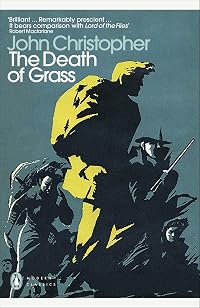
Obviously influenced by HG Wells, Sheriff has used his own wartime experiences to great effect in this study of the human condition in adversity. Like many others which follow, e.g. John Christopher’s The Death of Grass, which I reviewed here, everything will revert to chaos; entropy rules and the results are rarely in mankind’s favour. However I don’t mean to depress you, for I really loved this book. (10/10)
An interesting introduction by Michael Moorcock, and an afterword about the science by Big Bang theorist Professor George Gamow provide useful bookends to the main event, and the lovely endpapers feature a blazing sun. show less
The story concerns the manuscript of Edgar Hopkins, written some years after the cataclysm that occurred back in May 1946 when the moon fell into show more the Earth. It is the only surviving account of daily life in the months leading up to, and after the disaster. Edgar is a retired schoolmaster (but still only in his late forties), who lives on the Sussex downs. He amuses himself by breeding prize-winning chickens, clipping his yew hedges and going up to London to meetings of the Lunar Society every month.
The moon has been looking different lately, and at the September 1945 meeting of the society, the chairman has some top secret information to impart to the privileged and esteemed members – the moon is falling towards the earth and they mustn’t tell anyone. Hopkins, who is a rather self-important fellow, is shocked and pleased in equal measure. He feels it his duty to carry on life as normal, but ere long it becomes obvious even to the man in the street, that the moon is getting nearer and the Government lifts the embargo on the press.
Surprisingly not everyone starts running around like Chicken Licken screaming the end of the world is nigh. The memories of WWI are still there, and everyone joins in with preparations for the impact in building dug-outs etc. Hopkins though is rather put out that the event affects the local poultry show in which his prize hen Broodie is entered...
"When I entered the hall I found it barely a quarter full, and Pomfret Wilkins, the Secretary, greeted me with an exuberance that seemed, in the circumstances, a little overdone. He told me that a number of entries had been cancelled at the last moment, and that several had simply not turned up, without a word one way or the other, just as if the Show had slipped their memory as something of absolutely no importance whatever.
It was all terribly depressing, and I was furiously angry that Broodie should achieve her fiftieth victory under such unworthy conditions. Some of the exhibitors put on a kind of swaggering bravado as if they were heroes to have come at all, and the judges carried out their responsible duties with an impatience and a carelessness that was a lasting disgrace.
There were scarcely a dozen people left in the Hall when the prizes were distributed, and the Chairman’s mind was so hopelessly off his duty that he completely forgot that it was customary to invite an exhibitor to say a few words when one of his hens achieved a specially notable distinction.
He apologised when I reminded him, but there were only eight people left when I began my speech. Although
I spoke for less than fifteen minutes, three of these people actually left in the middle of it, and the others turned out to be the five men who were waiting to take the platform away when I had finished. In the circumstances it is not surprising that my carefully prepared joke, about Broodie receiving big offers to star in a film, completely misfired. It was received in silence, and I was very glad, as I have already said, to start back to my own village of Beadle again."
Edgar is similarly condescending to the vicar, and the pub landlord. But the impending doom does finally begin to humanise him and he begins to prepare, to make himself useful, and befriends the family who live on the opposite side of the valley to him – the Major’s teenaged children Pat and Robin seem to take to him, and after the disaster will give him a purpose in life as they finish growing up. We start out disliking this pompous little man who cares only for his chickens, but by the end of the book we’re glad to have known him.
The book starts out in an almost jocular vein after the intro as Edgar goes about his business, but as the disaster draws ever nearer, the tone changes. There are some great scenes of stiff upper lips and trench-style camaraderie, but none is more evocative than the last village cricket match on the night of the impact. After the moon crashes, life becomes much more serious – as at first the survivors have to learn to survive. Then, as society begins to pick itself up again, politics rears its ugly head over the fate of the moon, and we begin our descent into the abyss – for there’s always some kind of abyss in a dystopian novel.
Obviously influenced by HG Wells, Sheriff has used his own wartime experiences to great effect in this study of the human condition in adversity. Like many others which follow, e.g. John Christopher’s The Death of Grass, which I reviewed here, everything will revert to chaos; entropy rules and the results are rarely in mankind’s favour. However I don’t mean to depress you, for I really loved this book. (10/10)
An interesting introduction by Michael Moorcock, and an afterword about the science by Big Bang theorist Professor George Gamow provide useful bookends to the main event, and the lovely endpapers feature a blazing sun. show less
The narrator is an insufferable, self-centered bore, and the pacing of the book is preposterous--there are 29 chapters and nothing happens until chapter 20. I was looking forward to learning about his life in the aftermath, but all of that is crammed Cliff's notes style into the very end of the book. To my mind this isn't so much an apocalypse tale, or even a dystopian tale, as it is a comedy of manners with the moon as the villian. I've read scores of these books, good, bad an indifferent--this falls into the third category.
On the first page of this novel, written in 1939, R. C. Sherriff states that western civilization no longer exists. A young scientist from the Royal Society of Abyssinia discovers the Hopkins manuscript in a thermos bottle hidden in recess of a decayed wall. Prior to the discovery of the manuscript, the only written artifacts from The Island are a rectangular column of stone inscribed with "PERCHAM 3 MILES ( now in the Imperial Museum of Afghanistan) and a rusted iron tablet with " KEEP OFF THE GRASS" (Royal Collection of Addis Ababa). So begins the saga of what caused the total destruction of the west.
The author of the manuscript and hero is the unlikely Edgar Hopkins, a fifty-three year old retired math teacher whose chief interests show more in life are raising prize poultry and the moon. As a chicken breeder, his high point was the invention of a heated perch to keep the feet of his birds nice and warm. He felt he was not appreciated for this advance in creature comfort. As a moon fancier he belongs to the prestigious British Lunar Society. It is at the Sept 18, 1945 meeting of the society that he is made privy to the awful truth: the moon is hurtling toward the earth and will crash into it in seven months! How Edgar Hopkins and his village cope with the catastrophe is the story of the manuscript, much to the disappointment of the eastern scholars who were hoping for an in-depth study of western ideas and philosophies.
At first, Edgar is a caricature, a silly man who is so self-absorbed that he actually gives the vicar a subscription to a poultry-breeding magazine so they have something to talk about at the bridge table. After the shock wears off, he is full of a secret pride that he knows something the ignorant villagers are unaware of and he imagines he will become the "moon" expert of Beadle Hampshire. He is miffed when, at the eventual revelation to the country, the villagers seem unaffected by the news. Since the information was announced during church services many thought it was not nearly as good a sermon as the old vicar who could really talk about hell-fire. A moon collision was really not as menacing as all that brimstone.
Gradually, as the moon moves obviously closer to the earth, attitudes and people change, including Edgar Hopkins. For the first time he becomes involved in village life and finds himself accepted at the pub. He makes friends and uses his organizing skills to help to prepare for the crash. He becomes particularly close to two young neighbors until they are almost a family.
The crisis brings out the best in the village and, one supposes, the rest of the western world. But the manuscript ends seven years after the moon's impact. So what caused western civilization to disappear? Sadly, it is an easy mystery to solve.
As the world was ready to begin a second war in 1939, Sherriff wrote this social satire. Parts of it are funny, especially Edgar at his most pompous. Parts are very exciting and the tension as the moon draws closer is really well done. The evolution of Edgar from a prissy jerk to a heroic survivor is touching. But, in the end, The Hopkins Manuscript is a warning that, although humanity can survive any number of natural disasters, civilization can only be destroyed by man himself.
A marvelous read. show less
The author of the manuscript and hero is the unlikely Edgar Hopkins, a fifty-three year old retired math teacher whose chief interests show more in life are raising prize poultry and the moon. As a chicken breeder, his high point was the invention of a heated perch to keep the feet of his birds nice and warm. He felt he was not appreciated for this advance in creature comfort. As a moon fancier he belongs to the prestigious British Lunar Society. It is at the Sept 18, 1945 meeting of the society that he is made privy to the awful truth: the moon is hurtling toward the earth and will crash into it in seven months! How Edgar Hopkins and his village cope with the catastrophe is the story of the manuscript, much to the disappointment of the eastern scholars who were hoping for an in-depth study of western ideas and philosophies.
At first, Edgar is a caricature, a silly man who is so self-absorbed that he actually gives the vicar a subscription to a poultry-breeding magazine so they have something to talk about at the bridge table. After the shock wears off, he is full of a secret pride that he knows something the ignorant villagers are unaware of and he imagines he will become the "moon" expert of Beadle Hampshire. He is miffed when, at the eventual revelation to the country, the villagers seem unaffected by the news. Since the information was announced during church services many thought it was not nearly as good a sermon as the old vicar who could really talk about hell-fire. A moon collision was really not as menacing as all that brimstone.
Gradually, as the moon moves obviously closer to the earth, attitudes and people change, including Edgar Hopkins. For the first time he becomes involved in village life and finds himself accepted at the pub. He makes friends and uses his organizing skills to help to prepare for the crash. He becomes particularly close to two young neighbors until they are almost a family.
The crisis brings out the best in the village and, one supposes, the rest of the western world. But the manuscript ends seven years after the moon's impact. So what caused western civilization to disappear? Sadly, it is an easy mystery to solve.
As the world was ready to begin a second war in 1939, Sherriff wrote this social satire. Parts of it are funny, especially Edgar at his most pompous. Parts are very exciting and the tension as the moon draws closer is really well done. The evolution of Edgar from a prissy jerk to a heroic survivor is touching. But, in the end, The Hopkins Manuscript is a warning that, although humanity can survive any number of natural disasters, civilization can only be destroyed by man himself.
A marvelous read. show less
Members
- Recently Added By
Lists

Persephone
148 works; 3 members

Writers In Public Domain 2026
90 works; 1 member
Author Information

33+ Works 2,151 Members
Some Editions
Series
Belongs to Publisher Series
Common Knowledge
- Canonical title*
- Kohtalon päivä
- Original title
- The Hopkins Manuscript
- Alternate titles
- The Cataclysm
- Original publication date
- 1939
- People/Characters
- Edgar Hopkins; Pat; Robin
- Important places
- London, England, UK; Beadle, England, UK (fictional)
- First words
- I am writing by the light of a piece of string which I have pushed through a fragment of bacon fat and arranged in an egg-cup.
- Last words
- (Click to show. Warning: May contain spoilers.)From the blackness of the city comes one solitary, flickering light, one fitful little leam from ahouse in Ladbroke Square...I wonder who it is?
- Blurbers
- Reid, Forrest; Orrick, James
- Canonical DDC/MDS
- 823.912
- Canonical LCC
- PR6037.H513
- Disambiguation notice
- First published 1939 as 'The Hopkins Manuscript'
*Some information comes from Common Knowledge in other languages. Click "Edit" for more information.
Classifications
Statistics
- Members
- 402
- Popularity
- 77,289
- Reviews
- 16
- Rating
- (4.26)
- Languages
- 5 — English, Finnish, French, German, Polish
- Media
- Paper, Audiobook, Ebook
- ISBNs
- 12
- ASINs
- 13