
The Bad Girl
by Mario Vargas Llosa
On This Page
Description
Presents the story of a love affair between a Peruvian translator and an adventurous and independent woman, "the bad girl," as it unfolds over the course of forty years, from Lima to London, Paris, Tokyo, and Madrid.Tags
Recommendations
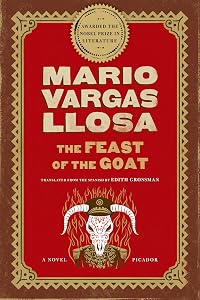
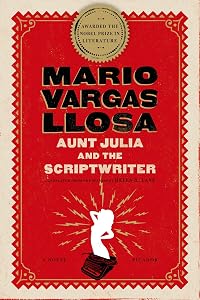
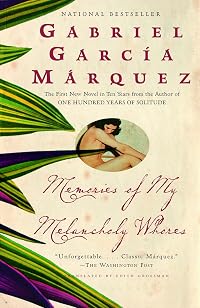
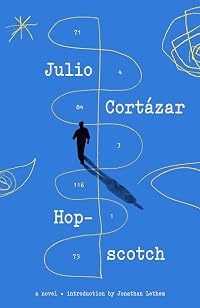




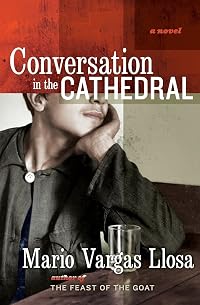
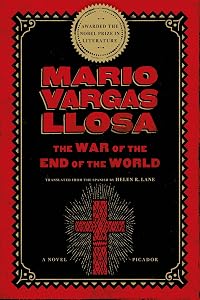
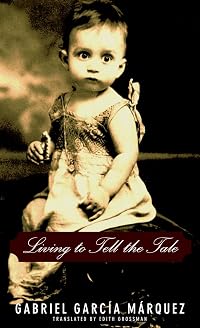
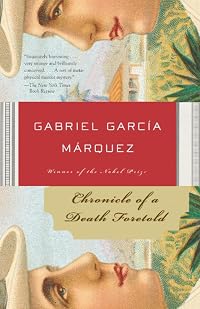




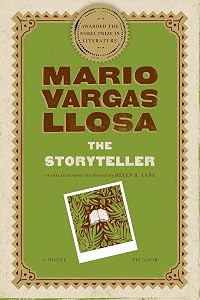
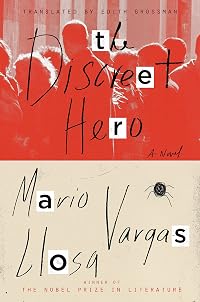
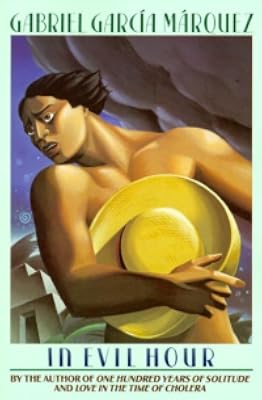

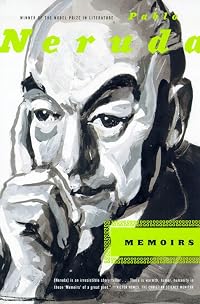


Member Recommendations
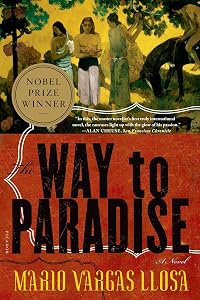
browner56 The stories of two women, separated by 150 years, who search desperately for something they never find. Flaubert's legendary protaganist is the role model for Vargas Llosa's "bad girl".
30
Member Reviews
A teenage boy falls for a girl in 1950’s Peru, and their lives intertwine over the years in Paris, London, Japan, and Spain in the decades which follow. He’s masochistic in his devotion to her, whereas she’s cool, cruel, and calculating, essentially always looking out for a better situation for herself.
That may sound like a painful read, but it’s really not, or at least, it wasn’t to me. With that said, there may be times that, like someone who can’t control themselves in a movie theater, you find yourself actually wanting to call out a warning to the “good boy”, or at the very least, gritting your teeth at what seems like his stupidity. You may also wonder, along with him, whether or not her latest reconciliation to show more him will be lasting, because with maturity she’s finally recognized the warmth and generosity of his love.
This is a novel that explores the limits of unconditional love, which I suppose is one of our greatest strengths, as well as what happens when being true to oneself is destructive to others, or is self-destructive. Throughout it all, despite her outrageous behavior and his obsessive feelings, there is a calmness and intelligence that pervades their relationship, as well as humor. Vargas Llosa’s prose is also to the point but has the quality of being both spare as well as elegant, which is hard to pull off, and always impressive to me. show less
That may sound like a painful read, but it’s really not, or at least, it wasn’t to me. With that said, there may be times that, like someone who can’t control themselves in a movie theater, you find yourself actually wanting to call out a warning to the “good boy”, or at the very least, gritting your teeth at what seems like his stupidity. You may also wonder, along with him, whether or not her latest reconciliation to show more him will be lasting, because with maturity she’s finally recognized the warmth and generosity of his love.
This is a novel that explores the limits of unconditional love, which I suppose is one of our greatest strengths, as well as what happens when being true to oneself is destructive to others, or is self-destructive. Throughout it all, despite her outrageous behavior and his obsessive feelings, there is a calmness and intelligence that pervades their relationship, as well as humor. Vargas Llosa’s prose is also to the point but has the quality of being both spare as well as elegant, which is hard to pull off, and always impressive to me. show less
"Tell me some more cheap, sentimental things."
The Bad Girl says this to Ricardito like a hundred times in this book, and each time she does, it becomes more and more eye-rollingly irritating. I mean, the first time it happens I was totally okay with it -- the story begins on a high note and crescendos up for the first 100 pages or so, with the Chilean girls and Miraflores and then the beginning of the Paris section -- all of which engrossed me. The simple, honest writing style smelled authentic and Spanish to me, and Ricardito as the crushing, aimless writer only kept me a sympathetic reader.
But then the plotline started to loop like a 70s sitcom. Ricardito has a fling with the Bad Girl, she breaks his heart again because she's an evil show more fuck with no personality, his best friend leaves him and dies, etc. -- repeat. The only constant (other than the repeating plotline) is Ricardito's blind love for the Bad Girl, that terribly-drawn gold digger. Her dialogue leaves everything to be desired -- as does every other depiction of her. She's not a real person. Llosa makes that clear by christening her as a trope -- "The Bad Girl," the unsympathetic "skinny bitch," conniving and ambitious and mean.
We're supposed to feel for poor Ricardito, with his endless stream of cheap, sentimental sayings and his obsessive love for the girl who's given him a life-long case of the blue balls. But once you reduce his life to a constantly looping chain of predictable events, an endless stream of caricatured characters who ebb and flow every 70 pages or so, and an abiding obsession with a shit of an individual, Ricardito becomes the least interesting protagonist ever.
After reading this book, I don't understand why Llosa is so renowned. I liked parts of it -- the first ~100 pages, and the last ~30, and some descriptions rang true to my life. But, in addition to the above flaws, Llosa's writing becomes as repetitive as his plot past a certain point. And the way he treats certain things in this book -- the AIDS epidemic, BDSM, women in general -- comes off as careless and reductionist, products of a narrow-minded writer. show less
The Bad Girl says this to Ricardito like a hundred times in this book, and each time she does, it becomes more and more eye-rollingly irritating. I mean, the first time it happens I was totally okay with it -- the story begins on a high note and crescendos up for the first 100 pages or so, with the Chilean girls and Miraflores and then the beginning of the Paris section -- all of which engrossed me. The simple, honest writing style smelled authentic and Spanish to me, and Ricardito as the crushing, aimless writer only kept me a sympathetic reader.
But then the plotline started to loop like a 70s sitcom. Ricardito has a fling with the Bad Girl, she breaks his heart again because she's an evil show more fuck with no personality, his best friend leaves him and dies, etc. -- repeat. The only constant (other than the repeating plotline) is Ricardito's blind love for the Bad Girl, that terribly-drawn gold digger. Her dialogue leaves everything to be desired -- as does every other depiction of her. She's not a real person. Llosa makes that clear by christening her as a trope -- "The Bad Girl," the unsympathetic "skinny bitch," conniving and ambitious and mean.
We're supposed to feel for poor Ricardito, with his endless stream of cheap, sentimental sayings and his obsessive love for the girl who's given him a life-long case of the blue balls. But once you reduce his life to a constantly looping chain of predictable events, an endless stream of caricatured characters who ebb and flow every 70 pages or so, and an abiding obsession with a shit of an individual, Ricardito becomes the least interesting protagonist ever.
After reading this book, I don't understand why Llosa is so renowned. I liked parts of it -- the first ~100 pages, and the last ~30, and some descriptions rang true to my life. But, in addition to the above flaws, Llosa's writing becomes as repetitive as his plot past a certain point. And the way he treats certain things in this book -- the AIDS epidemic, BDSM, women in general -- comes off as careless and reductionist, products of a narrow-minded writer. show less
This isn't quite as epic an exercise in misogyny and manpain as, say, the works of Ernest Hemingway, but Vargas Llosa's gives them a run for their money. The entire novel centres around the titular Bad Girl (not the Bad Woman) and how she uses her feminine wiles to gain materialistic rewards (always at the expense of the protagonist, Ricardo, who is of course referred to as the Good Boy) and is ultimately punished for them. A secondary plot line attempts to have us empathise with a man who hung himself because his girlfriend refused to put up with his possessive, inappropriate behaviour anymore. The women are ciphers, there to be catalysts for the angst and actions for the men.
There is also a nasty strain of 'Orientalising' racism in show more it—the sole male Japanese character we meet is an abusive, criminal sadist (I will provide no details because they may well be triggering for those who have experienced abuse), and it's implied that one of the reasons the Bad Girl gets off on how he treats her is because the "greenish tinge" of her skin may be because she has distant Chinese or Japanese ancestry.
On a technical level, the plot is often prone to clichés (the mute orphan adopted from Vietnam who learns how to talk when he meets the Bad Girl for the first time!) and while the prose is mostly good, there are some occasional clunkers. Avoid. show less
There is also a nasty strain of 'Orientalising' racism in show more it—the sole male Japanese character we meet is an abusive, criminal sadist (I will provide no details because they may well be triggering for those who have experienced abuse), and it's implied that one of the reasons the Bad Girl gets off on how he treats her is because the "greenish tinge" of her skin may be because she has distant Chinese or Japanese ancestry.
On a technical level, the plot is often prone to clichés (the mute orphan adopted from Vietnam who learns how to talk when he meets the Bad Girl for the first time!) and while the prose is mostly good, there are some occasional clunkers. Avoid. show less
This was an incredibly fun read. That's all a book really needs to be, but on top of that this book is also a brilliant exploration of cruelty and love and how the two can coexist. I can't understand the folks here saying that the story is "pointless". I also don't get why so many people see this as a mere rewrite of Madame Bovary: La Niña Mala is looking for money and security; Madame Bovary is tired of security and looking for romance (even if she confuses romance with jewelry). The book could be shorter - we could do without the last couple of chapters -, but that's about it.
This novel's first-person narrator is one Ricardo Somocurcio, whom we accompany from his teenage years in 1950s Lima, when he dreams of settling down in Paris, throughout later decades when, his dream achieved, he works as an interpreter in the French capital and around the world.
The real protagonist of the story however is, La Nina Mala, the "bad girl" of the title. We first meet her when, as a supposed daughter of Chilean immigrants, she turns heads in Lima. It is here that Ricardo (together with most of his male friends) is first besotted with her. It eventually turns out that she is no less Peruvian than Ricardo and that the background she has made up is simply a ruse to spice up her life story.
Indeed, subterfuge is "la nina mala" show more 's defining trait. She literally changes name and identity as, over the years, she flits in and out of Ricardo's life at the most unexpected of times. Ricardo falls for her again and again, although he is well aware that she is an opportunistic, cynical woman who, in a rare show of honesty, admits that she will never love him. Against the backdrop of a changing society (from stylish Paris to swinging London at the time of the onset of the AIDS crisis, to Tokyo and Spain), we witness, almost voyeur-like, to a relationship which veers wildly between teenage romance, heart-warming love and erotic obsession.
Like its main character, this novel does not try to be realistic and, as coincidences pile up, the reader is tempted to project allegorical interpretations onto "la nina mala". The most obvious one is that she is a symbol of a novelist's inspiration - a "Muse" of sorts. A novelist's calling is like a siren-song, or like la nina mala's charm - hard to ignore, even if it brings sacrifice, pain and penury.
Whether the novel is read at face value or as a symbolic journey, it remains a poetic work, beautifully rendered in this Italian translation. show less
The real protagonist of the story however is, La Nina Mala, the "bad girl" of the title. We first meet her when, as a supposed daughter of Chilean immigrants, she turns heads in Lima. It is here that Ricardo (together with most of his male friends) is first besotted with her. It eventually turns out that she is no less Peruvian than Ricardo and that the background she has made up is simply a ruse to spice up her life story.
Indeed, subterfuge is "la nina mala" show more 's defining trait. She literally changes name and identity as, over the years, she flits in and out of Ricardo's life at the most unexpected of times. Ricardo falls for her again and again, although he is well aware that she is an opportunistic, cynical woman who, in a rare show of honesty, admits that she will never love him. Against the backdrop of a changing society (from stylish Paris to swinging London at the time of the onset of the AIDS crisis, to Tokyo and Spain), we witness, almost voyeur-like, to a relationship which veers wildly between teenage romance, heart-warming love and erotic obsession.
Like its main character, this novel does not try to be realistic and, as coincidences pile up, the reader is tempted to project allegorical interpretations onto "la nina mala". The most obvious one is that she is a symbol of a novelist's inspiration - a "Muse" of sorts. A novelist's calling is like a siren-song, or like la nina mala's charm - hard to ignore, even if it brings sacrifice, pain and penury.
Whether the novel is read at face value or as a symbolic journey, it remains a poetic work, beautifully rendered in this Italian translation. show less
E' difficile dare un giudizio per questo bel romanzo: è un libro troppo buono per uno scrittore 'normale' e, forse, troppo poco per Vargas Llosa.
Della serie della tía Julia , ma quanto più malinconico di quello (non per niente tra i due romanzi sono trascorsi trenta anni).
Inizio un po' faticoso perchè da subito è chiaro l'andamento del racconto e sembra che le molte pagine che aspettano la lettura non saranno in grado di reggere la nostra attenzione (è troppo poco, varguitas); la parte centrale è invece molto coinvolgente per appiattirsi ancora un po' nel capitolo finale e in tutto il resto in cui la niña mala diventa 'buona'.
Più della struggentemente improbabile storia d'amore sono memorabili i personaggi di contorno e le loro show more storie/vite che VL sciorina per noi, capitolo dopo capitolo, con la sua meravigliosa dote di 'raccontatore di storie'. il rivoluzionario, il traduttore, il vecchio mago dei frangiflutti, lo zio Agilulfo ecc.
[audiolibro] show less
Della serie della tía Julia , ma quanto più malinconico di quello (non per niente tra i due romanzi sono trascorsi trenta anni).
Inizio un po' faticoso perchè da subito è chiaro l'andamento del racconto e sembra che le molte pagine che aspettano la lettura non saranno in grado di reggere la nostra attenzione (è troppo poco, varguitas); la parte centrale è invece molto coinvolgente per appiattirsi ancora un po' nel capitolo finale e in tutto il resto in cui la niña mala diventa 'buona'.
Più della struggentemente improbabile storia d'amore sono memorabili i personaggi di contorno e le loro show more storie/vite che VL sciorina per noi, capitolo dopo capitolo, con la sua meravigliosa dote di 'raccontatore di storie'. il rivoluzionario, il traduttore, il vecchio mago dei frangiflutti, lo zio Agilulfo ecc.
[audiolibro] show less
This novel's first-person narrator is one Ricardo Somocurcio, whom we accompany from his teenage years in 1950s Lima, when he dreams of settling down in Paris, throughout later decades when, his dream achieved, he works as an interpreter in the French capital and around the world.
The real protagonist of the story however is, La Nina Mala, the "bad girl" of the title. We first meet her when, as a supposed daughter of Chilean immigrants, she turns heads in Lima. It is here that Ricardo (together with most of his male friends) is first besotted with her. It eventually turns out that she is no less Peruvian than Ricardo and that the background she has made up is simply a ruse to spice up her life story.
Indeed, subterfuge is "la nina mala" show more 's defining trait. She literally changes name and identity as, over the years, she flits in and out of Ricardo's life at the most unexpected of times. Ricardo falls for her again and again, although he is well aware that she is an opportunistic, cynical woman who, in a rare show of honesty, admits that she will never love him. Against the backdrop of a changing society (from stylish Paris to swinging London at the time of the onset of the AIDS crisis, to Tokyo and Spain), we witness, almost voyeur-like, to a relationship which veers wildly between teenage romance, heart-warming love and erotic obsession.
Like its main character, this novel does not try to be realistic and, as coincidences pile up, the reader is tempted to project allegorical interpretations onto "la nina mala". The most obvious one is that she is a symbol of a novelist's inspiration - a "Muse" of sorts. A novelist's calling is like a siren-song, or like la nina mala's charm - hard to ignore, even if it brings sacrifice, pain and penury.
Whether the novel is read at face value or as a symbolic journey, it remains a poetic work, beautifully rendered in this Italian translation. show less
The real protagonist of the story however is, La Nina Mala, the "bad girl" of the title. We first meet her when, as a supposed daughter of Chilean immigrants, she turns heads in Lima. It is here that Ricardo (together with most of his male friends) is first besotted with her. It eventually turns out that she is no less Peruvian than Ricardo and that the background she has made up is simply a ruse to spice up her life story.
Indeed, subterfuge is "la nina mala" show more 's defining trait. She literally changes name and identity as, over the years, she flits in and out of Ricardo's life at the most unexpected of times. Ricardo falls for her again and again, although he is well aware that she is an opportunistic, cynical woman who, in a rare show of honesty, admits that she will never love him. Against the backdrop of a changing society (from stylish Paris to swinging London at the time of the onset of the AIDS crisis, to Tokyo and Spain), we witness, almost voyeur-like, to a relationship which veers wildly between teenage romance, heart-warming love and erotic obsession.
Like its main character, this novel does not try to be realistic and, as coincidences pile up, the reader is tempted to project allegorical interpretations onto "la nina mala". The most obvious one is that she is a symbol of a novelist's inspiration - a "Muse" of sorts. A novelist's calling is like a siren-song, or like la nina mala's charm - hard to ignore, even if it brings sacrifice, pain and penury.
Whether the novel is read at face value or as a symbolic journey, it remains a poetic work, beautifully rendered in this Italian translation. show less
Members
- Recently Added By
Published Reviews
ThingScore 75
Det är inte särskilt intressant i längden att höra vad Ricardo tycker om det mesta och det är inte bra när gestaltningen blir en förevändning för tyckande, alltså tveklöst författarens eget.
added by Jannes
Das eigentliche Happyend aber folgt sofort: Vargas Llosa, dieser listige, kunstfertige Romancier, bietet dem Leser eine literarische Lösung an: dem Ich-Erzähler Ricardo wird indirekt durch das böse Mädchen ein Lob zuteil, das auf den Autor Mario Vargas Llosa als Verfasser dieses Liebesromans hindeutet und so dem bösen Mädchen, .das das letzte Wort hat, auch jede Absolution zuteil wird
added by lophuels
Der Leser fühlt sich von diesem großen Autor einmal wieder bewegt, belehrt und belustigt und (je nach Alter) beinahe gerührt an Zeiten erinnert, in denen alles besser werden sollte.
added by lophuels
Lists

Favorite Literary Love Stories
182 works; 101 members

Books We Discovered On LibraryThing
530 works; 130 members

Top Five Books of 2025
954 works; 303 members
Talk Discussions
Past Discussions
The Bad Girl in Author Theme Reads (September 2011)
Author Information

387+ Works 34,534 Members
Mario Vargas Llosa was born in Arequipa, Peru on March 28, 1936. He studied literature and law at the National University of San Marcos and received a Ph.D from the University of Madrid in 1959. He is a writer, politician, and journalist. His works vary in genre from literary criticism and journalism to comedies, murder mysteries, historical show more novels, and political thrillers. His books include The Time of the Hero, The Green House, Conversation in the Cathedral, Aunt Julia and the Scriptwriter, The Feast of the Goat, and The War of the End of the World. He has received numerous awards including the Rómulo Gallegos International Novel Prize, the Premio Leopoldo Alas in 1959, the Premio Biblioteca Breve in 1962, the Premio Planeta in 1993, the Miguel de Cervantes Prize in 1994, the Jerusalem Prize in 1995, and the Nobel Prize in Literature in 2010. (Bowker Author Biography) show less
Some Editions
Awards and Honors
Series
Belongs to Publisher Series
Work Relationships
Is contained in
Common Knowledge
- Canonical title
- The Bad Girl
- Original title
- Travesuras de la niña mala
- Original publication date
- 2006 (original Spanish) (original Spanish); 2007 (English: Grossman) (English: Grossman)
- People/Characters
- Ricardo Somocurcio; The bad girl; Lucy; Paúl Escobar; Robert Arnoux; Juan Barreto (show all 16); Salomón Toledano; Mitsuko; Fukuda; Simon Gravoski; Elena Gravoski; Yilal Gravoski; Arquímedes; Ataúlfo Lamiel; Alberto Lamiel; Marcella
- Important places
- Miraflores, Lima, Peru; Paris, France; London, England, UK; Newmarket, England, UK; Lavapiés, Madrid, Spain
- Important events
- Coup of Juan Velasco Alvarado (1968); Mai 68 (1968)
- Dedication*
- Für X, zur Erinnerung an die heroischen Zeiten
- First words
- That was a fabulous summer.
- Last words
- (Click to show. Warning: May contain spoilers.)...Haven't I, good boy?"
- Publisher's editor*
- Alfaguara
- Original language
- Spanish
*Some information comes from Common Knowledge in other languages. Click "Edit" for more information.
Classifications
- Genres
- Fiction and Literature, General Fiction
- DDC/MDS
- 813 — Literature & rhetoric American literature in English American fiction in English
- LCC
- PQ8498.32 .A65 .T7313 — Language and Literature French, Italian, Spanish and Portuguese literatures Spanish literature Provincial, local, colonial, etc. Spanish America
- BISAC
Statistics
- Members
- 2,353
- Popularity
- 8,349
- Reviews
- 83
- Rating
- (3.75)
- Languages
- 32 — Arabic, Bulgarian, Czech, Dutch, English, Estonian, Finnish, French, Georgian, German, Greek, Hebrew, Hungarian, Italian, Korean, Latvian, Lithuanian, Norwegian (Bokmål), Norwegian, Farsi/Persian, Polish, Romanian, Russian, Serbian, Croatian, Slovenian, Spanish, Swedish, Turkish, Portuguese (Brazil), Chinese, traditional, Chinese, simplified
- Media
- Paper, Audiobook, Ebook
- ISBNs
- 82
- ASINs
- 23
