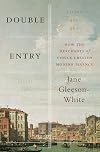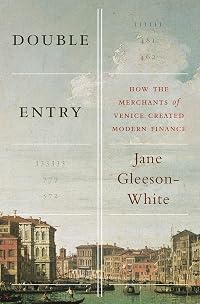
Double Entry: How the Merchants of Venice Created Modern Finance
by Jane Gleeson-White
On This Page
Description
Describes the history of accounting and double-entry bookkeeping from Mesopotamia to the Renaissance to modern finance and explains how a system developed that could work across all trades and nations.Tags
Recommendations
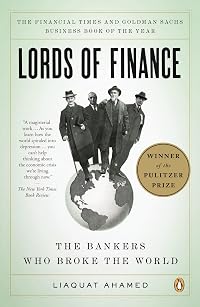
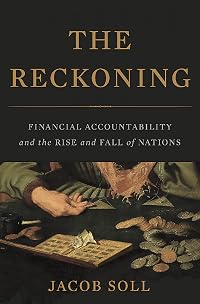
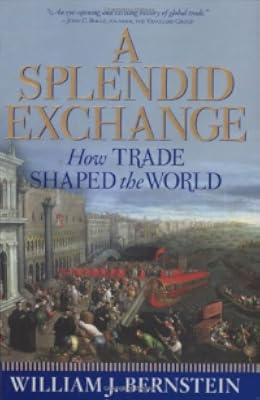
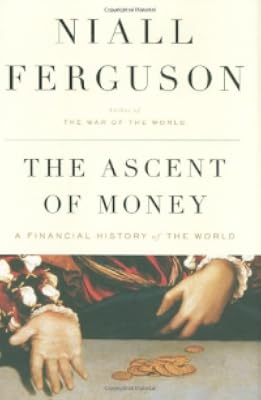












Member Reviews
Fascinating. One of the most interesting books I’ve read in a while. Takes a seemingly dry topic: bookkeeping and shows how one innovation in bookkeeping—double entry— most likely made capitalism possible, the destruction of our natural world inevitable, and the potential salvation of our world tenable. Just a remarkable journey. Luca Picioli is the polymath hero who in renaissance Venice was the first to explain Arabic numbers and double entry bookkeeping to the masses. The sweep of this book is amazing. It touches on the history of math, commerce, book history, the Industrial Age, and climate change. Just an incredible scope for a mere 250 pages. Wow. We’re in trouble. We better hope the powers that be let us use double entry show more to account in REAL terms the health and wealth of nations. show less
I didn't feel like the author found enough material to justify the whole book. It was a little fuzzy on how bookkeeping actually works, which is understandable since the topic is dry, but it would have been nice to get just enough information to help you understand why it was revolutionary.
Late in the book bookkeeping is criticized for leading people to focus too much on commerce. Though the book is called Double Entry, it sweeps things like GDP into its domain, criticizing it for failing to measure human flourishing. This is a standard line on the left and, though I lean left myself, I think it's kind of dumb. But, whether you agree with the point or not, it bespeaks a certain lack of focus.
Late in the book bookkeeping is criticized for leading people to focus too much on commerce. Though the book is called Double Entry, it sweeps things like GDP into its domain, criticizing it for failing to measure human flourishing. This is a standard line on the left and, though I lean left myself, I think it's kind of dumb. But, whether you agree with the point or not, it bespeaks a certain lack of focus.
Somewhat interesting but the author does skip around the timeline a bit. Going back and forth and repeating certain facts like we would not be able to understand it if it wasn't repeated. Towards the end it does become a bit of a rant about how we need to find a way to take natural resources and quality of life into account. But basically no one has found a better way to balance the books since 15th century Venice.
Can't really recommend this book. A few interesting facts here and there. She spends time on the Renaissance and on Pacioli's background. There's a quick gloss on what double-entry bookkeeping/accounting is and how it works. She then discusses how it changed in 1800s. Then on to accounting scandals then & now. Last was a lot about GDP, GNP, National Systems of Accounts and how they are inadequate. For all the time and attention she spends on this last part, she makes no effort at all to show how this is tied to double-entry accounting.
A surprisingly poor attempt to explore the history of accounting, built around an account of the traditional father of modern accounting leading into a superficial plan for using accounting to advance modern environmental concerns.
The author appears to be neither an expert in history or accounting, and this book will not enlighten non-accountants who come to understand the importance of accounting in the modern world.
The author appears to be neither an expert in history or accounting, and this book will not enlighten non-accountants who come to understand the importance of accounting in the modern world.
Ratings
Members
- Recently Added By
Published Reviews
ThingScore 75
The invention of double-entry bookkeeping, which originated in Italy more than six centuries ago, is one of the great achievements of Western civilization. Without this venerable method of accounting . . . it is scarcely possible to conceive of our economic system. . . . Ms. Gleeson-White's narrative in Double Entry is clear and approachable. The complexities of accounting are lucidly presented.
added by sgump
THIS book traces the 500-year history of double-entry bookkeeping, the basis of modern accounting. A dull and unpromising subject?
To the contrary, in the imaginative hands of Sydney writer Jane Gleeson-White it proves fascinating. The dramatic subtitle, How the merchants of Venice shaped the modern world -- and how their invention could make or break the planet, is not an overreach.
To the contrary, in the imaginative hands of Sydney writer Jane Gleeson-White it proves fascinating. The dramatic subtitle, How the merchants of Venice shaped the modern world -- and how their invention could make or break the planet, is not an overreach.
added by hf22
Lists

History and Biography Read in 2016
20 works; 3 members

Non-Fiction Worth Reading
1,025 works; 264 members

Books Read in 2016
4,666 works; 199 members
Author Information

6 Works 469 Members
Awards and Honors
Common Knowledge
- Original title
- Double Entry : How the Merchants of Venice Shaped the Modern World -- And How Their Invention Could Make of Break the Planet
- Alternate titles
- Double Entry : How the Merchants of Venice Created Modern Finance
- Original publication date
- 2011
- People/Characters
- Luca Pacioli; Robert F. Kennedy; Francesco Datini
- Important places
- Venice, Veneto, Italy
- First words
- On 18 March 1968, three months before an assassin's bullet cut short his life, Senator Robert F. Kennedy made an impassioned speech at the University of Kansas.
- Blurbers
- Batuman, Elif; Wapshott, Nicholas
- Original language
- English
Classifications
Statistics
- Members
- 275
- Popularity
- 117,881
- Reviews
- 5
- Rating
- (3.30)
- Languages
- English, German
- Media
- Paper, Audiobook, Ebook
- ISBNs
- 13
- ASINs
- 6