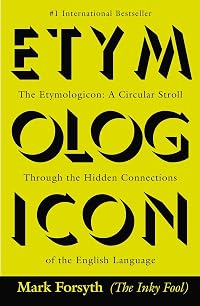
The Etymologicon: A Circular Stroll Through the Hidden Connections of the English Language
by Mark Forsyth
Mark Forsyth's Ternion Set (1)
On This Page
Description
"The Etymologicon is an occasionally ribald, frequently witty and unerringly erudite guided tour of the secret labyrinth that lurks beneath the English language. What is the actual connection between disgruntled and gruntled? What links church organs to organised crime, California to the Caliphate, or brackets to codpieces? Mark Forsyth's riotous celebration of the idiosyncratic and sometimes absurd connections between words is a classic of its kind. This lavishly illustrated edition is a show more mine of fascinating information for the coffee tables, boudoirs, and loos of word-lovers everywhere."-- show lessTags
Recommendations






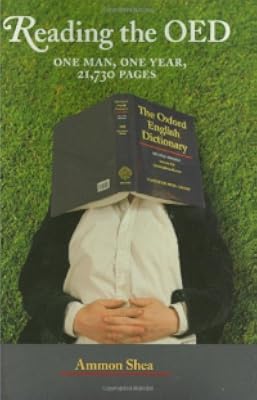
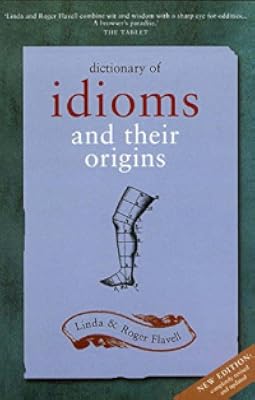
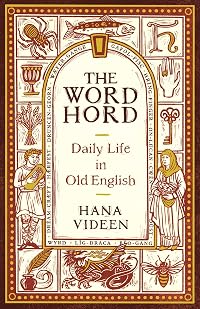
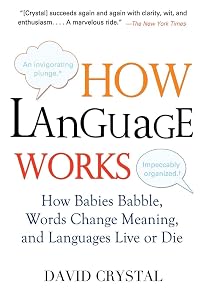



Member Recommendations
Member Reviews
Being the type of pedantic reader who double checks the vocabulary of historical novels at Etymonline, and whose favourite fun fact is that 'feisty' means a little farting dog, I couldn't resist this book. I think the paper version might be more accessible than the ebook, however - this is one to browse, not devour page by page. A host of interesting, obscure and quotable word origins, from avocado testicles to injecting sausage poison (Botox), plus 'who coined what', this is the perfect gift for anyone who gens up on episodes of QI so that they can bore people silly with pointless 'Did you know ...?' trivia.
I have this book on my Kindle and I heard the original BBC series so; why do I feel the need to own it as an audio book too?
If you have yet to come across the Etymologicon, then you have a real treat awaiting you. Get it NOW! It doesn't matter whether it be in the original paper form, the e-book or this audio book - they're all great. The Etymologicon describes itself as, "a circular stroll through the hidden connections of the English language". Sounds a bit grand, but the reality is a fun book that is packed with fascinating stories of the origins, and unexpected links, between English words. It started life as the Inky Fool blog, created by Mark Forsyth and evolved into a humorous, but educational, tome.
Each chapter follows a show more different strand through our beloved language and, whilst I am content to acknowledge my ignorance, I will not believe any of you who tells me that they knew all the intricate links in any chapter - and that includes aficionados, such as myself, who have read and heard the book on many occasions!
This audio version does not scimp, it covers the complete book on 6 CD's. I do wonder about some audio books; when you've listened once to a whodunnit, will you want to listen again? On the other hand, the Etymologicon is so packed with information that one can read it, several times and listen to the disc copy on multiple occasions and STILL not glean all the information that Mr Forsyth offers. If one is ever invited to a dinner party, given by a superior friend, then put part of this collection on your car's media player. I guarantee that, when you arrive, you will have a whole bunch of interesting facts to work into your conversation: indeed, I have invented the game of how many such facts one can introduce in a single evening (double points are awarded for the most esoteric!) Three players, in the know, can completely banjax a condescending host, with in minutes - try it! show less
If you have yet to come across the Etymologicon, then you have a real treat awaiting you. Get it NOW! It doesn't matter whether it be in the original paper form, the e-book or this audio book - they're all great. The Etymologicon describes itself as, "a circular stroll through the hidden connections of the English language". Sounds a bit grand, but the reality is a fun book that is packed with fascinating stories of the origins, and unexpected links, between English words. It started life as the Inky Fool blog, created by Mark Forsyth and evolved into a humorous, but educational, tome.
Each chapter follows a show more different strand through our beloved language and, whilst I am content to acknowledge my ignorance, I will not believe any of you who tells me that they knew all the intricate links in any chapter - and that includes aficionados, such as myself, who have read and heard the book on many occasions!
This audio version does not scimp, it covers the complete book on 6 CD's. I do wonder about some audio books; when you've listened once to a whodunnit, will you want to listen again? On the other hand, the Etymologicon is so packed with information that one can read it, several times and listen to the disc copy on multiple occasions and STILL not glean all the information that Mr Forsyth offers. If one is ever invited to a dinner party, given by a superior friend, then put part of this collection on your car's media player. I guarantee that, when you arrive, you will have a whole bunch of interesting facts to work into your conversation: indeed, I have invented the game of how many such facts one can introduce in a single evening (double points are awarded for the most esoteric!) Three players, in the know, can completely banjax a condescending host, with in minutes - try it! show less
This was hilarious. Every page had something to laugh at, and every other page was quote-worthy. Reading it on public transit may cause agony from suppressed laughter; nevertheless, I highly recommend it for language nerds. You’re guaranteed to learn something.
This is a completely enjoyable stroll through the origins of hundreds of words, told in a conversational style, with lots of personality and wit.
Seriously, what's not to love about this?
And, as an added bonus, every time I go to some insipid party where they have the inevitable pumpernickel and spinach dip, I can tell everyone that "pumpernickel" originally meant "the devil's fart," and it doesn't get any better than that.
Seriously, what's not to love about this?
And, as an added bonus, every time I go to some insipid party where they have the inevitable pumpernickel and spinach dip, I can tell everyone that "pumpernickel" originally meant "the devil's fart," and it doesn't get any better than that.
this is a very difficult book to describe...although the subtitle really says it all: A Circular Stroll Through the Hidden Connections of the English Language. The author starts with the word 'book', describes its etymology and developmental history, and meanders his way (in that typical british fashion) into how it etymologically relates to other seemingly unrelated words, and so on, and so forth...and before you know it, he's filled an entire book's worth of trivia you didnt know you didnt know.
mostly, i find it difficult to describe because i cannot remember any of it...well, two things stuck with me:
1. butterflies are so named because their poo is yellow, like butter (i dont know why of all the interesting facts in this book, this show more is the one i did not forget)
2. Buffalo is not just a name for the bovines, its also a name for a handful of north american towns. It also previously meant the verb 'to bully' or 'bullies'. Which means that this sentence makes sense somehow:
"Buffalo buffalo buffalo buffalo buffalo buffalo buffalo buffalo"
Very fun read :) show less
mostly, i find it difficult to describe because i cannot remember any of it...well, two things stuck with me:
1. butterflies are so named because their poo is yellow, like butter (i dont know why of all the interesting facts in this book, this show more is the one i did not forget)
2. Buffalo is not just a name for the bovines, its also a name for a handful of north american towns. It also previously meant the verb 'to bully' or 'bullies'. Which means that this sentence makes sense somehow:
"Buffalo buffalo buffalo buffalo buffalo buffalo buffalo buffalo"
Very fun read :) show less
This book took me FOREVER to finish, and not because it was bad, boring or dense. It took me forever because I couldn't read more than a paragraph without having to stop and read it aloud to MT, much to his amusement and increasing irritation, so I found myself avoiding it for stretches at a time so he wasn't tempted to hide the book somewhere, like the recycle bin.
As he's gone for the weekend, my impulse to share was thwarted and I was able to power through the rest of the book. Truly, for word lovers out there, I can't recommend this book highly enough. It's so interesting and so easy to read; Forsyth breaks the book into sections, rather than chapters, but really it's more a free-association type of narrative. Talking about the show more origins of one word brings him to another, that leads him to another and so on. Did you know there's a direct etymological connection between the Old/New Testaments and a mans testicles? Sex and bread? Torpedoes and turtles? I didn't, but now I do.
Etymology might strike people as bland, but those people will have never read Forsyth; part of why I read so much of this out loud is because he's hilarious, especially in his footnotes (which are not overdone). If kids were allowed to learn with texts like these, we'd have a lot more smarter adults. show less
As he's gone for the weekend, my impulse to share was thwarted and I was able to power through the rest of the book. Truly, for word lovers out there, I can't recommend this book highly enough. It's so interesting and so easy to read; Forsyth breaks the book into sections, rather than chapters, but really it's more a free-association type of narrative. Talking about the show more origins of one word brings him to another, that leads him to another and so on. Did you know there's a direct etymological connection between the Old/New Testaments and a mans testicles? Sex and bread? Torpedoes and turtles? I didn't, but now I do.
Etymology might strike people as bland, but those people will have never read Forsyth; part of why I read so much of this out loud is because he's hilarious, especially in his footnotes (which are not overdone). If kids were allowed to learn with texts like these, we'd have a lot more smarter adults. show less
I bet Mark Forsyth is fun at parties. Or, well, I would enjoy talking to him at a party, at any rate; he has a fund of interesting facts and a dry wit, which is what I look for in a social setting. This book isn’t academic in any way; he doesn’t cite his sources or delve deeply into linguistics, so basically what you are in fact getting is the written equivalent of someone telling you fun facts at a party (but in your own time and with a lot less background noise!).
The book was a fun light read, easy to delve into and easy to put down. But I won’t be making most of these *my* fun facts, should I ever attend a party again, because I caught two incidental errors, and the lack of citations mean I can’t check the rest of what he show more says. But! Etymology is often just about a good story, and these are some very good stories. show less
The book was a fun light read, easy to delve into and easy to put down. But I won’t be making most of these *my* fun facts, should I ever attend a party again, because I caught two incidental errors, and the lack of citations mean I can’t check the rest of what he show more says. But! Etymology is often just about a good story, and these are some very good stories. show less
Members
- Recently Added By
Lists

Top Five Books of 2013
1,562 works; 715 members

Etymology
26 works; 7 members

Favourite Books
1,820 works; 316 members

Books Read in 2015
3,299 works; 126 members
Books Read in 2016
4,666 works; 197 members

Books Read in 2023
5,638 works; 147 members

Books Read in 2024
4,727 works; 128 members
Author Information

15 Works 4,294 Members
Mark Forsyth is the proprietor of the popular blog The Inky Fool.
Awards and Honors
Awards
Series

Work Relationships
Common Knowledge
- Original title
- The Etymologicon : a Circular Stroll through the Hidden Connections of the English Language
- Original publication date
- 2011
- People/Characters
- Antoine Lavoisier; Henry VIII, King of England; Pocahontas; Captain John Smith; William Whiston; Pantaleon (show all 219); Emperor Maximianus; The Pantaloni; Harlequin; Scaramouch; Pantalone; St Pantaleon; Pan; Marcus Agrippa; John Milton; Voltaire (Franç | ois-Marie Arouet, 1694-1778); Justinus Kerner; Edward III, King of England; Quintilian; Domitian; William Caxton (c.1422-1491); Sigmund Freud; Carl Jung; Richard von Krafft-Ebing; Donatien Alphonse-François, Marquis de Sade; Geoffrey Gorer; Leopold von Sacher-Masoch; Fanny Pistor; Sir John Harington; Vidkun Quisling; Ben Jonson; Thomas Derrick; Joseph-Ignace Guillotin; Tobias Schmidt; Thomas Crapper; Edward Jennings; J. Churchill; Carl Buck; John Le Fucker; Paul the Deacon; Guido of Arezzo; Wilhelm II, German Kaiser and King of Prussia; Basil II Bulgaroctonus, Byzantine Emperor; Josef II, Holy Roman Emperor; Karel Capek; Thai Khac Chuyen; Colonel Kurtz; Kenneth Alford; Charles Babbage; Colonel Bogey; James Bond; Thomas Brown; James Cameron; Myles Coverdale; Thomas Edison; Baron Munchausen; Bayer; Morphus; Thomas De Quincey; Percy Bysshe Shelley; Thomas More (Sir, Saint, 1478 to 1535); Anacreon; John Stafford Smith; Ralph Tomlinson; Francis Scott Key; Lawrens Andrewe; Beau Nash; Bushnell; Robert Fulton; George Washington; Lawrence Washington; Edward Vernon; Moraji Desai; Dom Perignon; Ignatius of Loyola (Saint, 1491? to 1556); Georges Lenaitre; Margaret Henley; W. E. Henley; Fred Hoyle; J. M. Barrie; Peter Pan; Wendy Darling; Michael Jackson; Alexander Graham Bell; Marvin Gaye; Norman Whitfield; Barret Strong; Bob Dylan; The Rolling Stones; Muddy Waters; Sir Thomas Wyatt. (1503&ndash | 1542); Desiderius Erasmus (Erasmus of Rotterdam, 1469? to 1536); Simon Peter; John Skelton; Thomas Nashe; Alexander von Humboldt; Amerigo Vespucci; Marco Vespucci; Simonetta Cataneo; Sandro Botticelli; Martin Landseemuller; William Thomas; John Florio; Edward Cave; Tim Croneen; t. Ledger; Joan Condon; Samuel Johnson; John of Garland; Henry Cockeram; Nathan Bailey; Noah Webster; James Murray (Sir, lexicographer); Eastman Minor; Lucy Minor; William Minor; George Merret; Origen (c.185-c.254); Winston Churchill; Ernest Swinton; Krupp Armaments; Rudyard Kipling; Queen Gunhilda; Sven Forkbeard; Jim Kardack; Frans Gunnar Bengtsson; Harald Bluetooth; Marcus Samuel; Hamlet; Pliny (23-79); Bishop of Avranches; Peter Bales; William Ewart Gladstone; Homer; Ajax; Hector; Cassandra; Christopher Marlowe; William Cullen Bryant; Agamemnon; Queen (musical group); Philip Verheyen; Martial; James VI and I, King of Scots and King of England; Felix Walker; Edward Buncombe; Richard de Bounecombe; Boudica (as Boadicea); Alfred the Great; Valentine Starbuck; Obed Starbuck; Herman Melville; Jerry Baldwin; Matteo Da Bascio; Capuchin Monks; George Ruggle; John Duns Scotus (c.1265-c.1308); Emily Brontë; Thomas Carlyle; Geoffrey Chaucer; William Shakespeare; P. G. Wodehouse; Ophelia (Polonius's daughter); Sir John Mandeville; William Blake; William Morris; Robert Recorde; Galen; Zeus; Leda; Castor; Pollux; Helen of Troy; Clytemnestra; Tyndareus; Ambrose E. Burnside; Jacques Heim; Louis Reard; Horace Walpole; Sappho; Christopher Columbus; James Cook (Captain, RN, FRS); John Montague; Queen Margherita Maria Teresa Giovanna; King Umberto; Raffaele Esposito; Isaac Newton; Henri Murger; Giacomo Puccini; William Makepeace Thackeray; A. E. Housman; Alfred de Vigny; Francisco de Orellana; Garcí Ordóñez de Montalvo; Calafia; Esplandian; Mohammed; Abu Bakr; Ismail; Hansan-i Sabbah; Robert Pierce; Doctor Placebo; Pliny the Elder; Ovid; Ceyx; Halcyon; Hesiod; Antisthenes; Diogenes; Zeno; Akademos; Plato (c.428-347 BC); Ward Cunningham; Norbert Weiner; Walter Clopton Whigfield; Conrad Weiser; Harry S. Truman; Lewis Carroll; Swein Forkbeard, King of Denmark
- Important places
- Ghent University, Ghent, East Flanders, Belgium; Dundee, Scotland, UK; British Museum, London, England, UK; Florence, Tuscany, Italy; Ely, Cambridgeshire, England, UK; Great Yarmouth, Norfolk, England, UK (show all 30); Baltimore, Maryland, USA; Venezuela; Venice, Veneto, Italy; Athens, Greece; Syracuse, Sicily, Italy; Sri Lanka; New York, New York, USA; Lambeth, London, England, UK; London, England, UK; Broadmoor Hospital, Crowthorne, Berkshire, England, UK; Edinburgh Castle, Edinburgh, Scotland, UK; Windsor Castle, Windsor, Berkshire, England, UK; Borring; Gath (biblical city and home of Goliath); Jerusalem; Buncombe County, North Carolina, USA; Saffron Walden, Essex, England, UK; Nantucket, Massachusetts, USA; Bikini Atoll, Marshall Islands; Serendip (Old Persian name for Sri Lanka); Lesbos, Greece; Hawai'i, USA; Naples, Campania, Italy; California, USA
- First words
- This is a book.
Classifications
Statistics
- Members
- 1,691
- Popularity
- 13,244
- Reviews
- 60
- Rating
- (3.92)
- Languages
- English, Swedish
- Media
- Paper, Audiobook, Ebook
- ISBNs
- 16
- ASINs
- 20