On This Page
Description
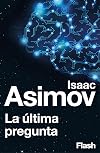
¿Es posible revertir el inevitable final del Universo, o el mundo debe acabar de todas formas? es la pregunta que desde un día del siglo XXI, hasta generaciones y generaciones posteriores en el tiempo, hacen los humanos a los ordenadores. En un relato aparentemente sencillo sobre un asunto sobrecogedor, el fin de los días, Asimov demuestra, una vez más, una mente preclara y una mano maestra para sobrecoger al lector y dejarlo en vilo, incluso después de la lectura.Tags
Recommendations



















Member Reviews
Sometimes it all feels futile, this thing called humankind.
With no god to believe in, I only have science and well, that in itself is problematic, isn't it? It's not quite the idyllic, benevolent guardian, either. These days, add the explosion of AI in the equation, I can become quite desperate with worry for the future of our species.
My dad, a farmer, used to say, "Worry is rust upon the blade."
Now, after reading this short story--Asimov's own personal favorite--I might be able to take Dad's advice, relax my worries a bit, even about AI. It will only take a few billion years, but all could be well again.
And that is enough for me.
With no god to believe in, I only have science and well, that in itself is problematic, isn't it? It's not quite the idyllic, benevolent guardian, either. These days, add the explosion of AI in the equation, I can become quite desperate with worry for the future of our species.
My dad, a farmer, used to say, "Worry is rust upon the blade."
Now, after reading this short story--Asimov's own personal favorite--I might be able to take Dad's advice, relax my worries a bit, even about AI. It will only take a few billion years, but all could be well again.
And that is enough for me.
This is one of my favourite short stories. What Asimov does with a small word count is amazing. The timespan which he attempted to cover was a bold move, one he undoubtedly pulled off in my opinion. All the subtleties, from the shift in character’s names to the ever increasing scales of technology, work so well. And what’s more—while this is available for free online—the "No Reply Press" letterpress edition with Rockwell Kent’s artworks absolutely does the story justice and enhances the read.
I cannot deny that Asimov is a brilliant mind and on an intellectual level that probably makes me an amoeba, but there is something falsely brilliant about this story that repelled me. It is an absence of any belief system for man, a belief in nothing except the technology he creates that outstrips him and leaves him a disembodied, un-individualized Borg. Even Star Trek knew that no matter how efficient the collective might be it was not the answer. What good is immortality to these people, for that matter what good would it be for any of us? There is an answer to the Last Question, maybe just not the answer people want to hear.
Queen got it right. Who Wants to Live Forever
Queen got it right. Who Wants to Live Forever
It doesn't matter if it's a 9 page story or a 1,000 page story, Asimov always grabs me and thrills me in ways other authors never have. It gets me excited about all the big questions - philosophy, the meaning of life, space travel, religion, technology and more. This is obviously a super quick read, but is densely packed and has a terrific ending.
Intriguing story from one of the 20th century's foremost scientific minds. At first, I found myself disturbed by the notion that at some point in the very distant future, our universe will simply cease to exist. But as the story progresses, the parallel between man's relationship with the supercomputer (AC) as similar to man's real life relationship with, and need for oneness with, God. Asimov's story also contains elements of a scientific theory that the universe is in a constant cycle of expanding and contracting.
However unnerving I felt at the beginning, I felt rewarded at the end. This story is thought provoking and well worth your time.
However unnerving I felt at the beginning, I felt rewarded at the end. This story is thought provoking and well worth your time.
It’s nearly impossible to properly review The Last Question without spoiling it; without the crucial line that literally inverts the story you think you’re reading. Suffice it to say that Asimov (my favorite science fiction writer) has the goal of making you think about this. It’s about fifteen minutes to read, and all you need to know is that entropy is the measure of chaos.
I could probably write an essay on The Last Question that would actually be longer than the story. But that would be totally useless if you haven’t read it, because anything I write much longer than this will result in a watering down of the story. Just read it., and remember, no problem is insoluble in all conceivable circumstances.
I could probably write an essay on The Last Question that would actually be longer than the story. But that would be totally useless if you haven’t read it, because anything I write much longer than this will result in a watering down of the story. Just read it., and remember, no problem is insoluble in all conceivable circumstances.
Perfect example of what sci-fi is when it's done well. A volcano of of ideas communicated in sort of shoddy writing. But we forgive the shoddy writing, because the ideas are blowing our minds anyway. This one short story has so so much to it - and from 1956! Was he the first to start talking about the singularity? - predicting what the internet would become when computers themselves were still only toddlers?
Members
- Recently Added By
Lists

Isaac Arthur’s Book Recommendations
98 works; 3 members

Favourite Short Stories
22 works; 2 members

Books Read in 2016
110 works; 1 member
Talk Discussions
Past Discussions
The Last Question by Isaac Asimov - NO REPLY PRESS 2022 in Fine Press Forum (November 2023)
Author Information

2,398+ Works 293,472 Members
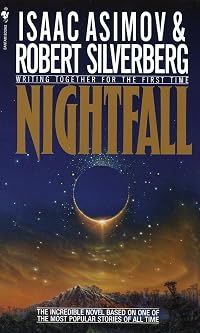
Isaac Asimov was born in Petrovichi, Russia, on January 2, 1920. His family emigrated to the United States in 1923 and settled in Brooklyn, New York, where they owned and operated a candy store. Asimov became a naturalized U.S. citizen at the age of eight. As a youngster he discovered his talent for writing, producing his first original fiction at show more the age of eleven. He went on to become one of the world's most prolific writers, publishing nearly 500 books in his lifetime. Asimov was not only a writer; he also was a biochemist and an educator. He studied chemistry at Columbia University, earning a B.S., M.A. and Ph.D. In 1951, Asimov accepted a position as an instructor of biochemistry at Boston University's School of Medicine even though he had no practical experience in the field. His exceptional intelligence enabled him to master new systems rapidly, and he soon became a successful and distinguished professor at Columbia and even co-authored a biochemistry textbook within a few years. Asimov won numerous awards and honors for his books and stories, and he is considered to be a leading writer of the Golden Age of science fiction. While he did not invent science fiction, he helped to legitimize it by adding the narrative structure that had been missing from the traditional science fiction books of the period. He also introduced several innovative concepts, including the thematic concern for technological progress and its impact on humanity. Asimov is probably best known for his Foundation series, which includes Foundation, Foundation and Empire, and Second Foundation. In 1966, this trilogy won the Hugo award for best all-time science fiction series. In 1983, Asimov wrote an additional Foundation novel, Foundation's Edge, which won the Hugo for best novel of that year. Asimov also wrote a series of robot books that included I, Robot, and eventually he tied the two series together. He won three additional Hugos, including one awarded posthumously for the best non-fiction book of 1995, I. Asimov. "Nightfall" was chosen the best science fiction story of all time by the Science Fiction Writers of America. In 1979, Asimov wrote his autobiography, In Memory Yet Green. He continued writing until just a few years before his death from heart and kidney failure on April 6, 1992. (Bowker Author Biography) show less
Some Editions
Series

Belongs to Publisher Series
Work Relationships
Is contained in
Common Knowledge
- Canonical title
- The Last Question (short story) (short story)
- Original title
- The Last Question
- Original publication date
- 1956-11
- People/Characters
- Multivac; Adell; Lupov; Jerrodd; Jerrodine; Jerrodette I (show all 10); Jerrodette II; Zee Prime; Dee Sub Wun; Universaler AC
- First words*
- Die letzte Frage wurde zum ersten Mal halb im Jux am 21. Mai 2061 gestellt, zu einer Zeit, als die Menschheit den ersten Schritt ins Licht tat.
- Last words*
- (Click to show. Warning: May contain spoilers.)Und es ward Licht ...
- Original language
- English
- Canonical DDC/MDS
- 813.08762
- Disambiguation notice*
- This work is for the short story only. Do not combine with identically titled works containing other short stories as well.
*Some information comes from Common Knowledge in other languages. Click "Edit" for more information.
Classifications
Statistics
- Members
- 524
- Popularity
- 57,102
- Reviews
- 29
- Rating
- (4.41)
- Languages
- Dutch, English, German, Spanish
- Media
- Paper, Audiobook, Ebook
- ISBNs
- 3
- ASINs
- 5