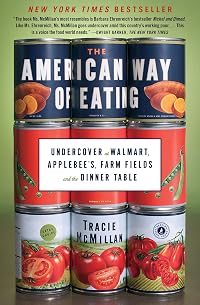
The American Way of Eating: Undercover at Walmart, Applebee's, Farm Fields and the Dinner Table
by Tracie McMillan
On This Page
Description
"In 2009 McMillan embarked on a groundbreaking undercover journey to see what it takes to eat well in America. For nearly a year, she worked, ate, and lived alongside the working poor to examine how Americans eat when price matters"--Jacket.Tags
Recommendations


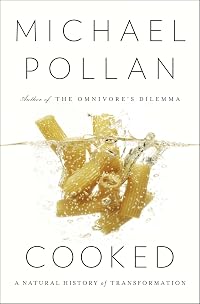

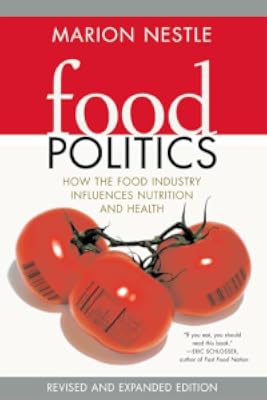
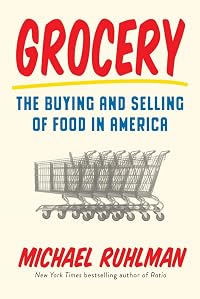
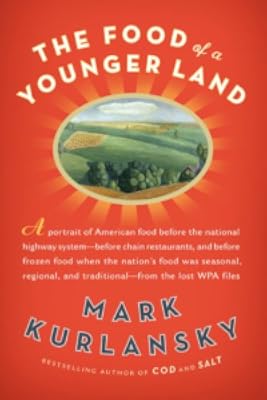

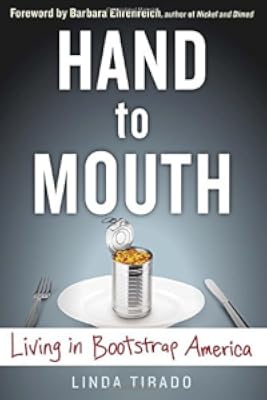


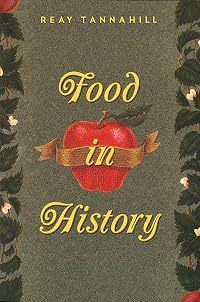
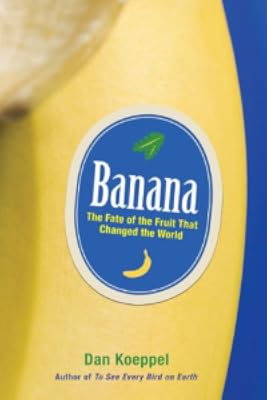

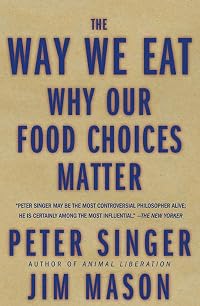












Member Recommendations

Member Reviews
Books about food and food culture in America seem to be a dime a dozen these days. And any book in which the author works undercover is bound to have comparisons drawn to Elhenrich's now classic "Nickled and Dimed." All that said, McMillan's book is a unique investigation into three different sections of the food industry -- growing, selling, and serving. In her introduction, the author, a Midwesterner relocated to New York City, describes her attitude towards food when she first moved to the city (shopping at a roach infested supermarket because it was convenient and most similar to the stores she was accustomed to); and how it changed over the years as she spent time around affluent families and tried her hand at preparing "fancy show more foods." But because of her childhood, where the standard meals came out of a box and were accompanied by "salads of chopped iceberg lettuce tossed with diced carrots, celery, wedges of tomato, and some Wish-Bone Ranch dressing" (2), she still had the underlying assumption that "fancy food was for the rich, box meals were for the rest of us, and there was no point in making a fuss about it" (3).
McMillian works in three different sections of the food industry, starting with fieldwork in California, picking peaches and grapes, uprooting and trimming onions and garlic; during this last one, she seriously injures herself and has to go to a clinic, where they advise her, "no repetitive movement," to which her response is "But my job is to cut garlic. All I do is grasp. I'm just a farmworker. All I do is cut garlic" (91). Working amid immigrants, she stands out simply by being a white female, and at different jobs, many of the workers ask her to help them with their English. She also knows enough about wage law to realize that the farmworkers are being paid by the piece, not by the hour -- their paychecks are adjusted such that the total amount for their piecework is doled out according to hourly wages -- an eight hour shift where she only picked $19.20 worth of garlic is listed as two hours work. McMillan also works in the produce department at Walmart, where she learns the secrets of "crisping" produce to make it appear fresh and salable for longer, and in the kitchen at Applebee's, which she turns out to genuinely enjoy.
I found this book to be an interesting look at the food industry from multiple vantage points. As someone who can presently afford what McMillan calls "fancy foods," but who also grew up close to immigrant grandparents and family members who cherish traditional cooking, some of the author's observations about American habits baffle me. Having been ingrained with good shopping and food preparation habits, I can see from peers and those around me how different upbringings and values can affect their perspective and attitude towards food. This is a worthwhile read, and will hopefully provoke you to think about your own food habits and attitudes. show less
McMillian works in three different sections of the food industry, starting with fieldwork in California, picking peaches and grapes, uprooting and trimming onions and garlic; during this last one, she seriously injures herself and has to go to a clinic, where they advise her, "no repetitive movement," to which her response is "But my job is to cut garlic. All I do is grasp. I'm just a farmworker. All I do is cut garlic" (91). Working amid immigrants, she stands out simply by being a white female, and at different jobs, many of the workers ask her to help them with their English. She also knows enough about wage law to realize that the farmworkers are being paid by the piece, not by the hour -- their paychecks are adjusted such that the total amount for their piecework is doled out according to hourly wages -- an eight hour shift where she only picked $19.20 worth of garlic is listed as two hours work. McMillan also works in the produce department at Walmart, where she learns the secrets of "crisping" produce to make it appear fresh and salable for longer, and in the kitchen at Applebee's, which she turns out to genuinely enjoy.
I found this book to be an interesting look at the food industry from multiple vantage points. As someone who can presently afford what McMillan calls "fancy foods," but who also grew up close to immigrant grandparents and family members who cherish traditional cooking, some of the author's observations about American habits baffle me. Having been ingrained with good shopping and food preparation habits, I can see from peers and those around me how different upbringings and values can affect their perspective and attitude towards food. This is a worthwhile read, and will hopefully provoke you to think about your own food habits and attitudes. show less
Ms. McMillan decided to explore how food works in the U.S. To do this, she took a decidedly Barbara Ehrenreich approach: she went out and worked in the field. Literally. She chose to seek work in the California central valley as a farm worker, in Michigan as a Wal-Mart supercenter grocery employee, and as a cook at Applebee’s in Brooklyn, New York. She allowed herself a small cushion of funds with each new job to help with finding a place to live in her new cities, but if she ran out, she did what people who don’t have nest eggs to pull from: she took out an advance on her credit card, or just did without.
Each section starts out with a page that lists her hourly earnings, what that would translate to weekly and annually after taxes, show more as well as what percentage she spent on food, broken down by eating out and cooking at home. As expected, the work she did was hard, the money she earned was ridiculous, and in many cases it was just easier to eat shitty food than to find the money or energy to cook well.
Some of the author’s observations are quite interesting and good to see; her main take-away is that healthy eating isn’t just about the availability of fresh food, as so many campaigns want us to believe (have you had that ‘food desert’ ad, featuring two kids, in an endless loop on Hulu like I have? I now loathe that ad). It’s also about having a solid education in how to cook (which so many of us don’t), a job that provides the wages AND the time and energy to do that cooking, and a supportive public system like adequate healthcare and child care to allow people to cook instead of eating out.
From my perspective, the most surprising thing was how little cooking actually happens at a restaurant like Applebee’s. I spent one summer working as a hostess and busser at a local restaurant, and other than the giant vat of butter we kept cooling in a sink from which we would scoop a dish to bring out to the fancy tables, everything appeared to be cooked and prepared in the kitchen. Not so with Applebee’s. Yikes.
This book is written pretty well. She manages to weave in statistics and other information in well, and I found her sections on Wal-Mart and the private food supply chain to be very interesting. However, and I knew this going into reading the book – why did SHE need to tell this story? A college-educated, white woman? Come on. Couldn’t she have actually interviewed people who had their own stories to tell? I mean, obviously she did do that to a degree, but this was the Tracie McMillan story, and it absolutely did not have to be. I mean, at one point she is hired on part-time at a Wal-Mart outside of Detroit, and all I could think was that she was taking a job away from someone who actually needed it. I couldn’t get over it, and I don’t necessarily think this book needed to be written in this way. I’m not recommending it, mostly because I think there are a lot of other, better ways to learn about these industries, that don’t involve taking jobs away from people who need them, or replacing the voices of poor people, many of whom are people of color, with the voice of a middle-class white woman. show less
Each section starts out with a page that lists her hourly earnings, what that would translate to weekly and annually after taxes, show more as well as what percentage she spent on food, broken down by eating out and cooking at home. As expected, the work she did was hard, the money she earned was ridiculous, and in many cases it was just easier to eat shitty food than to find the money or energy to cook well.
Some of the author’s observations are quite interesting and good to see; her main take-away is that healthy eating isn’t just about the availability of fresh food, as so many campaigns want us to believe (have you had that ‘food desert’ ad, featuring two kids, in an endless loop on Hulu like I have? I now loathe that ad). It’s also about having a solid education in how to cook (which so many of us don’t), a job that provides the wages AND the time and energy to do that cooking, and a supportive public system like adequate healthcare and child care to allow people to cook instead of eating out.
From my perspective, the most surprising thing was how little cooking actually happens at a restaurant like Applebee’s. I spent one summer working as a hostess and busser at a local restaurant, and other than the giant vat of butter we kept cooling in a sink from which we would scoop a dish to bring out to the fancy tables, everything appeared to be cooked and prepared in the kitchen. Not so with Applebee’s. Yikes.
This book is written pretty well. She manages to weave in statistics and other information in well, and I found her sections on Wal-Mart and the private food supply chain to be very interesting. However, and I knew this going into reading the book – why did SHE need to tell this story? A college-educated, white woman? Come on. Couldn’t she have actually interviewed people who had their own stories to tell? I mean, obviously she did do that to a degree, but this was the Tracie McMillan story, and it absolutely did not have to be. I mean, at one point she is hired on part-time at a Wal-Mart outside of Detroit, and all I could think was that she was taking a job away from someone who actually needed it. I couldn’t get over it, and I don’t necessarily think this book needed to be written in this way. I’m not recommending it, mostly because I think there are a lot of other, better ways to learn about these industries, that don’t involve taking jobs away from people who need them, or replacing the voices of poor people, many of whom are people of color, with the voice of a middle-class white woman. show less
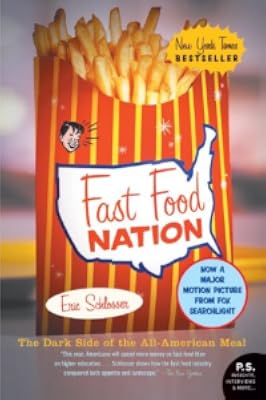
There is no shortage of films, TV shows or books concerning the current state of America’s food, and I eat them up. My interest in food began in 2001 when I read Fast Food Nation. That is when I realized that fast food wasn’t just bad for individual health, it has detrimental effects on agriculture, economics, pollution, ecology, animal health, even social cohesion, and I’m sure I’m missing some. The country has been going down this path of massive-scale agriculture and low-quality food production for over fifty years now, and we may have reached the tipping point.
Unlike Fast Food Nation, McMillan’s American Way of Eating is more about how the food industry affects individuals. She began with the concept of food deserts, areas show more that have people of low incomes who also have low access to supermarkets or large grocery stores. She decided to drop her life temporarily and live in food deserts while working in three different areas of the food industry – farming, selling, and cooking. She started with a small nest egg in each instance to get started, but then lived only off the wages she earned. She kept track of how much money she made, how much she spend of food, and what percentage of her income was spent on food.
Farming was spent in California’s Central and Salinas Valleys, areas known for food growing despite low water levels that require the need for heavy irrigation. She worked mostly with migrant farm workers who were generous and friendly. She picked grapes, peaches, and garlic working for various farming corporations. She, like the other workers, was grossly underpaid, not just in wage rates, but also in shady accounting. The company would divide her total earned by piece rate and divide it by hourly minimum wage so it appeared on paper that she received adequate compensation for work, but it would only list two hours of work time when she actually put in a full eight hour day. These practices are common in the farming industry, particularly when the majority of workers are migrants.
To get some insight into selling food, McMillan when to the giant – Walmart. She worked in two Walmarts in Michigan; one stocking dry goods and the other stocking produce. The sheer scale in which Walmart is able to operate marks it as a game-changer in the food distribution system. Before mass supermarkets, food was grown regionally and shipped locally. With the advent of large-scale distribution, foods of all types are available in almost any location in America regardless of season. The sacrifice here is quality and surprisingly price. Although Walmart may have some of the lowest prices in town on some things, produce is not one of them. Local grocery stores are actually able to beat out Walmart produce prices and offer higher quality because they have more dexterity in food logistics.
She also discusses urban agriculture, specifically in Detroit. There are two things about Detroit that make growing food in the community both appealing and viable – vacant land and lack of grocery stores. Michigan State University conducted a study in 2010 that found Detroiters could get nearly half of their nontropical fruits and three-quarters of their vegetables from urban growers, and it would require only about 12 percent of the city’s vacant land if biointensive agriculture is used, which most urban farms use already.
Lastly, Macmillan works in a kitchen to get the cooking experience of the food industry. Like her experience selling food, she went to one of the big dogs to learn how to cook it – Applebee’s. Although, I’m not sure cooking would be an apt description. With almost everything, from soups and sauces to mashed potatoes and garlic, coming from pre-made bags shipped from food service vendors. On top of the fact that it was pre-made, it is mostly compiled and cooked in a microwave. They don’t really cook at Applebee’s, they assemble. Applebee’s may have servers and a bar, but there is not much difference between Applebee’s and typical fast food.
When she started out, McMillan wanted to explore what life was like for individuals in the food industry as well as how the working poor ate. It could not be further from true that poor people do not care about the quality, taste, and look of their food. What they lack is time, access, and knowledge. When the food stamp program was extended to allow acceptance at farmers markets, they were used heavily. When grocery stores are available, they are patronized over corner stores. When cooking and nutrition classes are completed, people are more comfortable in the kitchen and are able to create well-balanced, wholesome meals that cost less and are healthier than following directions on a box. show less
Unlike Fast Food Nation, McMillan’s American Way of Eating is more about how the food industry affects individuals. She began with the concept of food deserts, areas show more that have people of low incomes who also have low access to supermarkets or large grocery stores. She decided to drop her life temporarily and live in food deserts while working in three different areas of the food industry – farming, selling, and cooking. She started with a small nest egg in each instance to get started, but then lived only off the wages she earned. She kept track of how much money she made, how much she spend of food, and what percentage of her income was spent on food.
Farming was spent in California’s Central and Salinas Valleys, areas known for food growing despite low water levels that require the need for heavy irrigation. She worked mostly with migrant farm workers who were generous and friendly. She picked grapes, peaches, and garlic working for various farming corporations. She, like the other workers, was grossly underpaid, not just in wage rates, but also in shady accounting. The company would divide her total earned by piece rate and divide it by hourly minimum wage so it appeared on paper that she received adequate compensation for work, but it would only list two hours of work time when she actually put in a full eight hour day. These practices are common in the farming industry, particularly when the majority of workers are migrants.
To get some insight into selling food, McMillan when to the giant – Walmart. She worked in two Walmarts in Michigan; one stocking dry goods and the other stocking produce. The sheer scale in which Walmart is able to operate marks it as a game-changer in the food distribution system. Before mass supermarkets, food was grown regionally and shipped locally. With the advent of large-scale distribution, foods of all types are available in almost any location in America regardless of season. The sacrifice here is quality and surprisingly price. Although Walmart may have some of the lowest prices in town on some things, produce is not one of them. Local grocery stores are actually able to beat out Walmart produce prices and offer higher quality because they have more dexterity in food logistics.
She also discusses urban agriculture, specifically in Detroit. There are two things about Detroit that make growing food in the community both appealing and viable – vacant land and lack of grocery stores. Michigan State University conducted a study in 2010 that found Detroiters could get nearly half of their nontropical fruits and three-quarters of their vegetables from urban growers, and it would require only about 12 percent of the city’s vacant land if biointensive agriculture is used, which most urban farms use already.
Lastly, Macmillan works in a kitchen to get the cooking experience of the food industry. Like her experience selling food, she went to one of the big dogs to learn how to cook it – Applebee’s. Although, I’m not sure cooking would be an apt description. With almost everything, from soups and sauces to mashed potatoes and garlic, coming from pre-made bags shipped from food service vendors. On top of the fact that it was pre-made, it is mostly compiled and cooked in a microwave. They don’t really cook at Applebee’s, they assemble. Applebee’s may have servers and a bar, but there is not much difference between Applebee’s and typical fast food.
When she started out, McMillan wanted to explore what life was like for individuals in the food industry as well as how the working poor ate. It could not be further from true that poor people do not care about the quality, taste, and look of their food. What they lack is time, access, and knowledge. When the food stamp program was extended to allow acceptance at farmers markets, they were used heavily. When grocery stores are available, they are patronized over corner stores. When cooking and nutrition classes are completed, people are more comfortable in the kitchen and are able to create well-balanced, wholesome meals that cost less and are healthier than following directions on a box. show less
DNF at 97 pages in, when she stops picking garlic.
I have a problem with books like this or Nickel and Dimed, where educated people try to live (what they think are) lives of poverty, then come back and write about what they think the problems are. The authors rarely talk with the people that they work with and live among about their lives, and the authors themselves often live quite differently than their informants. In this book, McMillan sometimes mentions the times when her whiteness, English fluency, or education give her opportunities that the other people around her don't have, but sometimes she calls these opportunities simple "strokes of luck."
I eventually gave up when, upon leaving the garlic fields, McMillan reveals to the show more people that she has been living with that she is a writer. They immediately start trying to tell her about their lives and their difficulties, which she summarizes in a single paragraph. It feels like problems that she experiences herself and talks about are "real", but the experiences of the people living these lives are minimized. I really find it difficult to accept that spending a few weeks trying to live like other people (or at least, like how you think other people live) is more worth hearing about than the people who spend their whole lives doing these things. show less
I have a problem with books like this or Nickel and Dimed, where educated people try to live (what they think are) lives of poverty, then come back and write about what they think the problems are. The authors rarely talk with the people that they work with and live among about their lives, and the authors themselves often live quite differently than their informants. In this book, McMillan sometimes mentions the times when her whiteness, English fluency, or education give her opportunities that the other people around her don't have, but sometimes she calls these opportunities simple "strokes of luck."
I eventually gave up when, upon leaving the garlic fields, McMillan reveals to the show more people that she has been living with that she is a writer. They immediately start trying to tell her about their lives and their difficulties, which she summarizes in a single paragraph. It feels like problems that she experiences herself and talks about are "real", but the experiences of the people living these lives are minimized. I really find it difficult to accept that spending a few weeks trying to live like other people (or at least, like how you think other people live) is more worth hearing about than the people who spend their whole lives doing these things. show less
If reading McMillan's description of the conversation between a self-described "foodie" and a working class woman talking about the care her grandmother took with food doesn't open your eyes to the class divide nothing will. While comparisons to Nickle and Dimed are impossible to ignore, McMillan manages to take the American middle and upper class obsession with food and turn it on its head.
I don't think this book is groundbreaking. It gives a lot of information that's available elsewhere and packages it together with a personal narrative. That, however, may make it more useful and accessible. The three part structure works well and helps highlight different phases of now we eat.
There are a lot of comparisons to Nickel and Dimed, a book that people often love or hate. While I can see the comparison, it's not the same book. There's more focus to her decisions; she's not really pretending that she can show you what it's like to be an immigrant farm worker by doing the job. If anything she's all too conscious of how she's different. Going out and working in the fields is a little bit of a gimmick, but it throws you into it show more more than just an interview. I think it would have been a less interesting and effective book if she had not gone and reported firsthand.
Overall, I liked this and felt that she did a good job of illustrating the problems with our food system without being overly preachy or elitist in the Mark Bittman "if you have time to watch TV, you have time to cook" mold, or pretending that buying those $9 tomatoes and being a locavore is the solution. This is a systemic problem that is much more complicated than where your tomatoes are grown and whether the fertilizer was organic. Who picks the food at your farmers' market? Do you know? I don't. It's about labor law, immigration, land use policy, corporate structure, logistics, and much more. show less
There are a lot of comparisons to Nickel and Dimed, a book that people often love or hate. While I can see the comparison, it's not the same book. There's more focus to her decisions; she's not really pretending that she can show you what it's like to be an immigrant farm worker by doing the job. If anything she's all too conscious of how she's different. Going out and working in the fields is a little bit of a gimmick, but it throws you into it show more more than just an interview. I think it would have been a less interesting and effective book if she had not gone and reported firsthand.
Overall, I liked this and felt that she did a good job of illustrating the problems with our food system without being overly preachy or elitist in the Mark Bittman "if you have time to watch TV, you have time to cook" mold, or pretending that buying those $9 tomatoes and being a locavore is the solution. This is a systemic problem that is much more complicated than where your tomatoes are grown and whether the fertilizer was organic. Who picks the food at your farmers' market? Do you know? I don't. It's about labor law, immigration, land use policy, corporate structure, logistics, and much more. show less
“The American Way of Eating” (AWE) was a worthwhile read, despite the book’s kind of goofy subtitle “Undercover at Walmart, Applebee’s, Farm Fields, and the Dinner Table.” It is to Tracie McMillan’s credit that she carefully investigated, by means of her personal albeit temporary immersion into stops along the U.S. food supply chain, a number of the most important reasons why bringing good-tasting, nutritious food to the kitchen table can be a huge challenge. Her reportage on the abysmal wages and work/life conditions of farm workers who harvest crops for literally pennies on the pound was on-point and moving. One can’t avoid drawing the conclusion that we “haves” cook and dine on the backs of an undervalued and show more anonymous underclass. Likewise, McMillan wrote convincingly about the hard lives and dicey future prospects of minimum-wage workers across (but hardly limited to) the food industry. To me, one of the most interesting sections of the book was McMillan’s dissection of the wholesale distribution networks which serve large populations. Using Detroit as her example, McMillan described how massive amounts of decent food pour into the city’s wholesale markets but for the most part are quickly rerouted to suburban locations. While initiatives exist to send a portion of the food to mom-and-pop stores within the city, the absence of big-draw supermarkets limits the number of people these activities serve.
So overall I appreciated McMillan’s scrappy approach, and I admired the moxie with which she conducted her research. (But “undercover”?…oh please).
Yet the root causes which underlie Americans’ poor eating habits of Americans are much broader and more complex than the ground which AWE was able to cover. As much as anything, the problem lies with the marketeers and food scientists responsible for producing and joyously hawking modern junk food and nutrient-challenged convenience fare. Ultimately what you eat is a personal choice, of course. But it takes considerable stamina, I know from personal experience, to wave kids off from heavily-marketed food porn like Lunchables and sugar-laden breakfast foods. As McMillan points out, imo correctly so, exposing adults and kids alike to good food and actively teaching and helping them to obtain better food outcomes on time-constrained schedules is a critical and constant task. Inculcating better eating habits needs to occur relentlessly and in a myriad of different forms, in the same way that anti-smoking campaigns have become a visible and ongoing reminder of the health risks of associated with tobacco. show less
So overall I appreciated McMillan’s scrappy approach, and I admired the moxie with which she conducted her research. (But “undercover”?…oh please).
Yet the root causes which underlie Americans’ poor eating habits of Americans are much broader and more complex than the ground which AWE was able to cover. As much as anything, the problem lies with the marketeers and food scientists responsible for producing and joyously hawking modern junk food and nutrient-challenged convenience fare. Ultimately what you eat is a personal choice, of course. But it takes considerable stamina, I know from personal experience, to wave kids off from heavily-marketed food porn like Lunchables and sugar-laden breakfast foods. As McMillan points out, imo correctly so, exposing adults and kids alike to good food and actively teaching and helping them to obtain better food outcomes on time-constrained schedules is a critical and constant task. Inculcating better eating habits needs to occur relentlessly and in a myriad of different forms, in the same way that anti-smoking campaigns have become a visible and ongoing reminder of the health risks of associated with tobacco. show less
Members
- Recently Added By
Lists

LT picks: Blue Books
197 works; 44 members
Author Information

3+ Works 494 Members
Michigan-born and Brooklyn-based writers Tracie McMillan has won numerous awards for her writing in publications ranging from the New York Times to 0, The Oprah Magazine. She is a Senior Fellow at the Schuster Institute for Investigative Journalism and a Knight-Wallace Fellow at the University of Michigan.
Awards and Honors
Common Knowledge
- Original publication date
- 2012-02
- Important places
- Bakersfield, California, USA; Detroit, Michigan, USA; New York, New York, USA
- Dedication
- For those who aren't here to see this:
My mother, Charyl Kaye McMillan;
my grandmother Margaret Mary McMillan;
my grandfathers John Alan McMillan and Donald Eugene Weddle;
And for my grandmother who, thank... (show all)fully, is:
Katheryn Camelia Weddle - First words
- This is a work of journalism, and an undercover one at that. Nobody I worked with ever knew that I was a journalist when I met them, and to protect their privacy I've changed all of my co-workers' names and, in rare instances... (show all), identifying details; most people who knew I was a journalist when they met me are identified by their real names. I tried a mix of strategies with regard to this, my rule of thumb being to never endanger my ability to maintain a job or to encourage preferential treatment I succeeded on the first count, but when without revealing my "true" identity I seemed to fail abysmally at the latter. Much of that has to do with fixed variables (my inexperience, my youthful appearance, my gender, my language, my citizenship, my race) and not a little of it can be traced to something more fluid: the kindness of the people with whom I worked -Before You Read This Book
The first Brooklyn supermarket I ever walked into had a cockroach in the deli. Not one of those stealthy critters stealing along the crevices in the floor, or hanging out backstage in dry storage. No, this was a proud-to-be-h... (show all)ere New York City roach, crawling openly up the wall's white tile before dropping unceremoniously, onto the meat slicer below. I decided to skip the lunchmeat and headed for the produce aisle. -Introduction, Eating in America
By the time I meet Pilar, I've already spent a week looking for work, venturing out in increasing radii from the cheap hotel where I've holed up in Bakersfield. I've met with an organizer from the United Farmworkers, outside ... (show all)a rural gas station, to get the phone numbers of foremen. I've met with a community advocate, Felix, whose job entails helping farmworkers in one of the farm towns outside the city: recouping back wages, finding health care, and otherwise negotiating rural poverty. I've driven up and down the highway looking for onion crews to no avail, hindered by my ignorance of, in descending order, what an onion field looks like, how many people might be on a crew, and basic local geography. In every instance, I have been unable to find work in the fields of California's Central Valley Accordingly, I've begun to feel the first strains of desperation that precede failure. -Chapter 1, Grapes (Part I, Farming) - Last words
- (Click to show. Warning: May contain spoilers.)Anyone serious about changing anything about the American way of eating—whether it's the way we grow our food, how we sell it, or how we eat it—will need to figure out how to do the same.
- Blurbers
- Schlosser, Eric; Conover, Ted; Estabrook, Barry; Patel, Raj; Poppendieck, Janet; Oseland, James
- Canonical DDC/MDS
- 394.12
- Canonical LCC
- HD9005.M375
Classifications
- Genres
- Sociology, Nonfiction, General Nonfiction, Economics, Food & Cooking
- DDC/MDS
- 394.12 — Society, government, & culture Customs, etiquette & folklore General customs Eating, drinking, using drugs Eating and drinking
- LCC
- HD9005 .M375 — Social sciences Industries. Land use. Labor Industries. Land use. Labor Special industries and trades Agricultural industries
- BISAC
Statistics
- Members
- 455
- Popularity
- 67,307
- Reviews
- 22
- Rating
- (3.68)
- Languages
- English
- Media
- Paper, Audiobook, Ebook
- ISBNs
- 10
- ASINs
- 2