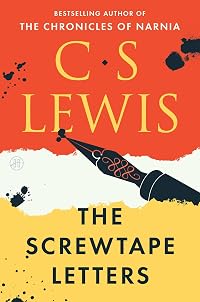
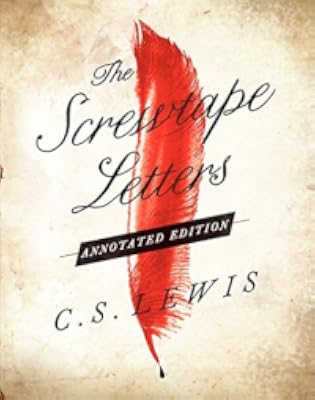
The Screwtape Letters / Screwtape Proposes a Toast
by C. S. Lewis (Author, Preface)
On This Page
Description
A masterpiece of satire, this classic has entertained and enlightened readers the world over with its sly and ironic portrayal of human life from the vantage point of Screwtape, a highly placed assistant to "Our Father Below." At once wildly comic, deadly serious, and strikingly original, C. S. Lewis gives us the correspondence of the worldly-wise old devil to his nephew Wormwood, a novice demon in charge of securing the damnation of an ordinary young man. The Screwtape Letters is the most show more engaging and humorous account of temptation--and triumph over it--ever written. show lessTags
Recommendations






Member Recommendations


Litrvixen Narrated by demons
Member Reviews
This book is not what I was expecting. A funny satire, it is not. Instead, I found myself reading some of the most revolting, selfish, disgusting opinions I've ever had the misfortune to deal with.
If this is Lewis' christianity, the tenets of his religion consist of such charming little bits like:
1. Love in relationships doesn't matter, just making kids
2. Caring about suffering in general is a waste of time, you should only care about people you know personally
3. The "european war" has no moral considerations at all and is a distraction from things of higher spiritual importance, stop thinking about it
4. Furthermore, there is no difference between a pacifist and a nationalistic warmonger, both stances are equally irrelevant to spiritual show more matters
5. Materialism or things such as scientific advancement or knowledge don't assist your immortal soul and may be a devilish distraction, actively avoid such topics of thought
6. 'Liberal, compassionate jesus' is an invalid construction, just as invalid a construction as 'fashionably communist jesus', stop trying to assign goodwill to him because it exists only in your own mind.
Just like all other religious apologia, this has nothing useful to say if you haven't already fully guzzled the flavoraid of the religion yourself. I've lost interest in hearing anything Lewis has to say. I find his morals repulsive and his worldview regressive. The man is an anti-humanist - if everybody did things the way he thinks you should, the world would be a worse place, with more human suffering in it.
I rarely DNF books, normally I can power through to the end. I powered through the Illuminatus trilogy to the end, and that was a feat. This one, I'm done. show less
If this is Lewis' christianity, the tenets of his religion consist of such charming little bits like:
1. Love in relationships doesn't matter, just making kids
2. Caring about suffering in general is a waste of time, you should only care about people you know personally
3. The "european war" has no moral considerations at all and is a distraction from things of higher spiritual importance, stop thinking about it
4. Furthermore, there is no difference between a pacifist and a nationalistic warmonger, both stances are equally irrelevant to spiritual show more matters
5. Materialism or things such as scientific advancement or knowledge don't assist your immortal soul and may be a devilish distraction, actively avoid such topics of thought
6. 'Liberal, compassionate jesus' is an invalid construction, just as invalid a construction as 'fashionably communist jesus', stop trying to assign goodwill to him because it exists only in your own mind.
Just like all other religious apologia, this has nothing useful to say if you haven't already fully guzzled the flavoraid of the religion yourself. I've lost interest in hearing anything Lewis has to say. I find his morals repulsive and his worldview regressive. The man is an anti-humanist - if everybody did things the way he thinks you should, the world would be a worse place, with more human suffering in it.
I rarely DNF books, normally I can power through to the end. I powered through the Illuminatus trilogy to the end, and that was a feat. This one, I'm done. show less
In a series of letters written from one demon, Screwtape, to his nephew and trainee demon, Wormwood, Lewis exposes the nature of temptation and how easy it is to rationalize sin. It didn’t take me long to realize that Lewis had “stopped preaching and started to meddling”. I didn’t like what I saw reflected in my own life. Lewis died before I was born, yet his theological, philosophical, and cultural observations still feel fresh and relevant.
Sometimes I hold off on reviewing "classics" because everyone tells me how danged "classic" they are and I tend to not trust things that are "popular." So, the long wait (my whole life) before I finally read C. S. Lewis's The Screwtape Letters and the appended "Screwtape Proposes a Toast."
Wow! It is good. It is, despite some dated references in a dated setting, still relevant to present-day mankind and their souls. The story is so well-known, and so easily findable on Wikipedia and the like, that I won't give any sort of recap. A million other reviewers have praised this work's virtues, so I will just say that Lewis's take on how and why mankind could be tempted to hellfire is brilliant.
As I said, still relevant too. I will give a few show more examples of Lewis's prescient warnings and insights. In "Screwtape Proposes a Toast" he derides the educational system.
"At universities, examinations must be framed so that nearly all the students get good marks. Entrance examinations must be framed so that all, or nearly all, citizens can go to universities, whether they have any power (or wish) to profit from higher education or not. At schools, children who are too stupid of lazy to learn languages and mathematics and elementary science can be set to doing things that children used to do in their spare time. Let them, for example, make mud pies and call it modelling." (pp. 125-126)
How familiar does that sound? The dumbing down of our educational system? The rampant student loan debt because everybody MUST go to college!
Or on the pitfalls of democracy. Democracy as in everyone is equal, which is how the demons want to define it. "..they [the humans] should never be allowed to give this word a clear and definable meaning." Why? Teach man that instead of all men being created equal, and how every man is equal before the law, the government, and God, no, falsely teach man that "all men are equal" (p. 122, emphasis in the original). Why? "As a result you can use the word democracy to sanction in his thought the most degrading (and also the least enjoyable) of all human feelings. You can get him to practise, not only without shame but with a positive glow of self-approval, conduct which, if undefended by the magic word, would be universally derided." (p. 122).
Does that not sound like the decline of Western thought and values in a nutshell? "We are all equal! All the same! Democracy! So do what everyone else is doing!" Or, to give it a socialist tinge, which is what Lewis mainly meant I think. You would not steal another man's property as a burglar, but call it a tax to pull down the rich so all men are at the same level! Democracy!
A classic, and rightly so. Highly recommended.
Reviewed ISBN 0684831171. Two prefaces by the author included. show less
Wow! It is good. It is, despite some dated references in a dated setting, still relevant to present-day mankind and their souls. The story is so well-known, and so easily findable on Wikipedia and the like, that I won't give any sort of recap. A million other reviewers have praised this work's virtues, so I will just say that Lewis's take on how and why mankind could be tempted to hellfire is brilliant.
As I said, still relevant too. I will give a few show more examples of Lewis's prescient warnings and insights. In "Screwtape Proposes a Toast" he derides the educational system.
"At universities, examinations must be framed so that nearly all the students get good marks. Entrance examinations must be framed so that all, or nearly all, citizens can go to universities, whether they have any power (or wish) to profit from higher education or not. At schools, children who are too stupid of lazy to learn languages and mathematics and elementary science can be set to doing things that children used to do in their spare time. Let them, for example, make mud pies and call it modelling." (pp. 125-126)
How familiar does that sound? The dumbing down of our educational system? The rampant student loan debt because everybody MUST go to college!
Or on the pitfalls of democracy. Democracy as in everyone is equal, which is how the demons want to define it. "..they [the humans] should never be allowed to give this word a clear and definable meaning." Why? Teach man that instead of all men being created equal, and how every man is equal before the law, the government, and God, no, falsely teach man that "all men are equal" (p. 122, emphasis in the original). Why? "As a result you can use the word democracy to sanction in his thought the most degrading (and also the least enjoyable) of all human feelings. You can get him to practise, not only without shame but with a positive glow of self-approval, conduct which, if undefended by the magic word, would be universally derided." (p. 122).
Does that not sound like the decline of Western thought and values in a nutshell? "We are all equal! All the same! Democracy! So do what everyone else is doing!" Or, to give it a socialist tinge, which is what Lewis mainly meant I think. You would not steal another man's property as a burglar, but call it a tax to pull down the rich so all men are at the same level! Democracy!
A classic, and rightly so. Highly recommended.
Reviewed ISBN 0684831171. Two prefaces by the author included. show less
From this, one of the only satires (not parodies) I've read that was actually funny, I have learned mainly that it is entirely acceptable to mock Satan and his demons. Apparently, theologians have long understood that; but I didn't until after reading this--that we should go ahead and laugh at him. Why not? because if you stop and think about it, Satan is a deeply ridiculous figure, for eternally waging an obviously futile rebellion against His Maker for no reason but to satisfy his bizarrely stubborn pride. I used to think I should fear Satan just because of the danger he presents; but sometime after figuring out that it's acceptable to laugh at him, I also realized that in the first place, Satan is actually not dangerous at all to a show more Christian keeping close to God.
The chapters about Screwtape raging at the young man's being in love, and his threatening to eat Wormwood, are particularly funny; I was just rereading them and my delight motivated me to bother writing a review of something I first read over a decade ago. show less
The chapters about Screwtape raging at the young man's being in love, and his threatening to eat Wormwood, are particularly funny; I was just rereading them and my delight motivated me to bother writing a review of something I first read over a decade ago. show less
Entertaining (there's some sharp social commentary), and I found having to reverse the psychology, as it were, a useful intellectual exercise that worked my brain nicely (and, I think, helped me get the theological points Lewis was making). My copy ends with a "Screwtape Proposes a Toast," which I found *quite* tedious, unfortunately. Well worth a read, even if you're disinclined (as I am) to take the religious aspects.... religiously. *looks askance at LW3*
I tried this book once many years ago and I couldn't get into it -- but I just recommended it to a friend I thought would enjoy it, and I wanted to give it another try. I love the first third or so -- it's a very amusing satire from the perspective of a devil, with snarky one-liners that I enjoyed. The implicit advice on how to live well and what to avoid was also fascinatingly aligned with other religions, which I enjoyed engaging.
By the second half, I was dragging though -- the novelty of the format seemed to wear off, or perhaps the biting satire lost steam. I also found one later chapter in particular to be a bit too sexist for me to be wholly comfortable, though of course it's a product of its era (about 80 years old now!).
I'm glad show more I read this classic, and I stand by it being an excellent choice for my friend, but I don't think I need to own a copy. show less
By the second half, I was dragging though -- the novelty of the format seemed to wear off, or perhaps the biting satire lost steam. I also found one later chapter in particular to be a bit too sexist for me to be wholly comfortable, though of course it's a product of its era (about 80 years old now!).
I'm glad show more I read this classic, and I stand by it being an excellent choice for my friend, but I don't think I need to own a copy. show less
Wickedly funny. Sneering but at other times understated sarcasm will either challenge or enrage (all those one star reviews) depending on your belief. Written in an epistolary style between the uber-demon Wormwood as he tries to give advice to his novice demon nephew Screwtape, as he tries to corrupt his first human soul. We only see half the conversation, but just like those people in the airport or mall talking to themselves on their Blutooth headsets, we know exactly what the other end of the line is saying. Appended with Wormwood's Toast.
Probably Lewis's best fiction book, better than the kiddie novels Narnia, or the Perelandra trilogy, or even Mere Christianity. A very fast read but easy to miss something if you do.
I welcome show more comments, but if you try to append another actual review as a comment to this review, I will just delete it. You're free to post your own review to GoodReads anytime you want. show less
Probably Lewis's best fiction book, better than the kiddie novels Narnia, or the Perelandra trilogy, or even Mere Christianity. A very fast read but easy to miss something if you do.
I welcome show more comments, but if you try to append another actual review as a comment to this review, I will just delete it. You're free to post your own review to GoodReads anytime you want. show less
Members
- Recently Added By
Published Reviews
ThingScore 100
What struck me most about this book is its relevance, even decades after it was first published. Lewis's insights into the human condition are as pertinent today as they were back then, reminding us that the battle between good and evil is as old as time itself..........
added by Almatar
Clive Staples Lewis (1898-1963), hoogleraar literatuurgeschiedenis, schrijver van kinderboeken (de Narnia-verhalen) en apologeet van het christelijk geloof, heeft grote naam gemaakt met zijn 'Brieven uit de hel', waarin oom Schroeflik tegenover zijn neef de waarheden van het christelijk geloof omdraait en ze beschrijft als belemmeringen voor inlijving in het rijk van de duivel. Op paradoxale show more wijze en in een stijl die nog niets van zijn levendigheid heeft verloren, wordt hier een klassiek geworden apologie van het christelijk geloof gegeven. Toegevoegd is 'Schroeflik heft het glas'. Het nawoord en de aantekeningen zijn van de vertaler. De laatste vertaling dateerde uit 1947; deze vertaling is uit 2002 en sluit dus beter aan bij het hedendaagse taalgebruik. Paperback; normale druk.
Redactie show less
Redactie show less
added by karnoefel
Lists

Unread books
1,063 works; 87 members

Trinity College Booklist (1951): Class Three, Philosophy and Religion
80 works; 3 members

Generation Joshua
115 works; 3 members

Five star books
1,757 works; 107 members

Blue Pyramid 1,276 Best Books of All Time
1,248 works; 32 members

Summer Reading 2015
18 works; 1 member

Most Disturbing Books
124 works; 27 members

RZIM Introductory Christianity List
12 works; 1 member

Books Read in 2017
4,249 works; 129 members

Christianity
19 works; 3 members

Honey For a Child's Heart
1,152 works; 25 members

Best Essay Collections
61 works; 24 members

Pleasant Surprises: Books That Exceeded Our Expectations
418 works; 143 members

Christian Classics (Old and Modern)
53 works; 3 members

20th Century Literature
1,161 works; 54 members

2024-2025 Ezra Klein Guest Recommendations
213 works; 6 members
GreatBooks Worldview Academy Lists
133 works; 4 members

Religious Fiction
58 works; 13 members

Folio Society
831 works; 52 members
Favorite Childhood Books
1,646 works; 514 members

1960s
281 works; 16 members

Recommend the 20 best books you've read in the last five years
2,168 works; 606 members

Best Books Involving Satan
63 works; 26 members

Stories of Good Versus Evil
22 works; 7 members
Best Satire
188 works; 29 members

Books tagged favorites
390 works; 30 members

Sonlight Books
1,487 works; 25 members
Sycamore Baptist Church Book Study Reading List
156 works; 5 members
Christianity Books You've Read
179 works; 19 members
Ambleside Books
459 works; 18 members

Xenos Christian Fellowship Book Suggestions
102 works; 2 members
Trinity Norman Recommended Christian Readings
170 works; 5 members
Develop Your Personal Christian Library
101 works; 15 members

Literature of Honor for Boys
91 works; 3 members

Books Read in 2025
4,091 works; 97 members
Author Information

C. S. (Clive Staples) Lewis, "Jack" to his intimates, was born on November 29, 1898 in Belfast, Ireland. His mother died when he was 10 years old and his lawyer father allowed Lewis and his brother Warren extensive freedom. The pair were extremely close and they took full advantage of this freedom, learning on their own and frequently enjoying show more games of make-believe. These early activities led to Lewis's lifelong attraction to fantasy and mythology, often reflected in his writing. He enjoyed writing about, and reading, literature of the past, publishing such works as the award-winning The Allegory of Love (1936), about the period of history known as the Middle Ages. Although at one time Lewis considered himself an atheist, he soon became fascinated with religion. He is probably best known for his books for young adults, such as his Chronicles of Narnia series. This fantasy series, as well as such works as The Screwtape Letters (a collection of letters written by the devil), is typical of the author's interest in mixing religion and mythology, evident in both his fictional works and nonfiction articles. Lewis served with the Somerset Light Infantry in World War I; for nearly 30 years he served as Fellow and tutor of Magdalen College at Oxford University. Later, he became Professor of Medieval and Renaissance English at Cambridge University. C.S. Lewis married late in life, in 1957, and his wife, writer Joy Davidman, died of cancer in 1960. He remained at Cambridge until his death on November 22, 1963. (Bowker Author Biography) show less
Some Editions
Awards and Honors
Awards
Notable Lists
Series
Belongs to Publisher Series
Work Relationships
Is contained in
Contains
Is abridged in
Common Knowledge
- Canonical title
- The Screwtape Letters / Screwtape Proposes a Toast
- Original title
- The Screwtape Letters and Screwtape Proposes a Toast
- Alternate titles
- The Screwtape letters : with, Screwtape proposes a toast; Screwtape proposes a toast; 魔鬼書信; 大榔頭寫給蠹木的煽情書; 魔鬼家書(地獄來鴻); 小心魔鬼很聰明 (show all 7); 地獄來鴻 : 來自魔鬼的書信 [另收錄: 魔鬼祝酒文]
- Original publication date
- 1942 (The Screwtape Letters) (The Screwtape Letters); 1959 (Screwtape Proposes a Toast) (Screwtape Proposes a Toast)
- People/Characters
- Screwtape; Wormwood; Our Father Below; The Enemy
- Important places
- Earth; Hell
- Important events
- World War II
- Epigraph
- 'The best way to drive out the devil, if he will not yield to texts of Scripture, is to jeer and flout him, for he cannot bear scorn.'
-- Luther
'The devil . . . the prowde spirite . . . cannot endure to be mocked.'
--Thomas More - Dedication
- To J.R.R. Tolkien
- First words
- My dear Wormwood, I note what you say about guiding your Patient's reading and taking care that he sees a good deal of his materialist friend.
- Quotations
- ...the safest road to Hell is the gradual one--the gentle slope, soft underfoot, without sudden turnings, without milestones, without signposts.
Hatred has its pleasures. It is therefore often the compensation by which a frightened man reimburses himself for the miseries of Fear.
The claim to equality, outside the strictly political field, is made only by those who feel themselves to be in some way inferior. - Last words
- (Click to show. Warning: May contain spoilers.)Your Immanence, your Disgraces, my Thorns, Shadies and Gentledevils: I give you the toast of- Principle Slubgob and the College!
- Original language
- English
- Canonical DDC/MDS
- 248.4
- Canonical LCC
- BR125.L67
- Disambiguation notice
- Please do not combine this LT work with any abridged edition, or with any edition that omits Lewis' additional piece, "Screwtape Proposes a Toast." Each of these variants should be combined only with similar LT works.... (show all) Thank you.
Please note that some works titled simply "The Screwtape Letters" also contain "Screwtape Proposes a Toast". If your edition is combined here and should not be then please be certain to check and, if need be, correct your ISBN before separating. The following ISBNs are of editions titled "The Screwtape Letters" but known to also contain "Screwtape Proposes a Toast":- 0060652896
- 0060652934
- 0684831171
- 0805420401
Classifications
Statistics
- Members
- 19,878
- Popularity
- 293
- Reviews
- 165
- Rating
- (4.13)
- Languages
- 12 — Chinese, Czech, Danish, Dutch, English, German, Hungarian, Italian, Japanese, Polish, Russian, Swedish
- Media
- Paper, Audiobook, Ebook
- ISBNs
- 72
- UPCs
- 3
- ASINs
- 73