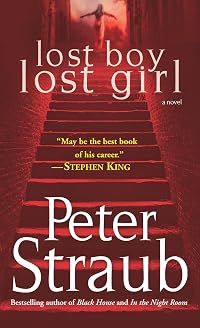
Lost Boy Lost Girl
by Peter Straub
On This Page
Description
Fantasy. Fiction. Horror. Thriller. HTML:A woman commits suicide for no apparent reason. A week later, her son—beautiful, troubled fifteen-year-old Mark Underhill—vanishes from the face of the earth. To his uncle, horror novelist Timothy Underhill, Mark’s inexplicable absence feels like a second death. After his sister-in-law’s funeral, Tim searches his hometown of Millhaven for clues that might help him unravel this mystery of death and disappearance. He soon learns that a show more pedophilic murderer is on the loose in the vicinity, and that shortly before his mother’s suicide Mark had become obsessed with an abandoned house where he imagined the killer might have taken refuge. No mere empty building, the house on Michigan Street whispers from attic to basement with the echoes of a long-hidden true-life horror story, and Tim Underhill comes to fear that in investigating its unspeakable history, Mark stumbled across its last and greatest secret: a ghostly lost girl who may have coaxed the needy, suggestible boy into her mysterious domain.With lost boy lost girl, Peter Straub affirms once again that he is the master of literary horror. show less
Tags
Recommendations





Member Reviews
I've always felt that Peter Straub has never gotten his due from critics and horror fans. He's the Bob Seger of the literary world: a great storyteller as acknowledged by nearly everyone who has read his work, but without the Hollywood-propped household name recognition of a Stephen King or a Neil Gaiman. LOST BOY, LOST GIRL is just more evidence of this.
Straub is a true master of the genre in both style and substance. This story is a strange wandering through an early 2000s landscape when cameras were not yet everywhere and Internet-enabled technology still felt somewhat magical to the average user. In that way, this novel has probably not aged well.
However, if you set aside the dated technological references and instead focus on the show more double mystery of Nancy Underhill's suicide and Mark Underhill's disappearance, the story is timeless. Familial bonds are tested. Young boys only out to entertain themselves become inextricably linked to a mysterious empty house. Murderous evil people are suspected of wrongdoing. Societal and cultural prejudices hold deadly influence over events and people. And then there's the ghost of the little girl.
There's a great deal to enjoy about LOST BOY, LOST GIRL. I'm glad I picked it up. show less
Straub is a true master of the genre in both style and substance. This story is a strange wandering through an early 2000s landscape when cameras were not yet everywhere and Internet-enabled technology still felt somewhat magical to the average user. In that way, this novel has probably not aged well.
However, if you set aside the dated technological references and instead focus on the show more double mystery of Nancy Underhill's suicide and Mark Underhill's disappearance, the story is timeless. Familial bonds are tested. Young boys only out to entertain themselves become inextricably linked to a mysterious empty house. Murderous evil people are suspected of wrongdoing. Societal and cultural prejudices hold deadly influence over events and people. And then there's the ghost of the little girl.
There's a great deal to enjoy about LOST BOY, LOST GIRL. I'm glad I picked it up. show less
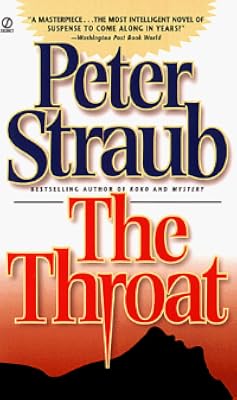
Peter Straub can scare readers with just a whisper. Other horror writers might give us books which scream blood, gore and guts, but Straub (Ghost Story, Koko, The Throat) puts ice in our veins with a soft, barely-audible "boo!"
To badly paraphrase Carl Sandburg, Straub creeps up on little cat's feet and puts his icy paws on the back of our neck when we least expect it. In his latest novel, lost boy lost girl, he saturates his typically literate prose with an ominous buzz that crescendos right up until the last nerve-shattering sentence.
In lost boy lost girl, novelist Tim Underhill (who also appears in Koko and The Throat) returns to his hometown of Millhaven, Illinois when his sister-in-law commits suicide. The death is shocking, show more especially to Tim's brother Philip and nephew Mark. It was "a death like a slap in the face," the book's first sentence informs us. The family's grief is only made worse when Mark mysteriously disappears a week later.
Based in part on a couple of cryptic e-mails Mark had sent him, Tim starts to think there's something more to his nephew's disappearance than the police department's suspicion that it's the work of the local Sherman Park Killer who has been snatching local teenage boys off the street. Tim returns to Millhaven and begins to investigate the string of deaths and as he gets closer to the truth, he discovers it most likely can be found in the creepy house which has sat abandoned in Mark's neighborhood for years.
As we'd expect from the man who gave us the ultimate Ghost Story, lost boy lost girl eventually turns into another haunted-house masterpiece. The residence at 3323 North Michigan Street becomes a living, breathing, pulsating character in its own right, complete with hidden staircases, sliding panels and poltergeists that move objects from room to room.
Straub is an elegant writer—on the opposite end of the horror spectrum from his chum Stephen King, the Royal Scribe of Sticky Gore. From Julia onward, Straub has penned his stories in a tradition established by people like Hawthorne, James and Saki. Like his literary ancestors, he knows how to scare readers psychologically, rather than with an amplified, Hollywood-ized barrage of "gotcha!" cheap thrills. The result is complex writing which is placid on its surface, but underneath teems with the squirming nasties of the id.
Like the dust-moted rooms of the house, Straub's writing is quiet and intense, choosing not to blare off the page in show-offy fashion (starting with the unobtrusive, e.e. cummings-like title). Instead, we take our horror in small doses, unexpected scenes which can prickle the neck-hairs with a single, well-placed word.
For instance, while out skateboarding one day, Mark comes across a dark, hulking figure we assume is the Sherman Park Killer and the sight fills him (and us) with icy dread:
A thick-bodied man facing the other direction stood silhouetted against the dead sky at the top of Michigan Street….The sense of wrongness flowed from this man, Mark understood—this figure with his back turned. Mark took in the unkempt black hair curling past his collar, his wide back covered by a black coat that fell like a sheet of iron to the backs of his knees. Willful, powerful wrongness came off of him like steam.
You could spend hours deconstructing a paragraph like that to determine how Straub does it, how he goes about the business of icy cat's paws with words like "unkempt," "curling," and "steam."
There are plenty of other instances where the author works his black magic on the reader: for instance, a ghost's footsteps "chimed like brush strokes." As Mark sits in the not-empty-after-all house, those whispery footfalls were like "hearing someone stepping down a passage within his own head."
And, earlier, when Mark and his friend Jimbo first entered the house, he'd looked for footprints in the thick dust carpeting the floors. "He saw only tracings, loops and swirls like writing in an unknown alphabet inscribed with the lightest possible pressure of a quill pen." Straub excels at writing subtly wicked sentences like that which collapse our lungs and tighten our throats. What ethereal being, we wonder, could have made those loops and swirls and—most importantly—are they good or evil?
Both good and evil inhabit the rooms of Straub's haunted house in lost boy lost girl, and it's that conjunction of forces which gives the novel its air of melancholy and, ultimately, majesty. show less
To badly paraphrase Carl Sandburg, Straub creeps up on little cat's feet and puts his icy paws on the back of our neck when we least expect it. In his latest novel, lost boy lost girl, he saturates his typically literate prose with an ominous buzz that crescendos right up until the last nerve-shattering sentence.
In lost boy lost girl, novelist Tim Underhill (who also appears in Koko and The Throat) returns to his hometown of Millhaven, Illinois when his sister-in-law commits suicide. The death is shocking, show more especially to Tim's brother Philip and nephew Mark. It was "a death like a slap in the face," the book's first sentence informs us. The family's grief is only made worse when Mark mysteriously disappears a week later.
Based in part on a couple of cryptic e-mails Mark had sent him, Tim starts to think there's something more to his nephew's disappearance than the police department's suspicion that it's the work of the local Sherman Park Killer who has been snatching local teenage boys off the street. Tim returns to Millhaven and begins to investigate the string of deaths and as he gets closer to the truth, he discovers it most likely can be found in the creepy house which has sat abandoned in Mark's neighborhood for years.
As we'd expect from the man who gave us the ultimate Ghost Story, lost boy lost girl eventually turns into another haunted-house masterpiece. The residence at 3323 North Michigan Street becomes a living, breathing, pulsating character in its own right, complete with hidden staircases, sliding panels and poltergeists that move objects from room to room.
Straub is an elegant writer—on the opposite end of the horror spectrum from his chum Stephen King, the Royal Scribe of Sticky Gore. From Julia onward, Straub has penned his stories in a tradition established by people like Hawthorne, James and Saki. Like his literary ancestors, he knows how to scare readers psychologically, rather than with an amplified, Hollywood-ized barrage of "gotcha!" cheap thrills. The result is complex writing which is placid on its surface, but underneath teems with the squirming nasties of the id.
Like the dust-moted rooms of the house, Straub's writing is quiet and intense, choosing not to blare off the page in show-offy fashion (starting with the unobtrusive, e.e. cummings-like title). Instead, we take our horror in small doses, unexpected scenes which can prickle the neck-hairs with a single, well-placed word.
For instance, while out skateboarding one day, Mark comes across a dark, hulking figure we assume is the Sherman Park Killer and the sight fills him (and us) with icy dread:
A thick-bodied man facing the other direction stood silhouetted against the dead sky at the top of Michigan Street….The sense of wrongness flowed from this man, Mark understood—this figure with his back turned. Mark took in the unkempt black hair curling past his collar, his wide back covered by a black coat that fell like a sheet of iron to the backs of his knees. Willful, powerful wrongness came off of him like steam.
You could spend hours deconstructing a paragraph like that to determine how Straub does it, how he goes about the business of icy cat's paws with words like "unkempt," "curling," and "steam."
There are plenty of other instances where the author works his black magic on the reader: for instance, a ghost's footsteps "chimed like brush strokes." As Mark sits in the not-empty-after-all house, those whispery footfalls were like "hearing someone stepping down a passage within his own head."
And, earlier, when Mark and his friend Jimbo first entered the house, he'd looked for footprints in the thick dust carpeting the floors. "He saw only tracings, loops and swirls like writing in an unknown alphabet inscribed with the lightest possible pressure of a quill pen." Straub excels at writing subtly wicked sentences like that which collapse our lungs and tighten our throats. What ethereal being, we wonder, could have made those loops and swirls and—most importantly—are they good or evil?
Both good and evil inhabit the rooms of Straub's haunted house in lost boy lost girl, and it's that conjunction of forces which gives the novel its air of melancholy and, ultimately, majesty. show less
I was a huge fan of Peter Straub’s horror novels back in the day. Reading GHOST STORY and FLOATING DRAGON were incredible experiences, and his collaborations with Stephen King, THE TALISMAN and BLACK HOUSE, are must reads for anyone who loves horror and fantasy. I also very much enjoyed Straub’s earlier forays into the supernatural, JULIA and IF YOU COULD SEE ME NOW. The man had a way with words that really pulled a reader into his world, and unlike most authors in the genre back during the horror novel boom of the ‘80s, he did not go in for the grue and gore prevalent in most of the paperbacks on the shelf in the drug store book rack; Straub didn’t rely on such tropes as the “creature on the loose” or the “evil child.” show more Instead, his horror was more subtle and supernatural; his books were filled with vengeful ghosts, and malevolent entities whose nature could not quite be determined except that they held a grudge against the living. His best stories were puzzle pieces where the legacy of some crime or atrocity in the past collides with the present day. Where his friend, Stephen King, was clearly influenced by the old EC horror comics of the ‘50s, Straub’s inspirations were Poe, Hawthorne, and Henry James. In the ‘90s, Straub shifted gears somewhat, and began writing thrillers and mysteries where there were hints of horror, but it was not the primary focus. Most of these books had the central character of Tim Underhill, a Vietnam veteran and bestselling author. In all honesty, I can’t say I liked the Underhill books as well as his earlier horror works.
LOST BOY LOST GIRL is a Tim Underhill book which came out in the early 2000s, the last decade of Straub’s writing career and it sat on my shelf for quite awhile before I got around to reading it. I was prompted to pick it up after all this time because unlike the other Underhill books, this one had a much more distinct supernatural element to the story. The book is set in the small mid-western town of Millhaven, the place where Tim and his brother grew up, and where his sibling and his family still live. Tim returns to his boyhood home when his sister-in-law, Nancy, commits suicide, quickly followed by the disappearance of his fifteen year old nephew, Mark. The disappearance of Mark is the mystery Tim tries to solve, and compounding the problem is a serial killer on the loose whose victims are young boys.
My feelings on the book: There is a narrative that jumps from one POV to another, including that of Mark, and it sometimes requires attention as to who is speaking at any certain point in the story. Also, information is given to the reader outside of chronological order, which also demands attention. Some familiar tropes and themes from Straub’s earlier work appear, including heinous crimes committed decades in the past that were covered up or just unknown, an old house filled with grisly secrets, inquisitive teenage boys, an apparition that appears to some people and not to others, and who might be The Big Bad. Straub has a knack for crating distinctly unsympathetic characters, like Tim’s brother, who could easily win a Bad Husband and Dad of the Year contest, and is equally at adept portraying teenagers such as Mark, and his best friend, Jimbo. Some of the plotting feels lifted from Serial Killer 101, and the police seem to be particularly dense when it comes to an important clue that would have easily put them on the trail of the killer. As has been noted in other reviews, Straub is not much on giving women prominent voices in his narratives, and this book is no different, though I take exception to those who called him a misogynist. As with any contemporary book written in the early years of the 21st Century, some of the tech used is now totally obsolete. My paperback copy comes in at 336 pages, so this is a fairly short read, and some other reviewers have expressed that they wish it was longer, and delved into the back story more, and expanded on the conclusion. And the finale might be a bone of contention for some, as it does suggest a strong supernatural element with the existence not only of ghosts, but of other realms and worlds beyond this one. A number of things are left unexplained, so much so that a reader might surmise that we have been left with the words of an “unreliable narrator” and that there is another explanation of events altogether.
But that is what makes reading Peter Straub both interesting and challenging. At his best, I thought his horror writing actually surpassed Stephen King, and I’m sorry they never got to collaborate on a third book. On the cover of LOST BOY LOST GIRL, King provided a blurb that stated he thought it “May be the best book of his career.” I would not go that far, but still concede that LOST BOY LOST GIRL contains many of the elements that drew us to Straub in the first place, and is well worth reading. show less
LOST BOY LOST GIRL is a Tim Underhill book which came out in the early 2000s, the last decade of Straub’s writing career and it sat on my shelf for quite awhile before I got around to reading it. I was prompted to pick it up after all this time because unlike the other Underhill books, this one had a much more distinct supernatural element to the story. The book is set in the small mid-western town of Millhaven, the place where Tim and his brother grew up, and where his sibling and his family still live. Tim returns to his boyhood home when his sister-in-law, Nancy, commits suicide, quickly followed by the disappearance of his fifteen year old nephew, Mark. The disappearance of Mark is the mystery Tim tries to solve, and compounding the problem is a serial killer on the loose whose victims are young boys.
My feelings on the book: There is a narrative that jumps from one POV to another, including that of Mark, and it sometimes requires attention as to who is speaking at any certain point in the story. Also, information is given to the reader outside of chronological order, which also demands attention. Some familiar tropes and themes from Straub’s earlier work appear, including heinous crimes committed decades in the past that were covered up or just unknown, an old house filled with grisly secrets, inquisitive teenage boys, an apparition that appears to some people and not to others, and who might be The Big Bad. Straub has a knack for crating distinctly unsympathetic characters, like Tim’s brother, who could easily win a Bad Husband and Dad of the Year contest, and is equally at adept portraying teenagers such as Mark, and his best friend, Jimbo. Some of the plotting feels lifted from Serial Killer 101, and the police seem to be particularly dense when it comes to an important clue that would have easily put them on the trail of the killer. As has been noted in other reviews, Straub is not much on giving women prominent voices in his narratives, and this book is no different, though I take exception to those who called him a misogynist. As with any contemporary book written in the early years of the 21st Century, some of the tech used is now totally obsolete. My paperback copy comes in at 336 pages, so this is a fairly short read, and some other reviewers have expressed that they wish it was longer, and delved into the back story more, and expanded on the conclusion. And the finale might be a bone of contention for some, as it does suggest a strong supernatural element with the existence not only of ghosts, but of other realms and worlds beyond this one. A number of things are left unexplained, so much so that a reader might surmise that we have been left with the words of an “unreliable narrator” and that there is another explanation of events altogether.
But that is what makes reading Peter Straub both interesting and challenging. At his best, I thought his horror writing actually surpassed Stephen King, and I’m sorry they never got to collaborate on a third book. On the cover of LOST BOY LOST GIRL, King provided a blurb that stated he thought it “May be the best book of his career.” I would not go that far, but still concede that LOST BOY LOST GIRL contains many of the elements that drew us to Straub in the first place, and is well worth reading. show less
*Partial spoilers ahead*
An interesting premise, though Straub takes his time getting to the point and the reader occasionally may wonder if all the buildup is leading to anything. I enjoyed the vividly spooky phantom imagery borrowed from Henry James's classic ghost story "The Jolly Corner" (seasoned Straub fans will be aware of his longstanding fascination with James). In stylistic terms, Straub is fairly successful in translating the flavor of his 600-page bestsellers into a shorter, simpler format, and Lost Boy, Lost Girl is not a bad introduction to his writing for folks who aren't ready to tackle a big, daunting book like The Throat or Mr. X. Where it falls short is in its depiction of teenage characters. Kids are hard to write, I show more get it, and writing them realistically presents a challenge even for authors of Straub's caliber. Unfortunately, a lot of this novel consists of the interactions between two skateboarding adolescent boys, and the characterization, mannerisms and dialogue are consistently awkward throughout.
But don't avoid the book just because of that. Fans of The Throat, in particular, should read Lost Boy, Lost Girl because it follows author/amateur detective Tim Underhill back to his hometown of Millhaven to solve a new mystery: the disappearance of his young nephew Mark, which is somehow related to a shunned neighborhood house where terrible events took place decades earlier. The particulars of the story will be comfortably familiar to Straub fans, and this short novel is a nice warm-up for its sequel In the Night Room. There, Straub revisits the setting of this book, but on surer footing with a cast of adult characters. show less
An interesting premise, though Straub takes his time getting to the point and the reader occasionally may wonder if all the buildup is leading to anything. I enjoyed the vividly spooky phantom imagery borrowed from Henry James's classic ghost story "The Jolly Corner" (seasoned Straub fans will be aware of his longstanding fascination with James). In stylistic terms, Straub is fairly successful in translating the flavor of his 600-page bestsellers into a shorter, simpler format, and Lost Boy, Lost Girl is not a bad introduction to his writing for folks who aren't ready to tackle a big, daunting book like The Throat or Mr. X. Where it falls short is in its depiction of teenage characters. Kids are hard to write, I show more get it, and writing them realistically presents a challenge even for authors of Straub's caliber. Unfortunately, a lot of this novel consists of the interactions between two skateboarding adolescent boys, and the characterization, mannerisms and dialogue are consistently awkward throughout.
But don't avoid the book just because of that. Fans of The Throat, in particular, should read Lost Boy, Lost Girl because it follows author/amateur detective Tim Underhill back to his hometown of Millhaven to solve a new mystery: the disappearance of his young nephew Mark, which is somehow related to a shunned neighborhood house where terrible events took place decades earlier. The particulars of the story will be comfortably familiar to Straub fans, and this short novel is a nice warm-up for its sequel In the Night Room. There, Straub revisits the setting of this book, but on surer footing with a cast of adult characters. show less
Many times I almost gave up on this book because I found it tedious and uninteresting. But it’s Peter Straub, so I kept giving it another chance. Not until about halfway through the 336 pages did it finally get interesting and start to grab me like Straub’s books normally would. And grab me it did, with palpable dread, and it had me biting my fingernails. Whew! Then it slowed down again toward the end, and that was ok for a wrap-up.
The book really centers on an abandoned house. Although the plot summary on the back cover talks about a mother’s unexplained suicide and her son’s disappearance, it really has to do with what the son discovers about a house and its old gruesome secrets. Eerie and with a touch of the supernatural, show more “Lost Boy Lost Girl” is a creepy novel that is not consistently entertaining - certainly not one of Straub’s better novels. show less
The book really centers on an abandoned house. Although the plot summary on the back cover talks about a mother’s unexplained suicide and her son’s disappearance, it really has to do with what the son discovers about a house and its old gruesome secrets. Eerie and with a touch of the supernatural, show more “Lost Boy Lost Girl” is a creepy novel that is not consistently entertaining - certainly not one of Straub’s better novels. show less
lost boy lost girl lost mind
...that's what I imagine happened to Stephen King in order for him to have written the blurb on the cover of this - "May be the best book of his career" - unless it was a really nasty left-handed compliment in which case...
golf clap
SPOILER ALERT
I was toddling along with this merrily enough until I got into the last 50? 75? pages when it became clear that the denouement was going to revolve around...
wait
magic teenage sex with the invisible undead. Or something. But it's cool because she's really, really hot.
...that's what I imagine happened to Stephen King in order for him to have written the blurb on the cover of this - "May be the best book of his career" - unless it was a really nasty left-handed compliment in which case...
golf clap
SPOILER ALERT
I was toddling along with this merrily enough until I got into the last 50? 75? pages when it became clear that the denouement was going to revolve around...
wait
magic teenage sex with the invisible undead. Or something. But it's cool because she's really, really hot.
Another good story by mystery/horror master Peter Straub. In this one we have it all: a mystery, a serial killer, a haunted house, family drama and ghosts all around. One fine day, Mark Underhill´s mother decides to commit suicide and decides to go out the big way: takes a bunch of sleeping pills, slashes her wrists and ties a plastic bag over her head. Lo and behold, Mark is the one to find her. Mark, who has lately become obsessed with an abandoned house up the street, is positive some force emanating from that house had to do with his mother´s suicide. Along with his best friend Jimbo, they both set out to uncover whatever secrets the house holds. Several days after, Mark disappears and everyone seems to think that he was taken by show more a pedophile that has been lurking the area and who is believed to have kidnapped and killed other teenage boys. Tim Underhill, famed writer and Mark´s uncle, sets out to dig deep into all those secrets in order to find out what happened to Mark.
I would have given the book five starts if it were not for the ending. I found it pretty meh for such a build up the book created. Other than that it´s a "stay up late and read me" book. show less
I would have given the book five starts if it were not for the ending. I found it pretty meh for such a build up the book created. Other than that it´s a "stay up late and read me" book. show less
Members
- Recently Added By
Lists

Nightmare Magazine's Top 100 Horror Books
100 works; 7 members

Haunted Places and Ghost Stories Reading List
99 works; 4 members

Jones & Newman: Best Horror Books Further Recommended Reading
577 works; 4 members

Books Read in 2022
5,226 works; 115 members

Mustich's 1000 Books to Read Before You Die: A Life Changing List
1,001 works; 20 members

Bram Stoker Award
238 works; 5 members
Author Information

78+ Works 41,918 Members
Author Peter Straub was born in Milwaukee, Wisconsin in 1943. He earned degrees in English from the University of Wisconsin and Columbia University. He taught English at his former high school for three years and worked for a time on his doctorate in Ireland. He began writing in 1969 and published two books of poetry in 1972. His novel Julia show more (1975) was an attempt to find a successful genre in which to work, after his first novel, Marriages (1973), did not sell well. He found that he had a talent for writing horror thrillers in the Gothic tradition. His stories are complex and well paced, with authentic settings that add to the believability of the plot. He is particularly good at creating grotesque characters and gruesome situations; the eeriness of his work is captivating. He has won numerous awards including the British Fantasy Award, the Bram Stoker Award, and the World Fantasy Award. (Bowker Author Biography) show less
Some Editions
Awards and Honors
Awards
Distinctions
Notable Lists
Series
Belongs to Publisher Series
Common Knowledge
- Canonical title
- Lost Boy Lost Girl
- Original title
- Lost boy lost girl
- Original publication date
- 2003
- People/Characters
- Nancy Underhill; Timothy Underhill; Philip Underhill; Mark Underhill; Jimbo Monagham; Margo Monagham (show all 13); Jackie Monagham; Joseph Kalendar; Tom Pasmore; Omar "Old Man" Hilliard; Lucy Cleveland; Ronnie Lloyd-Jones; Sergeant Franz Pohlhaus
- Important places
- Sherman Park; Millhaven; Pigtown; 3323 Michigan Street; 55 Grand Street
- Epigraph*
- Ich sah mich vor einem gewaltigen Hügel, Und lange Tage kletterte ich Durch Regionen des Schnees. Als ich den Gipfelblick vor mir hatte, Schien es, als hätte meine Mühe Dazu gedient, Gärten zu sehen, Die in undenkbarer Fe... (show all)rne lagen. - Stephen Crane
Was hier auf dem Spiel stand, dachte er, war die Undurchlässigkeit der Welt. - Timothy Underhill: Der geteilte Mann - Dedication*
- Für Charles Bernstein und Susan Bee
- First words
- Nancy Underhill's death had been unexpected, abrupt-- a death like a slap in the face.
- Last words
- (Click to show. Warning: May contain spoilers.)The brothers retreated to Philip's lot line and looked on as the first of the adolescent dead began their journey upward into daylight.
- Blurbers
- Gaiman, Neil; King, Stephen
- Original language
- English US
- Canonical DDC/MDS
- 813.54
- Canonical LCC
- PS3569.T6914
*Some information comes from Common Knowledge in other languages. Click "Edit" for more information.
Classifications
Statistics
- Members
- 1,266
- Popularity
- 19,461
- Reviews
- 32
- Rating
- (3.35)
- Languages
- 9 — Danish, Dutch, English, Finnish, French, German, Polish, Spanish, Turkish
- Media
- Paper, Audiobook, Ebook
- ISBNs
- 36
- ASINs
- 6