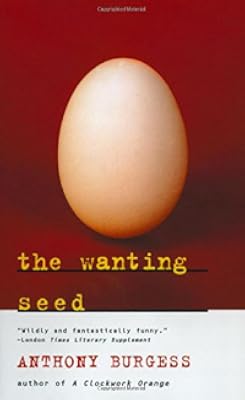
The Wanting Seed
by Anthony Burgess 
On This Page
Description
"Set in the near future, The Wanting Seed is a Malthusian comedy about the strange world overpopulation will produce. Tristram Foxe and his wife, Beatrice-Joanna, live in their skyscraper world where official family limitation glorifies homosexuality. Eventually, their world is transformed into a chaos of cannibalistic dining-clubs, fantastic fertility rituals, and wars without anger. It is a novel both extravagantly funny and grimly serious."Tags
Recommendations
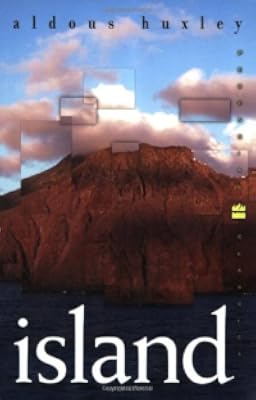
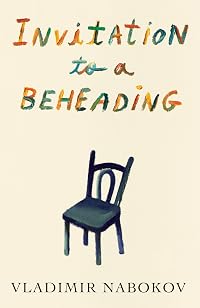
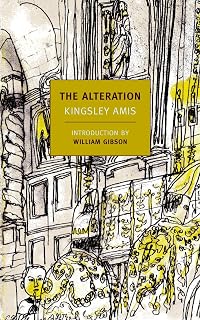
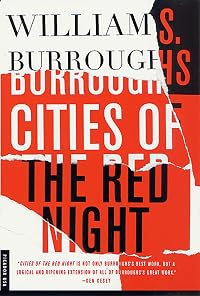







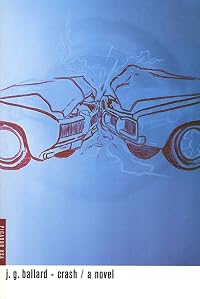
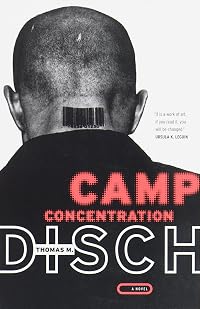


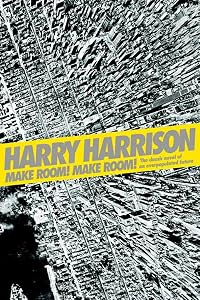


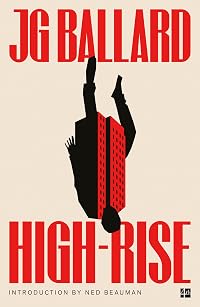






Member Recommendations
anonymous user Slightly absurdist satire that includes an anti-war message
anonymous user Satire that includes an anti-war message
Member Reviews
Orwell meet Burgess, Burgess meet Orwell. Do I say it? The Wanting Seed is an Orwellian imagining of a future wherein the earth is so taxed by overpopulation that homosexuality is encouraged and is necessary to achieve promotion in society. Food is rationed, families may have only one child, if any, media is controlled. All of this negation of fecundity is creating a backlash - crops are failing, animals are dying. Soon jackbooted thugs are patrolling the streets. People are drafted into a military that is out of practice and at war with no one. But the killing fields are there. One woman is about to sneak off to the country and have a child by her lover. When she does, Dionysus returns and with him is ecstasy, cannibalism, debauchery show more and ultimately balance. show less
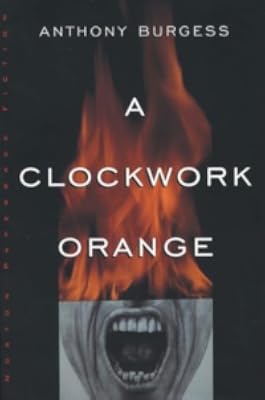
Last month I reread Anthony Burgess's most famous novel, A Clockwork Orange. In it I found new insights into Burgess's creative thought, encouraging me to read more of his oeuvre. I followed up on that idea with The Wanting Seed, which he wrote immediately following Clockwork. This dystopian novel demonstrates one of his persistent themes, the conflict between 'Augustinian' authoritarianism and 'neo-Pelagian' liberalism. The novel is set in a future similar to A Clockwork Orange, where Burgess projects an England in which Christianity, fertility, and heterosexuality will have been outlawed. His heroine, Beatrice-Joanna, is a dissident earth-mother who runs away to Wales to give birth in the home of her brother-in-law. Her husband, show more Tristram, is a history teacher who, in an early scene in the novel, explains the history and meaning of pelphase (Pelagianism) and gusphase (Augustinianism), while his brother heads the Ministry of Infertility. The brothers' relationship leads Tristram to think, “If you expect the worst from a person you can never be disappointed.” Using an almost over-the-top comic style Burgess comments on themes including: the tyranny of the state, homosexuality, perpetual war, spontaneous orgies, the persistence of religious feeling, and cannibalism. After his escape from prison Tristram hitches a ride from a sort of local militia-man who comments: "There doesn't seem to be a government at the moment, but we're trying to improvise some kind of regional law and order. . . We can't have all this, indiscriminate cannibalism and the drains out of order. We've got our wives and children to think of." (pp 171-2) Although the setting of the novel demonstrates the worst aspects of pelagian liberalism and addresses many societal issues, the primary subject is overpopulation and its relation to culture.
The novel is inventive with a comic seriousness that is humorous with periodic moments of unease; the line between the comic and the serious is sometimes blurred. The author's signature fecundity of ideas, his love of quotations and literary allusions, and his brilliant use of language carries the reader through the rough spots. However, it is not hard to understand why it was "considered too daring" by potential backers of Carlo Ponti's proposed film version. My admiration for Burgess as a novelist of ideas grows with each of his novels. This comically heretical entry, combines with its predecessor to provide a veritable one-two punch of dystopian delight. show less
The novel is inventive with a comic seriousness that is humorous with periodic moments of unease; the line between the comic and the serious is sometimes blurred. The author's signature fecundity of ideas, his love of quotations and literary allusions, and his brilliant use of language carries the reader through the rough spots. However, it is not hard to understand why it was "considered too daring" by potential backers of Carlo Ponti's proposed film version. My admiration for Burgess as a novelist of ideas grows with each of his novels. This comically heretical entry, combines with its predecessor to provide a veritable one-two punch of dystopian delight. show less
Loved this book. Hilarious and energetic. Comes at you like a psychedelic rock song. I found the story pretty clever but really loved Burgess' sense of apocalypse, as if he transcribed images from Bosch's Garden of Earthly Delights. I loved Tristram's trek thru degenerating England, the slow sprawl of history, moving from extreme police states on opposite poles of the structure.
Yes, the love story was clumsy, but t served the purpose of showing this world's dichotomy and hypocrisy, his wife leaving him for a fake gay man, being cursed in either worlds for asking questions and being against the establishment no matter who is in charge. The final payoff of the book wasn't as great as the sum of its parts.
|
An amazing hallucinatory romp show more through what could be called social commentary, the main purpose of The Wanting Seed is to examine the ebb and flow of political life, how the world seems to veer from one set of rules, of justifications, to the next. The plot is nothing special, but Burgess creates such a skewed and hilarious world of cannibalistic spiritualism, forced sexuality, contrived war that the novel's other flaws are only minor stumbling blocks. He achieves this satire by having his world try to re-create the doings of the past---most hilariously by staging wars to create jobs and keep the population in check.
But where the novel really succeeds is representing how each authoritarian figure in the novel grasps almost mindlessly at the next perfect doctrine for controlling the world, be it a general whose only understanding of war is through old movies and the War Poets (a man of many famous first lines) or Tristram's brother, who callously jumps onto each new moral ideal, going from a leader in the INFERTILITY POLICE, needing to hide his illegitimate children in fear of being arrested, to a higher-up in the FERTILITY POLICE, now using those same bastard children as a method of advancing his career.
A wondrous, but flawed, novel. You truly get a sense of this sprawling world, and the journey chapters are very effective.
Think A Modest Proposal on bad Acid. show less
Yes, the love story was clumsy, but t served the purpose of showing this world's dichotomy and hypocrisy, his wife leaving him for a fake gay man, being cursed in either worlds for asking questions and being against the establishment no matter who is in charge. The final payoff of the book wasn't as great as the sum of its parts.
|
An amazing hallucinatory romp show more through what could be called social commentary, the main purpose of The Wanting Seed is to examine the ebb and flow of political life, how the world seems to veer from one set of rules, of justifications, to the next. The plot is nothing special, but Burgess creates such a skewed and hilarious world of cannibalistic spiritualism, forced sexuality, contrived war that the novel's other flaws are only minor stumbling blocks. He achieves this satire by having his world try to re-create the doings of the past---most hilariously by staging wars to create jobs and keep the population in check.
But where the novel really succeeds is representing how each authoritarian figure in the novel grasps almost mindlessly at the next perfect doctrine for controlling the world, be it a general whose only understanding of war is through old movies and the War Poets (a man of many famous first lines) or Tristram's brother, who callously jumps onto each new moral ideal, going from a leader in the INFERTILITY POLICE, needing to hide his illegitimate children in fear of being arrested, to a higher-up in the FERTILITY POLICE, now using those same bastard children as a method of advancing his career.
A wondrous, but flawed, novel. You truly get a sense of this sprawling world, and the journey chapters are very effective.
Think A Modest Proposal on bad Acid. show less
Burgess' talent for rhythmic prose & the "novel of ideas" makes, here, for a farcical dystopian story with tremendous narrative momentum and dark humor, a book that will suggest associations with "Brave New World" and "Dr. Strangelove." On one hand it has the patina of "old Sci-Fi," on the other hand Burgess was well ahead of his time on topics such as carbon footprint mania.- Adam
My first Burgess novel....what a ride! I admire his writing and immense and obscure vocabulary. The plot leaves something to be desired. As a a political satire it is brilliant and worthy of dissection and deep discussion. As a novel it's fragmented, meandering, and hard to really connect to the characters. But if you can get over that, it's fun, amusing, very darkly comic, and completely unique.
You know, I don’t read a lot of genre writing. I live, for better or for worse, in the Fiction section of the bookstore. Reading The Wanting Seed makes me think that I might have missed something. I’m not saying that this is a good book – I’m not sure that it is – but it’s the strangest thing I’ve read in some time.
First off, there’s nothing quite as dated as the past’s future. Burgess describes a future where newscasts on vinyl LP’s are delivered daily and Britain uses a complicated pounds-and-shillings currency. The future’s not what it once was, I guess. There’s a lot of more familiar dystopian society stuff here – the planet in Burgess’s future is governed by three or four enormous, oppressive nanny show more states and is, per Malthus, quickly running out of food and room. Burgess’s classical education, which was noted in Jacks0n’s review, contributes to a story arc concerning a society’s shift from Apollonian to Dionysian values. Jacks0n praise for Burgess’s excellent vocabulary is also right on. The favorite new word I picked up from The Wanting Seed is, “plenilunar,” which means, “relating to the full moon.”
What sets this book apart, though, is the grotesque fun that Burgess seems to have with these subjects. Many citizens of the future have had their teeth removed and replaced with rubber dentures. Homosexuality is encouraged and childbearing discouraged, and Burgess turns many of his gay characters into unsubtle caricatures. The less said about the book’s frequent descriptions of enthusiastic cannibalism, the better. Let’s just say that Mr. Burgess made me consider vegetarianism for the first time in years. I can’t help thinking he’s trying to squick out his readers on purpose, and I’m sad to say that he’s rather good at it. Whether he’s being serious about the political and historical points he makes throughout the book is really anybody’s guess. Still, The Wanting Seed’s recommend to those who are looking for something a bit unusual. show less
First off, there’s nothing quite as dated as the past’s future. Burgess describes a future where newscasts on vinyl LP’s are delivered daily and Britain uses a complicated pounds-and-shillings currency. The future’s not what it once was, I guess. There’s a lot of more familiar dystopian society stuff here – the planet in Burgess’s future is governed by three or four enormous, oppressive nanny show more states and is, per Malthus, quickly running out of food and room. Burgess’s classical education, which was noted in Jacks0n’s review, contributes to a story arc concerning a society’s shift from Apollonian to Dionysian values. Jacks0n praise for Burgess’s excellent vocabulary is also right on. The favorite new word I picked up from The Wanting Seed is, “plenilunar,” which means, “relating to the full moon.”
What sets this book apart, though, is the grotesque fun that Burgess seems to have with these subjects. Many citizens of the future have had their teeth removed and replaced with rubber dentures. Homosexuality is encouraged and childbearing discouraged, and Burgess turns many of his gay characters into unsubtle caricatures. The less said about the book’s frequent descriptions of enthusiastic cannibalism, the better. Let’s just say that Mr. Burgess made me consider vegetarianism for the first time in years. I can’t help thinking he’s trying to squick out his readers on purpose, and I’m sad to say that he’s rather good at it. Whether he’s being serious about the political and historical points he makes throughout the book is really anybody’s guess. Still, The Wanting Seed’s recommend to those who are looking for something a bit unusual. show less
I think the Wanting Seed qualifies as truly brilliant literature - and I use the term literature in place of fiction. If you haven't read any Anthony Burgess before, he stands as a gateway to the past. It seems to me - and maybe I stress this overmuch, but it seems as though Burgess is one of the last classic British authors - authors classically educated and with classic sensibilities.
Of course, that doesn't mean that The Wanting Seed is mundane - quite the contrary. This is exciting, entertaining, and virtually guaranteed to offend some of your sensibilities. It alternately pokes fun at and accepts homosexuals, it seems to endorse cannibalism, it makes a wide range of statements about religion, and so forth.
Not only is The Wanting show more Seed a very diverse book, but Burgess' writing is excellent throughout. I'm not much a fan of "classics," since they mostly seem boring, so I'm not too familiar with say, Jane Austen's style. But Burgess write immaculate prose, and his knowledge of the English language is exceptional. I think I've enountered more unfamiliar words in The Wanting Seed than just about any book - words that had me running to the Oxford English Dictionary because they weren't in any other source I checked.
Furthermore, Burgess doesn't use any words, at all, incorrectly. One of my favorite passages in all literature occurs on the last few pages of this book, and I wanted to make sure I had some word meaning correct, so I checked my OED. Low and behold, they were all correctly used, no big deal. But many of the words had multiple connotations, all of which seemed to have been considered. Burgess is a craftsman.
All in all, I don't think it gets better than this, literature which is eminently entertaining. I would highly recommend The Wanting Seed to anyone, particularly those who enjoy dystopian fictions, end-of-the-world tales, and florid prose. show less
Of course, that doesn't mean that The Wanting Seed is mundane - quite the contrary. This is exciting, entertaining, and virtually guaranteed to offend some of your sensibilities. It alternately pokes fun at and accepts homosexuals, it seems to endorse cannibalism, it makes a wide range of statements about religion, and so forth.
Not only is The Wanting show more Seed a very diverse book, but Burgess' writing is excellent throughout. I'm not much a fan of "classics," since they mostly seem boring, so I'm not too familiar with say, Jane Austen's style. But Burgess write immaculate prose, and his knowledge of the English language is exceptional. I think I've enountered more unfamiliar words in The Wanting Seed than just about any book - words that had me running to the Oxford English Dictionary because they weren't in any other source I checked.
Furthermore, Burgess doesn't use any words, at all, incorrectly. One of my favorite passages in all literature occurs on the last few pages of this book, and I wanted to make sure I had some word meaning correct, so I checked my OED. Low and behold, they were all correctly used, no big deal. But many of the words had multiple connotations, all of which seemed to have been considered. Burgess is a craftsman.
All in all, I don't think it gets better than this, literature which is eminently entertaining. I would highly recommend The Wanting Seed to anyone, particularly those who enjoy dystopian fictions, end-of-the-world tales, and florid prose. show less
Members
- Recently Added By
Lists

Survey of Classic Dystopias
29 works; 4 members

Novels that you shouldn't waste your time on
94 works; 50 members
Author Information

120+ Works 48,185 Members
Anthony Burgess was born in 1917 in Manchester, England. He studied language at Xaverian College and Manchester University. He had originally applied for a degree in music, but was unable to pass the entrance exams. Burgess considered himself a composer first, one who later turned to literature. Burgess' first novel, A Vision of Battlements show more (1964), was based on his experiences serving in the British Army. He is perhaps best known for his novel A Clockwork Orange, which was later made into a movie by Stanley Kubrick. In addition to publishing several works of fiction, Burgess also published literary criticism and a linguistics primer. Some of his other titles include The Pianoplayers, This Man and Music, Enderby, The Kingdom of the Wicked, and Little Wilson and Big God. Burgess was living in Monaco when he died in 1993. (Bowker Author Biography) show less
Anthony Burgess has a Legacy Library. Legacy libraries are the personal libraries of famous readers, entered by LibraryThing members from the Legacy Libraries group.
Series
Belongs to Publisher Series
W&Wserien (415)
Work Relationships
Is contained in
Common Knowledge
- Canonical title
- The Wanting Seed
- Original title
- The Wanting Seed
- Original publication date
- 1962
- People/Characters
- Tristam Foxe; Beatrice-Joanna Foxe; Derek Foxe
- Dedication
- To the Unsleeping Gillons.
- First words
- This was the day before the night when the knives of official disappointment struck.
- Last words
- (Click to show. Warning: May contain spoilers.)The wind rises ... we must try to live. The immense air opens and closes my book. The wave, pulverized, dares to gush and spatter from the rocks. Fly away, dazzled, blinded pages. Break, waves. Break with joyful waters ...
Classifications
Statistics
- Members
- 1,206
- Popularity
- 20,707
- Reviews
- 28
- Rating
- (3.57)
- Languages
- 7 — Danish, English, French, Italian, Polish, Russian, Swedish
- Media
- Paper, Ebook
- ISBNs
- 21
- ASINs
- 14