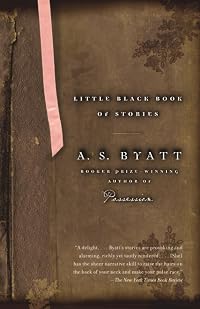
Little Black Book of Stories
by A. S. Byatt
On This Page
Description
Blending elements of folk tales with the darker elements of everyday life, a collection of short fiction includes the story of two middle-aged women confronting their childhood fears and the tale of a man who encounters the ghost of his living wife.Tags
Recommendations





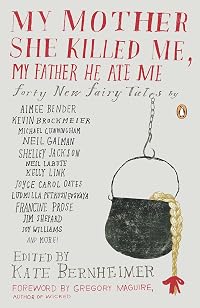
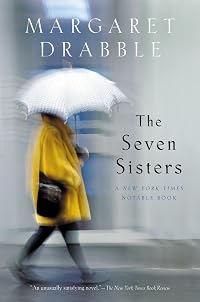
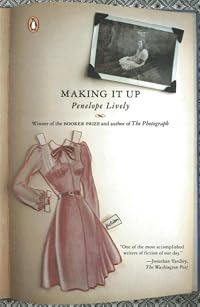
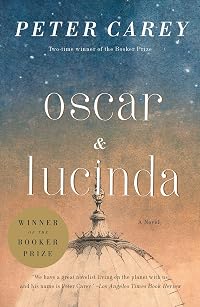
Member Recommendations

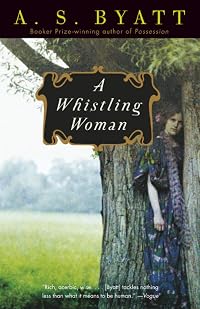
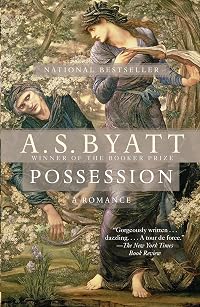
KayCliff The behaviour of the sufferer from Alzheimer's in "The Pink Ribbon" resembles that of Iris Murdoch as recounted by Jon Bayley.
Member Reviews
Another one that does what it says on the tin: a collection of five fairly dark tales, where Byatt uses the extra freedom of short form to be a little bit more experimental and less tied to realism than in her novels.
"The Thing in the forest" brings a grisly fairy-tale motif into an otherwise realist story about two women who met as little girls evacuated from London during the war. The Thing is memorably horrific, but the two women's strategies for dealing with the memory of it are perhaps a bit too flip. "Body art" — originally written for a Wellcome Trust exhibition — is about a gynaecologist who rather unwisely lets a young artist loose in a collection of historic medical artefacts.
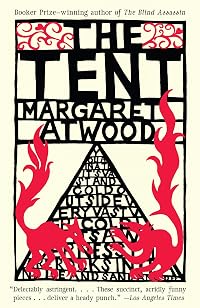
My favourite in the collection was "A stone show more woman", a kind of mineral counterpart to Margaret Atwood's Edible Woman: a woman metamorphoses into rock in a glorious riot of geological and mineralogical terminology and Icelandic scenery. "Raw material" is a sardonic look at the Creative Writing business: an evening-class teacher tries to persuade his students to move away from melodrama and writing-as-therapy. Naturally, he finds that the one student in his group who is not tone-deaf to language, who repeatedly produces modest little sketches of the greatest elegance and beauty, is the one with the most melodramatic life of all. The last piece, "The pink ribbon", brings together dementia, Teletubbies, the Aeneid and the London Blitz in ways that were touching but didn't quite convince me in the end: I think there was just a bit too much going on. show less
"The Thing in the forest" brings a grisly fairy-tale motif into an otherwise realist story about two women who met as little girls evacuated from London during the war. The Thing is memorably horrific, but the two women's strategies for dealing with the memory of it are perhaps a bit too flip. "Body art" — originally written for a Wellcome Trust exhibition — is about a gynaecologist who rather unwisely lets a young artist loose in a collection of historic medical artefacts.
My favourite in the collection was "A stone show more woman", a kind of mineral counterpart to Margaret Atwood's Edible Woman: a woman metamorphoses into rock in a glorious riot of geological and mineralogical terminology and Icelandic scenery. "Raw material" is a sardonic look at the Creative Writing business: an evening-class teacher tries to persuade his students to move away from melodrama and writing-as-therapy. Naturally, he finds that the one student in his group who is not tone-deaf to language, who repeatedly produces modest little sketches of the greatest elegance and beauty, is the one with the most melodramatic life of all. The last piece, "The pink ribbon", brings together dementia, Teletubbies, the Aeneid and the London Blitz in ways that were touching but didn't quite convince me in the end: I think there was just a bit too much going on. show less
Reading Byatt is like casting a net in a tropical fish tank: each dip brings a different combination, mostly of startling variety and beauty. But sometimes I catch some pondweed, rocks, or detritus as well.
I had a similar experience with this collection of five stories from 2003, ranging from 5* to 2*. I admire her work, but often find aspects that detract and distract. But the best are so good, I keep coming back.
They are superficially very different in style, setting, and plot, but they are connected by undercurrents, many with a sharp, dark, and sometimes shocking edge.
Art, especially colour
Byatt is consistently brilliant at conjuring mood and period by meticulous attention to the rich and atmospheric details of nature, textiles, show more textures, fabrics, and furnishings: both concrete and metaphor.
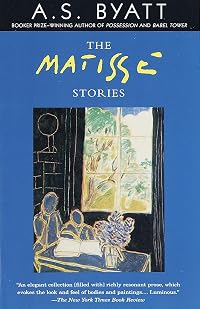
That is especially true of The Thing in the Forest and A Stone Woman, and descriptions of the colour black in Raw Material. See also her The Matisse Stories.
Flesh, especially scarred or aging
Many characters exhibit a revulsion of flesh and of things “the colour of flayed flesh” or “raw flesh”. But Byatt’s delicate descriptions betray her fondness for unexpected beauty. An old woman’s eyes “held to the outer world by the most fragile, spider-web cradle of lid, and muscle, all stained umber, violet, indigo as though bruised by the strain of staying in place”.
Belief, and the loss or absence of it
We all want to be believed, however extraordinary what we say. Many in these stories also have beliefs in the supernatural that they don’t want to be challenged.
Some fear not being believed and thought crazy. Some are crazy. A doctor loses his faith - but not quite enough to free him of it. A child learns the truth about Father Christmas: “The vanishing of magic, a breath-taking blow.” But one fortunate character finds new life in folklore.
The power of the unsaid
In all the stories, what is not said is significant, usually as misguided self-protection. But there are also characters who lose the power of speech, as well as a mute whose crimes are never spoken of.
Dreams, imagination, muddled memories, and mental decline
Several of the stories have an explicitly magical realist aspect, but all have people wrestling with what’s “real” and what is not.
Transformation, beginnings, and endings
Life to death: animal and plant to gems and coal, coal to heat. Abortion and euthanasia. Sane to not.
(Auto)biography
This is a common thread in Byatt’s books. Here, Penny, a thin “reading child” is like the bookish Byatt as the “Thin Child in Wartime” in Ragnarok (see my review HERE). However, as an adult, Penny is not the one who becomes the storyteller.
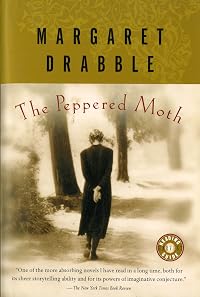
Some characters in the writing class of Raw Material may be drawn from personal experience, and the disagreements over what is good writing might reflect Byatt’s estrangement from her novelists sister, Margaret Drabble.
Reviews of individual stories
To include them here would exceed the character count (GR deleted the whole review!), so here are links:
The Thing in the Forest, 5*, review HERE.
Body Art, 2*, review HERE.
A Stone Woman, 5*, review HERE.
Raw Material, 4*, review HERE.
The Pink Ribbon, 3*, review HERE. show less
I had a similar experience with this collection of five stories from 2003, ranging from 5* to 2*. I admire her work, but often find aspects that detract and distract. But the best are so good, I keep coming back.
They are superficially very different in style, setting, and plot, but they are connected by undercurrents, many with a sharp, dark, and sometimes shocking edge.
Art, especially colour
Byatt is consistently brilliant at conjuring mood and period by meticulous attention to the rich and atmospheric details of nature, textiles, show more textures, fabrics, and furnishings: both concrete and metaphor.
That is especially true of The Thing in the Forest and A Stone Woman, and descriptions of the colour black in Raw Material. See also her The Matisse Stories.
Flesh, especially scarred or aging
Many characters exhibit a revulsion of flesh and of things “the colour of flayed flesh” or “raw flesh”. But Byatt’s delicate descriptions betray her fondness for unexpected beauty. An old woman’s eyes “held to the outer world by the most fragile, spider-web cradle of lid, and muscle, all stained umber, violet, indigo as though bruised by the strain of staying in place”.
Belief, and the loss or absence of it
We all want to be believed, however extraordinary what we say. Many in these stories also have beliefs in the supernatural that they don’t want to be challenged.
Some fear not being believed and thought crazy. Some are crazy. A doctor loses his faith - but not quite enough to free him of it. A child learns the truth about Father Christmas: “The vanishing of magic, a breath-taking blow.” But one fortunate character finds new life in folklore.
The power of the unsaid
In all the stories, what is not said is significant, usually as misguided self-protection. But there are also characters who lose the power of speech, as well as a mute whose crimes are never spoken of.
Dreams, imagination, muddled memories, and mental decline
Several of the stories have an explicitly magical realist aspect, but all have people wrestling with what’s “real” and what is not.
Transformation, beginnings, and endings
Life to death: animal and plant to gems and coal, coal to heat. Abortion and euthanasia. Sane to not.
(Auto)biography
This is a common thread in Byatt’s books. Here, Penny, a thin “reading child” is like the bookish Byatt as the “Thin Child in Wartime” in Ragnarok (see my review HERE). However, as an adult, Penny is not the one who becomes the storyteller.
Some characters in the writing class of Raw Material may be drawn from personal experience, and the disagreements over what is good writing might reflect Byatt’s estrangement from her novelists sister, Margaret Drabble.
Reviews of individual stories
To include them here would exceed the character count (GR deleted the whole review!), so here are links:
The Thing in the Forest, 5*, review HERE.
Body Art, 2*, review HERE.
A Stone Woman, 5*, review HERE.
Raw Material, 4*, review HERE.
The Pink Ribbon, 3*, review HERE. show less
On the whole and as individual stories, very intriguing. I like Byatt's style and imagination and found it lead to intense moments that usually end up being the indelible breath of such things. For example, the first story, "The Thing in the Forest," takes a historical theme (children being sent out of London on trains during WWII) and adds literary elements that are very campfire-familiar (two kids in the woods end up seeing something that shapes their lives and relationship) to create an intense story that's on par with the original fairy tales that haven't had all the gore and gray sucked out of them for mass consumption. It ends in a way that leaves a tangible sensation hanging in the air and your brain humming.
“There were once two little girls who saw, or believed they saw, a thing in a forest.” Thus begins A.S. Byatt’s fairy tale. Read this story at bedtime, then try to sleep!
Little Black Book of Stories collects five of A.S. Byatt’s complex, riveting fictions. Each one is marvelous in its own way, and two of the tales are masterful examples of Magical Realism.
“The Thing in the Forest” uses the trope of vulnerable, motherless fairy tale children. Byatt’s little girls are evacuees from London during the Blitz of WWII. One child is fair and giddy, the other dark and intense. They are transformed by their forest adventure, in the pitiless way that war changes those who endure it. Byatt writes, “The corner of the blanket that show more covered the unthinkable had been turned back.”
"A Stone Woman” employs allegory to describe a literal, physical transformation. A beloved mother dies, and her middle-aged daughter struggles with emotion so unbearable it turns gangrenous. The poisoned section of gut can be surgically removed, but unusual scar tissue grows over the wound. Read this story for lyrical prose that feels excruciatingly painful yet comforting, as Byatt explores how one woman transcends loss and grief.
“Raw Material” is presented realistically – or is it? The ending is so shocking, so unexpected that the reader wonders. This is the best story I’ve ever found on the perils, loneliness, and joy of being an obscure writer.
Byatt’s fiction thrills with a vibrancy that makes the reader want to crawl inside and live there, to shed one’s own pale reality for her enhanced vision. Read it and swoon. show less
Little Black Book of Stories collects five of A.S. Byatt’s complex, riveting fictions. Each one is marvelous in its own way, and two of the tales are masterful examples of Magical Realism.
“The Thing in the Forest” uses the trope of vulnerable, motherless fairy tale children. Byatt’s little girls are evacuees from London during the Blitz of WWII. One child is fair and giddy, the other dark and intense. They are transformed by their forest adventure, in the pitiless way that war changes those who endure it. Byatt writes, “The corner of the blanket that show more covered the unthinkable had been turned back.”
"A Stone Woman” employs allegory to describe a literal, physical transformation. A beloved mother dies, and her middle-aged daughter struggles with emotion so unbearable it turns gangrenous. The poisoned section of gut can be surgically removed, but unusual scar tissue grows over the wound. Read this story for lyrical prose that feels excruciatingly painful yet comforting, as Byatt explores how one woman transcends loss and grief.
“Raw Material” is presented realistically – or is it? The ending is so shocking, so unexpected that the reader wonders. This is the best story I’ve ever found on the perils, loneliness, and joy of being an obscure writer.
Byatt’s fiction thrills with a vibrancy that makes the reader want to crawl inside and live there, to shed one’s own pale reality for her enhanced vision. Read it and swoon. show less
I picked up this book as a lark at the public library; I was in the B section, looking for something else when the spine caught my eye. Whenever that happens to me, I pick the book up, open it to a random page and read a paragraph or two. I was so taken with what I read during that brief time that I brought the book home and dove into it right away.
Little Black Book of Stories is a collection of five short stories, each a bit stranger and harder to classify than the next. A story about a forgotten childhood monster in the woods, a woman who slowly turns to stone, the fantastic mixed in the mundane so skillfully that the transitions are seamless. Some of the stories are straightforward and have little fantasy in them, dealing only with show more ordinary people in ordinary situations. Yet even then, Byatt has the ability to imbue what should be simple with a sense of largess; that what we are reading about is by all means daily life, but in taking a closer look we see the deeper meaning it's held all along. At times the book reads like a collection of modern folk tales, at other times like a bit of dry science fiction (or speculative fiction, if you prefer).
There's a great deal of wit and charm in the writing, the stories crafted so well they seemed effortless. The book is a bit dark at times, funny and smart and entertaining, strange and unexpected. I read it all in one day and then wished I'd saved some for later, which to me is the greatest compliment I can pay any writing. show less
Little Black Book of Stories is a collection of five short stories, each a bit stranger and harder to classify than the next. A story about a forgotten childhood monster in the woods, a woman who slowly turns to stone, the fantastic mixed in the mundane so skillfully that the transitions are seamless. Some of the stories are straightforward and have little fantasy in them, dealing only with show more ordinary people in ordinary situations. Yet even then, Byatt has the ability to imbue what should be simple with a sense of largess; that what we are reading about is by all means daily life, but in taking a closer look we see the deeper meaning it's held all along. At times the book reads like a collection of modern folk tales, at other times like a bit of dry science fiction (or speculative fiction, if you prefer).
There's a great deal of wit and charm in the writing, the stories crafted so well they seemed effortless. The book is a bit dark at times, funny and smart and entertaining, strange and unexpected. I read it all in one day and then wished I'd saved some for later, which to me is the greatest compliment I can pay any writing. show less
I wasn’t, going in, expecting fairy glens and unicorns or anything like that. But, I still wasn’t quite prepared for the direction these fairy tales written for adults took. They were modern, entirely, in the first place. And, secondly, they were centered around World War II and its aftermath in the UK.
Each tale brought home to me a different aspect of humanity, whether it was our different ways of dealing with problems, difficulties and unknowns in our lives... perhaps even our ways of dealing with our fears. Something I suppose most fairy tales are about. Though, in this case, they were not necessarily about our valor and courage, but perhaps our methods of coping and surviving and, something most fairy tales aren't about, the show more aftermath, our attempts to move on.
The other thing I enjoyed was the author's ability to take ordinary situations and make them extraordinary, gradually. What starts as two refugee girls exploring a woods, ends with one facing a monster, and the other sharing the tale as a story teller. What begins as a woman facing the death of her mother ends with the woman becoming a statue of stone and myth, no longer concerned with the every day worries that she had before.
This book is not for the faint of heart. It is very much a Thinking Book. There were so many meanings and so much symbolism in each and every story. I loved it. show less
Each tale brought home to me a different aspect of humanity, whether it was our different ways of dealing with problems, difficulties and unknowns in our lives... perhaps even our ways of dealing with our fears. Something I suppose most fairy tales are about. Though, in this case, they were not necessarily about our valor and courage, but perhaps our methods of coping and surviving and, something most fairy tales aren't about, the show more aftermath, our attempts to move on.
The other thing I enjoyed was the author's ability to take ordinary situations and make them extraordinary, gradually. What starts as two refugee girls exploring a woods, ends with one facing a monster, and the other sharing the tale as a story teller. What begins as a woman facing the death of her mother ends with the woman becoming a statue of stone and myth, no longer concerned with the every day worries that she had before.
This book is not for the faint of heart. It is very much a Thinking Book. There were so many meanings and so much symbolism in each and every story. I loved it. show less
This brilliant little collection of stories by award-winning author Byatt covers a wide range of topics and styles, often incorporating mythological or folkloric imagery to great effect. Byatt's protagonists are frequently trapped--either literally or more figuratively--in the day-to-day details of their own lives and in the expectations of others, and are looking for ways out that sometimes come in surprising forms. From the repressed doctor who reaches out to a free-spirited young artist to the middle-aged spinster who finds herself becoming a creature of stone out of Icelandic myth to the pair of very different adult women whose childhood sighting of a loathsome dragon has haunted them, they find redemption at best and find their show more comfortable assumptions shaken at least.
Standouts in the collection include 'The Thing in the Woods,' 'The Stone Woman,' and 'The Pink Ribbon.' show less
Standouts in the collection include 'The Thing in the Woods,' 'The Stone Woman,' and 'The Pink Ribbon.' show less
Members
- Recently Added By
Published Reviews
It is a delightful collection. It is her sparest, and her richest.... tough and good, stony in all the best ways, vitally not nice. It is her finest collection yet.
added by KayCliff
Lists

Metamorphoses
35 works; 4 members
Author Information

83+ Works 38,399 Members
A.S. Byatt was born on August 24, 1936 in Sheffield, England. She received a B.A. from Newnham College, Cambridge in 1957, did graduate study at Bryn Mawr College from 1957-58, and attended Somerville College, Oxford from 1958-59. She was a staff member in the extra-mural department at the University of London from 1962-71. From 1968-69, she was show more also a part-time lecturer in the liberal studies department of the Central School of Art and Design, London. She was a lecturer at University College from 1972-80 and then senior lecturer from 1981-83. She became a full-time writer in 1983. Her works include The Biographer's Tale, The Virgin in the Garden, Babel Tower, A Whistling Woman, and The Children's Book. She also wrote numerous collections of short stories including Sugar and Other Stories, The Matisse Stories, The Djinn in the Nightingale's Eye, Elementals, and Little Black Book of Stories. Byatt received the English Speaking Union fellowship in 1957-58, the Fellow of the Royal Society of Literature in 1983, the Silver Pen Award for Still Life, and the Booker Prize for Possession: A Romance in 1990. (Bowker Author Biography) show less
Some Editions
Awards and Honors
Awards
Notable Lists
Series
Belongs to Publisher Series
Work Relationships
Is contained in
Common Knowledge
- Canonical title*
- Pieni musta kirja
- Original title
- Little black book of stories
- Original publication date
- 2003
- First words
- There were once two little girls who saw, or thought they saw, a thing in a forest.
- Quotations
- Every time he forgot a phrase he had once known by heart, singing in the nerves, he felt a brief chill of panic. Is it beginning?
When "this" began, he had known that it required more courage to get up every day, to watch over Mado's wandering mind and shambling body, than anything he, or they, had faced in the past. - Last words
- (Click to show. Warning: May contain spoilers.)"Just rest, for a while", said James.
- Original language*
- englanti
*Some information comes from Common Knowledge in other languages. Click "Edit" for more information.
Classifications
Statistics
- Members
- 1,094
- Popularity
- 23,417
- Reviews
- 32
- Rating
- (3.75)
- Languages
- 8 — Danish, Dutch, English, Finnish, French, Italian, Spanish, Turkish
- Media
- Paper, Ebook
- ISBNs
- 20
- ASINs
- 5