On This Page
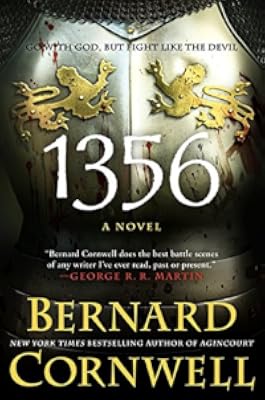
Description
The rascally Thomas of Hookton, aka Le Batard, and his band of not-so-merry mercenaries are bidden by the Earl of Northhampton to unearth the lost sword of Saint Peter in this recreation of the Battle of the Poitiers in 1356 wherein a severely outnumbered English army defeats the French and captures the Poitiers and French King John II.Tags
Recommendations








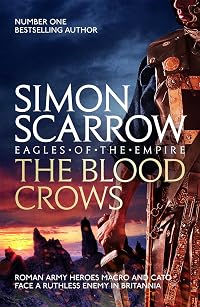
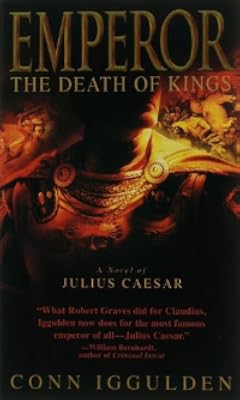
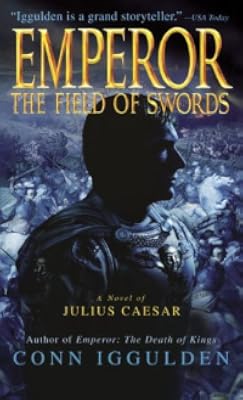
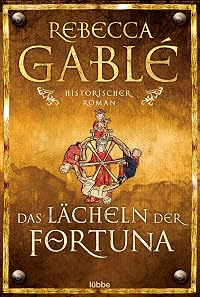

Member Recommendations
Member Reviews
It's a little counter intuitive to say you loved a book that is mostly battle and brutal fighting between two armies in that long ago year of 1356, but it's the truth. Bernard Cornwell has the ability to create vivid pictures in the reader's mind, and to map out the happenings of long ago battles. He brings to life both actual historic characters and the characters that come to life through his writing skill.If I'd had Bernard Cornwell on my bookshelf in college, I would have aced those essay questions about what happened in the different wars that were taught in Western Civ.
Having said that, I read the first in The Grail Quest series back in 2010, and have now picked back up with this audio book. It was great fun to stumble upon old show more friends and find what's gone on with them in the interim. It's very obvious that Cornwell speaks his writing aloud as part of the process (and , indeed, if you've ever gone down the street where he lives part-time here in Charleston, you can hear him, sounding like a man possessed, speaking his characters' lines.The tour guides love it when he gets going full steam.) The dialog is real, funny, moving, and very, very authentic. Another delight was the introduction of a character named Keane, who, I strongly suspect, got his name from a mutual friend, also here in Charleston.Even if Keane is not based on Keane, he's a great character, and I'm glad he made it out of this book alive.
Will go back and find the interim books, also hopefully on audio, to fill in the gap. show less
Having said that, I read the first in The Grail Quest series back in 2010, and have now picked back up with this audio book. It was great fun to stumble upon old show more friends and find what's gone on with them in the interim. It's very obvious that Cornwell speaks his writing aloud as part of the process (and , indeed, if you've ever gone down the street where he lives part-time here in Charleston, you can hear him, sounding like a man possessed, speaking his characters' lines.The tour guides love it when he gets going full steam.) The dialog is real, funny, moving, and very, very authentic. Another delight was the introduction of a character named Keane, who, I strongly suspect, got his name from a mutual friend, also here in Charleston.Even if Keane is not based on Keane, he's a great character, and I'm glad he made it out of this book alive.
Will go back and find the interim books, also hopefully on audio, to fill in the gap. show less
Another outstanding book from an author who excels at taking a historic event and turning it into a rousing and hard to put down story. Filled with interesting heroes and really bad villains, the story leads into and concludes with the Battle of Poitiers where once more the flower of French Chivalry falls to British and Gascon knights, men at arms and archers. Cornwell's MacGuffin, the sword of St. Peter, places the story nicely into the author's Grail Quest series. Hopefully, other quests and battles, which Cornwell does better than just about everyone, lie in our future. Read again this time on an audio Book with excellent narration.
The novel 1356 is a continuation of Bernard Cornwell's Grail Quest series. It continues the story of the fictional English archer Thomas Hookton during the 100 Years War. Bernard Cornwell writes stories that hold interest for hundreds of pages. Had to keep reading because there was always something else about to happen. In the previous book, Heretic, Hookton was looking for the Holy Grail though he was quite sure it did not really exist. In this book a sword that was believed to be the one St. Peter carried in the Garden of Gethsemane. It was believed that this sword would convey great power. Hookton hoped to find it and put it where it would never be found and fought over again. Does he succeed?
4th in the Thomas of Hookton series, set during the Hundred Years War. Thomas is a great character, a British longbowman who's risen to lead his own mercenary band. In previous books we've met Thomas at the historical Battle of Crecy (1346) and later battles as he searched for the holy grail. In 1356, 10 years later, we find Thomas older, gruffer, harder, and yet more determined lead his men in "honorable" war, rather than rape and pillage as was common. The (again, historical) Battle of Poitiers is looming. Thomas is following Edward, the Black Prince, and seeking La Malice, the legendary sword Peter used to defend Christ at Gethsemane. Caught between French soldiers on one side and a malevolent, ambitious Cardinal on the other. Thomas show more must find a way to survive both.
Cornwell's writing is always "easy on the eyes" and I found 1356 to be a fast, engaging read, filled with history but not beating you over the head with it. I love the Thomas character, and am looking forward to another book in the series. show less
Cornwell's writing is always "easy on the eyes" and I found 1356 to be a fast, engaging read, filled with history but not beating you over the head with it. I love the Thomas character, and am looking forward to another book in the series. show less
"This is going to hurt you...so very much." Hilarious! I loved this old lady. Look out for her!
Bernard Cornwell, like a macro photographer, focuses on amazing details of life during that period.
I devoured this book with relish. I loved Bernard Cornwell's rich portrayal of that life; the use of titles, the food they ate, weapons used, how arrows were made, the differences in arrows, the use of crushed bones in the making of steel and and and... Yet at no time are you aware of him telling these details because they are finely threaded into an awesome story. Without the details the plot would be meaningless.
The brutality of those days has no comparison to anything we know today. It is jarring. How was it possible to live?
I can't think of show more any man that would not want to be more like Le Batard. I wanted to know more of the ladies; beyond them being beautiful.
I highly recommend this book for those that love historical fiction, for those that would love to reside with a traveling band of raw warriors show less
Bernard Cornwell, like a macro photographer, focuses on amazing details of life during that period.
I devoured this book with relish. I loved Bernard Cornwell's rich portrayal of that life; the use of titles, the food they ate, weapons used, how arrows were made, the differences in arrows, the use of crushed bones in the making of steel and and and... Yet at no time are you aware of him telling these details because they are finely threaded into an awesome story. Without the details the plot would be meaningless.
The brutality of those days has no comparison to anything we know today. It is jarring. How was it possible to live?
I can't think of show more any man that would not want to be more like Le Batard. I wanted to know more of the ladies; beyond them being beautiful.
I highly recommend this book for those that love historical fiction, for those that would love to reside with a traveling band of raw warriors show less
'1356' is the fourth book in Cornwell’s Grail Quest series all set during The Hundred Years’ War, a fact that I hadn't realised before starting it. The series’ protagonist, Thomas of Hookton, is now known throughout France as 'le Bâtard', the commander of a fierce band of mercenary English longbowmen called the Hellequin. As with the other books in the series Thomas is given a quest to find a religious artifact, this time a sword called 'la Malice' – the sword that Saint Peter used in the Garden of Gethsemane.
Cornwell isn't particularly great at character development but one of the best things about his books are his villains, and this novel is no different with a colourful cast of adversaries opposing Thomas’ quest. These show more include a malevolent priest called Father Calade and an ambitious Cardinal (Bessières), who believes that finding 'la Malice' will help him become the next pope.
The Battle of Poitiers, the main battle in the year 1356 after which the book is named, is the setting for the novel’s climax. I am a fan of historical novels and one of Cornwell's strengths is writing gripping medieval battle scenes. Once again the battle at Poitiers is masterfully written, but the conflict between Thomas and the cardinal over la Malice dominates this story. Personally I would have quite happily foregone this section of the story but overall 1356 is a worthy addition to Cornwell's catalogue which I believe can easily be read as a stand alone (as I did) or as it was intended as a continuation to this series. show less
Cornwell isn't particularly great at character development but one of the best things about his books are his villains, and this novel is no different with a colourful cast of adversaries opposing Thomas’ quest. These show more include a malevolent priest called Father Calade and an ambitious Cardinal (Bessières), who believes that finding 'la Malice' will help him become the next pope.
The Battle of Poitiers, the main battle in the year 1356 after which the book is named, is the setting for the novel’s climax. I am a fan of historical novels and one of Cornwell's strengths is writing gripping medieval battle scenes. Once again the battle at Poitiers is masterfully written, but the conflict between Thomas and the cardinal over la Malice dominates this story. Personally I would have quite happily foregone this section of the story but overall 1356 is a worthy addition to Cornwell's catalogue which I believe can easily be read as a stand alone (as I did) or as it was intended as a continuation to this series. show less
A well paced, well informed and gripping 'techno' thriller for the 1300's! Absolutely loved it. I'm trying to get my son to read it - if you've a child (teenager realistically) who doesn't get excited by history get them to read Cornwell's books; I read this as a stand alone and would be a great introduction to his work.
Members
- Recently Added By
Lists

Top Five Books of 2013
1,562 works; 721 members

Historical Fiction
889 works; 91 members

Stories set in Western Europe
36 works; 1 member
Author Information

172+ Works 93,653 Members
Bernard Cornwell was born in London, England, on February 23, 1944, and came to the United States in 1980. He received a B.A. from the University of London in 1967. Cornwell served as producer of the British Broadcasting Corporation from 1969-1976. After this he was head of current affairs for BBC-TV in Belfast, Northern Ireland. In 1979 he became show more editor of television news for Thames Television of London. Since 1980 he has been a freelance writer. he lives with his wife on Cape Cod. Cornwell's Sharpe series, adventure stories about a British soldier set in the Peninsula War of 1808-1814, are built on the author's interest in the Duke of Wellington's army. Titles include Sharpe's Rifles, Sharpe's Revenge, Sharpe's Siege, Sharpe's Regiment, and Sharpe's Waterloo. The Last Kingdom series has ten books. Book ten, The Flame Bearer is on the bestsellers list. He has also written other works including Wildtrack, Killer's Wake, Sea Lord, Stormchild, Rebel, Copperhead, and Battle Flag. His title Death of Kings made The New York Times Best Seller List in 2012 and In 2014 his title The Pagan Lord made the list again. (Bowker Author Biography) show less
Some Editions
Awards and Honors
Awards
Distinctions
Series

Work Relationships
Is contained in
Common Knowledge
- Canonical title
- 1356
- Original title
- 1356
- Original publication date
- 2012-09-27
- People/Characters
- Thomas of Hookton
- Important events
- Hundred Years' War (1337 | 1453); Reign of Edward III, King of England (1327-01-25 | 1377-06-21); Battle of Poitiers (1356-09-19)
- Epigraph
- The English are riding, no one knows where. - Warning sent in fourteenth-century, quoted in 'A Fool and His Money' by Ann Wroe
- Dedication
- 1356 is for my grandson, Oscar Cornwell, with love.
- First words
- He was late.
- Last words
- (Click to show. Warning: May contain spoilers.)It was time to go home.
- Blurbers
- Martin, George R. R.; Flynn, Vince; Penman, Sharon Kay; Child, Lee
Classifications
Statistics
- Members
- 1,248
- Popularity
- 19,721
- Reviews
- 39
- Rating
- (3.86)
- Languages
- 8 — Czech, English, German, Hungarian, Italian, Portuguese, Spanish, Swedish
- Media
- Paper, Audiobook, Ebook
- ISBNs
- 43
- ASINs
- 16