On This Page
Description
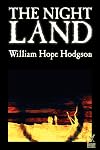
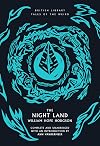
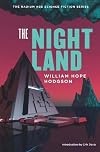
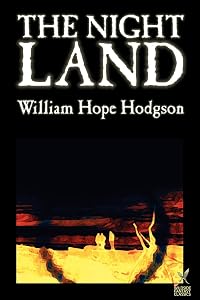
Described by H. P. Lovecraft as being "one of the most potent pieces of macabre imagination ever written", The Night Land is a classic horror fantasy novel by William Hope Hodgson published in 1912. Telling the story of a dying earth, The Night Land starts with a man from the 17th century who, mourning the death of his true love, is given a vision through the eyes his future incarnation. In that distant time Earth is only dimly lit by the remaining glow of the dead Sun. The last millions of show more the human race cluster together inside the Last Redoubt, a huge metal pyramid, and are set upon by mysterious forces from the dark outside. Leaving the protection of their refuge means certain death, but our narrator makes mind contact with a survivor in a forgotten Lesser Redoubt. He must journey alone through the evil darkness to find her, knowing that she is the reincarnation of his past precious love.Writer Clark Ashton Smith said that "In all literature, there are few works so sheerly remarkable, so purely creative, as The Night Land... it impresses the reader as being the ultimate saga of a perishing cosmos, the last epic of a world beleaguered by eternal night and by the unvisageable spawn of darkness. Only a great poet could have conceived and written this story; and it is perhaps not illegitimate to wonder how much of actual prophecy may have been mingled with the poesy."
. show less
Tags
Recommendations










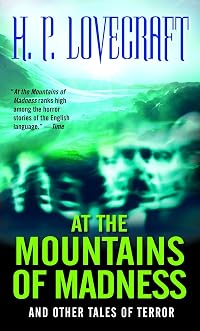

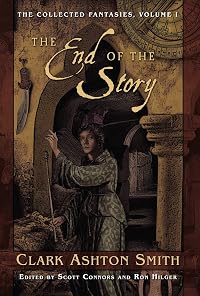
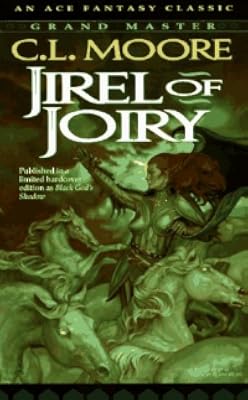
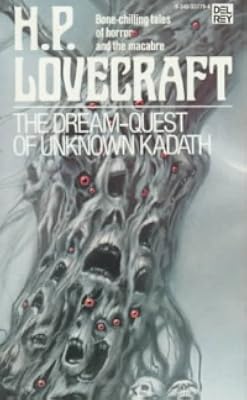








Member Recommendations
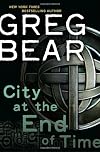
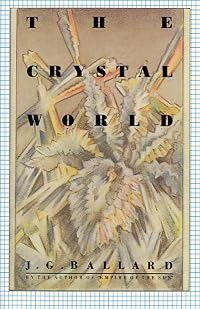
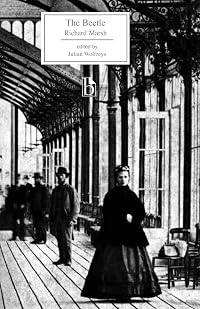
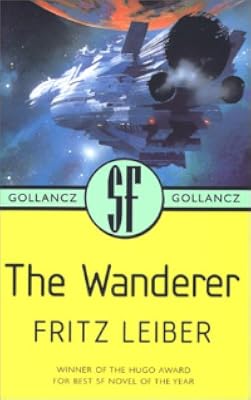
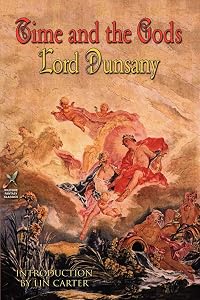
emf1123 Greg Bear's "City at the End of Time" is a homage to the classic "The Night Land" (Wm H. Hodgson), and --having read both--Greg Bear's version tells a better story in a similar landscape, and is much more readable. If you struggled with, or gave up on, The Night Land; try City at the End of Time first, then go back to The Night Land if you enjoyed Bear's version.
Member Reviews
This is the most problematic and the most "flawed" (if you wish) of Hodgson's novels, and yet there are things about it ... the imaginative sweep of the main set up/setting/idea ... it's hard for me to talk about this book in an objective way, because it changed my life. As I read it, I felt Hodgson reaching out and touching things that had haunted me (without my being to name them) and naming them in a way that had unbelievable power.
Yes, it's told in a weird pastiche of 18th century (or thereabouts) English. Yes, the book almost excruciatingly goes over the same ground (backwards) in the second half. Yes, the picture of sexual relationships is troubling to say the least. But that backdrop ... that world ...
There are works of show more imagination that force me to wonder of the author "what happened to you? what did you see? where have you been?" and this is surely one of them. show less
Yes, it's told in a weird pastiche of 18th century (or thereabouts) English. Yes, the book almost excruciatingly goes over the same ground (backwards) in the second half. Yes, the picture of sexual relationships is troubling to say the least. But that backdrop ... that world ...
There are works of show more imagination that force me to wonder of the author "what happened to you? what did you see? where have you been?" and this is surely one of them. show less
Disappointing. I was excited to read this after experiencing [b:The House on the Borderland|220937|The House on the Borderland|William Hope Hodgson|https://d.gr-assets.com/books/1348820158s/220937.jpg|3150114] but this severely dragged.
The beginning to this novel is supremely evocative; a world in darkness due to the absence of the sun, lit from within by flaming pits and powered by a type of geothermal energy. The landscape is visionary, the creatures suitably monstrous and unsettling; from slug-like behemoths to the vile and base Humpt men. After the initial world building the descriptive fervour wanes and we are left following a very traditional tale of a knight on a quest to rescue a fair maiden. This can be tolerated if done well, show more but seems so naive now to a modern audience that the feeling it should be relegated to a children's fairy story is the tempting compulsion, but then again that would insult the modern child. Even allowing for the literary conventions of a hundred years back this is deeply repetitive. I set it down for four days without any desire to pick it back up again and complete it. Out of fairness, stubbornness and being blown away by The House on the Borderland I went back to it but unfortunately that was a waste of time. By the time the ending came around the lack of any psychological truth made what was supposed to be a stirring denouement unengaging and fatuous.
It shocked me how quickly this turned from an imaginative fantastical world of wonder to a tedious drudge in the company of a messed up knight with issues and his drippy girlfriend. The misogyny on show is just awful and cannot be excused by saying it was of its time. And even if that is disregarded there is not enough to sustain the narrative for even a half of the length of the novel.
Please read [b:The House on the Borderland|220937|The House on the Borderland|William Hope Hodgson|https://d.gr-assets.com/books/1348820158s/220937.jpg|3150114]. It is completely ace. show less
The beginning to this novel is supremely evocative; a world in darkness due to the absence of the sun, lit from within by flaming pits and powered by a type of geothermal energy. The landscape is visionary, the creatures suitably monstrous and unsettling; from slug-like behemoths to the vile and base Humpt men. After the initial world building the descriptive fervour wanes and we are left following a very traditional tale of a knight on a quest to rescue a fair maiden. This can be tolerated if done well, show more but seems so naive now to a modern audience that the feeling it should be relegated to a children's fairy story is the tempting compulsion, but then again that would insult the modern child. Even allowing for the literary conventions of a hundred years back this is deeply repetitive. I set it down for four days without any desire to pick it back up again and complete it. Out of fairness, stubbornness and being blown away by The House on the Borderland I went back to it but unfortunately that was a waste of time. By the time the ending came around the lack of any psychological truth made what was supposed to be a stirring denouement unengaging and fatuous.
It shocked me how quickly this turned from an imaginative fantastical world of wonder to a tedious drudge in the company of a messed up knight with issues and his drippy girlfriend. The misogyny on show is just awful and cannot be excused by saying it was of its time. And even if that is disregarded there is not enough to sustain the narrative for even a half of the length of the novel.
Please read [b:The House on the Borderland|220937|The House on the Borderland|William Hope Hodgson|https://d.gr-assets.com/books/1348820158s/220937.jpg|3150114]. It is completely ace. show less
I loved the house on the borderland, so I suppose my expectations were too high. The ideas and atmosphere were amazing, but the writing just dragged on and on. I wasn't even that bothered by the fake archaic language: it was the endless repeating that made it hard to read. And the romance was...well.. disgusting. The protagonist is obsessed with his being the "master" of his beloved and reminded me of Gollum if anything. Only Gollum would probably not slap his beloved ring if it displayed a personality of its own. Still, the unique atmosphere got me through about 70% of the book...but then it just got too much. "mine own Baby-Slave"?! etc. The actual horror story is slowly buried beneath a new kind of horror: that of a man completely show more and utterly convinced that he is to tame his beloved and that she is his possession and has to do whatever he wants her to. At this point I gave up. I am not convinced these were not actually Hodgson's own fantasies and ideals shining through because it is told through a 17th century character. On The Borderland also featured a weak, irrational woman (in this case the main character's sister) who did not seem to have much of a mind of her own. Hodgson seems to have been convinced women only function on feelings and should be treated as children. I don't think I will ever actually finish this, and I don't feel I'm missing all that much. show less
The Night Land has an unpromising start with a love story set at some point in Olde Englande, but then the object of the narrator’s love dies and he experiences a vision of a distant future time and a similarly distant future existence. We are supposed to accept that the protagonist and his One True Love share souls across time, and indeed this provides a motivation for the future protagonist’s actions. But really, this was not necessary. Viewed as a story set at the far end of time, when the sun has died and the Earth is plunged into eternal night, the story could stand on its own in those terms. After all, The Night Land dates from 1912, yet Forster’s The Machine Stops was written in 1909 and quite happily plunged the reader show more into a future time without any framing device connecting it to the present day.
All the same elements that we have already seen in Hodgson's other novels are present here: weird creatures of unknown origin and savage intent; strange situations; striking imagery. Yet this all works; the beasts and altered men of The Night Land don’t need any explanation because they are not located in the world we know. And Hodgson introduces what must be science fiction’s first megastructure; we are some way into the story before we realise that the Last Redoubt, the great pyramid housing the remaining humans on Earth, is several miles high and of similarly impressive footprint; Hodgson describes the mechanisms of the Pyramid in some detail. In so many ways, the story provides a foretaste of later works by other hands – Yevgeny Zamyatin’s We, Algis Budrys’ Rogue Moon and the Strugatsky Brothers’ Roadside Picnic (filmed by Andrei Tarkovsky as Stalker) all came to mind at different times.
Yet the novel is written in the same cod-archaic language as the first Olde Englishe chapter; and this gets very irritating very quickly. Our super-competent hero – possibly channelling the author’s fascination with physical fitness and body images – evades all the horrors and perils of the setting to rescue a survivor from a forgotten outstation of the Redoubt. This survivor turns out to be another incarnation of the Best Belovéd from the first chapter, and the description of the relationship between this survivor and our hero rapidly turns increasingly toe-curling in its tweeness. Of course, the hero’s attitude to this woman is typical of its time – there is a sequence of corporal punishment that we would find totally unacceptable today – so it is refreshing when the Belovéd suddenly displays a feisty side. But sadly, this is only temporary.
I ended up skimming the text as life was too short for all the cod-archaic language and all the stuff about ‘Mine Own Belovéd”. But the pace increases as the protagonists get nearer to their goal, their return to the Pyramid; I was torn between rushing to the end just to get the novel finished with and actually wanting to see how it ended and whether there would be a happy ending or not.
Despite its stylistic problems, The Night Land is probably one of the most iconic proto-science fiction novels of its time; the world-building (well, dismantling, really) and the visual descriptions are stunning. It would actually film rather well, I think; a film adaptation could make the female protagonist a lot tougher, and easily cut out the reams of superfluous material and drill down to the weird and visually stunning adventure story underneath. show less
All the same elements that we have already seen in Hodgson's other novels are present here: weird creatures of unknown origin and savage intent; strange situations; striking imagery. Yet this all works; the beasts and altered men of The Night Land don’t need any explanation because they are not located in the world we know. And Hodgson introduces what must be science fiction’s first megastructure; we are some way into the story before we realise that the Last Redoubt, the great pyramid housing the remaining humans on Earth, is several miles high and of similarly impressive footprint; Hodgson describes the mechanisms of the Pyramid in some detail. In so many ways, the story provides a foretaste of later works by other hands – Yevgeny Zamyatin’s We, Algis Budrys’ Rogue Moon and the Strugatsky Brothers’ Roadside Picnic (filmed by Andrei Tarkovsky as Stalker) all came to mind at different times.
Yet the novel is written in the same cod-archaic language as the first Olde Englishe chapter; and this gets very irritating very quickly. Our super-competent hero – possibly channelling the author’s fascination with physical fitness and body images – evades all the horrors and perils of the setting to rescue a survivor from a forgotten outstation of the Redoubt. This survivor turns out to be another incarnation of the Best Belovéd from the first chapter, and the description of the relationship between this survivor and our hero rapidly turns increasingly toe-curling in its tweeness. Of course, the hero’s attitude to this woman is typical of its time – there is a sequence of corporal punishment that we would find totally unacceptable today – so it is refreshing when the Belovéd suddenly displays a feisty side. But sadly, this is only temporary.
I ended up skimming the text as life was too short for all the cod-archaic language and all the stuff about ‘Mine Own Belovéd”. But the pace increases as the protagonists get nearer to their goal, their return to the Pyramid; I was torn between rushing to the end just to get the novel finished with and actually wanting to see how it ended and whether there would be a happy ending or not.
Despite its stylistic problems, The Night Land is probably one of the most iconic proto-science fiction novels of its time; the world-building (well, dismantling, really) and the visual descriptions are stunning. It would actually film rather well, I think; a film adaptation could make the female protagonist a lot tougher, and easily cut out the reams of superfluous material and drill down to the weird and visually stunning adventure story underneath. show less
One of the weirdest and most striking settings of any novel I've read, and some of the most tedious and repetitive passages of any novel I've read. Apparently WHH shortened it later to an 80-page novella called "The Dream of X" --- sounds promising, but I hope he didn't leave any of the good stuff out.
The beginning sets up an interesting world and the descriptions of everything paint a very, very interesting landscape. I could see making a movie or a t.v. series easily out of this. In many ways it felt like more modern of a science-fiction story than I'd expect for a story created in 1912.
The book has it's weaknesses. However, the book does run long and the possibly interesting female character gets buried under the male character's narration (there's no dialog, only narration, which is problematic in such a long book) with some rather disturbing violent behavior on the narrator's part. (And oddly, it seems to indicate that he crosses line with the female character, but it's never really addressed. Very odd).
I'd almost say if you show more start getting bored, skip to the last chapter or don't hesitate to skim ahead.
Tempted to read some of the rewrites, actually also tempted to just rewrite it more myself. show less
The book has it's weaknesses. However, the book does run long and the possibly interesting female character gets buried under the male character's narration (there's no dialog, only narration, which is problematic in such a long book) with some rather disturbing violent behavior on the narrator's part. (And oddly, it seems to indicate that he crosses line with the female character, but it's never really addressed. Very odd).
I'd almost say if you show more start getting bored, skip to the last chapter or don't hesitate to skim ahead.
Tempted to read some of the rewrites, actually also tempted to just rewrite it more myself. show less
A rather infuriating mix of great lovecraftian horror in the first part, and a second part where the reader gets entirely too much exposure to the protagonist/narrator's brand of chivalrous barbarism.
I can understand that the story wouldn't have worked as intended if the young girl had been Xena warrior-princess (though actually, events do show that she is more than capable when needed), but sooo many, too many addresses to the reader, useless reminders as if the reader was assumed to have the memory of a goldfish, assumptions that said reader is sympathetic to the narrator's view on all topics including his drivel on the nature of feminity and a proper relationship.
I can understand that the story wouldn't have worked as intended if the young girl had been Xena warrior-princess (though actually, events do show that she is more than capable when needed), but sooo many, too many addresses to the reader, useless reminders as if the reader was assumed to have the memory of a goldfish, assumptions that said reader is sympathetic to the narrator's view on all topics including his drivel on the nature of feminity and a proper relationship.
Members
- Recently Added By
Lists

Scary Stories for the Season
160 works; 94 members

Lovecraft's 'Supernatural Horror in Literature' Reading List
216 works; 8 members

Cawthorn and Moorcock's Fantasy: The 100 Best Books
110 works; 7 members

The 5 Parsec Shelf
50 works; 7 members
Jones & Newman: Best Horror Books Further Recommended Reading
577 works; 4 members
Author Information

255+ Works 6,099 Members
Some Editions
Awards and Honors
Series

Belongs to Publisher Series
Work Relationships
Is contained in
Contains
Is retold in
Is abridged in
Common Knowledge
- Canonical title*
- Le Pays de la nuit
- Original title
- The Night Land
- Original publication date
- 1912
- People/Characters
- Narrator; Mirdath/Naani; Master Monstruwacan
- Important places
- Kent, England, UK
- First words
- "This to be Love, that your spirit to live in a natural holiness with the Beloved, and your bodies to be a sweet and natural delight that shall be never lost of a lovely mystery."
- Original language
- English
- Canonical DDC/MDS
- 823.087621
- Disambiguation notice
- This work is for the single-volume edition. Please do not combine with either of the split Volume 1 or Volume 2 editions.
*Some information comes from Common Knowledge in other languages. Click "Edit" for more information.
Classifications
- Genres
- Fiction and Literature, Horror, Science Fiction
- DDC/MDS
- 823.087621 — Literature & rhetoric English & Old English literatures English fiction By type Genre fiction Adventure fiction Speculative fiction Science fiction Time travel
- LCC
- PR6015 .O253 .N54 — Language and Literature English English Literature 1900-1960
- BISAC
Statistics
- Members
- 636
- Popularity
- 45,784
- Reviews
- 14
- Rating
- (3.33)
- Languages
- 7 — Dutch, English, French, German, Polish, Russian, Spanish
- Media
- Paper, Audiobook, Ebook
- ISBNs
- 103
- UPCs
- 1
- ASINs
- 39