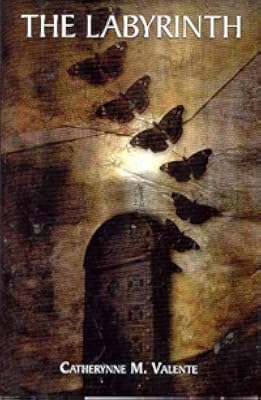
The Labyrinth
by Catherynne M. Valente
On This Page
Description
Here Monsters are hidden ... A lyrical anti-quest through aconscious maze without center, borders, or escape--a dark pilgrim's progressthrough a landscape of vicious Angels, plague houses, crocodile-prophets, tragicchess-sets, and the mind of an unraveling woman, driven on by the mocking guidewho seeks to destroy as much as save. Enter the world of the Labyrinth,where Doors do not wait to be opened, but hunt you in the night. This isZarathustra in Wonderland, a puzzle which defies solution, show more a twisted paththrough language and madness... But where will you hide? show lessTags
Recommendations

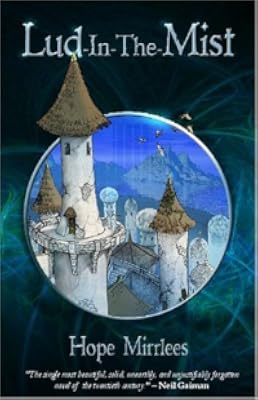
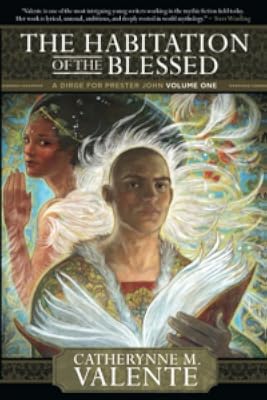
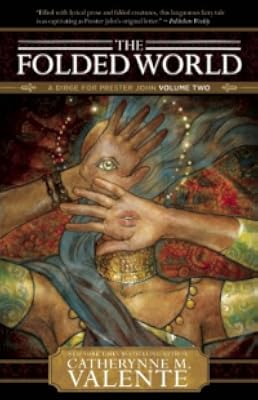
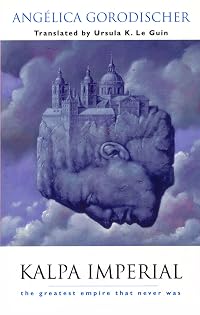




Member Reviews
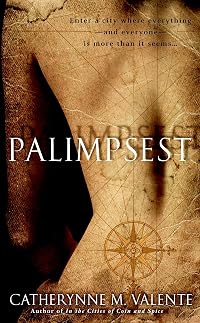
I really enjoyed Catherynne Valente's book Palimpsest, as well as the short story she contributed to Troll's Eye View. So I was eager to read more of her works. I am so glad I did, I absolutely loved this book, it read more like a gothic epic poem than an actually book but was absolute enrapturing. The content is very dreamy and may not be for all readers; those readers who don't enjoy abstract stories and poetry should probably stick with something else.
This book tells the story of a girl stuck in a Labyrinth. She is a Wanderer and wanders through the Labyrinth fighting madness the whole way. She complete various tasks and meets strange creatures all in a quest to escape the Labyrinth. She is constantly trying to outrun Doors, that show more threaten to devour here.
This book reads like a crazy dream. At some times you get caught up the beautiful and poignant descriptions and loose the storyline for a bit, but Valente always tugs you back to the story at hand. I can't say enough how beautiful, artistic, and wonderfully abstract the language throughout this novel is; I absolutely loved it.
There are times where you can get a bit confused about what is happening, most of these times coincide with the dream-like periods of madness that the main character goes through. The first madness period had me befuddled, but after the second bit of madness I figured out what was going on and then was struck by how cleverly Valente is representing this character's insanity. The story snaps back to a more traditional form as the character meets up with and is forced to converse with various strange creatures in the Labyrinth. These portions of the story are written just as beautifully but less abstractly and take the reader through a more traditional fairy tale like plot.
I was struck by how this story reminded me both of The Jabberwocky (in the somewhat made-up words that were used throughout) and also of Alice in Wonderland (as the main character struggles through a world that doesn't make sense).
I love different things and beautifully dark stories and this book was both of those things in spades. That is not to say this story will be for everyone. If you don't like poetry or abstractness in your stories I wouldn't read this book. A lot of the story is woven of analogies and words that don't make clear-cut sense. If you are the type of person who likes absolutes and well-defined stories and characters this probably won't be your cup of tea. I can see how this story and the writing style would be just plain too strange for some folks.
Overall a beautiful, creative, and different read that I found to be exquisite. Valente is quickly turning into one of those authors that can do no wrong in my eyes. I feel like everything I read from her is strange, wonderful and absolute golden. show less
This book tells the story of a girl stuck in a Labyrinth. She is a Wanderer and wanders through the Labyrinth fighting madness the whole way. She complete various tasks and meets strange creatures all in a quest to escape the Labyrinth. She is constantly trying to outrun Doors, that show more threaten to devour here.
This book reads like a crazy dream. At some times you get caught up the beautiful and poignant descriptions and loose the storyline for a bit, but Valente always tugs you back to the story at hand. I can't say enough how beautiful, artistic, and wonderfully abstract the language throughout this novel is; I absolutely loved it.
There are times where you can get a bit confused about what is happening, most of these times coincide with the dream-like periods of madness that the main character goes through. The first madness period had me befuddled, but after the second bit of madness I figured out what was going on and then was struck by how cleverly Valente is representing this character's insanity. The story snaps back to a more traditional form as the character meets up with and is forced to converse with various strange creatures in the Labyrinth. These portions of the story are written just as beautifully but less abstractly and take the reader through a more traditional fairy tale like plot.
I was struck by how this story reminded me both of The Jabberwocky (in the somewhat made-up words that were used throughout) and also of Alice in Wonderland (as the main character struggles through a world that doesn't make sense).
I love different things and beautifully dark stories and this book was both of those things in spades. That is not to say this story will be for everyone. If you don't like poetry or abstractness in your stories I wouldn't read this book. A lot of the story is woven of analogies and words that don't make clear-cut sense. If you are the type of person who likes absolutes and well-defined stories and characters this probably won't be your cup of tea. I can see how this story and the writing style would be just plain too strange for some folks.
Overall a beautiful, creative, and different read that I found to be exquisite. Valente is quickly turning into one of those authors that can do no wrong in my eyes. I feel like everything I read from her is strange, wonderful and absolute golden. show less
Labyrinth is like a lace-work of words. It's definitely surreal, and there are explosions of paragraphs that describe nothing so much as madness. It a story of a quest that isn't, a journey to a center that's not there. It's slightly insane and cyclical, but it's beautifully wrought. The plot is certainly secondary to the tale-telling, and the times that the book drops out of the narrator's head and dips into dialogue serve as resting points for your sensory-overloaded brain. At times, it can be a little bit hard to slog through the metaphors and find the meaning behind it, but it's rewarding in the end.
I finished the labyrinth a couple of days ago and I'm still thinking about it, which is a good sign. This is certainly not a book that you can just read through, or even read more than 2 or 3 chapers in a row., and so despite being a short novel, it took me toe same time as it would to read a book twice it's size. plot? basicaly the unnamed narrator is trying to escape the doors and meets various creatures along the way;chess pieces who can't play chess, etc. She cannot remember ever not being in the labyrinth and she is slowly descending into madness.
Overall, I enjoyed the Labyrinth and I'm glad I read it, though I love the Orphan's Tales books a lot more. I'm definitely going to look out for more of valente's work.
Overall, I enjoyed the Labyrinth and I'm glad I read it, though I love the Orphan's Tales books a lot more. I'm definitely going to look out for more of valente's work.
It's like being in an actual labyrinth of syntax and meaning. I'm not sure if I enjoyed it but it's a very good piece of work.
Hmm. This is a tricky one.
My first thought on reading through the opening pages of this book was "ah, I see - somebody read Vellum and thought 'Duncan has some nice ideas, but it's a shame he's so fixated on cramming his books with the myriad details of his obsessively linear plot; he could have tried to develop some sort of literary style instead'". While that isn't, to be honest, a very fair assessment of The Labyrinth, it is, I think, a good indication of who shouldn't be reading this book - the chances seem pretty good that if you don't care for Duncan (or, for that matter, Harrison or K.J.Bishop or VanderMeer or any similar writers) this isn't the book for you.
On her website Valente observes that "people seem a little accusatory show more when they tell me that it's 'not fiction, really, it's prose-poetry,' as though I somehow tricked them into reading poetry and must now be shot.'". And indeed, anybody saying that would, I think, be going a little far: while the language is certainly lyrical, this is clearly a novel, not a poem: there are characters, dialogue, and yes, even glimmerings of a plot.
However, this certainly isn't an easy book to read. For a start, the prose - while frequently gorgeous - is just as frequently obtuse, and occasionally borders on ludicrous. The central, unnamed protagonist of the book is not exactly in full possession of her mental faculties, and while the text does a good job (most of the time) of her capturing her worldview, it would be hard to say that this made for a pleasant reading experience. I also had some reservations with elements of the plot - in particular, while the ending probably wasn't meant to be a 'twist' in the usual sense of the word, the fact I could guess what it was likely to be only a couple of chapters into the book was a slight disappointment. And perhaps the plot itself could have been developed a little more deeply; while Valente's essentially riffing on fairy tales here, I'd argue that a novel of this length requires a little more meat to it - the language by itself isn't quite up to justifying the book's size.
But this is a clever book, and one I'm glad to have read. For a first novel especially, it's an impressive effort, if oddly lacking in any real emotional punch. I'd be intrigued to see what Valente is capable of when working with a more traditional narrative, so I'll almost certainly be taking a look at her Orphan's Tales books later this year. show less
My first thought on reading through the opening pages of this book was "ah, I see - somebody read Vellum and thought 'Duncan has some nice ideas, but it's a shame he's so fixated on cramming his books with the myriad details of his obsessively linear plot; he could have tried to develop some sort of literary style instead'". While that isn't, to be honest, a very fair assessment of The Labyrinth, it is, I think, a good indication of who shouldn't be reading this book - the chances seem pretty good that if you don't care for Duncan (or, for that matter, Harrison or K.J.Bishop or VanderMeer or any similar writers) this isn't the book for you.
On her website Valente observes that "people seem a little accusatory show more when they tell me that it's 'not fiction, really, it's prose-poetry,' as though I somehow tricked them into reading poetry and must now be shot.'". And indeed, anybody saying that would, I think, be going a little far: while the language is certainly lyrical, this is clearly a novel, not a poem: there are characters, dialogue, and yes, even glimmerings of a plot.
However, this certainly isn't an easy book to read. For a start, the prose - while frequently gorgeous - is just as frequently obtuse, and occasionally borders on ludicrous. The central, unnamed protagonist of the book is not exactly in full possession of her mental faculties, and while the text does a good job (most of the time) of her capturing her worldview, it would be hard to say that this made for a pleasant reading experience. I also had some reservations with elements of the plot - in particular, while the ending probably wasn't meant to be a 'twist' in the usual sense of the word, the fact I could guess what it was likely to be only a couple of chapters into the book was a slight disappointment. And perhaps the plot itself could have been developed a little more deeply; while Valente's essentially riffing on fairy tales here, I'd argue that a novel of this length requires a little more meat to it - the language by itself isn't quite up to justifying the book's size.
But this is a clever book, and one I'm glad to have read. For a first novel especially, it's an impressive effort, if oddly lacking in any real emotional punch. I'd be intrigued to see what Valente is capable of when working with a more traditional narrative, so I'll almost certainly be taking a look at her Orphan's Tales books later this year. show less
While the language is rich and poetic, I wouldn’t recommend this particular title to just any fantasy reader. Instead, I’d recommend it to any reader who has a love of poetic language, a love of metaphor. It’s hardly a fantasy so much as it is a myth, a fairy-tale (which is a fantasy in some regards, but not traditional). The chapters are short and grouped together in Cantos (see? Big!Long!Prose!Poem!). This is something I’d recommend to lovers of myth and fairytale, philosophy and metaphor, and most important, lovers of language. You can’t help but feel a little smarter, more enlightened, after reading this.
I definitely plan on reading more of Valente’s work, particularly her latest release. It’ll be interesting to show more compare her other books to this, especially the style and use of language. And I’d really love to hear her read The Labyrinth out loud. As with anything poetic, one feels as though they’re missing something while reading it silently. This book demands to be heard.
And an aside: this book also begs to be a painted narrative by someone as surreal and talented as Dave McKean. Everything from the Labyrinth itself to the chameleon colors of the narrator…I’d love to see what an artist like him could do with this book.
For a full review, which may or may not include spoilers, please click here: http://calico-reaction.livejournal.com/25234.html show less
I definitely plan on reading more of Valente’s work, particularly her latest release. It’ll be interesting to show more compare her other books to this, especially the style and use of language. And I’d really love to hear her read The Labyrinth out loud. As with anything poetic, one feels as though they’re missing something while reading it silently. This book demands to be heard.
And an aside: this book also begs to be a painted narrative by someone as surreal and talented as Dave McKean. Everything from the Labyrinth itself to the chameleon colors of the narrator…I’d love to see what an artist like him could do with this book.
For a full review, which may or may not include spoilers, please click here: http://calico-reaction.livejournal.com/25234.html show less
It's like being in an actual labyrinth of syntax and meaning. I'm not sure if I enjoyed it but it's a very good piece of work.
Members
- Recently Added By
Lists

Speculative Fiction: Slipstream Literature
166 works; 16 members
Author Information

173+ Works 22,574 Members
Awards and Honors
Distinctions
Work Relationships
Is contained in
Common Knowledge
- Original publication date
- 2006-04-06
Classifications
Statistics
- Members
- 196
- Popularity
- 167,157
- Reviews
- 9
- Rating
- (4.03)
- Languages
- English
- Media
- Paper
- ISBNs
- 1