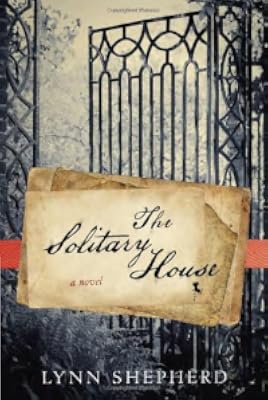
On This Page
Description
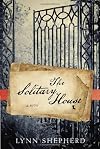
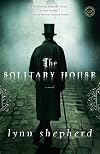
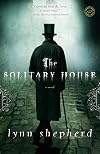
Lynn Shepherd’s first acclaimed novel of historical suspense, Murder at Mansfield Park, brilliantly reimagined the time of Jane Austen. Now, in this spellbinding new triumph, she introduces an unforgettable duo of detectives into the gaslit world of Dickens.London, 1850. Charles Maddox had been an up-and-coming officer for the Metropolitan police until a charge of insubordination abruptly ended his career. Now he works alone, struggling to eke out a living by tracking down criminals. show more Whenever he needs it, he has the help of his great-uncle Maddox, a legendary “thief taker,” a detective as brilliant and intuitive as they come.
On Charles’s latest case, he’ll need all the assistance he can get.
To his shock, Charles has been approached by Edward Tulkinghorn, the shadowy and feared attorney, who offers him a handsome price to do some sleuthing for a client. Powerful financier Sir Julius Cremorne has been receiving threatening letters, and Tulkinghorn wants Charles to—discreetly—find and stop whoever is responsible.
But what starts as a simple, open-and-shut case swiftly escalates into something bigger and much darker. As he cascades toward a collision with an unspeakable truth, Charles can only be aided so far by Maddox. The old man shows signs of forgetfulness and anger, symptoms of an age-related ailment that has yet to be named.
Intricately plotted and intellectually ambitious, The Solitary House is an ingenious novel that does more than spin an enthralling tale: it plumbs the mysteries of the human mind.
This eBook edition includes two complete classic novels that are referenced in The Solitary House: Charles Dickens’s Bleak House and Wilkie Collins’s The Woman in White! This edition also includes a discussion guide and an excerpt from Lynn Shepherd's A Fatal Likeness.
Praise for The Solitary House
“A Victorian tour de force . . . a must-read.”—Kirkus Reviews (starred review)
“Dickens fans will rejoice. . . . [Lynn] Shepherd leaves the reader spellbound.”—Booklist (starred review)
“The star of Lynn Shepherd’s intriguing mystery novel is mid-century Victorian London. . . . Her suspenseful story and winning prose ably serve her literary conceit.”—Associated Press
“Intellectually enthralling, with dark twists at every turn . . . a haunting novel that will have you guessing until the last pages.”—Historical Novels Review
“Lynn Shepherd has a knack for setting literary murder puzzles. . . . This literary magpie-ism is a treat for book lovers, a little nudge-and-a-wink here and there which delights fans of these other works without alienating those who haven’t read them yet. . . . An intelligent, gripping and beautifully written novel.”—The Scotsman
“The reader is plunged into a complex but comprehensible labyrinth of deception.”—Publishers Weekly (starred review). show less
Tags
Recommendations







Member Recommendations
Member Reviews
Solitary House -Lynne Shepherd
3 stars
Charles Maddox is a uniquely gifted young man who is struggling to establish himself as a private detective in a Dickensian London. It is not a setting in an 1850’s London similar to one that Dickens created. It is the London setting that Dickens depicted in his great novel Bleak House. Charles Maddox has been contacted by the infamous Chancery lawyer, Mr. Tulkinghorn. Possessing a photographic memory and a strong sense of justice (much like Sherlock Holmes), Charles is dangerously entrapped in the Tulkinghorn’s evil intrigues.
In direct imitation of Bleak House the book is told through two voices. The story of Charles Maddox’s investigation is told in the voice of an omniscient narrator who show more occasionally injects an all-knowing and condescending 21st century commentary (reminiscent of Faber’s Crimson Petal and the White.) The second story line is told in first person diary entries by a character named Hester. Throughout both of these narratives it becomes apparent that the characters and events of the Dickens’ novel are proceeding simultaneously. In addition to Mr. Tulkinghorn’s role as Charles Maddox’s employer, other Bleak House characters make cameo appearances and occasionally play key roles. One final plot twist borrows characters and content from Wilke Collins’ Woman in White.
I am usually a fan of books, plays or movies which draw their inspiration from earlier works. I love to look at the intellectual process that transforms ideas into new images that can provide a different perspective. That is what I’d hoped to find in this novel. I can’t fault Ms Shepard’s knowledge of 19th century literature. As the omniscient narrator she makes sure the reader is aware of her research:
“It is as if a switch has been flicked – an analogy which is at least thirty years away, incidentally, though the snap of a magic lantern will do almost as well”
“(Charles)…….betakes himself to the nearest suitable establishment, a Victorian version of fast food known by the wonderfully descriptive name of a slap-bang – you slap down the money, and they bang down the food.”
I have to admit that the intertwining plot lines are very clever and excepting the 21st century side commentary, the atmosphere of the period is maintained. However, Ms Shepard claims that Solitary House is meant as homage to Dickens. I cannot help remembering how appalled Dickens was by unauthorized versions of his works and how hard he fought for copy rights. For me, Solitary House did not work as pastiche, or farce or as reinvention. It simply felt too much like plagiarism. show less
Summary: Charles Maddox is a private detective, struggling to earn a living after being kicked off the London police force. He is driven equally by the memory of his sister's kidnapping many years ago, and the example set by his great-uncle, a once-famous detective whose wits have begun to fail him. When Charles receives a letter from a Mr. Tulkinghorn, a secretive attorney whose clients number some of the most powerful people in the kingdom, he is eager to take the case. At first, it seems fairly straightforward: determine the source of some threatening letters received by one of Tulkinghorn's clients. But the further Charles gets into his investigations, the more complicated things become. Complicated... and dangerous, for those show more involved in the plot he uncovers would do anything to preserve their secrets.
Review: The Solitary House does everything that I want my historical mysteries to do. It brings the historical period (in this case, 1850s London) to life, complete with dense fogs, muddy streets, stinking tanneries, and seedy taverns. Its central mystery is well-woven, dropping enough hints and clues to allow me to piece together some things on my own, but still throwing in some good twists and turns and surprises along the way. Its main character is developed outside of the detective work, and there are interesting secondary characters as well - in this case, primarily Charles's great-uncle Maddox. Watching a brilliant man succumb to the effects of dementia, and the effects this has on Charles, is one of the "quieter" pieces of the book - not murder and arson and pickpockets and prostitutes - but is excellently done, and extremely affecting. And finally, it's well-written; in this case in a prose style that emulates Victorian conventions, which occasionally made things a little dense - it's not a fast read - but was well worth it for the historical tone it added to the story. The only exception was the omniscient narrator, which is a tricky device to get right, and is used relatively sparingly by Shepherd, but which I still found distracting whenever it cropped up.
The Solitary House is based on/inspired by Charles Dickens's Bleak House. I can't give any more comparison than that, since (to my shame!) the only Dickens I've read is A Christmas Carol. But as evidenced by the fact that I loved The Solitary House, a familiarity with Dickens is not really required. That's not to say it wouldn't have helped, however. About a third of the book was given over to a narrative from an orphaned girl named Hester, and I found these really confusing at first, since they don't tie into the main narrative until right at the end. When everything is revealed, it made sense, but for most of the book they felt out of place, especially since they interrupted the main story at what felt like strange times. Presumably, a working knowledge of Bleak House would have given me a better idea of how everything fit together. Similarly, some of the characters in this book are drawn directly from Dickens and other Victorian authors, so I definitely felt that there were some minor moments whose significance went straight over my head. I'd be interested to read Bleak House and then revisit The Solitary House, to see how my opinions may change. But overall, despite not being in the Dickens in-crowd, I enjoyed the heck out of this book, and am looking forward to reading more of Shepherd's work. 4.5 out of 5 stars.
Recommendation: Definitely recommended for those who liked Michael Cox's The Meaning of Night, Victorian novels, or historical (and/or literary-based) mysteries. show less
Review: The Solitary House does everything that I want my historical mysteries to do. It brings the historical period (in this case, 1850s London) to life, complete with dense fogs, muddy streets, stinking tanneries, and seedy taverns. Its central mystery is well-woven, dropping enough hints and clues to allow me to piece together some things on my own, but still throwing in some good twists and turns and surprises along the way. Its main character is developed outside of the detective work, and there are interesting secondary characters as well - in this case, primarily Charles's great-uncle Maddox. Watching a brilliant man succumb to the effects of dementia, and the effects this has on Charles, is one of the "quieter" pieces of the book - not murder and arson and pickpockets and prostitutes - but is excellently done, and extremely affecting. And finally, it's well-written; in this case in a prose style that emulates Victorian conventions, which occasionally made things a little dense - it's not a fast read - but was well worth it for the historical tone it added to the story. The only exception was the omniscient narrator, which is a tricky device to get right, and is used relatively sparingly by Shepherd, but which I still found distracting whenever it cropped up.
The Solitary House is based on/inspired by Charles Dickens's Bleak House. I can't give any more comparison than that, since (to my shame!) the only Dickens I've read is A Christmas Carol. But as evidenced by the fact that I loved The Solitary House, a familiarity with Dickens is not really required. That's not to say it wouldn't have helped, however. About a third of the book was given over to a narrative from an orphaned girl named Hester, and I found these really confusing at first, since they don't tie into the main narrative until right at the end. When everything is revealed, it made sense, but for most of the book they felt out of place, especially since they interrupted the main story at what felt like strange times. Presumably, a working knowledge of Bleak House would have given me a better idea of how everything fit together. Similarly, some of the characters in this book are drawn directly from Dickens and other Victorian authors, so I definitely felt that there were some minor moments whose significance went straight over my head. I'd be interested to read Bleak House and then revisit The Solitary House, to see how my opinions may change. But overall, despite not being in the Dickens in-crowd, I enjoyed the heck out of this book, and am looking forward to reading more of Shepherd's work. 4.5 out of 5 stars.
Recommendation: Definitely recommended for those who liked Michael Cox's The Meaning of Night, Victorian novels, or historical (and/or literary-based) mysteries. show less
 This review was written for LibraryThing Early Reviewers.
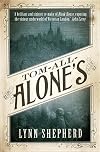
Lynn Shepherd's Dickens spin-off has been top of my Kindle To Read list ever since I borrowed and thoroughly enjoyed her reworking of Austen's Mansfield Park earlier this year, but Tom-All-Alone's is a different kettle of fish altogether. Shepherd achieves the same creative reimagining of the original text, while remaining faithful to Dickens' style and setting, yet this time the murder mystery was harder to follow. Charles Maddox, great-nephew of the thief taker in Murder at Mansfield Park, is investigating the disappearance of a young woman and her child, when a notorious lawyer, Mr Tulkinghorn of Bleak House, enlists his services to find the blackmailer sending threatening notes to his client, a powerful banker named Sir Julius show more Cremorne. Very much in the way of Dickens' own novels, however, subplots abound - what does Hester's narrative have to do with Maddox's case, and can the reader even trust her story? - to the point where the main investigation seems to lose its way in the murky, filthy streets of Victorian London.
I must admit to having only read half of Bleak House, and remaining ignorant of the BBC adaptation, yet I think the key to enjoying Tom-All-Alone's is not to expect a reworking of Dickens. There are some cross-over characters, like Tulkinghorn, Dr Woodcourt, Jo the crossing sweeper, and Inspector Bucket, plus references to names from Wilkie Collins' The Woman in White, but Lynn Shepherd's detective story is independent of both. The timeless and omniscient narrator - a device borrowed from The French Lieutenant's Woman - even name-drops the original authors in the text, which can sound quite smug but works well overall. Shepherd is not working within the confines of Dickens' story, but creating her own, and once I figured that out, the pages flew by!
The different strands of the mystery also start to come together by the middle of the book, and I found the solution intriguing, if somewhat contrived. Asylums, dementia, homosexuality, illegitimacy, incest, paedophilia, prostitution, and even Jack the Ripper - Shepherd leaves no stone unturned, and the effect is suitably dark and gritty. Breaking the fourth wall, with a modern narrator commenting on the past, is obtrusive, but also informative and a clever way around blundering with anachronisms.
Recommended for readers interested in history, and those who read mysteries for the clues and the chase rather than the characters, I think. Also worth a re-read. show less
I must admit to having only read half of Bleak House, and remaining ignorant of the BBC adaptation, yet I think the key to enjoying Tom-All-Alone's is not to expect a reworking of Dickens. There are some cross-over characters, like Tulkinghorn, Dr Woodcourt, Jo the crossing sweeper, and Inspector Bucket, plus references to names from Wilkie Collins' The Woman in White, but Lynn Shepherd's detective story is independent of both. The timeless and omniscient narrator - a device borrowed from The French Lieutenant's Woman - even name-drops the original authors in the text, which can sound quite smug but works well overall. Shepherd is not working within the confines of Dickens' story, but creating her own, and once I figured that out, the pages flew by!
The different strands of the mystery also start to come together by the middle of the book, and I found the solution intriguing, if somewhat contrived. Asylums, dementia, homosexuality, illegitimacy, incest, paedophilia, prostitution, and even Jack the Ripper - Shepherd leaves no stone unturned, and the effect is suitably dark and gritty. Breaking the fourth wall, with a modern narrator commenting on the past, is obtrusive, but also informative and a clever way around blundering with anachronisms.
Recommended for readers interested in history, and those who read mysteries for the clues and the chase rather than the characters, I think. Also worth a re-read. show less
Powerful spin off novel from Dickens's Bleak House. This is very well written and shows a close eye for the minutiae of Victoria life, especially the seamy aspects. This book provides in effect a potential alternative interpretation of some of the events and characters in Dickens's classic novel, an interpretation which concerns themes of child abuse and exploitation and graphic Ripper-style killings, which Dickens would not have been able to have write for publication. There are also references to Wilkie Collins's Woman in White, which I have read but with the details of which I am rather less familiar. While I enjoyed the writing, it does leave an unpleasant taste in the mouth because of some of these themes and slightly besmirches my show more view of Bleak House itself - but it is a fascinating and well-executed literary exercise. show less
London in 1850 was no place for the weak. Wretched, filthy, full to bursting with desperate people. The wealthy, of course, took advantage and had it all.
Charles Maddox, a disgraced police officer, is now struggling to make a living as a 'private detective' although he doesn't use the term. He still has his contacts on Bow Street which helps, as does the fact he was raised by his grandfather who was a famous 'Thief-taker' of Bow Street. Using his grandfather's methods he's found a case that takes him into the mire and mirk of rotting bodies buried in a horrid cemetery where the police have dug up rotting babies. Charles, whose own baby sister was stolen from his mother's arms, and has never gotten over it, sees his sister in those show more babies and needs to learn more.
Shortly after his visit to the cemetery he's contacted by a famous lawyer and hired for another case. Charles, desperate for money accepts the case despite the fact he has reservations due to the lawyer's reputation as a ruthless man. Thus, Charles is drawn deeper and deeper into trying to find out who is sending threatening notes to an extremely wealthy banker. When he does discover the man's identity, then things get worse. And grimmer and Charles, although he is warned off several times, has to find out the secrets the banker and the lawyer are trying desperately to keep.
Shepherd evokes a wretched and atmospheric London, one that totally suits the story. Her characters are beautifully drawn and the mystery is complex enough that if you do guess some of it, you need to, like Charles, discover all of it.
Highly recommended! show less
Charles Maddox, a disgraced police officer, is now struggling to make a living as a 'private detective' although he doesn't use the term. He still has his contacts on Bow Street which helps, as does the fact he was raised by his grandfather who was a famous 'Thief-taker' of Bow Street. Using his grandfather's methods he's found a case that takes him into the mire and mirk of rotting bodies buried in a horrid cemetery where the police have dug up rotting babies. Charles, whose own baby sister was stolen from his mother's arms, and has never gotten over it, sees his sister in those show more babies and needs to learn more.
Shortly after his visit to the cemetery he's contacted by a famous lawyer and hired for another case. Charles, desperate for money accepts the case despite the fact he has reservations due to the lawyer's reputation as a ruthless man. Thus, Charles is drawn deeper and deeper into trying to find out who is sending threatening notes to an extremely wealthy banker. When he does discover the man's identity, then things get worse. And grimmer and Charles, although he is warned off several times, has to find out the secrets the banker and the lawyer are trying desperately to keep.
Shepherd evokes a wretched and atmospheric London, one that totally suits the story. Her characters are beautifully drawn and the mystery is complex enough that if you do guess some of it, you need to, like Charles, discover all of it.
Highly recommended! show less
This review was written for LibraryThing Early Reviewers.I asked for a Library Thing review copy of The Solitary House by Lynn Shepherd (called Tom-All-Alone's in the UK) knowing only the briefest of details about it but knowing also that it was bound to fit my interests perfectly. So imagine my joyful surprise when I read the first sentence of the book and immediately recognized it as being almost the exact starting words as one of my favorite Dickens novels, Bleak House --
London. Michaelmas term lately over, and the Lord Chancellor sitting in Lincoln’s Inn Hall.
However, Shepherd's story starts as Michaelmas term has lately begun because this is not the story of Esther Summerson and her family and friends, although that story does live in the background of this one. Rather, it is the story show more of Charles Maddox, a detective who is trying track down a child that has gone missing many years before. While trying to care for his ailing uncle and mentor, he is summoned to the powerful Mr. Edward Tulkinghorn and is given a seemingly simple case by the formidable lawyer. The ways that these two stories eventually come together is unimaginable, the cases turning out to be just as twisted as the course that Shepherd leads us down through this marriage of old and new stories.
After the pleasant surprise that this was a novel inspired by Dickens, I was even more thrilled to see another favorite novel incorporated later in the tale -- which I won't reveal to you because it's quite a wonderful and unexpected thing. I immediately wanted to reread these two favorites because The Solitary House is written from a place of devotion to these novels and it comes through constantly. But the story that Shepherd has created on her own is just as strong and my worry that it wouldn't live up to the novels that it borrowed from was unfounded. The only moment I was unhappy was when I had to relive one of the saddest moments in Bleak House and, in my opinion, in all of literature. Regardless of my dread of that heartbreaking scene, this was a wonderful novel that would have made Dickens proud in its exposure and denunciation of some of the myriad injustices of Victorian London. I can't wait to read Shepherd's next novel (and I've decided to reread Bleak House for my Year of Dickens after all).
http://webereading.com/2012/05/year-of-dickens-new-release-solitary.html show less
London. Michaelmas term lately over, and the Lord Chancellor sitting in Lincoln’s Inn Hall.
However, Shepherd's story starts as Michaelmas term has lately begun because this is not the story of Esther Summerson and her family and friends, although that story does live in the background of this one. Rather, it is the story show more of Charles Maddox, a detective who is trying track down a child that has gone missing many years before. While trying to care for his ailing uncle and mentor, he is summoned to the powerful Mr. Edward Tulkinghorn and is given a seemingly simple case by the formidable lawyer. The ways that these two stories eventually come together is unimaginable, the cases turning out to be just as twisted as the course that Shepherd leads us down through this marriage of old and new stories.
After the pleasant surprise that this was a novel inspired by Dickens, I was even more thrilled to see another favorite novel incorporated later in the tale -- which I won't reveal to you because it's quite a wonderful and unexpected thing. I immediately wanted to reread these two favorites because The Solitary House is written from a place of devotion to these novels and it comes through constantly. But the story that Shepherd has created on her own is just as strong and my worry that it wouldn't live up to the novels that it borrowed from was unfounded. The only moment I was unhappy was when I had to relive one of the saddest moments in Bleak House and, in my opinion, in all of literature. Regardless of my dread of that heartbreaking scene, this was a wonderful novel that would have made Dickens proud in its exposure and denunciation of some of the myriad injustices of Victorian London. I can't wait to read Shepherd's next novel (and I've decided to reread Bleak House for my Year of Dickens after all).
http://webereading.com/2012/05/year-of-dickens-new-release-solitary.html show less
This review was written for LibraryThing Early Reviewers.Lynn Shepherd's The Solitary House is what the author calls a "literary murder" (and it certainly does contain its fair share of murders). Drawing on classics like Bleak House and The Woman in White and interweaving her own story with some of the same characters and plot-lines that Dickens and Collins deployed, Shepherd has created a complex story with some fascinating characters that makes for quite a good read.
While Charles Maddox, former policeman turned private detective, is the main protagonist, his great-uncle (of the same name), a retired (and sometimes not-entirely-all-there) thief-taker with meticulous records of his career, is the most compelling character, and I hope a prequel is in the works that will tell more of his show more story.
Filled with fun allusions and references that will either keep you turning back to your copies of Dickens and Collins, or perhaps lead you to reach for them for the first time, The Solitary House is a suspenseful tribute to the novels which inspired it. show less
While Charles Maddox, former policeman turned private detective, is the main protagonist, his great-uncle (of the same name), a retired (and sometimes not-entirely-all-there) thief-taker with meticulous records of his career, is the most compelling character, and I hope a prequel is in the works that will tell more of his show more story.
Filled with fun allusions and references that will either keep you turning back to your copies of Dickens and Collins, or perhaps lead you to reach for them for the first time, The Solitary House is a suspenseful tribute to the novels which inspired it. show less
Members
- Recently Added By
Lists

Historical Fiction Lovers
88 works; 4 members

Stories Inspired by Other Fiction
127 works; 24 members

Authors from England
147 works; 4 members
Author Information

5 Works 1,111 Members
Some Editions
Awards and Honors
Distinctions
Series

Work Relationships
Was inspired by
Common Knowledge
- Canonical title
- The Solitary House
- Original title
- Tom-All-Alone's
- Original publication date
- 2012-02-02
- People/Characters
- Charles Maddox; Edward Tulkinghorn; Uncle Maddox; Hester; Molly; Abel Stornaway (show all 8); Sir Julius Cremorne; Lizzie Miller
- Important places
- London, England, UK; England, UK
- Publisher's editor
- Green, Krystyna; Miciak, Kate
Classifications
Statistics
- Members
- 460
- Popularity
- 66,378
- Reviews
- 47
- Rating
- (3.63)
- Languages
- Dutch, English
- Media
- Paper, Audiobook, Ebook
- ISBNs
- 16
- ASINs
- 3