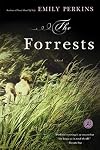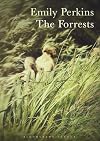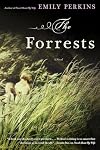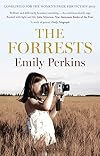
The Forrests
by Emily Perkins
On This Page
Description
Fiction. Literature. HTML:Evelyn and Dorothy - the twins - are seven when the Forrests move from New York City, the hub of the world, to Westmere, New Zealand. The Forrest Trust Fund now cut out of their lives, the family live under a cloudless sky, in the dust and the heat, outdoors and running wild. Their father - who they would only call Frank - works for a cab company over the weekends but is really an actor. Michael, the eldest, has a friend called Daniel whose father lives in a show more half-way house. He starts to live with them, punches Dorothy on the shoulder to stop her crying when she starts school, and becomes family.Lee, their mother, takes them to a commune when she needs to get away from Frank. The memory of that place - the freedom, the dirty richness of the landscape, the stolen kisses - their chaotic childhood, undulates beneath the surface of all their lives, and brings them together in flickering moments when they grow far apart.
The passing of time happens quickly. Evelyn and Dorothee grow older, discover sex, love, have babies, and watch as they too grow old. Their youngest sister moves away and their parents decrease in importance in their lives. Daniel, like a shadow, is always in the back of their minds. Death changes everything, but somehow life remains the same.
In a narrative that shifts and moves, growing as wild as the characters, The Forrests is an extraordinary literary achievement. A novel that sings with color and memory, it speaks of family and time, dysfunction, aging and loneliness, about lethargy, heat, youth, and how there is always something inaccessible and secretive, lying just out of reach. show less
Tags
Recommendations


















Member Recommendations

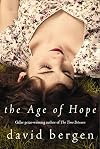
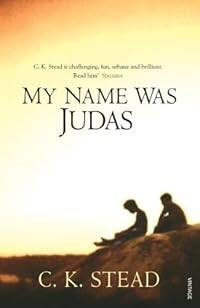
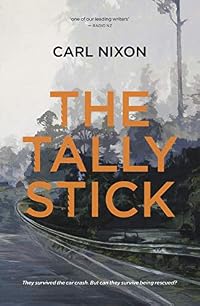
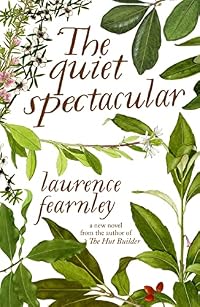
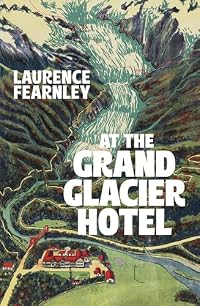
fountainoverflows Though less impressionistic than The Forrests, Bergen's novel, like Perkins's, follows a woman through her very ordinary life...from her roots in Mennonite Canada. This novel, too, consists of vignettes, and the central character is increasingly puzzled by herself and her life. There are some dreamlike qualities here, too, as the novel progresses.
Member Reviews
Opening with Frank Forrest filming a family movie of his children, Dorothy, Evelyn, Michael, Ruthie and their friend Daniel, the interrupted script, unintended images, and the ultimate abandonment of the film captures the feel of the novel as a whole and sets up this slice of life series of episodic style shorts from the life of the dysfunctional Forrest family. The Forrests move to New Zealand chasing father Frank's dream of acting but he can no more break into theater in Auckland than he could in New York and the family must fall back on his rapidly disappearing trust fund to live. Thus starts this dreamy novel that follows second Forrest daughter Dorothy's life from childhood through her dementia-riddled old age.
The vignette-like show more chapters each freeze a moment in time as the story progresses and the Forrests age. Parents Frank and Lee are remote and consumed by their own self-centered whims. They haul their children around without reference to the damage they might do them and they never actually see what is going on in the lives of the kids. Although each of the family members is granted time on the page, Dorothy is the focus of the majority of the novel and so the reader spends the most time reading about her ultimately ordinary life and the never realized dreams she still sometimes entertains, including her lifelong love of family friend Daniel.
The writing is kaleidoscopic, filled with shimmeringly beautiful descriptions and imagery but the feel is still somehow still distant and detached. The feel is almost like a collection of photographs overlaid with a wash, like Instagram snaps. From chapter to chapter there are gaps in time that are left to the reader to fill in. Some of the gaps are quite large and some smaller, an uneven teasing thread. The characters, specifically Dorothy and Eve, can never quite overcome their family and their upbringing, remaining emotionally shattered. They cannot connect, drifting untethered in their own lives. And while the effect seems intentional it is still disorienting for the reader who also cannot quite connect with this admittedly gorgeously written but aloof and oft times dispassionate story. show less
The vignette-like show more chapters each freeze a moment in time as the story progresses and the Forrests age. Parents Frank and Lee are remote and consumed by their own self-centered whims. They haul their children around without reference to the damage they might do them and they never actually see what is going on in the lives of the kids. Although each of the family members is granted time on the page, Dorothy is the focus of the majority of the novel and so the reader spends the most time reading about her ultimately ordinary life and the never realized dreams she still sometimes entertains, including her lifelong love of family friend Daniel.
The writing is kaleidoscopic, filled with shimmeringly beautiful descriptions and imagery but the feel is still somehow still distant and detached. The feel is almost like a collection of photographs overlaid with a wash, like Instagram snaps. From chapter to chapter there are gaps in time that are left to the reader to fill in. Some of the gaps are quite large and some smaller, an uneven teasing thread. The characters, specifically Dorothy and Eve, can never quite overcome their family and their upbringing, remaining emotionally shattered. They cannot connect, drifting untethered in their own lives. And while the effect seems intentional it is still disorienting for the reader who also cannot quite connect with this admittedly gorgeously written but aloof and oft times dispassionate story. show less
‘Happy families are all alike; every unhappy family is unhappy in its own way.’
In the dysfunctional Forrest family, the universal is in the particular. There are many mundane-but-fascinating scenes of day to day (middle-class) life that are described so exactly and minutely that resonated with my own experience that at times it seemed like reading about my own life. It was because of this sensory detail the characters felt like real people and were totally absorbing.
Daniel is the charming, elusive, Heathcliff-type figure that Dorothy continually hankers after. Is he the under-tow that keeps dragging her under, or does that longing keep her afloat when life becomes overwhelming? Of one of the many wonderful metaphors throughout the show more book, this one encapsulates their relationship: ‘A vine had grown over the kitchen window and been cut back, leaving a tattoo of broken black swirls. Dorothy picked at the insistent tendril that crawled under the windowpane, its bright greenness probing the room, pale green shoots emerging like arrowheads, or the tops of the spades suit in a deck of playing cards.’
A minor quibble: The book evokes a nostalgic growing up in NZ atmosphere that I was immersed in so completely, that when references such as silver foil milk bottle tops, the new anti-nuclear policy and EpiPens, and the Red Squad came up, I needed to readjust my time-frame slightly. I almost wanted dates with the chapter headings, as the references that helped me to pinpoint dates were vague and at times contradictory – Dorothy is 25 in the mid 1980s, on page 289 she is almost 65, but then the later the Rest Home scenes with current news items (duct tape, topless women on bikes etc) disorientated me. Perhaps they were they her confused memories of another time? It was a bit disconcerting, my reaction was no, no, you can’t do that to her yet!
The episodic style is similar to that of ‘The Stranger’s Child’ and I loved the way the writing got inside the heads of the female characters: ‘She would clear out the cupboards and vacuum in the corners and wipe down all the boxes. She would find enough fresh food to make something hearty for dinner, and light the fire and pick flowers for the table and in the morning would sand down the windowsills and paint them and clean the windows and re-roof the house and mow the lawns and burn this house down and build a better one and bring her father back from the dead.’
As the song says Life is what happens when you're busy making other plans. A great read that I just devoured. show less
In the dysfunctional Forrest family, the universal is in the particular. There are many mundane-but-fascinating scenes of day to day (middle-class) life that are described so exactly and minutely that resonated with my own experience that at times it seemed like reading about my own life. It was because of this sensory detail the characters felt like real people and were totally absorbing.
Daniel is the charming, elusive, Heathcliff-type figure that Dorothy continually hankers after. Is he the under-tow that keeps dragging her under, or does that longing keep her afloat when life becomes overwhelming? Of one of the many wonderful metaphors throughout the show more book, this one encapsulates their relationship: ‘A vine had grown over the kitchen window and been cut back, leaving a tattoo of broken black swirls. Dorothy picked at the insistent tendril that crawled under the windowpane, its bright greenness probing the room, pale green shoots emerging like arrowheads, or the tops of the spades suit in a deck of playing cards.’
A minor quibble: The book evokes a nostalgic growing up in NZ atmosphere that I was immersed in so completely, that when references such as silver foil milk bottle tops, the new anti-nuclear policy and EpiPens, and the Red Squad came up, I needed to readjust my time-frame slightly. I almost wanted dates with the chapter headings, as the references that helped me to pinpoint dates were vague and at times contradictory – Dorothy is 25 in the mid 1980s, on page 289 she is almost 65, but then the later the Rest Home scenes with current news items (duct tape, topless women on bikes etc) disorientated me. Perhaps they were they her confused memories of another time? It was a bit disconcerting, my reaction was no, no, you can’t do that to her yet!
The episodic style is similar to that of ‘The Stranger’s Child’ and I loved the way the writing got inside the heads of the female characters: ‘She would clear out the cupboards and vacuum in the corners and wipe down all the boxes. She would find enough fresh food to make something hearty for dinner, and light the fire and pick flowers for the table and in the morning would sand down the windowsills and paint them and clean the windows and re-roof the house and mow the lawns and burn this house down and build a better one and bring her father back from the dead.’
As the song says Life is what happens when you're busy making other plans. A great read that I just devoured. show less
The novel opens in a chaotic jumble -- a staged family film -- that dissolves into mess of wiggling children, animals, snacks, arguments. It's a bit difficult at first to make heads or tails of the story as Perkins literally plunges you into the middle of the Forrest family. Quickly, though, threads emerge: Frank Forrest, an aspiring actor, wants to leave it all and hauls his family from New York to New Zealand but fails in his theatrical endeavors, so the family, stranded now, lives off his trust fund allowance, which isn't enough to bring them back to the States. Lee, his wife, drags her four children and a neighbor's boy with her to a commune, and the story blossoms from there.
The novel follows (mostly) Dot through her life -- from show more her eight-year old self through to her elderly self, suffering dementia -- and the story she tells is unsurprising, conventional, slow, discomforting, confusing, and bittersweet. And, for me, that's what is so lovely and sad about it.
Honestly, from the first page, this book made me uncomfortable, deeply uncomfortable, but in a good way. From the first page, I was reminded of a less physically savage, feminine Mosquito Coast -- there's no man versus nature versus his own insanity struggle for survival -- but Dot and her family, caught in the whims of their parents -- struggle in their own ways. I wanted to scream at Dot's parents, Dot herself, constantly; I wanted to hug all of them. As the story follows Dot and her siblings, I was reminded of other sparse, uncomfortable coming-of-age novels: The Virgin Suicides, Lauren Groff's Arcadia,
Perkins writing style is sparse but dreamy; I didn't race through this book but I couldn't put it down. It's hard to get a feel for the characters but that distance feels intentional -- all the characters are struggling to survive, to keep on, to find some measure of happiness without losing themselves -- and it was depressing/amazing to follow them. But I was captured by this tragic, odd, damaged family -- horrified, moved, shocked, sympathetic -- and by the end ... I felt a bit gutted. (Even if the end had enough lift that I actually felt freed!)
If you like moody family sagas, this is your book. Or commune tales. Or so-uncomfortable-you-wiggle coming-of-age stories. If you want to be grateful for you own slightly less messed up childhood, pick this up. Like me, you might be seduced by the Forrests, entranced, mesmerized, and even saddened to finally leave them. show less
The novel follows (mostly) Dot through her life -- from show more her eight-year old self through to her elderly self, suffering dementia -- and the story she tells is unsurprising, conventional, slow, discomforting, confusing, and bittersweet. And, for me, that's what is so lovely and sad about it.
Honestly, from the first page, this book made me uncomfortable, deeply uncomfortable, but in a good way. From the first page, I was reminded of a less physically savage, feminine Mosquito Coast -- there's no man versus nature versus his own insanity struggle for survival -- but Dot and her family, caught in the whims of their parents -- struggle in their own ways. I wanted to scream at Dot's parents, Dot herself, constantly; I wanted to hug all of them. As the story follows Dot and her siblings, I was reminded of other sparse, uncomfortable coming-of-age novels: The Virgin Suicides, Lauren Groff's Arcadia,
Perkins writing style is sparse but dreamy; I didn't race through this book but I couldn't put it down. It's hard to get a feel for the characters but that distance feels intentional -- all the characters are struggling to survive, to keep on, to find some measure of happiness without losing themselves -- and it was depressing/amazing to follow them. But I was captured by this tragic, odd, damaged family -- horrified, moved, shocked, sympathetic -- and by the end ... I felt a bit gutted. (Even if the end had enough lift that I actually felt freed!)
If you like moody family sagas, this is your book. Or commune tales. Or so-uncomfortable-you-wiggle coming-of-age stories. If you want to be grateful for you own slightly less messed up childhood, pick this up. Like me, you might be seduced by the Forrests, entranced, mesmerized, and even saddened to finally leave them. show less
This is the complex story of the dysfunctional Forrest family. Frank is the head of the family, an aspiring actor he moves his family from the States to New Zealand to progress his career, only to find that he does not succeed and the family are then required to live on his trust fund. Sadly the trust fund is not enough to return his family to the States. The novel follows the storyline of Dot, from childhood through into her adult years to finally the elderly stages of life, where she suffers from dementia.
I was frustrated by the characters, and every time I pondered whether I should stop reading because I was so frustrated something compelled me to continue reading. This is a modern, moody family saga.
I was frustrated by the characters, and every time I pondered whether I should stop reading because I was so frustrated something compelled me to continue reading. This is a modern, moody family saga.
"Brimming with talent." - Esther Freud
Brimming maybe, but not over-flowing.
"A write very much in command........of the unique and surprising variations she brings to the form"- T C Boyle
Unique - well, yes. Meaning plain odd.
Surprising - see above.
This book had "Booker nominee 2012" written all over it. It is long, rambling and contains descriptive passages in their many. It is about nothing, and therefore everything. It is life. If I had to describe it to myself, I would think I would love it. But I didn't.
It was all going so well at the start, I foresaw better things than what I was reading so persevered happily. But as it turned out, the characters were like lacework: pretty and intricate, but full of holes. I think the main problem show more was that they didn't say enough. I simply couldn't get to know them well enough to care.
It was so close to being more for me, but the text just didn't get me anywhere. I appreciated so many of the wonderful phrasings, but was completely perplexed by half as many. show less
Brimming maybe, but not over-flowing.
"A write very much in command........of the unique and surprising variations she brings to the form"- T C Boyle
Unique - well, yes. Meaning plain odd.
Surprising - see above.
This book had "Booker nominee 2012" written all over it. It is long, rambling and contains descriptive passages in their many. It is about nothing, and therefore everything. It is life. If I had to describe it to myself, I would think I would love it. But I didn't.
It was all going so well at the start, I foresaw better things than what I was reading so persevered happily. But as it turned out, the characters were like lacework: pretty and intricate, but full of holes. I think the main problem show more was that they didn't say enough. I simply couldn't get to know them well enough to care.
It was so close to being more for me, but the text just didn't get me anywhere. I appreciated so many of the wonderful phrasings, but was completely perplexed by half as many. show less
The Forrests by Emily Perkins is a novel told in a series of gymnastically articulated snapshots, each chapter vividly reflecting a different point in the lives of two sisters, Dorothy and Eve Forrest, who move from New York City to Auckland, New Zealand when they are around 7-8 years old. Though their parents come from money, they have wasted their trust funds, forcing the family to lead stressful and haphazard lives. Dorothy and Eve have two other siblings, Michael and Ruth, that reside on their periphery, but never quite fully engage with the other two.
Admittedly, I had a hard time getting into this book, the first chapter seeming to jump all over in time within a paragraph or two. (I have an obsession with fitting events into a show more sequentially accurate timeline - I'm fine with jumping around in time, as long as I can place where in time I am.) But by the second chapter or so, the novel began to hit its stride: Perkins' colorful descriptions bringing to life each vignette in a different way. She could precisely capture those moments between childhood and adulthood where everyone else's lives seem shinier than yours, and she also manages to capture those bits in which we learn to put on those shiny, everything's-totally-fine appearances (or at least, we believe we're fooling those to whom we're talking).
Perkins' prose is enchanting, her descriptions uniquely acute. But what the novel gives us in pointed clarity it lacks in depth of field. It's as if in each snapshot, we're given one point of hyperfocus with everything else blurred in the background, darkening at the edges. I never felt I really got a sense of either Dorothy or Eve's separate characters, and their lives seem to be missing a certain fullness that they beg to portray.
Despite a few of its shortcomings, The Forrests pulled me into its glimpses of these women's ordinary but not-so-ordinary lives. Dorothy (and Eve, to an extent) survive but never escape their strange family and upbringing, but manage to find small bits of happiness along the way despite themselves. I'm happy I was given the chance to read the novel, courtesy of Bloomsbury USA, NetGalley, and TLC Book Tours. Check out what other reviewers had to say about the novel here. show less
Admittedly, I had a hard time getting into this book, the first chapter seeming to jump all over in time within a paragraph or two. (I have an obsession with fitting events into a show more sequentially accurate timeline - I'm fine with jumping around in time, as long as I can place where in time I am.) But by the second chapter or so, the novel began to hit its stride: Perkins' colorful descriptions bringing to life each vignette in a different way. She could precisely capture those moments between childhood and adulthood where everyone else's lives seem shinier than yours, and she also manages to capture those bits in which we learn to put on those shiny, everything's-totally-fine appearances (or at least, we believe we're fooling those to whom we're talking).
Perkins' prose is enchanting, her descriptions uniquely acute. But what the novel gives us in pointed clarity it lacks in depth of field. It's as if in each snapshot, we're given one point of hyperfocus with everything else blurred in the background, darkening at the edges. I never felt I really got a sense of either Dorothy or Eve's separate characters, and their lives seem to be missing a certain fullness that they beg to portray.
Despite a few of its shortcomings, The Forrests pulled me into its glimpses of these women's ordinary but not-so-ordinary lives. Dorothy (and Eve, to an extent) survive but never escape their strange family and upbringing, but manage to find small bits of happiness along the way despite themselves. I'm happy I was given the chance to read the novel, courtesy of Bloomsbury USA, NetGalley, and TLC Book Tours. Check out what other reviewers had to say about the novel here. show less
Sadly I have delayed too long writng my own review for this book, but I did love it. It is a gentle tale recounting an ordinary life and perhaps because of this there are those moments and feelings that are so recognisable.
From the cover then
'Dorothy Forrest is immersed in the sensory world around her; she lives in the flickering moment. From the age of seven, when her odd, disenfranchised family moves from New York City to the wide skies of Auckland, to the very end of her life, this is her great gift and possible misfortune.Through the wilderness of a commune, to falling in love, to early marriage and motherhood, from the glorious anguish of parenting to the loss of everything worked for and the unexpected return of love, Dorothy is show more swept along by time. Her family looms and recedes; revelations come to light; death changes everything, but somehow life remains as potent as it ever was, and the joy in just being won’t let her go.
In a narrative that shifts and moves, growing as wild as the characters, The Forrests is an extraordinary literary achievement. A novel that sings with colour and memory, it speaks of family and time, dysfunction, ageing and loneliness, about heat, youth, and how life can change if ‘you’re lucky enough to be around for it’. show less
From the cover then
'Dorothy Forrest is immersed in the sensory world around her; she lives in the flickering moment. From the age of seven, when her odd, disenfranchised family moves from New York City to the wide skies of Auckland, to the very end of her life, this is her great gift and possible misfortune.Through the wilderness of a commune, to falling in love, to early marriage and motherhood, from the glorious anguish of parenting to the loss of everything worked for and the unexpected return of love, Dorothy is show more swept along by time. Her family looms and recedes; revelations come to light; death changes everything, but somehow life remains as potent as it ever was, and the joy in just being won’t let her go.
In a narrative that shifts and moves, growing as wild as the characters, The Forrests is an extraordinary literary achievement. A novel that sings with colour and memory, it speaks of family and time, dysfunction, ageing and loneliness, about heat, youth, and how life can change if ‘you’re lucky enough to be around for it’. show less
Members
- Recently Added By
Published Reviews
ThingScore 67
Emily Perkins' sumptuous new book, The Forrests, is a novel to savour slowly: line by line, character by character, revelation by revelation. Within a few pages I felt I was in the company of a contemporary Katherine Mansfield or Virginia Woolf.Why? It is to do with Perkins' attention to the sentence, to the slow mesmeric pace, to the minute details, to the sweet power of analogy and the show more dialogue that draws you in.....This is one of those rare and precious books that made me want to pick up my pen and write. show less
added by vancouverdeb
It might sound like a dreary ambition – to attempt to capture the fullness of one rather ordinary life – but Emily Perkins's book ends up being extraordinary....It seems, in these pages, as if Perkins has a special gift for capturing a child's inner universe, but the talent extends itself as the novel progresses to the incandescent joys and devastations of teenage love, the compromises of show more mid-life and the tragedy of old age...Life is a fleetingly glorious thing, Perkins seems to say in this magnificent novel. show less
added by vancouverdeb
Creative writing teachers will not accuse her novel of committing the sin of description: it's all show, no tell. Scenery is reduced to the locality of an episode: a playground or ski hut or bedroom in the immediate perception of a character. I think the story takes place mostly in Auckland, but the generic suburban setting could be anywhere people say "loo" and "nappies". History is entirely show more outside the frame;...Minute descriptions of family life drag down this novel show less
added by vancouverdeb
Lists

Favourite books from the 2013 Women's Prize for Fiction (Orange Prize) long
20 works; 17 members

IMPAC Dublin Literary Award 2014 longlist
150 works; 3 members
Author Information

10+ Works 626 Members
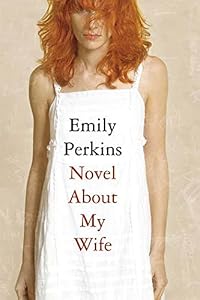
Emily Perkins is a New Zealand novelist who has started to write for theatre with her adaptation of A Doll's House by Henrik Ibsen. Perkins started her theatre career as an acting student in Toi Whakaari's stellar Class of 1987. Her first collection of stories Not Her Real Name, published when she was 26, was awarded the Geoffrey Faber Memorial show more Prize in the UK and the Montana First Book of Fiction Award in NZ. Picador published her first novel, Leave Before You Go. The New Girl, her second novel, was shortlisted for the John Llewellyn Rhys Prize in the UK. She was the Buddle Findlay Sargeson Fellow in 2006 and during the Fellowship finished her fourth book, Novel About My Wife which was awarded the Believer Book Award in the US and the Medal for Fiction at the Montana NZ Book Awards. Her most recent novel, The Forrests, published by Bloomsbury in 2012, was long-listed for the Women's Prize for Fiction 2013 and a finalist in the NZ Post Book Awards. In 2011 she was made an Arts Laureate by the Arts Foundation of New Zealand. (Bowker Author Biography) show less
Awards and Honors
Awards
Common Knowledge
- Canonical title
- The Forrests
- Original title
- The Forrests
- People/Characters
- Dorothy Forrest
- Important places
- Auckland, New Zealand
- Dedication
- For Karl, Veronica, Cass and Mary
- First words
- THEIR FATHER BALANCED behind the movie camera, shouting directions as he walked backwards and forwards in front of them.
- Quotations
- Begin anywhere - John Cage
And there is a physical bliss which cannot be compared to anything. The body is transformed into a gift. And one feels it is a gift because one is experiencing at source the unmistakable good fortune of material existence. - ... (show all)Clarice Lispector, 'State of Grace' - Last words
- (Click to show. Warning: May contain spoilers.)A dandelion clock tumbled past mid-air, thin black-tipped wisps floating from the pored seed-head that rose, released, like the microphone thrown by the singer from the band they heard that time, and she remembered the fierce, elated way he flung it high into the air to turn and fall, an invitation, towards the upturned faces of the crowd.
Classifications
Statistics
- Members
- 162
- Popularity
- 201,158
- Reviews
- 12
- Rating
- (3.39)
- Languages
- Dutch, English, French, German
- Media
- Paper, Audiobook, Ebook
- ISBNs
- 12
- ASINs
- 5