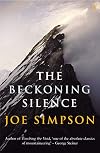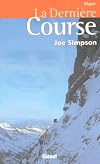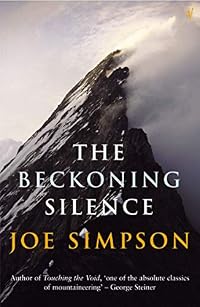
The Beckoning Silence
by Joe Simpson
On This Page
Description
Joe Simpson has experienced a life filled with adventure but marred by death. He has endured the painful attrition of climbing friends in accidents, calling into question the perilously exhilarating activity to which he has devoted his life. Probability is inexorably closing in. The tragic loss of a close friend forces a momentous decision upon him. It is time to turn his back on the mountains that he has loved. Never more alive than when most at risk, he has come to see a last climb on the show more hooded, mile-high North Face of the Eiger as the cathartic finale. In a narrative which takes the reader through extreme experiences, from an avalanche in Bolivia, ice-climbing in the Alps and Colorado and paragliding in Spain - before his final confrontation with the Eiger - Simpson reveals the inner truth of climbing, exploring both the power of the mind and the frailties of the body. The subject of his new book is the siren song of fear and his struggle to come to terms with it. show lessTags
Recommendations

































Member Recommendations

Member Reviews
I read this after reading Touching the Void earlier this year and being completely blown away by it, and decided to read more books about climbing because something about it seems to resonate with me even though I'm not a climber myself and I don't even know anybody who is!
This book was an interesting combination of Joe talking about various different experiences while climbing, some personal experiences from his own life, and also accounts of earlier climbers who attempted the north face of the Eiger, which all built up to Joe's decision on whether to climb the face, and also his feelings about climbing and whether to continue. At times it was almost a little strange to read about such personal feelings- almost like reading somebody's show more diary that would usually be private, but I admire Joe's honesty and the combination of both a pragmatic attitude to climbing mistakes, paired with some beautiful descriptions of the emotions evoked by climbing- of which I think Joe's description of being caught in a storm on the south face of Les Drus was one of the most stunning.
This book, and others like it, raise all sorts of interesting questions- such as how to balance the desire to do something potentially life threatening with the fact that family and friends want you to be safe, along with weirdness of sometimes feeling most alive when close to death, which Joe mentions on a few occasions. I think this is one of the reasons I enjoyed this book so much- because human emotions seem to make so much more sense in these more extreme environments, and you can see that in many ways we're designed for coping with the immediate risk and dangers that activities like climbing throw at us, whereas in the "real world" everything is so drawn out, anxiety goes on for hours, days, weeks, months over risks that aren't life and death they are just ongoing worries. It is uplifting and life affirming to read about emotions in such a different environment- the powerful descriptions of ecstatic joy at achieving a goal tinged with sadness when it is over, the fear and awe and respect for the mountains, the enjoyment and absorption in the climbing.
I guess this book might not be for you if you prefer one long "story" rather than a collection of different experiences, but for me (perhaps because I have a background in psychology!) reading about Joe's feelings towards climbing and whether or not it is worth the risks was a really rewarding experience and I think that for anyone who is troubled with asking what life is for or why we are here I feel like the answer is hidden inside books like this, and inside people who follow their dreams to the very end. show less
This book was an interesting combination of Joe talking about various different experiences while climbing, some personal experiences from his own life, and also accounts of earlier climbers who attempted the north face of the Eiger, which all built up to Joe's decision on whether to climb the face, and also his feelings about climbing and whether to continue. At times it was almost a little strange to read about such personal feelings- almost like reading somebody's show more diary that would usually be private, but I admire Joe's honesty and the combination of both a pragmatic attitude to climbing mistakes, paired with some beautiful descriptions of the emotions evoked by climbing- of which I think Joe's description of being caught in a storm on the south face of Les Drus was one of the most stunning.
This book, and others like it, raise all sorts of interesting questions- such as how to balance the desire to do something potentially life threatening with the fact that family and friends want you to be safe, along with weirdness of sometimes feeling most alive when close to death, which Joe mentions on a few occasions. I think this is one of the reasons I enjoyed this book so much- because human emotions seem to make so much more sense in these more extreme environments, and you can see that in many ways we're designed for coping with the immediate risk and dangers that activities like climbing throw at us, whereas in the "real world" everything is so drawn out, anxiety goes on for hours, days, weeks, months over risks that aren't life and death they are just ongoing worries. It is uplifting and life affirming to read about emotions in such a different environment- the powerful descriptions of ecstatic joy at achieving a goal tinged with sadness when it is over, the fear and awe and respect for the mountains, the enjoyment and absorption in the climbing.
I guess this book might not be for you if you prefer one long "story" rather than a collection of different experiences, but for me (perhaps because I have a background in psychology!) reading about Joe's feelings towards climbing and whether or not it is worth the risks was a really rewarding experience and I think that for anyone who is troubled with asking what life is for or why we are here I feel like the answer is hidden inside books like this, and inside people who follow their dreams to the very end. show less
This is my third Joe Simpson book, and probably my last; no reflection on the quality of his writing (which is once again superb), but I feel I've probably read the best of him now, and there are only so many more mountains left to climb with him.
As touched on to an extent in This Game of Ghosts, Simpson is now seriously considering giving up climbing. The tally of friends lost to the mountains grows every year, and despite his climbing ability improving year-on-year, the danger and fragility of climbing expeditions is more and more at the forefront of his mind. In the first half of the book, he jumps between a number of climbs which seem there to serve one main purpose - a back-story so yet another friend's death could be written show more about. Perhaps because he'd already covered some of this ground in This Game of Ghosts it rubbed me up the wrong way a little in The Beckoning Silence, feeling included for the sake of sensationalism and selling books.
In the second half of the book, Simpson is talked into tackling the north face of the Eiger by a climbing friend, and at this point I really settled into the book, absorbed as always by his ability to make the mountains come alive. I've skied in Grindelwald, the closest town to the Eiger, so for that reason this account particularly hooked me in as I could visualise the areas he was talking about. Simpson also delves into some of the history of the doomed Eiger climbers of the 1930s who paved the way for other climbers, and I really enjoyed his retelling of their stories (which were new to me) and the fantastic photos included. Sadly, there's yet more tragedy on the mountain at the same time that Simpson and his friend are climbing, yet somehow his writing is so immersive that I found myself torn between wondering why anyone ever climbs mountains this difficult and desperately wanting to experience it for myself. It's not too hard to guess which sentiment will ultimately win me over, but it's testament to Simpson's writing skill that he does leave you with a great pull for the mountains.
4 stars - an incredibly skilled writer, but probably with little more to say that's new and shocking by the time you've read a few of his titles. show less
As touched on to an extent in This Game of Ghosts, Simpson is now seriously considering giving up climbing. The tally of friends lost to the mountains grows every year, and despite his climbing ability improving year-on-year, the danger and fragility of climbing expeditions is more and more at the forefront of his mind. In the first half of the book, he jumps between a number of climbs which seem there to serve one main purpose - a back-story so yet another friend's death could be written show more about. Perhaps because he'd already covered some of this ground in This Game of Ghosts it rubbed me up the wrong way a little in The Beckoning Silence, feeling included for the sake of sensationalism and selling books.
In the second half of the book, Simpson is talked into tackling the north face of the Eiger by a climbing friend, and at this point I really settled into the book, absorbed as always by his ability to make the mountains come alive. I've skied in Grindelwald, the closest town to the Eiger, so for that reason this account particularly hooked me in as I could visualise the areas he was talking about. Simpson also delves into some of the history of the doomed Eiger climbers of the 1930s who paved the way for other climbers, and I really enjoyed his retelling of their stories (which were new to me) and the fantastic photos included. Sadly, there's yet more tragedy on the mountain at the same time that Simpson and his friend are climbing, yet somehow his writing is so immersive that I found myself torn between wondering why anyone ever climbs mountains this difficult and desperately wanting to experience it for myself. It's not too hard to guess which sentiment will ultimately win me over, but it's testament to Simpson's writing skill that he does leave you with a great pull for the mountains.
4 stars - an incredibly skilled writer, but probably with little more to say that's new and shocking by the time you've read a few of his titles. show less
In the world of mountaineering writing Joe Simpson is without peer. There seem to be two reasons for this. First, Simpson is one of those people to whom things just keep happening. Famously, in "Touching the Void", he shatters a leg in a fall, is left to die at high altitude by his climbing partner and yet still struggles to safety. In other books, he gets swept up by avalanches, caught up in snowstorms and suffers many other close scrapes. Eventually, in this book, as he reflects on the near misses and the number of his friends who have died in various misadventures, Simpson decides to hang up his crampons for good. But before he does so, he decides to tackle the infamous north face of the Eiger, known as the "Mordwand" or Murder Face show more by the locals because of the large number of climbers dying in an attempt to climb it. A mile-high, sheer cliff of rock and ice, the Mordwand has been an unforgiving test of a climber's ability over the years though, according to Simpson, advances in the quality of equipment have made it much more feasible. One of the local guides points out that with advances in mountain rescue that despite the Eiger's grim reputation that it had been many years since the last death on the face. But Simpson is somebody to whom things happen and as he sets foot on the face, people start falling off.
But that's not the whole reason. There are many other climbers who have written of death-defying adventures. Simpson's second asset is that he's also a superb tailor of prose. He describes the climbs and hang-gliding flights in such vivid detail yet with such pace that you feel as if you're there with him. And this is where Simpson wins out over other mountaineering writers who simply write of their experiences — Simpson's natural storytelling skills draw you in rather than leaving you feeling that you've read a bare, dry narrative.
I'm not going to spoil things by saying whether Simpson is successful in his climb or not, but clearly he survives to write the book! At the end though, there's some doubt as to whether this really was the final climb. I hope that, if it wasn't, Simpson will continue to share his adventures with us. show less
But that's not the whole reason. There are many other climbers who have written of death-defying adventures. Simpson's second asset is that he's also a superb tailor of prose. He describes the climbs and hang-gliding flights in such vivid detail yet with such pace that you feel as if you're there with him. And this is where Simpson wins out over other mountaineering writers who simply write of their experiences — Simpson's natural storytelling skills draw you in rather than leaving you feeling that you've read a bare, dry narrative.
I'm not going to spoil things by saying whether Simpson is successful in his climb or not, but clearly he survives to write the book! At the end though, there's some doubt as to whether this really was the final climb. I hope that, if it wasn't, Simpson will continue to share his adventures with us. show less
SkyRider says it very well here. Simpson is a writer of considerable talent. This is a loose narrative, stories strung together following a very slowly evolving decision to give up climbing, but only after just a 'few more' routes. That the last (in this book at least) is the north face of the Eiger suggests a certain lack of commitment to the notion of the quiet life. Simpson seeks his silence in the higher places, although after reading the toll of dead he recounts, one wonders whether the silence he speaks of is death itself. Anyone who has an interest in mountaineering, or who has read any of Simpson's other books will enjoy this. Highly recommended.
In my opinion, “The Beckoning Silence” is not as good as “Touching the Void”, but it's still an enjoyable read for anyone who enjoys mountaineering books. It contains a sobering discussion of the dangers of serious climbing and the reasons why people choose to continue even knowing the risks.
That Joe Simpson writes well. I shall have to go and read Touching the Void again now. Fascinating to see how age tames climbers and they feel the risks are less worth it, indeed they see the risks where they didn't before. MInd you, having seen paragliders at the Alps, I'm not exactly sure that is a less risky way to get your adrenaline rush. Looks pretty scary to me. How on earth do they avoid hitting each other? Anyway, very well written and I will look to make sure I have read or re-read all his others.
Compared to the previous two books I've read by him, I was seriously underwhelmed by this one. Bit of a trek to make it to the end...
Members
- Recently Added By
Author Information

10+ Works 4,120 Members
Awards and Honors
Common Knowledge
- People/Characters
- Joe Simpson
- Important places
- Eiger; Alps; Switzerland
- Epigraph
- Climb if you will, but remember that courage and strength are nought without prudence, and that a momentary negligence may destroy the happiness of a lifetime. Do nothing in haste; look well to each step; and from the beginni... (show all)ng think what may be the end. (Edward Whymper, 'Scrambles Amongst the Alps')
- Dedication
- To Ian 'Tat' Tattersall. 'We miss you, kid.'
In memory of Matthew Hayes and Philip O'Sullivan whose dream stretched to the very end. - First words
- The ice was thin and loosely attached to the rock.
- Last words
- (Click to show. Warning: May contain spoilers.)Just a look, mind, nothing more.
Classifications
Statistics
- Members
- 415
- Popularity
- 73,681
- Reviews
- 7
- Rating
- (3.90)
- Languages
- 7 — Czech, Dutch, English, French, German, Italian, Spanish
- Media
- Paper, Ebook
- ISBNs
- 13
- ASINs
- 4