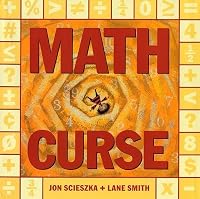
Math Curse
by Jon Scieszka 
On This Page
Description
When the teacher tells her class that they can think of almost everything as a math problem, one student acquires a math anxiety which becomes a real curse.Tags
Recommendations
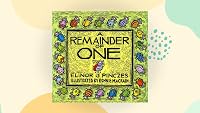
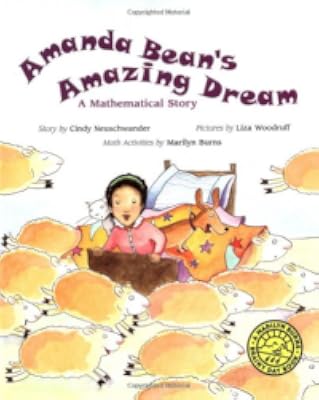
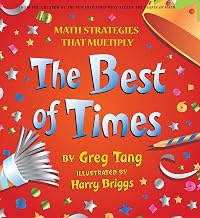
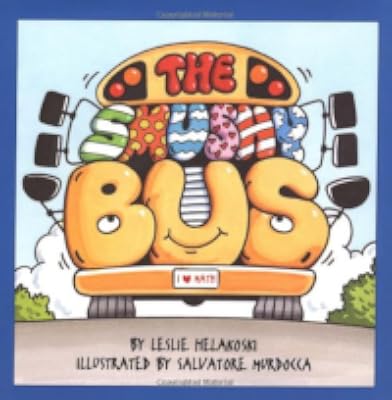

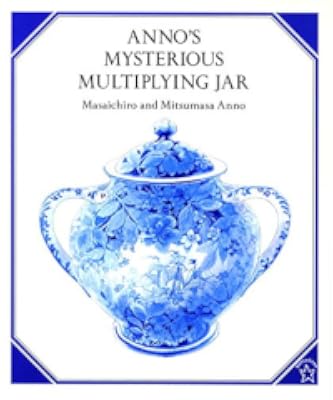
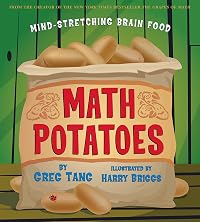
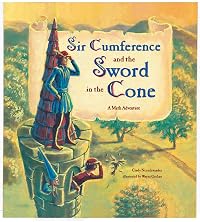
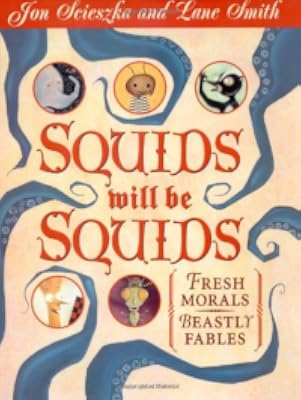
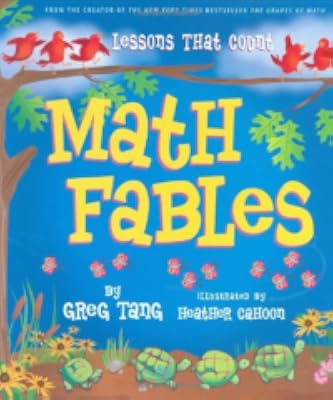
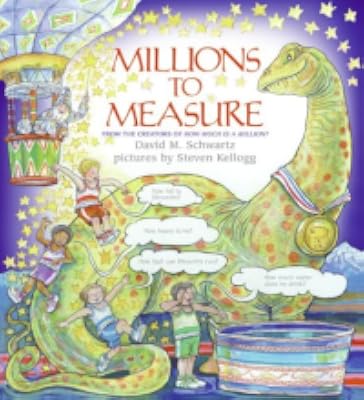
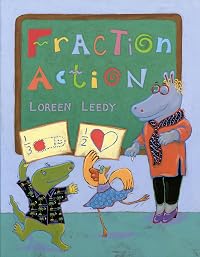



Member Recommendations
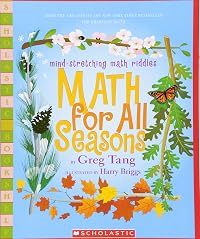
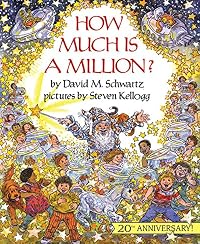
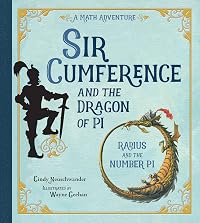
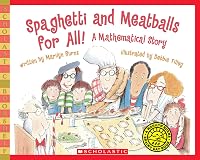
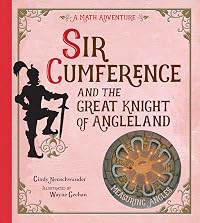
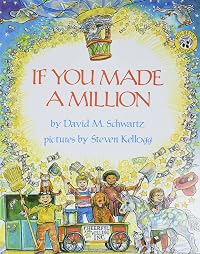
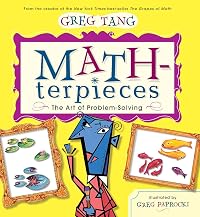
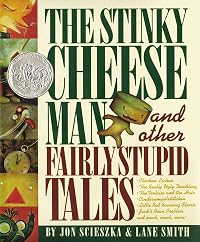
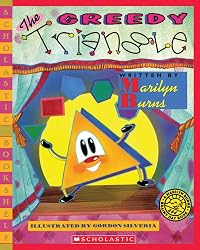
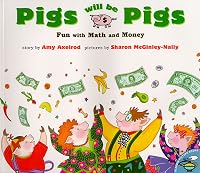
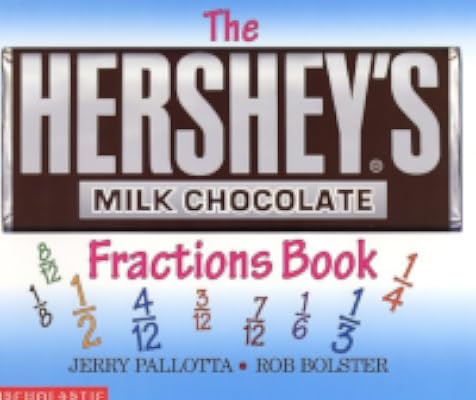
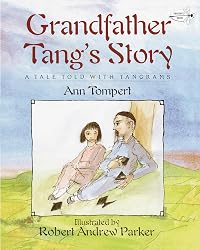
Runa Numbed! is for older readers, but both heavily focus on students who have some kind of math related curse put on them.
Member Reviews
Sciezka has created a zany picture book that encourages readers to see the entertainment and everyday application of math. In the story, the young protagonist hears his math teacher (Mrs. Fibonacci) say that you can think of almost everything as a math problem. The next day the boy starts having a problem. Everything he does becomes framed as math. Eating pizza involves fractions, getting to the bus on time relates to times and rates, and passing out cupcakes to the class uses addition, subtraction, division, and fractions! He realizes that he has a math curse! Every subject and every activity becomes an equation or a word problem. Finally, the boy is driven nearly to distraction with his math obsession for an entire day, and he dreams show more he is trapped in a room covered in equations. He solves a problem, puts two halves together to make a whole, puts the hole on a wall, and jumps to freedom. His math anxiety is over. Too bad the next day he hears his science teacher say you can think of almost everything as a science experiment.
What a wonderful way to demonstrate how math is ingrained in our world. So many children see math as a boring skill with no relevance, because they just know the formulas and drills, and don't understand the underlying concepts. This book visually illuminates what math means, with an abundance of fun. On each page, the reader gets the story, and often an assortment of math questions that range from simple to quite complex and are related to the activities the boy is engaged in. It's not necessary to answer the questions to appreciate and enjoy the story. However, a great afternoon activity could be reading the story with your children, and then working out some of those problems together. Also, most of the math questions have silly elements to break up any idea of drill-and-kill school work. For instance, one box asks three questions: If my bus leaves at 8:00, will I make it on time? How many minutes in 1 hour? How many teeth in 1 mouth? The whole book lovingly pokes fun at math, while celebrating how important math is in the world around us.
The illustrations are an inseparable component of the book. They are part collage, part drawings, and incorporate math everywhere. Numbers are part of almost every page. Circles are broken into pie pieces, and information is shared in bar graphs. Formulas and math facts float around. The collage placement adds to a surreal atmosphere, and reinforces the feeling of a curse. Also, the expressions on the bewildered boy's face are hilarious, and adorable when he wakes up feeling confident in his math prowess. Every aspect of the book is aligned with the theme. Even the book flaps have math problems and hidden jokes. The author and illustrator are represented in a Venn diagram at the back of the book. Numbers in the copyright information are given in roman numerals and the prices is given as a math equation. This is a fabulous book, with attention to every detail, and an excellent use of the picture book format. Parents and teachers need this book in their library. show less
What a wonderful way to demonstrate how math is ingrained in our world. So many children see math as a boring skill with no relevance, because they just know the formulas and drills, and don't understand the underlying concepts. This book visually illuminates what math means, with an abundance of fun. On each page, the reader gets the story, and often an assortment of math questions that range from simple to quite complex and are related to the activities the boy is engaged in. It's not necessary to answer the questions to appreciate and enjoy the story. However, a great afternoon activity could be reading the story with your children, and then working out some of those problems together. Also, most of the math questions have silly elements to break up any idea of drill-and-kill school work. For instance, one box asks three questions: If my bus leaves at 8:00, will I make it on time? How many minutes in 1 hour? How many teeth in 1 mouth? The whole book lovingly pokes fun at math, while celebrating how important math is in the world around us.
The illustrations are an inseparable component of the book. They are part collage, part drawings, and incorporate math everywhere. Numbers are part of almost every page. Circles are broken into pie pieces, and information is shared in bar graphs. Formulas and math facts float around. The collage placement adds to a surreal atmosphere, and reinforces the feeling of a curse. Also, the expressions on the bewildered boy's face are hilarious, and adorable when he wakes up feeling confident in his math prowess. Every aspect of the book is aligned with the theme. Even the book flaps have math problems and hidden jokes. The author and illustrator are represented in a Venn diagram at the back of the book. Numbers in the copyright information are given in roman numerals and the prices is given as a math equation. This is a fabulous book, with attention to every detail, and an excellent use of the picture book format. Parents and teachers need this book in their library. show less
Growing up as the daughter of a math teacher, I felt a lot like the protagonist of Math Curse! My mom turned everything into a math problem and, as someone who has always been more interested in words than numbers, it drove me crazy! This is a very funny book. After her teacher says that everything can be a math problem, the protagonist is put under a math curse and her world is turned upside down. Math problems are everywhere: in the cafeteria, in social studies, even in art and P.E. Her anxiety worsens as the day progresses until she eventually becomes a "math zombie." The curse is finally broken when she draws a circle on a blackboard covered with equations and jumps through the hole. I think students will like the humor and show more creepiness of this book. It would also be fun to go through the book from start to finish and solve each of the math problems as they appear. My only hesitation is that the story presents math in a negative light, as if it's something that needs to be escaped, which is not the way I want my students to feel about a subject I'm teaching. show less
Synopsis: In this book a young child is told by their teacher that everything in life could be seen as a math problem. From that moment on, the child is plagued by a curse, a Math curse, which makes them think of each of their daily activities in terms of mathematics. The curse continues until the child has a dream in which they successfully solve a fraction problem, breaking the curse and freeing them. Ages 7 and up.
Response: This frenetic, anxiety-inducing book speaks to the fears that many children (and adults) have about conquering math. It is funny and relentless as it drives its protagonist mad with math. The artistic style of the illustrations is slightly dark and eerie but still whimsical, (think Neil Gaiman, Tim Burton), and it show more would appeal to a certain type of child. The sort of prematurely sarcastic and rye jokester who gets on well with adults would adore this book. After taking a step back from the initial experience with this book, the reader will see the myriad of math concepts it ties to real life applications, which can help the reader see math as a realistically usable tool, rather than just an overwhelming boogeyman waiting to devour them. Or maybe not... show less
Response: This frenetic, anxiety-inducing book speaks to the fears that many children (and adults) have about conquering math. It is funny and relentless as it drives its protagonist mad with math. The artistic style of the illustrations is slightly dark and eerie but still whimsical, (think Neil Gaiman, Tim Burton), and it show more would appeal to a certain type of child. The sort of prematurely sarcastic and rye jokester who gets on well with adults would adore this book. After taking a step back from the initial experience with this book, the reader will see the myriad of math concepts it ties to real life applications, which can help the reader see math as a realistically usable tool, rather than just an overwhelming boogeyman waiting to devour them. Or maybe not... show less
I love books by Jon Scieszka. He is so clever, and manages to turn topics like science and math into pure laugh-out-loud fun, all the while surreptitiously teaching something to his readers.
In this book, the young boy who narrates says he was “cursed” by his math teacher, “Mrs. Fibonacci.”
[The Fibonacci sequence is a series of numbers in which you get to the next number by adding up the two numbers before it. For example, starting with 1 and adding it to get the next number, and then continuing in this way, you get: 1+1=2, 1+2=3, 2+3=5, 3+5=8, and so on. It’s a “thing” because, amazingly enough, you can see the Fibonacci pattern everywhere in nature, such as in more than 90 percent of plants in which multiple parts are show more arranged around a single stem.]
As the story opens, Mrs. Fibonacci tells her students, “You know, you can think of almost everything as a math problem.”
And that is exactly what the boy begins to do, in a way that always ends humorously. For example:
“I take the milk out for my cereal and wonder:
How many quarts in a gallon?
How many pints in a quart?
How many inches in a foot?
How many feet in a yard?
How many yards in a neighborhood? Haw many inches in a pint? How many feet in my shoes?”
Or this:
"1. Estimate how many M&Ms it would take to measure the length of the Mississippi River.
2. Estimate how many M&Ms you would eat if you had to measure the Mississippi River with M&Ms.
3. Bonus: Can you spell Mississippi without any M&Ms?"
In the end, he finally gets free of the curse, only because math is suddenly no longer a “problem” for him.
He announces:
“‘I’ve broken the math curse.
I can solve any problem.
And life is just great until science class, when
Mr. Newton says,
‘You know, you can think of almost everything as a science experiment….’”
Whimsical, cartoon-like illustrations by Lane Smith complement each page.
To quote the author, this book is “for ages > 6 and < 99.”
Evaluation: Like other books by this team, this one is both adorable and informative. show less
In this book, the young boy who narrates says he was “cursed” by his math teacher, “Mrs. Fibonacci.”
[The Fibonacci sequence is a series of numbers in which you get to the next number by adding up the two numbers before it. For example, starting with 1 and adding it to get the next number, and then continuing in this way, you get: 1+1=2, 1+2=3, 2+3=5, 3+5=8, and so on. It’s a “thing” because, amazingly enough, you can see the Fibonacci pattern everywhere in nature, such as in more than 90 percent of plants in which multiple parts are show more arranged around a single stem.]
As the story opens, Mrs. Fibonacci tells her students, “You know, you can think of almost everything as a math problem.”
And that is exactly what the boy begins to do, in a way that always ends humorously. For example:
“I take the milk out for my cereal and wonder:
How many quarts in a gallon?
How many pints in a quart?
How many inches in a foot?
How many feet in a yard?
How many yards in a neighborhood? Haw many inches in a pint? How many feet in my shoes?”
Or this:
"1. Estimate how many M&Ms it would take to measure the length of the Mississippi River.
2. Estimate how many M&Ms you would eat if you had to measure the Mississippi River with M&Ms.
3. Bonus: Can you spell Mississippi without any M&Ms?"
In the end, he finally gets free of the curse, only because math is suddenly no longer a “problem” for him.
He announces:
“‘I’ve broken the math curse.
I can solve any problem.
And life is just great until science class, when
Mr. Newton says,
‘You know, you can think of almost everything as a science experiment….’”
Whimsical, cartoon-like illustrations by Lane Smith complement each page.
To quote the author, this book is “for ages > 6 and < 99.”
Evaluation: Like other books by this team, this one is both adorable and informative. show less
I LOVED this book. The illustrations are kind of Tim Burton-like, which gives an otherwise cutesy story this dark edge. Often students don't understand the practical use of mathematics, and so they don't like math class, but this book shows how almost ANYTHING can be a math problem.
I fell in love with "The Math Curse", and can't wait to share it with my kids. I just ordered a copy for them, which will be conspicuously displayed on my coffee table. I feel like I just bought myself a ticket to listen to my kids chuckle their way through math problems. Shall I secretly video?
I will definitely have this in my class library or check it out from the school library for kids to peruse. For some kids, math feels like death, and this light-hearted take on the "curse" does what Keeper of Soles does for mortality.
I wonder what the best way to incorporate this book is? Group read? Just have it on hand? A page a day? I'm fishing for ideas.
In the continuing spirit of using librarything to record links to potential resources, I show more wonder if I should explore this book, which one a teacher's choice in 2009. I need to get my hands on as many arts-integrated resources as possible.
http://www.amazon.com/Math-Poetry-Linking-Language-Fresh/dp/1596470720 show less
I will definitely have this in my class library or check it out from the school library for kids to peruse. For some kids, math feels like death, and this light-hearted take on the "curse" does what Keeper of Soles does for mortality.
I wonder what the best way to incorporate this book is? Group read? Just have it on hand? A page a day? I'm fishing for ideas.
In the continuing spirit of using librarything to record links to potential resources, I show more wonder if I should explore this book, which one a teacher's choice in 2009. I need to get my hands on as many arts-integrated resources as possible.
http://www.amazon.com/Math-Poetry-Linking-Language-Fresh/dp/1596470720 show less
Math Curse by Jon Scieszka is a fun picture book using different types of mathematical processes used in middle school classrooms! This book is about this student who thinks that their teacher put a math curse on them because everything they look at turns into a math problem! This book is very cute and has a fun humor to it which would make it very entertaining for students to listen to. This book would be a great book to read in a middle school class at the beginning of the year, previews things they will be learning during the year and how almost anything can be a math problem. Students' favorite thing to say is "when will I ever use this?" This book shows how you can think of anything as a math problem and I would recommend this to show more any teacher who teaches math! show less
Members
- Recently Added By
Lists

1001 Children's Books You Must Read Before You Grow Up
774 works; 101 members

Reading Rainbow
193 works; 10 members

Books Read in 2013
1,630 works; 51 members

Favorite Picture Books
479 works; 160 members
Author Information

176+ Works 59,066 Members
Jon Scieszka was born September 8, 1954 in Flint , Michigan. After he graduated from Culver Military Academy where he was a Lieutenant, he studied to be a doctor at Albion College. He changed career directions and attended Columbia University where he received a Master of Fine Arts degree in 1980. Before he became a full time writer, Scieszka was show more a lifeguard, painted factories, houses, and apartments and also wrote for magazines. He taught elementary school in New York for ten years as a 1st grade assistant, a 2nd grade homeroom teacher, and a computer, math, science and history teacher in 3rd - 8th grade. He decided to take off a year from teaching in order to work with Lane Smith, an illustrator, to develop ideas for children's books. His book, The Stinky Cheese Man received the 1994 Rhode Island Children's Book Award. Scieszka's Math Curse, illustrated by Lane Smith, was an American Library Association Notable Book in 1996; a Blue Ribbon Book from the Bulletin of the Center for Children's Books in 1995; and a Publisher's Weekly Best Children's Book in 1995. The Stinky Cheese Man received Georgia's 1997 Children's Choice Award and Wisconsin's The Golden Archer Award. Math Curse received Maine's Student Book Award, The Texas Bluebonnet Award and New Hampshire's The Great Stone Face Book Award in 1997. He was appointed the first National Ambassador for Young People's Literature by the Library of Congress in 2008. In 2014 his title, Frank Einstein and the Antimatter Motor made The New York Times Best Seller List. Frank Einstein and the Electro-Finger made the list in 2015. (Bowker Author Biography) show less
Jon Scieszka is a LibraryThing Author, an author who lists their personal library on LibraryThing.
All Editions
Awards and Honors
Awards
Distinctions
Work Relationships
Is contained in
Common Knowledge
- Canonical title*
- Mate maldición
- Original publication date
- 1995
- Dedication
- If the sum of my nieces and nephews equals 15, and their product equals 54, and I have more nephews than nieces, HOW MANY NEPHEWS AND HOW MANY NIECES IS THIS BOOK DEDICATED TO? --J.S.
If I divide the number of years my dad was an accountant (30) by the number of years I needed help with my math (30), I get one (1) dedication: FOR DAD (THE C.P.A.)--L.S. - First words
- ON MONDAY in math class, Mrs. Fibonacci says, "YOU KNOW, you can think of almost everything as a math problem."
- Original language
- English
*Some information comes from Common Knowledge in other languages. Click "Edit" for more information.
Classifications
Statistics
- Members
- 3,123
- Popularity
- 5,608
- Reviews
- 264
- Rating
- (4.29)
- Languages
- English, French, Portuguese, Spanish
- Media
- Paper, Audiobook, Ebook
- ISBNs
- 21
- UPCs
- 1
- ASINs
- 7