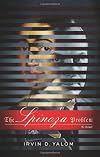
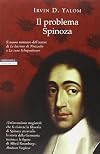
The Spinoza Problem
by Irvin Yalom
On This Page
Description
A novel by the masterful storyteller and psychotherapist Irvin Yalom interweaves the philosophical life of Benedict Spinoza with the story of the obsessive Nazi ?philosopher" Alfred Rosenberg
Tags
Recommendations


















Member Reviews
Juxtaposition, thy name is Yalom! This story weaves between 17th-century philosopher Baruch Spinoza's excommunication by the rabbinical leaders of Amsterdam's Jewish community, and a young Alfred Rosenberg's attempt to understand how Germany's most celebrated literary mind, Goethe, could revere and lean so heavily upon the work of a Jewish mind like Spinoza. Rosenberg would go on to pen The Myth of the Twentieth Century and be considered the Nazi's leading ideologue.
As usual, see blurb for plot details: this book is a biography of Baruch Spinoza paired with a bio of the actual Nazi ideologue Alfred Rosenberg, who had an unexplained thing about Spinoza, which Yalom reimagines and turns into the structuring principle of his book.
I gave this three stars because I really wanted to like this book. It's such a workmanlike effort. And I love Spinoza, despite my pathetic inability after years of trying to hack my way through the Ethics. (I read things like Spinoza in Ninety Minutes to try to get an overall grasp, and other secondary texts, but the original? Maybe when I'm 80 . . . )
So I admire Yalom's proficiency with Spinoza's thought, though I'm guessing he might have gone mostly to the bottled-water show more version, like me, instead of to the original well. And I admire his evocation of Enlightenment Amsterdam and complex society that thrived there.
I have some credibility problems with the psychologizing of the Nazi Rosenberg, and the neatness of the whole pairing of Rosenberg and Spinoza. . . actually it's the neatness of this book that disappoints me. Yalom set out to do a thing with this book and he went and did it. No remainder, no extra. The book was well-behaved. This, to me, is usually a disappointment. And so it is here. show less
I gave this three stars because I really wanted to like this book. It's such a workmanlike effort. And I love Spinoza, despite my pathetic inability after years of trying to hack my way through the Ethics. (I read things like Spinoza in Ninety Minutes to try to get an overall grasp, and other secondary texts, but the original? Maybe when I'm 80 . . . )
So I admire Yalom's proficiency with Spinoza's thought, though I'm guessing he might have gone mostly to the bottled-water show more version, like me, instead of to the original well. And I admire his evocation of Enlightenment Amsterdam and complex society that thrived there.
I have some credibility problems with the psychologizing of the Nazi Rosenberg, and the neatness of the whole pairing of Rosenberg and Spinoza. . . actually it's the neatness of this book that disappoints me. Yalom set out to do a thing with this book and he went and did it. No remainder, no extra. The book was well-behaved. This, to me, is usually a disappointment. And so it is here. show less
There is very little that we know about the personal life of Spinoza. Of course this is perfect to give a writer the freedom of how his life could have been. Irvin Yalom uses this white space in history and his insight from his psychological work to give us an account about the life of Spinoza and Alfred Rosenberg, a Nazi-figure who ran an antisemitic newspaper.
This results in a good story with lots of psychoanalytic conversations. This is something that you must be able to relate to, but when you do like conversations that are are mining the human mind, this is a book for you.
Yalom's choice to make the narrative a double story, one in the 17th century about Spinoza's life and thinking and the story other about Alfred Rosenberg in the show more 20th century gives the reader an insight and better understanding how the ideas of Spinoza are embedded in our knowledge of psychology. Like how humans are able to search for causal motivations, emotions drive us, - and that insight in these aspects make us more free.
While reading the book I got the feeling that Yalom really wanted to explore the ideas of Spinoza. Spinoza's 'chosen' solitude (he got banned by the Jewish community for his ideas on the godly status of the Torah) is mirrored by ideas on the human need to belong, and that one can choose to participate because in untrue rituals because we prefer to live together (and don't we all sometimes act happy about a ugly gift because we prefer the social gesture). This investigating element is mainly worked out as conversations between Spinoza and Franco, where the latter has chosen to be faithful to the Jewish community. Because these are only dialogs between two man, I was missing the lived/ existential element, an element that shows the different standpoints in their discussion.
Mostly, I like books that do more show than tell. This is the reason why, while Yalom's book is good and an easy read that gives you a nice introduction to the philosophy of Spinoza, does not get to a five star rating. show less
This results in a good story with lots of psychoanalytic conversations. This is something that you must be able to relate to, but when you do like conversations that are are mining the human mind, this is a book for you.
Yalom's choice to make the narrative a double story, one in the 17th century about Spinoza's life and thinking and the story other about Alfred Rosenberg in the show more 20th century gives the reader an insight and better understanding how the ideas of Spinoza are embedded in our knowledge of psychology. Like how humans are able to search for causal motivations, emotions drive us, - and that insight in these aspects make us more free.
While reading the book I got the feeling that Yalom really wanted to explore the ideas of Spinoza. Spinoza's 'chosen' solitude (he got banned by the Jewish community for his ideas on the godly status of the Torah) is mirrored by ideas on the human need to belong, and that one can choose to participate because in untrue rituals because we prefer to live together (and don't we all sometimes act happy about a ugly gift because we prefer the social gesture). This investigating element is mainly worked out as conversations between Spinoza and Franco, where the latter has chosen to be faithful to the Jewish community. Because these are only dialogs between two man, I was missing the lived/ existential element, an element that shows the different standpoints in their discussion.
Mostly, I like books that do more show than tell. This is the reason why, while Yalom's book is good and an easy read that gives you a nice introduction to the philosophy of Spinoza, does not get to a five star rating. show less
Bellissimo. Come nelle lacrime, tutto è romanzato ma verosimile e nel capitolo finale, viene anche descritto il processo con cui l'autore ha costruito, in base ai fatti storici, il suo romanzo.
Le due storie che vengono raccontate sono perfettamente equilibrate in tutta la narrazione e scorrono via dense ma leggere: si fa un bel ripasso di storia e filosofia, senza neanche renderese conto...il che non guasta.
Sono tentata dalla quinta stellina: mi riservo di rileggere qualche passaggio.
Le due storie che vengono raccontate sono perfettamente equilibrate in tutta la narrazione e scorrono via dense ma leggere: si fa un bel ripasso di storia e filosofia, senza neanche renderese conto...il che non guasta.
Sono tentata dalla quinta stellina: mi riservo di rileggere qualche passaggio.
(no spoilers really, but this review might best be avoided by those who enjoy open-minded approaches to their books)
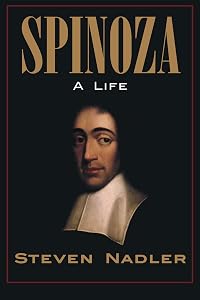
Books club reads may fall into a special category for reviewing, or at least, this book certainly does, because it is a genre I would be unlikely to read on my own and a topic about which I know little. Luckily, I was already reading a related book, Betraying Spinoza by Rebecca Goldstein, and have now picked up a standard biography by Steven Nadler. Of the three, I’d say Nadler’s is authoritative, Goldstein’s perhaps a more comfortable read, and Irvin Yalom’s novel is like the unlucky kid teachers used to brand with “not living up to high potential.”
It’s a great concept: how a Nazi ideologue developed a show more neurotic fascination with the work of Spinoza. Yalom intersperses chapters describing Spinoza’s life (based on Nadler’s work, among others) with chapters that tell a tale of real Nazi Alfred Rosenberg and his fictional encounters with a fictional psychiatrist. There is huge potential here to spin out the echoes of Spinoza’s philosophy in National Socialism. This book could also have explored whether analysis can have any effect on willfully narrow-minded hate, or whether reason can withstand superstition or mob hysteria (both in Spinoza’s time and in 20th century Germany). Unfortunately, Yalom doesn’t do so. The structure of alternating chapters allows him to show parallels but makes it more difficult to draw Spinoza’s philosophy and Nazi-ism into the same argument. The vehicle to do that would have been the character of the psychiatrist, but that character is weakly drawn. I would have been more engrossed if the psychiatrist had been challenged with something, such as the questions just noted above, or even a personal dilemma of some sort. As it is, the psychiatrist is a nice guy, a good analyst, but otherwise a blank.
I puzzled over why the whole thing seems so dull and somehow predestined. Yes, of course, it is because we know what happened in history. Also, though, it’s because Yalom rarely puts the characters at junctures where we can see that they might had done otherwise than what they do. What if, for example, Rosenberg had connected more deeply with Spinoza and truly struggled with his life choices? Last, I found Yalom's rendering of the speech of the three characters to be indistinguishable. Whether it is Spinoza dealing with the shock of being assaulted, Rosenberg longing for Hitler’s attention, or the psychiatrist wondering how to manage his patient, the voice used to express their thoughts sounds just the same.
All in all, then, this book is an easy way to have an introduction to Spinoza, and yet falls far short of brilliance. show less
Books club reads may fall into a special category for reviewing, or at least, this book certainly does, because it is a genre I would be unlikely to read on my own and a topic about which I know little. Luckily, I was already reading a related book, Betraying Spinoza by Rebecca Goldstein, and have now picked up a standard biography by Steven Nadler. Of the three, I’d say Nadler’s is authoritative, Goldstein’s perhaps a more comfortable read, and Irvin Yalom’s novel is like the unlucky kid teachers used to brand with “not living up to high potential.”
It’s a great concept: how a Nazi ideologue developed a show more neurotic fascination with the work of Spinoza. Yalom intersperses chapters describing Spinoza’s life (based on Nadler’s work, among others) with chapters that tell a tale of real Nazi Alfred Rosenberg and his fictional encounters with a fictional psychiatrist. There is huge potential here to spin out the echoes of Spinoza’s philosophy in National Socialism. This book could also have explored whether analysis can have any effect on willfully narrow-minded hate, or whether reason can withstand superstition or mob hysteria (both in Spinoza’s time and in 20th century Germany). Unfortunately, Yalom doesn’t do so. The structure of alternating chapters allows him to show parallels but makes it more difficult to draw Spinoza’s philosophy and Nazi-ism into the same argument. The vehicle to do that would have been the character of the psychiatrist, but that character is weakly drawn. I would have been more engrossed if the psychiatrist had been challenged with something, such as the questions just noted above, or even a personal dilemma of some sort. As it is, the psychiatrist is a nice guy, a good analyst, but otherwise a blank.
I puzzled over why the whole thing seems so dull and somehow predestined. Yes, of course, it is because we know what happened in history. Also, though, it’s because Yalom rarely puts the characters at junctures where we can see that they might had done otherwise than what they do. What if, for example, Rosenberg had connected more deeply with Spinoza and truly struggled with his life choices? Last, I found Yalom's rendering of the speech of the three characters to be indistinguishable. Whether it is Spinoza dealing with the shock of being assaulted, Rosenberg longing for Hitler’s attention, or the psychiatrist wondering how to manage his patient, the voice used to express their thoughts sounds just the same.
All in all, then, this book is an easy way to have an introduction to Spinoza, and yet falls far short of brilliance. show less
Yalom presented detailed portrayal of histocial fictional Spinoza and alfred rosenberg, a nazi official. he devised most of his characters in ways that i was interested to learn even more about them. my understanding of spinoza's ideas increased, but i am not sure how much we can really infer about him based on his writings that still exist. and of course reading more about hitler and how the nazis came to power is even more frightening in the u.s. and many other countries today.
This is a work of fiction that, as the author says, could have happened. He tells the story of Spinoza's philosophy and expulsion from the Jewish community, interspersed with the story of Nazi party official Alfred Rosenberg who admired Spinoza's ideas while hating his race. This is a novel driven by ideas more than plot or character, and provides insight into philosophical thought, religion, and the extremes of intolerance.
Members
- Recently Added By
Lists

Llibres que he llegit el 2017
49 works; 1 member
Author Information

33+ Works 12,635 Members
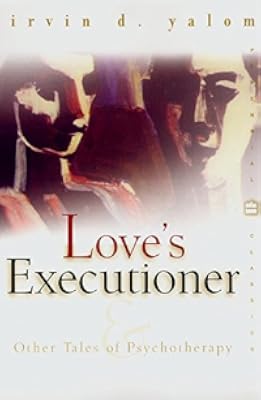
Irvin D. Yalom was born in Washington, D.C. on June 13, 1931, of parents who immigrated from Russia shortly after World War I. Yalom entered into medical school intent on studying the field of psychiatry. His first writings were scientific contributions to professional journals. His first book, "The Theory and Practice of Group Psychotherapy" was show more widely used as a text for training therapists. It has been translated into twelve languages and spawned four editions. "Existential Psychotherapy" followed, which was a textbook for a course that did not exist at the time, and then "Inpatient Group Psychotherapy," a guide to leading groups in the inpatient psychiatric ward. In an effort to teach aspects of Existential Therapy, Yalom turned to a literary conveyance and wrote a book of therapy tales called "Love's Executioner", two teaching novels, "When Nietzsche Wept" and "Lying on the Couch" and, "Momma and the Meaning of Life," a collection of true and fictionalized tales of therapy. These books went on to be best sellers, and "When Nietzsche Wept" won the Commonwealth Gold Medal for best fiction of 1993. They have been widely translated,each into about fifteen to twenty languages, and have had considerable distribution abroad. (Bowker Author Biography) show less
Some Editions
Awards and Honors
Series
Belongs to Publisher Series
Common Knowledge
- Canonical title
- The Spinoza Problem
- Original title
- The Spinoza Problem
- Original publication date
- 2012
- People/Characters
- Baruch Spinoza; Alfred Rosenberg; Franco Benitez; Friedrich Pfister
- Important places
- Amsterdam, North Holland, Netherlands; Rijnsburg, South Holland, Netherlands; Tallinn, Estonia (as Reval); Monaco; Berlin, Germany
- Important events
- Spinoza's expulsion from the Jewish community (1656-07-27)
- Dedication
- To Marilyn
- First words
- As the final rays of light glance off the water of the Zwanenburgwal, Amsterdam closes down.
- Last words
- (Click to show. Warning: May contain spoilers.)Finally, when no trace of Franco remained, Bento backed slowly away from the dock, back into the arms of solitude.
- Blurbers
- Parini, Jay; Verghese, Abraham; Seligman, Martin; Goldstein, Rebecca
- Original language
- English
Classifications
Statistics
- Members
- 697
- Popularity
- 40,952
- Reviews
- 29
- Rating
- (3.83)
- Languages
- 16 — Catalan, Czech, Dutch, English, French, German, Greek, Hungarian, Italian, Lithuanian, Polish, Portuguese (Portugal), Romanian, Serbian, Spanish, Turkish
- Media
- Paper, Audiobook, Ebook
- ISBNs
- 53
- ASINs
- 11