On This Page
Description
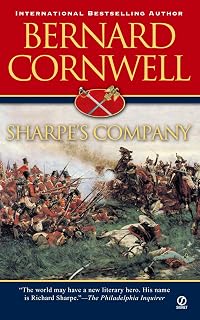
In an age of heroes and death before dishonor, one man stands above the rest.It is January 1812. Captain Richard Sharpe has one mission: to thwart Napoleon's dreams of an empire. To accomplish that goal, Sharpe and the fighting men of the Light Company must seize the fortress of Badajoz, which looms on the border of Portugal and Spain. To lead an assault on its thick, sheer walls and battlements is suicide, yet Sharpe has no choice, for the stakes have suddenly become personal. Inside the show more walls are his wife and daughter, and only he can save them.
Outside is the misshapen, vengeance-crazed Sergeant Obadiah Hakeswill, a man determined to kill Sharpe. Sharpe knows that in the heat of battle, only the cold steel of his battered sword and the ruthless bloodlust of a soldier at war will protect him from the danger of both sides.
. show less
Tags
Recommendations







Member Reviews
I think so far this is the most interesting book in the series that I have read.
It offers a deeper insight into Sharpe's soul and the inner workings of his mind. The author succeeds in making his hero more human by bringing his doubts and insecurity into the forefront. The question of bravery is examined up close.
The book drives more attention to the fate of the civilians, especially women and children, during the prolonged war and sieges. In this sense the book is extremely anti-war, as it describes the inevitability of civilian life loss, rape, murder and pillage, and stresses the impossibility to completely prevent these war crimes.
It offers a deeper insight into Sharpe's soul and the inner workings of his mind. The author succeeds in making his hero more human by bringing his doubts and insecurity into the forefront. The question of bravery is examined up close.
The book drives more attention to the fate of the civilians, especially women and children, during the prolonged war and sieges. In this sense the book is extremely anti-war, as it describes the inevitability of civilian life loss, rape, murder and pillage, and stresses the impossibility to completely prevent these war crimes.
Bold, Professional, Ruthless – Hero and Man of Action.
One day, I will have that printed on business cards. Until then, I am content to read about the exploits of Richard Sharpe, an officer brought up from the ranks, who fights as a rifleman in the Napoleonic Wars. Sharpe’s Company finds Captain Sharpe being demoted to Lieutenant thanks to bureaucrats disapproving of his gazetting. Frustrated by an old enemy’s arrival and with hurt pride, Sharpe turns his sights to Badajoz and the opportunity to lead a Forlorn Hope against the walls, securing his captaincy and proving his skill as a soldier.
Probably my favorite after Sharpe’s Eagle, Company stands out for several reasons: the first is that we meet Sergeant Obadiah Hakeswill, a show more loathsome creature and villain who opposed Sharpe earlier in the India prequels. I have heard that Cornwell admitted he had a hard time creating a villain in equal to Hakeswill, and it’s evident in the crop of devious and diabolical enemies Sharpe faces: Loup, the ruthless Frenchman; Simmerson, a useless and cowardly political enemy; and others who have come and gone. Hakeswill is a marvel; it seems amazing that a fictional creation can inspire so much blood-boiling rage, but Hakeswill manages it with every twitch and cackle. He’s in fine form in Company, rotting the battalion from within, attempting to murder Sharpe, and persecuting the genial Harper.
The other reason it stands out is in the sheer scale of the book. Old friends, like the loyal and hero-worshiping Robert Knowles and the laconic American Leroy, rub shoulders with the new, like the affably drunk letch Lieutenant Harry Price. Hogan, of course, is there, along with many others. And the siege itself is bloody and dangerous and horrendous. Of all the battles and sieges, Badajoz stands out as one of the most terrible. Cornwell describes bodies stacked high in a ditch, of fighting through the grasping hands of the wounded, the sheer scale of the damage taken in the siege. Its descriptions are terrifying and terrible.
It is, also, a turning point for the philandering Sharpe – though I won’t spoil why.
Savvy readers might notice a few inconsistencies sprinkled throughout. They are, for the most part, minor, and an almost unavoidable side effect of writing a chronological series out of order. Some readers may have picked up in an earlier book when Sharpe claims to have never met Daddy Hill, despite talking with him a book previous. These are much the same. The matter and manner of Sharpe’s flogging are not in line with the story given in the India trilogy, but mistakes can be forgiven (though not editors).
Whether taken by itself or in the series, however, Sharpe’s Company is one of the more finely written, the most triumphant and bloodthirsty, and one of the best of the Sharpe series. show less
One day, I will have that printed on business cards. Until then, I am content to read about the exploits of Richard Sharpe, an officer brought up from the ranks, who fights as a rifleman in the Napoleonic Wars. Sharpe’s Company finds Captain Sharpe being demoted to Lieutenant thanks to bureaucrats disapproving of his gazetting. Frustrated by an old enemy’s arrival and with hurt pride, Sharpe turns his sights to Badajoz and the opportunity to lead a Forlorn Hope against the walls, securing his captaincy and proving his skill as a soldier.
Probably my favorite after Sharpe’s Eagle, Company stands out for several reasons: the first is that we meet Sergeant Obadiah Hakeswill, a show more loathsome creature and villain who opposed Sharpe earlier in the India prequels. I have heard that Cornwell admitted he had a hard time creating a villain in equal to Hakeswill, and it’s evident in the crop of devious and diabolical enemies Sharpe faces: Loup, the ruthless Frenchman; Simmerson, a useless and cowardly political enemy; and others who have come and gone. Hakeswill is a marvel; it seems amazing that a fictional creation can inspire so much blood-boiling rage, but Hakeswill manages it with every twitch and cackle. He’s in fine form in Company, rotting the battalion from within, attempting to murder Sharpe, and persecuting the genial Harper.
The other reason it stands out is in the sheer scale of the book. Old friends, like the loyal and hero-worshiping Robert Knowles and the laconic American Leroy, rub shoulders with the new, like the affably drunk letch Lieutenant Harry Price. Hogan, of course, is there, along with many others. And the siege itself is bloody and dangerous and horrendous. Of all the battles and sieges, Badajoz stands out as one of the most terrible. Cornwell describes bodies stacked high in a ditch, of fighting through the grasping hands of the wounded, the sheer scale of the damage taken in the siege. Its descriptions are terrifying and terrible.
It is, also, a turning point for the philandering Sharpe – though I won’t spoil why.
Savvy readers might notice a few inconsistencies sprinkled throughout. They are, for the most part, minor, and an almost unavoidable side effect of writing a chronological series out of order. Some readers may have picked up in an earlier book when Sharpe claims to have never met Daddy Hill, despite talking with him a book previous. These are much the same. The matter and manner of Sharpe’s flogging are not in line with the story given in the India trilogy, but mistakes can be forgiven (though not editors).
Whether taken by itself or in the series, however, Sharpe’s Company is one of the more finely written, the most triumphant and bloodthirsty, and one of the best of the Sharpe series. show less
"Sergeant. We're going to Badajoz." Sharpe and Harper barely get through this one, indeed Wellington's army barely makes it. This has all the usual elements and the full complement of great characters - but I couldn't help feeling that it falls just short of the best Sharpe novels. Perhaps because it's about a siege, and we've already covered sieges in Sharpe's Tiger and Sharpe's Fortress. And then there's Obadiah Hakeswill, who I hate more than any fictional character I've ever come across - the reader is supposed to hate him, of course - but I cringe every time he appears on the page. At least by the end all is right with the world, but it was a difficult journey.
I did not like this book as much as others. I have been reading the Sharpe series in chronological order and this book did not ring true in consistency.
The Obadiah Hakeswill in this book is significantly different from the character in the Sharpe's Tiger, Triumph and Fortress novels which chronologically precede this book. I would say the character is about 50% true to form....but that other 50% put me off. Not one reference to Hakeswill's near death experiences with tigers, elephants or a pit of venomous snakes and Cornwell likes flashbacks for continuity, and nothing of his trademark reference to "scriptures" This is probably due to the fact that this book was written about 15 years before the other 3 books and it is hard for show more consistency but it was something I had come to expect and I was disappointed.
I was also put off a bit by the the invincibility of Sharpe. The books say you cannot kill Obadiah Hakewill...well try killing Sharpe!!! Impossible! There is little drama to the assaults for me. It doesn't matter how great the odds...he always comes through...occasionally with a flesh wound patched up with unsanitary work which never festers or corrupts.
Don't get me wrong...I like Richard Sharpe, especially his relationship with Harper, Hagman and the rest of the rifles. However this super human persona is starting to wear thin.
I am half way through this series and for the most part enjoy it but I suppose I am pretty demanding in what I like. show less
The Obadiah Hakeswill in this book is significantly different from the character in the Sharpe's Tiger, Triumph and Fortress novels which chronologically precede this book. I would say the character is about 50% true to form....but that other 50% put me off. Not one reference to Hakeswill's near death experiences with tigers, elephants or a pit of venomous snakes and Cornwell likes flashbacks for continuity, and nothing of his trademark reference to "scriptures" This is probably due to the fact that this book was written about 15 years before the other 3 books and it is hard for show more consistency but it was something I had come to expect and I was disappointed.
I was also put off a bit by the the invincibility of Sharpe. The books say you cannot kill Obadiah Hakewill...well try killing Sharpe!!! Impossible! There is little drama to the assaults for me. It doesn't matter how great the odds...he always comes through...occasionally with a flesh wound patched up with unsanitary work which never festers or corrupts.
Don't get me wrong...I like Richard Sharpe, especially his relationship with Harper, Hagman and the rest of the rifles. However this super human persona is starting to wear thin.
I am half way through this series and for the most part enjoy it but I suppose I am pretty demanding in what I like. show less
Number 13 in the Richard Sharpe series.
Sharpe is still in Spain with Wellington’s army. After the slaughter at Fuentes de Oñoro, Sharpe and the South Essex are moving on the French-held fort of Ciudad Rodrigo—and after that, the far more formidable fort of Badajoz.
For those who follow the series, this is a typical Cornwell production: meticulous historical research, taking liberties when he has to (but telling us where and how) in order to write yet another gripping story; brilliantly-realized battle scenes; outstanding detail; and last but never least, excellent writing throughout. In particular, Cornwell’s attention to detail—weather, topography, the ordinary life of a British soldier of the period—lend this book as well as show more the others the solid feel of authenticity. Sharpe himself and the other recurring characters are not particularly well-developed, but neither are they one-dimensional and boring. Cornwell portrays Wellington in a sympathetic way.
My edition also has an excellent diagram of the fortress of Badajoz, showing the fortifications and the British batteries. I didn't realize that the diagram was even in the book until after I'd finished it; some editions do not have maps or diagrams so I wasn't expecting one. But I really didn't miss much. Cornwell writes so graphically, so vividly, that it was easy to imagine the entire situation.
For those who love military historical fiction, the entire series is a real winner. I find myself ever more interested in the period, which I never expected. Highly recommended. show less
Sharpe is still in Spain with Wellington’s army. After the slaughter at Fuentes de Oñoro, Sharpe and the South Essex are moving on the French-held fort of Ciudad Rodrigo—and after that, the far more formidable fort of Badajoz.
For those who follow the series, this is a typical Cornwell production: meticulous historical research, taking liberties when he has to (but telling us where and how) in order to write yet another gripping story; brilliantly-realized battle scenes; outstanding detail; and last but never least, excellent writing throughout. In particular, Cornwell’s attention to detail—weather, topography, the ordinary life of a British soldier of the period—lend this book as well as show more the others the solid feel of authenticity. Sharpe himself and the other recurring characters are not particularly well-developed, but neither are they one-dimensional and boring. Cornwell portrays Wellington in a sympathetic way.
My edition also has an excellent diagram of the fortress of Badajoz, showing the fortifications and the British batteries. I didn't realize that the diagram was even in the book until after I'd finished it; some editions do not have maps or diagrams so I wasn't expecting one. But I really didn't miss much. Cornwell writes so graphically, so vividly, that it was easy to imagine the entire situation.
For those who love military historical fiction, the entire series is a real winner. I find myself ever more interested in the period, which I never expected. Highly recommended. show less
Hmmm, the Tolkien estate may have grounds for a copyright Infringement case in Cornwell's latest depiction of the his go-to villain, Obadiah Hakeswill. I'd be forced to testify that I kept expecting the loathsome Sargent to start crooning "My precious... Gollum!,gollum!" towards the book's end.
The seigeof Badajoz in August 1812 is the centrepiece of this adventure for Richard Sharpe. Nicely complicated, and full of solid detail, Cornwell weaves a relatively believable issue of lies. Very interesting, and possibly my favourite Sharpe
Members
- Recently Added By
Lists

Historical Fiction
889 works; 91 members

Cheesy pleasures and odd lots!
119 works; 7 members

THE WAR ROOM
813 works; 24 members
Author Information

172+ Works 93,872 Members
Bernard Cornwell was born in London, England, on February 23, 1944, and came to the United States in 1980. He received a B.A. from the University of London in 1967. Cornwell served as producer of the British Broadcasting Corporation from 1969-1976. After this he was head of current affairs for BBC-TV in Belfast, Northern Ireland. In 1979 he became show more editor of television news for Thames Television of London. Since 1980 he has been a freelance writer. he lives with his wife on Cape Cod. Cornwell's Sharpe series, adventure stories about a British soldier set in the Peninsula War of 1808-1814, are built on the author's interest in the Duke of Wellington's army. Titles include Sharpe's Rifles, Sharpe's Revenge, Sharpe's Siege, Sharpe's Regiment, and Sharpe's Waterloo. The Last Kingdom series has ten books. Book ten, The Flame Bearer is on the bestsellers list. He has also written other works including Wildtrack, Killer's Wake, Sea Lord, Stormchild, Rebel, Copperhead, and Battle Flag. His title Death of Kings made The New York Times Best Seller List in 2012 and In 2014 his title The Pagan Lord made the list again. (Bowker Author Biography) show less
Some Editions
Awards and Honors
Notable Lists
Series

Work Relationships
Is contained in
Sharpe's War Battle Collection (Sharpe's Waterloo, Sharpe's Siege, Sharpe's Regiment, Sharpe's Company, Sharpe's Battle, Sharpe's Fury, Sharpe's Escape, Sharpe's Gold, Sharpe's Eagle, Sharpe's Havoc, Sharpe's Rifles, Sharpe's Prey, Sharpe's Trafalgar, Sharpe's Fortress, Sharpe's Triumph, Sharpe's Tiger) by Bernard Cornwell
Sharpe Series (Sharpe's Trafalgar; Sharpe's Tiger; Sharpe's Triumph; Sharpe's Fortress; Sharpe's Prey; Sharpe's Rifles; Sharpe's Havoc; Sharpe's Eagle; Sharpe's Gold; Sharpe's Escape; Sharpe's Battle; Sharpe's Company; Sharpe's Sword; Sharpe's Enemy) by Bernard Cornwell
Has the adaptation
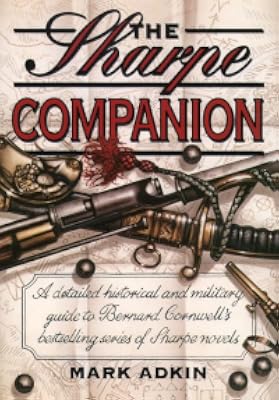
Has as a reference guide/companion
Common Knowledge
- Canonical title
- Sharpe's Company
- Original title
- Sharpe's company
- Alternate titles
- Sharpe's Company: Richard Sharpe and the Siege of Badajoz, January to April 1812
- Original publication date
- 1982-05-10
- People/Characters
- Richard Sharpe; Patrick Harper; Sergeant Obadiah Hakeswill; Arthur Wellesley, 1st Duke of Wellington; William Lawford; Teresa Moreno (show all 12); Obadiah Hakeswill; Daniel Hagman; Michael Hogan; Robert Knowles; Thomas Leroy; Harry Price
- Important places
- Ciudad Rodrigo, Castile and León, Spain; Badajoz, Extremadura, Spain
- Important events
- Siege of Badajoz (January to April 1812)
- Related movies
- Sharpe's Company (1994 | IMDb)
- Epigraph
- Now thou art come unto a feast of death. - William Shakespeare, Henry VI, Part I, Act 4, Scene 5.
- Dedication
- Sharpe's Company is for The Harper family, Charlie and Marie, Patrick, Donna and Terry, with affection and gratitude
- First words
- A pale horse seen a mile away at sunrise means the night is over.
- Quotations
- "Sergeant. We're going to Badajoz." - Richard Sharpe
- Last words
- (Click to show. Warning: May contain spoilers.)She was his, to be protected as he must protect all those other souls who liked him, were proud of him, and proud to be in his roaster - Sharpe's Company
- Blurbers
- King, Stephen
- Original language*
- englanti
*Some information comes from Common Knowledge in other languages. Click "Edit" for more information.
Classifications
Statistics
- Members
- 1,434
- Popularity
- 16,478
- Reviews
- 22
- Rating
- (4.04)
- Languages
- 7 — Czech, English, Finnish, French, German, Portuguese, Spanish
- Media
- Paper, Audiobook, Ebook
- ISBNs
- 42
- ASINs
- 18