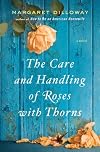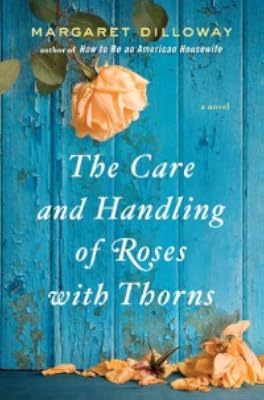
The Care and Handling of Roses with Thorns
by Margaret Dilloway
On This Page
Description
Thirty-six-year-old biology teacher Gal Garner's regimented life will never be the same after her estranged sister's teenage daughter Riley arrives one afternoon unannounced.Tags
Recommendations



























Member Reviews
"Difficult and obstinate. Thriving under a set of specific and limited conditions. That pretty much describes me. Maybe that's why I like these roses so much."
Gal has struggled all her life with a kidney failure, going to dialysis several times a week, hoping upon hope that she'll get a transplant soon. While she waits, she teaches biology very strictly at the local Catholic high school, and cultivates roses. As an amateur breeder, she tries to create a unique new strain of the Hulthemia rose. When her niece Riley turns up unannounced, she turns Gal's well-ordered life inside out... and breathes fresh life in.
Gal is a bit of an odd fish - but to me, a fairly understandable one. She sees everything very much in black and white, is show more ambitious and scientific and colours very much within the lines. She's so keen to be considered a legitimate rose competitor, to be validated, while she copes with the devastating reality of her kidney issues. Dilloway includes in Gal the depression of a chronic illness sufferer, the logistical difficulties of dialysis and rose-tending, and the elation, jealousy and heartbreak of watching other patients on the same transplant list.
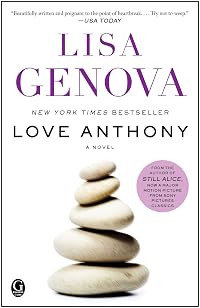
Like all these types of books (Looking for Me, Sisterland, Meet Me At the Cupcake Cafe, Love Anthony), the writing is easy and munchable without impediment, but equally not unappetising. Extra characters are as developed as necessary (i.e. often, not very), and certain conflicts and romances are easily foretold. The drama of the kidney failure is in a sense secondary to the main suspense of the Riley-Gal relationship.
Riley, the unexpected teenager, is the unsung heroine of this story. It would have been easy to cast the teenager as the disruption, the troublemaker, but Riley is actually a cleverly constructed character, full of surprises and gentle actions rather than trouble. She's honest but sullen, open and secretive in turns.
Not difficult to read at all - but quite good fun. show less
Gal has struggled all her life with a kidney failure, going to dialysis several times a week, hoping upon hope that she'll get a transplant soon. While she waits, she teaches biology very strictly at the local Catholic high school, and cultivates roses. As an amateur breeder, she tries to create a unique new strain of the Hulthemia rose. When her niece Riley turns up unannounced, she turns Gal's well-ordered life inside out... and breathes fresh life in.
Gal is a bit of an odd fish - but to me, a fairly understandable one. She sees everything very much in black and white, is show more ambitious and scientific and colours very much within the lines. She's so keen to be considered a legitimate rose competitor, to be validated, while she copes with the devastating reality of her kidney issues. Dilloway includes in Gal the depression of a chronic illness sufferer, the logistical difficulties of dialysis and rose-tending, and the elation, jealousy and heartbreak of watching other patients on the same transplant list.
Like all these types of books (Looking for Me, Sisterland, Meet Me At the Cupcake Cafe, Love Anthony), the writing is easy and munchable without impediment, but equally not unappetising. Extra characters are as developed as necessary (i.e. often, not very), and certain conflicts and romances are easily foretold. The drama of the kidney failure is in a sense secondary to the main suspense of the Riley-Gal relationship.
Riley, the unexpected teenager, is the unsung heroine of this story. It would have been easy to cast the teenager as the disruption, the troublemaker, but Riley is actually a cleverly constructed character, full of surprises and gentle actions rather than trouble. She's honest but sullen, open and secretive in turns.
Not difficult to read at all - but quite good fun. show less
I love novels with cranky heroines, and the one in this novel has a good reason for her attitude, having suffered from kidney disease since childhood that has left her hooked up to dialysis machines every other night. I like the way that Gal very slowly and very slightly softens up after the appearance of her niece Riley. She is also impacted by the hiring of a new teacher at the private school where she teaches biology. Through these relationships and several others, Gal realizes eventually that although her illness has put limitations on her life, she has to give to others as well as get something from them, and that she was not the only family member who was adversely affected by her illness. Without losing any of her edge, Gal does show more grow a little by the novel's conclusion. The rose/thorn metaphor might be a bit obvious, but the uniqueness of Gal's character keeps this book from lapsing into cliche. Definitely recommended. show less
Galilee "Gal" Garner lives for her roses. As an amateur rose breeder, Gal's world revolves around her precious hulthemias. The challenge of breeding the perfect rose consumes her every waking hour when she is not teaching or undergoing dialysis for a chronic kidney disorder. Gal's world is quite predictable, which she finds comforting. Then one day Gal is called out of class to discover that her 15 year old niece Riley has arrived unexpectedly. With nowhere else to go, it's soon settled that Riley will temporarily stay with Gal.
Although Gal teaches high school, she is completely unprepared for the challenges of raising a teenager she hardly knows. Gal is unaccustomed to the demands of parenting and soon finds herself in over her head as show more she juggles her teaching career, her health issues, and her new role as a guardian to a teen all while aiming to create a rose that will be the envy of the rose society. While Gal is as thorny as her roses and difficult to get to know, her journey changes her from an inflexible spinster into a nurturing caregiver. Along the way, Gal is given the opportunity to start actually living her life instead of living through her roses.
The Bottom Line: This is a beautiful tale told in the first person; it celebrates love, forgiveness, and the bonds of family. Although it is a bit predictable, it was a joy watching Gal's character blossom. This is a fast read, making it perfect for the weekend. Once you pick this one up, you won't be able to put it down. Enthusiastically recommended for those who enjoy contemporary fiction about family dynamics. This will also appeal to those interested in roses and gardening. Additionally, "The Care and Handling of Roses with Thorns" would also be a great pick for a book club. show less
Although Gal teaches high school, she is completely unprepared for the challenges of raising a teenager she hardly knows. Gal is unaccustomed to the demands of parenting and soon finds herself in over her head as show more she juggles her teaching career, her health issues, and her new role as a guardian to a teen all while aiming to create a rose that will be the envy of the rose society. While Gal is as thorny as her roses and difficult to get to know, her journey changes her from an inflexible spinster into a nurturing caregiver. Along the way, Gal is given the opportunity to start actually living her life instead of living through her roses.
The Bottom Line: This is a beautiful tale told in the first person; it celebrates love, forgiveness, and the bonds of family. Although it is a bit predictable, it was a joy watching Gal's character blossom. This is a fast read, making it perfect for the weekend. Once you pick this one up, you won't be able to put it down. Enthusiastically recommended for those who enjoy contemporary fiction about family dynamics. This will also appeal to those interested in roses and gardening. Additionally, "The Care and Handling of Roses with Thorns" would also be a great pick for a book club. show less
 This review was written for LibraryThing Early Reviewers.
Galilee Garner, called Gal by her few friends, lives a strict and very precisely regimented life. Part of this is out of necessity as she has a chronic kidney disease that has had her on thrice weekly dialysis for almost 10 years after her previous transplants eventually failed. But part of it is who she has become in her life: a bitter, prickly, inflexible, exacting biology teacher at the local Catholic high school who holds her students to impossible standards and who has lost all sense of the social niceties. She is firm and rude and clipped with others believing that she alone is cutting through the BS and being honest and truthful, uncaring of her effect on others. In reality, she has encased herself in a thorny covering to protect show more herself, to avoid the unwanted pity or the falsely sympathetic. It is only when Gal gets home from her days at school and moves into the solitude and sanctuary of her greenhouses to work with her beloved Hulthemia roses that she blossoms. She is not simply a rose grower, she is a rose breeder, determined to cultivate a rose worthy of being called Queen of Show, to bring the elusive fragrance back to her favorite type of cultivar.
When Gal's niece Riley, her estranged addict sister Becky's teenaged daughter, shows up unannounced and unexpected at her school, Gal's carefully guarded life is thrown into turmoil. Riley's mother has sent her to stay while she pursues a job across the globe, neither asking her sister's permission to send her daughter nor preparing her daughter emotionally for the massive changes both of them will have to make to accomodate the other. Riley is fragile after her mother's abandonment, academically behind, emotionally mercurial, and she is slow to fit in with her classmates at the school where Gal teaches. She does try to fit into this aunt she hadn't seen in years' world but she is every bit as damaged a child as Gal is an adult and there are frequent episodes of drama or tantrums from her. Riley's very presence challenges Gal and her notion of refusing to compromise as she tries to suddenly parent a three quarters grown child and comes to realize that the first and most important key to parenting is flexibility, completely counter to the mantra of her life thus far.
Gal very definitely starts off as an unlikable character and since she is the first person narrator, this presents a hurdle to the reader. But anyone who stays with the novel will be rewarded by watching Gal slowly change. The changes are neither easy nor absolute but they are honest and presented (complete with backsliding) in the way that real life works. Her tentative opening up of her heart to Riley and the other secondary characters and an eventual serious, close and unflinching examination of herself and her effect on others is well-done and believable. The abrasive Gal of the beginning of the book is kinder and gentler, less judgmental but with her firm moral core still intact, making her more likable over all. The insights into growing roses and the painstaking care with which their breeding occurs is interesting as is the glimpse into the competitive world of showing roses although the breadth of information could overwhelm some readers uninterested in the mechanics of gardening. Life with a chronic disease and the impact that the disease has on every aspect of a person, including personality and varying perceptions of those not suffering such a fate, is fascinating and well-integrated into the story thanks to Gal's self-referential musings. A touching look at the way we live in the world, compassion, how we treat others, and the love we carry for family, this is a quick and rewarding read. show less
When Gal's niece Riley, her estranged addict sister Becky's teenaged daughter, shows up unannounced and unexpected at her school, Gal's carefully guarded life is thrown into turmoil. Riley's mother has sent her to stay while she pursues a job across the globe, neither asking her sister's permission to send her daughter nor preparing her daughter emotionally for the massive changes both of them will have to make to accomodate the other. Riley is fragile after her mother's abandonment, academically behind, emotionally mercurial, and she is slow to fit in with her classmates at the school where Gal teaches. She does try to fit into this aunt she hadn't seen in years' world but she is every bit as damaged a child as Gal is an adult and there are frequent episodes of drama or tantrums from her. Riley's very presence challenges Gal and her notion of refusing to compromise as she tries to suddenly parent a three quarters grown child and comes to realize that the first and most important key to parenting is flexibility, completely counter to the mantra of her life thus far.
Gal very definitely starts off as an unlikable character and since she is the first person narrator, this presents a hurdle to the reader. But anyone who stays with the novel will be rewarded by watching Gal slowly change. The changes are neither easy nor absolute but they are honest and presented (complete with backsliding) in the way that real life works. Her tentative opening up of her heart to Riley and the other secondary characters and an eventual serious, close and unflinching examination of herself and her effect on others is well-done and believable. The abrasive Gal of the beginning of the book is kinder and gentler, less judgmental but with her firm moral core still intact, making her more likable over all. The insights into growing roses and the painstaking care with which their breeding occurs is interesting as is the glimpse into the competitive world of showing roses although the breadth of information could overwhelm some readers uninterested in the mechanics of gardening. Life with a chronic disease and the impact that the disease has on every aspect of a person, including personality and varying perceptions of those not suffering such a fate, is fascinating and well-integrated into the story thanks to Gal's self-referential musings. A touching look at the way we live in the world, compassion, how we treat others, and the love we carry for family, this is a quick and rewarding read. show less
First, let me say I loved Dilloway's How to be an American Housewife. It was one of last year's few 5* reads so I was really looking forward to Dilloway's latest. The Care and Handling of Roses with Thorns started out slowly for me with what felt like too much info on kidney disease, dialysis and breeding roses but then it seems like something magical happened and I really got into the storyline. Gal, who I didn't like very much but I did feel like I understood her, became much more likeable once I saw through her prickly exterior to her vulnerability underneath.
Gal's life is dictated by her kidney disease and her dialysis schedule. Every other night she has to sleep in the hospital while having dialysis. Even her diet is ruled by her show more kidneys. Being a biology teacher in a private school is her livelihood but breeding roses is her passion. It's the one way she has some control over things in her life.
"Difficult and obstinate. Thriving under a set of specific and limited conditions. That pretty much describes me. Maybe that's why I like roses so much."
Being somewhat of a loner is one of her traits along with liking things her way. She's not big into compromise or even seeing the other side of things until the day her niece, Riley, shows up at school. It figures, Gal thinks, that her sister Becky would just send her kid to stay with Gal without even asking her if it were okay. Becky, of whom, Gal does not approve has always been the irresponsible one, the impulsive one, not much of a mother, a drinker and a drug user. None of these things meet with Gal's liking at all. But that's all about to change after this one summer with Riley's unexpected and at first a little unwelcomed stay with her aunt.
Dilloway brings her characters to life while exploring family dynamics, the power of forgiveness, self esteem, understanding, hope and love. I grew very fond of all these characters and even the rose breeding parts became interesting. 4****
This would make a wonderful book club selection as I think there are many family issues that could be discussed.
Disclosure: A review copy of the book was provided by Putnam/LT in exchange for my honest opinion. show less
Gal's life is dictated by her kidney disease and her dialysis schedule. Every other night she has to sleep in the hospital while having dialysis. Even her diet is ruled by her show more kidneys. Being a biology teacher in a private school is her livelihood but breeding roses is her passion. It's the one way she has some control over things in her life.
"Difficult and obstinate. Thriving under a set of specific and limited conditions. That pretty much describes me. Maybe that's why I like roses so much."
Being somewhat of a loner is one of her traits along with liking things her way. She's not big into compromise or even seeing the other side of things until the day her niece, Riley, shows up at school. It figures, Gal thinks, that her sister Becky would just send her kid to stay with Gal without even asking her if it were okay. Becky, of whom, Gal does not approve has always been the irresponsible one, the impulsive one, not much of a mother, a drinker and a drug user. None of these things meet with Gal's liking at all. But that's all about to change after this one summer with Riley's unexpected and at first a little unwelcomed stay with her aunt.
Dilloway brings her characters to life while exploring family dynamics, the power of forgiveness, self esteem, understanding, hope and love. I grew very fond of all these characters and even the rose breeding parts became interesting. 4****
This would make a wonderful book club selection as I think there are many family issues that could be discussed.
Disclosure: A review copy of the book was provided by Putnam/LT in exchange for my honest opinion. show less
This review was written for LibraryThing Early Reviewers.Margaret Dilloway made a rod for her own back in creating a character as difficult as Gal. Yet, a couple chapters in I began to appreciate her and, eventually, pull for her. Nothing short of a miracle because this woman is a porcupine.
And that's the beauty of this book. Every character and every situation felt immediate and real. I never doubted anything I read, and I'm a skeptical reader. From the art of rose breeding to the trials of dialysis to the care and feeding of a truculent teenager--all of it delivered in a confident, direct voice that carried the story beautifully.
Dilloway's an accomplished storyteller with insight and compassion. I'm putting her other books on my list.
And that's the beauty of this book. Every character and every situation felt immediate and real. I never doubted anything I read, and I'm a skeptical reader. From the art of rose breeding to the trials of dialysis to the care and feeding of a truculent teenager--all of it delivered in a confident, direct voice that carried the story beautifully.
Dilloway's an accomplished storyteller with insight and compassion. I'm putting her other books on my list.
Margaret Dilloway’s The Care and Handling of Roses With Thorns features one of the most irritable main characters I’ve ever encountered. Gal is bitter, jaded, holier-than-thou — a woman who sticks to her guns and doesn’t care who dislikes her. Even those trying to help her — like Dara, her best friend — bear the brunt of Gal’s ill moods and whims. And when someone tries to point them out to her, she becomes even more pious.
It grated on me . . . for a while. Gal walks around correcting others’ grammar, pretending like she doesn’t have a crush on the cute new teacher, flunking students because they just didn’t “study hard enough” on her seemingly impossible tests. Her school’s headmaster takes her to task for her show more incredible rules, even by Catholic school standards, and still? She will not budge.
That should be Gal’s tagline: Will Not Budge. Will not compromise. Not about her clothing choices (terrible), her grading, her cultivation of roses. Once Gal makes her mind up, that’s it.
For 100 pages, I wanted to clobber her. I wanted to shake her and demonstrate just how selfish and acrid she was being. Riley was certainly no saint, but she was a teenage girl; at least she could use that in her own defense. Gal seemed like nothing more than a spoiled pity-party-thrower — a woman who levied others’ kindness against them and took advantage of their good intentions.
But then. Without realizing it, something clicked over. The animosity I felt for Gal switched to compassion. By bringing her niece into her home, Gal became more compassionate — and more adaptable. She understood the error of her ways, and that she’d blamed others for things for far too long. That the anger and jealousy she felt for Becky, her older sister, was maybe misguided . . . or, at the very least, the symptom of a much larger issue.
Gal began to see there are two sides to every story. And that maybe she’d only ever peered at one. Then I liked her.
The Care and Handling of Roses With Thorns centers on family, illness, friendship, hope. Though the descriptions of rose cultivation sometimes felt like a little much, this story was Gal’s — and told from her first-person perspective. Before Riley, the roses were her world — and I enjoyed the snippets of caring for the blossoms at the beginning of each chapter.
I absolutely loved Dilloway’s How To Be An American Housewife — it was one of my favorite reads of 2010 — and wasn’t disappointed with her follow-up, though I connected with Dilloway’s Japanese mother and American daughter more than Gal and Riley. Still, Dilloway is a vivid, lush and poignant writer who has more than earned herself a spot on my personal “must read” list. If you’re a fan of contemporary fiction, family dynamics and complicated sister relationships, don’t miss her sophomore novel. show less
It grated on me . . . for a while. Gal walks around correcting others’ grammar, pretending like she doesn’t have a crush on the cute new teacher, flunking students because they just didn’t “study hard enough” on her seemingly impossible tests. Her school’s headmaster takes her to task for her show more incredible rules, even by Catholic school standards, and still? She will not budge.
That should be Gal’s tagline: Will Not Budge. Will not compromise. Not about her clothing choices (terrible), her grading, her cultivation of roses. Once Gal makes her mind up, that’s it.
For 100 pages, I wanted to clobber her. I wanted to shake her and demonstrate just how selfish and acrid she was being. Riley was certainly no saint, but she was a teenage girl; at least she could use that in her own defense. Gal seemed like nothing more than a spoiled pity-party-thrower — a woman who levied others’ kindness against them and took advantage of their good intentions.
But then. Without realizing it, something clicked over. The animosity I felt for Gal switched to compassion. By bringing her niece into her home, Gal became more compassionate — and more adaptable. She understood the error of her ways, and that she’d blamed others for things for far too long. That the anger and jealousy she felt for Becky, her older sister, was maybe misguided . . . or, at the very least, the symptom of a much larger issue.
Gal began to see there are two sides to every story. And that maybe she’d only ever peered at one. Then I liked her.
The Care and Handling of Roses With Thorns centers on family, illness, friendship, hope. Though the descriptions of rose cultivation sometimes felt like a little much, this story was Gal’s — and told from her first-person perspective. Before Riley, the roses were her world — and I enjoyed the snippets of caring for the blossoms at the beginning of each chapter.
I absolutely loved Dilloway’s How To Be An American Housewife — it was one of my favorite reads of 2010 — and wasn’t disappointed with her follow-up, though I connected with Dilloway’s Japanese mother and American daughter more than Gal and Riley. Still, Dilloway is a vivid, lush and poignant writer who has more than earned herself a spot on my personal “must read” list. If you’re a fan of contemporary fiction, family dynamics and complicated sister relationships, don’t miss her sophomore novel. show less
This review was written for LibraryThing Early Reviewers.Members
- Recently Added By
Lists

ALA The Reading List
490 works; 28 members
Author Information
9+ Works 1,403 Members
Awards and Honors
Awards
Common Knowledge
- Canonical title
- The Care and Handling of Roses with Thorns
- Original publication date
- 2012-08-02
- People/Characters
- Galilee "Gal" Garner; Becky Garner; Riley Garner; Dara; George
- Important places
- San Luis Obispo, California, USA; San Francisco, California, USA
- Epigraph
- Some people are always grumbling because roses have thorns. I am thankful that thorns have roses.
- - Alphonse Karr - Dedication
- To Deborah, for the inspiration
To Keith, for the faith
Classifications
Statistics
- Members
- 251
- Popularity
- 129,634
- Reviews
- 35
- Rating
- (3.74)
- Languages
- English
- Media
- Paper, Audiobook, Ebook
- ISBNs
- 9
- ASINs
- 3