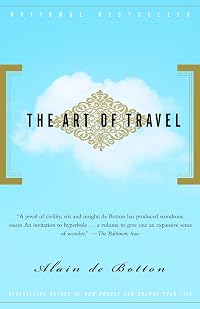
The Art of Travel
by Alain de Botton
On This Page
Description
An exploration of the human desire to travel presents a series of essays on airports, museums, landscapes, holiday romances, and hotel mini-bars, offering suggestions on how to render travel more fulfilling.Tags
Recommendations










Member Recommendations



Member Reviews
This is a very good book, and one that all travellers must read. As he starts - it is not just about where you wan to travel to, but why and how. I also like the gem at the end - be like a traveller in your own home.
The manner in which he has used some earlier writers and artists as 'guides', is a masterpiece. We see the world in their eyes, as much as he can help us do so, but also through the eyes of Alain. I am a 'traveller', and there is much that I relate to in the book. The manner in which he has laid out the book, from 'Anticipation' to 'Return' is absolutely brilliant.
The book, no fault of his, is something that people who have travelled to the West, or who are familiar with his 'guides', will relate to. For those who are not show more familiar, this can be a drawback. However, this is a small quibble in a magnificent book. show less
The manner in which he has used some earlier writers and artists as 'guides', is a masterpiece. We see the world in their eyes, as much as he can help us do so, but also through the eyes of Alain. I am a 'traveller', and there is much that I relate to in the book. The manner in which he has laid out the book, from 'Anticipation' to 'Return' is absolutely brilliant.
The book, no fault of his, is something that people who have travelled to the West, or who are familiar with his 'guides', will relate to. For those who are not show more familiar, this can be a drawback. However, this is a small quibble in a magnificent book. show less
Travel isn't always what it is cracked up to be. There is something about planning a trip that is inherently more delicious than actually taking the journey. Then afterwards when you get home, you find the time away did not live up to the expectation of all the planning. Alain de Botton invites you to travel in a way you have never considered before. When you finally arrive at your destination, he welcomes you to closely inspect your surroundings in ways you didn't know you could or should; to see beyond merely looking. Upon reading Art of Travel he makes you want to stand in the spot where van Gogh's little yellow house used to stand in Arles, France; where you'll find yourself a little sad it was destroyed in World War II. I could go show more on and on with other examples, but I think it's best to read the book. show less
This book reflects on travel focusing on the little things such as the novelty of the commonplace in a new place, disorientation, the boredom of travel, and even ponders whether travel for pleasure is even a necessity. Along the way he shows travel through the eyes of various artists: Van Gogh, Wordsworth, Flauber, Von Humboldt and others. He even details how artists create the vision we have of the destinations we wish to visit. This is all written in the intellectual vein of someone who attends a literary salon, so if that's not your thing, you won't like this book. I found it brain-teasingly good, but I think that de Botton is meant to be read more than heard so I don't recommend the audiobook.
Ever since I was a child I had a longing to travel. There are many explanations for this longing, but it became clear to me one summer, when after my first real heartbreak, I traveled by myself to Munich (because that was 'his' favorite city) by train reading "The Magic Mountain" (because that was 'his' favorite book), and I looked out the cabin window and wondered why I was there. And I knew. I was searching for something, what exactly was unclear, but it was something important, something elusive--beauty, love, meaning, something that I could not find in familiar places. I had to isolate myself from everything that was familiar in order to find my own meaning again. Alain de Botton's book "The Art of Travel" is a wonderful essay about show more longing and learning to see anew what is always before us. I loved the mix of paintings, memoirs, word-painting, and his own experiences. My favorite parts were.... well everything. I want to read the authors he spoke of, see the paintings he described, learn to word-paint and see the world in all its beauty. show less
The Art of Travel, it is a curious combination of travel locations, the artists and writers who portrayed them in their work, and the personal experiences of the book’s author. The book revolves around the thought that “wherever you go, you’re still yourself when you get there,” with all your anxieties, needs, and preferences.
He describes being in exotic locations and still arguing about desserts with his companion. The restaurant had served them the same dessert; one which was smaller and perfectly shaped, and a second one which was much larger, but misshapen. The man (our author) switched the larger one that he was served, for the perfect one, saying that she should have more. She ate a bite, and then slipped into an angry show more space, which evolved into a dual sulk that lasted for half a day … reminding themselves that as beautiful as the surroundings were, they were the same people they were at home.
He writes so clearly about what people get from traveling. In one section, he beautifully describes how differently Vincent van Gogh saw landscapes and colors. For so many years, painters had been using the same subdued palette, until van Gogh came along and blew it all up.
To be honest, I read this fine book some time ago, but I still remember being so impressed with his writing and intellect, a trait that all Alain de Botton books seem to share.
Unless something major changes in my life, I don’t see myself doing much more traveling, but this book will always resonate with me. show less
He describes being in exotic locations and still arguing about desserts with his companion. The restaurant had served them the same dessert; one which was smaller and perfectly shaped, and a second one which was much larger, but misshapen. The man (our author) switched the larger one that he was served, for the perfect one, saying that she should have more. She ate a bite, and then slipped into an angry show more space, which evolved into a dual sulk that lasted for half a day … reminding themselves that as beautiful as the surroundings were, they were the same people they were at home.
He writes so clearly about what people get from traveling. In one section, he beautifully describes how differently Vincent van Gogh saw landscapes and colors. For so many years, painters had been using the same subdued palette, until van Gogh came along and blew it all up.
To be honest, I read this fine book some time ago, but I still remember being so impressed with his writing and intellect, a trait that all Alain de Botton books seem to share.
Unless something major changes in my life, I don’t see myself doing much more traveling, but this book will always resonate with me. show less
Alain De Botton - [The Art of Travel]
"mais il faut cultiver notre jardin" is the last thing Candide says in Voltaires novel published in 1759, after travelling extensively and seeing some of the man made horrors in the world. Alain de Botton seems to come to a similar conclusion at the end of his The Art of Travel, although he might extend his garden to include his immediate locality. Why bother to travel when there is so much to see close to home if you can be bothered to look more carefully. Published in 2002 this book might become more relevant to a post covid-19 world where travel is likely to be either more difficult, more dangerous or both. Miles Davis is reported to have said something like 'why do I need to go and visit famous show more sights when I can see pictures of them in books.' Why indeed and after reading de Botton, and perhaps being careful of your carbon footprint you might think that Miles Davis had a point. I am sure that de Botton wished to educate his readers on how to travel better, how to enhance their experiences, but his own examples of his travels are hardly inspirational: a wet three days in the lake district (England), a package holiday to Barbados and a guilty escapade in Madrid following a working seminar.
Alain de Botton is a Swiss born British philosopher who writes books and articles aimed at a more general readership. His first book 'Essay on Love" was a best seller and his "The Consolations of Philosophy" published in 2000 also sold well. He has then turned his attention to travel; travel for pleasure and to help with his ideas he has enlisted the aid of artists (authors and painters) from the past to act as our guides. Wordsworth accompanies us in our travels in the Lake District, Vincent Van Gogh is present in Provence (France) and Edward Hopper in the transit stations along the way. The book starts with the thoughts of the Duc des Esseintes the misanthropic hero of J K Huysman's "A Rebours" who came to the conclusion that: the anticipation of travel is so much better than the real thing. The Duc made careful preparations to travel from his Villa on the outskirts of Paris to London, but when he arrived at the Parisian train terminus he had a cup of coffee and decided it was not worth the effort and returned home. There are further examples of regretful travellers: for example Charles Baudelaire:
We saw stars
And waves; we saw sand to
And, despite many crises and unforeseen disasters
We were often bored, just as we are here.
It would be misleading to give the impression that the book is totally negative about travelling, but de Botton does always find something that stops him being euphoric about the experience.
In addition to de Botton's thoughts on travelling the prime motive for the book is as a self-help guide, to encourage people to think a little more about what they are doing and why they are doing it. I personally found many of his observations to be in tune with my thoughts or at least how I would like to be thinking if I took the time to write them down. His ideas can seem a little trite but they are mercifully free from wisecracks and bon mots. Towards the end of the book John Ruskin is our guide in a search for beauty and how we can benefit by looking more carefully at what is around us, perhaps taking the time to sketch our viewpoints as a way of making us see more of what is there. We are almost back to spending our time cultivating our garden and not intrusively involving ourselves in the lives of other people.
I started of reading impatiently; in as much as de Botton seemed to spend much of his energy in stating the blindingly obvious, but I warmed to him and his thoughts as he paired his travels with authors and painters from the past to give a resonance to his own writing. My penguin edition of the book contains many and only black and white photos, which do nothing to enhance the text as they are of such poor quality. Perhaps this is a coffee table book struggling to get out. It might work better in a larger format with better art work.
The book probably won't stop you booking your next holiday and it is not intended to do so, but it might make you think a little more about your expectations and how you can gain more enjoyment from the experience. 3.5 stars. show less
"mais il faut cultiver notre jardin" is the last thing Candide says in Voltaires novel published in 1759, after travelling extensively and seeing some of the man made horrors in the world. Alain de Botton seems to come to a similar conclusion at the end of his The Art of Travel, although he might extend his garden to include his immediate locality. Why bother to travel when there is so much to see close to home if you can be bothered to look more carefully. Published in 2002 this book might become more relevant to a post covid-19 world where travel is likely to be either more difficult, more dangerous or both. Miles Davis is reported to have said something like 'why do I need to go and visit famous show more sights when I can see pictures of them in books.' Why indeed and after reading de Botton, and perhaps being careful of your carbon footprint you might think that Miles Davis had a point. I am sure that de Botton wished to educate his readers on how to travel better, how to enhance their experiences, but his own examples of his travels are hardly inspirational: a wet three days in the lake district (England), a package holiday to Barbados and a guilty escapade in Madrid following a working seminar.
Alain de Botton is a Swiss born British philosopher who writes books and articles aimed at a more general readership. His first book 'Essay on Love" was a best seller and his "The Consolations of Philosophy" published in 2000 also sold well. He has then turned his attention to travel; travel for pleasure and to help with his ideas he has enlisted the aid of artists (authors and painters) from the past to act as our guides. Wordsworth accompanies us in our travels in the Lake District, Vincent Van Gogh is present in Provence (France) and Edward Hopper in the transit stations along the way. The book starts with the thoughts of the Duc des Esseintes the misanthropic hero of J K Huysman's "A Rebours" who came to the conclusion that: the anticipation of travel is so much better than the real thing. The Duc made careful preparations to travel from his Villa on the outskirts of Paris to London, but when he arrived at the Parisian train terminus he had a cup of coffee and decided it was not worth the effort and returned home. There are further examples of regretful travellers: for example Charles Baudelaire:
We saw stars
And waves; we saw sand to
And, despite many crises and unforeseen disasters
We were often bored, just as we are here.
It would be misleading to give the impression that the book is totally negative about travelling, but de Botton does always find something that stops him being euphoric about the experience.
In addition to de Botton's thoughts on travelling the prime motive for the book is as a self-help guide, to encourage people to think a little more about what they are doing and why they are doing it. I personally found many of his observations to be in tune with my thoughts or at least how I would like to be thinking if I took the time to write them down. His ideas can seem a little trite but they are mercifully free from wisecracks and bon mots. Towards the end of the book John Ruskin is our guide in a search for beauty and how we can benefit by looking more carefully at what is around us, perhaps taking the time to sketch our viewpoints as a way of making us see more of what is there. We are almost back to spending our time cultivating our garden and not intrusively involving ourselves in the lives of other people.
I started of reading impatiently; in as much as de Botton seemed to spend much of his energy in stating the blindingly obvious, but I warmed to him and his thoughts as he paired his travels with authors and painters from the past to give a resonance to his own writing. My penguin edition of the book contains many and only black and white photos, which do nothing to enhance the text as they are of such poor quality. Perhaps this is a coffee table book struggling to get out. It might work better in a larger format with better art work.
The book probably won't stop you booking your next holiday and it is not intended to do so, but it might make you think a little more about your expectations and how you can gain more enjoyment from the experience. 3.5 stars. show less
Why travel at all? Nomadic herdsmen travel long distances, following seasonal shifts in pasture land. Trade is an ancient motivation. People migrate because of growing population density, reduction in farm productivity, etc.: in search of a way to make a living. People travel escape warfare or to practice warfare. People travel to cultivate diplomatic relations, to manage trade or migration or warfare. People travel to visit familiy and friends. People travel to learn skills that aren't taught in their hometowns. People travel to explore, to find out what remote places are like, to find new opportunities for trade etc.
De Botton picked his title well. Another sort of travel is motivated by aesthetics, to cultivate some sort of aesthetic show more appreciation of the place itself. Travel can be a way that I can change myself internally, emotionally, intellectually.
Is this kind of purely internal focus really effective? Can we cultivate a healthy internal without cultivating a healthy external at the same time? There are a variety of ways to combine travel with working to make the external world, the world outside myself, a better place. But that kind of heavy-handed deliberateness is not required, either. If we are simply engaged with the world in a careful and meaningful way, that can be enough, that can be even more powerful.
Pilgrimage is a curious sort of travel that is focused on internal transformation but that doesn't seem to fit de Botton's aesthetic approach. Maybe the difference is that de Botton looks for ways that external stimuli can trigger or steer internal dynamics. Pilgrimage, on the other hand, seems more externally focused. The story, the dynamics, are external. The self is subjected to that external story.
I just started watching Louis Malle's documentary film Phantom India. This film seems also to take an aesthetic approach to its subject, but seems to bring into question more the nature of that engagement. That film is also more people-oriented than de Botton's book. People demand more active engagement than does landscape!
We already seem to be retreating from the pinnacle of exotic travel, as the global airline industry goes into retreat, handicapped by high fuel prices and security concerns. Pulling in our horizons will feel much different than pushing them out. Intellectual and emotional self-transformation is always a worthy project, but its relationship to travel may be due for a major shift as we move into a world of declining resource availability. show less
De Botton picked his title well. Another sort of travel is motivated by aesthetics, to cultivate some sort of aesthetic show more appreciation of the place itself. Travel can be a way that I can change myself internally, emotionally, intellectually.
Is this kind of purely internal focus really effective? Can we cultivate a healthy internal without cultivating a healthy external at the same time? There are a variety of ways to combine travel with working to make the external world, the world outside myself, a better place. But that kind of heavy-handed deliberateness is not required, either. If we are simply engaged with the world in a careful and meaningful way, that can be enough, that can be even more powerful.
Pilgrimage is a curious sort of travel that is focused on internal transformation but that doesn't seem to fit de Botton's aesthetic approach. Maybe the difference is that de Botton looks for ways that external stimuli can trigger or steer internal dynamics. Pilgrimage, on the other hand, seems more externally focused. The story, the dynamics, are external. The self is subjected to that external story.
I just started watching Louis Malle's documentary film Phantom India. This film seems also to take an aesthetic approach to its subject, but seems to bring into question more the nature of that engagement. That film is also more people-oriented than de Botton's book. People demand more active engagement than does landscape!
We already seem to be retreating from the pinnacle of exotic travel, as the global airline industry goes into retreat, handicapped by high fuel prices and security concerns. Pulling in our horizons will feel much different than pushing them out. Intellectual and emotional self-transformation is always a worthy project, but its relationship to travel may be due for a major shift as we move into a world of declining resource availability. show less
Members
- Recently Added By
Published Reviews
ThingScore 50
The trouble with The Art of Travel is that he clearly does not have the same enthusiasm for travel.
added by prosperosbook
Lists

Best Beach Reads
99 works; 61 members

Favorite Short Fiction
228 works; 99 members

Bibliography of How the Old World Ended by Jonathan Scott
308 works; 1 member
Author Information

55+ Works 26,137 Members
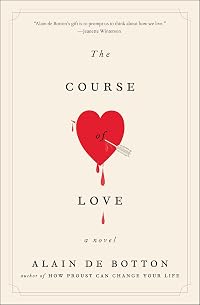
Born in Zurich, Switzerland on December 20, 1969, Alain de Botton was educated at Cambridge University, England, and now divides his time between London and Washington, D.C. With the publication of his first novel, Essays in Love, de Botton quickly became one of the most talked about British novelists of the 1990s. Although the basic plot of show more Essays in Love (published in the U.S. as On Love) is a rather typical love story, de Botton presents it in a unique and humorous way. De Botton's other novels include The Romantic Movement: Sex, Shopping and the Novel, which is written in a similar style to Essays on Love, and Kiss and Tell, which follows a would-be biographer as he attempts to write the life story of the first person he encounters. The Course of Love is his latest novel and is on the bestsellers list. Alain de Botton is also the author of How Proust Can Change Your Life: Not a Novel. (Bowker Author Biography) show less
Awards and Honors
Series
Belongs to Publisher Series
Common Knowledge
- Canonical title
- The Art of Travel
- Original title
- The Art of Travel
- Original publication date
- 2002
- People/Characters
- Charles Baudelaire; Joris-Karl Huysmans; Edward Hopper; Gustave Flaubert; Alexander von Humboldt; William Wordsworth (show all 11); Edmund Burke; Hiob; Vincent van Gogh; John Ruskin; Xavier de Maistre
- Important places
- London, England, UK; Barbados; Egypt; Amsterdam, North Holland, Netherlands; Madrid, Spain; Lake District, Cumbria, England, UK (show all 7); Provence, France
- Dedication
- For Michele Hutchison
- First words
- It was hard to say when exactly winter arrived.
- Quotations*
- Wenn das Streben nach Glück unser Leben beherrscht, erschließen uns vielleicht nur wenige unserer Handlungen soviel über die Dynamik dieser Suche – mit all ihrer Inbrunst und ihren Paradoxien – wie die Reisen, die wir... (show all) unternehmen.
- Last words
- (Click to show. Warning: May contain spoilers.)Dressed in pink and blue pyjamas, satisfied within the confines of his own bedroom, Xavier de Maistre was gently nudging us to try, before taking off for distant hemispheres, to notice what we have already seen.
- Original language*
- Englisch
*Some information comes from Common Knowledge in other languages. Click "Edit" for more information.
Classifications
- Genres
- Travel, Philosophy, Nonfiction, General Nonfiction
- DDC/MDS
- 910.01 — History & geography Geography & travel modified standard subdivisions of Geography and travel Philosophy and theory of geography and travel
- LCC
- G151 .D4 — Geography, Anthropology and Recreation Geography (General) Travel. Voyages and travels (General)
- BISAC
Statistics
- Members
- 3,256
- Popularity
- 5,297
- Reviews
- 67
- Rating
- (3.69)
- Languages
- 18 — Arabic, Chinese, Czech, Danish, Dutch, English, Estonian, French, German, Italian, Norwegian (Bokmål), Polish, Russian, Slovenian, Spanish, Swedish, Turkish, Portuguese (Portugal)
- Media
- Paper, Audiobook, Ebook
- ISBNs
- 63
- UPCs
- 1
- ASINs
- 13