

The Geography of Bliss: One Grump's Search for the Happiest Places in the World
by Eric Weiner
On This Page
Description
Part foreign affairs discourse, part humor, and part twisted self-help guide, this book takes the reader from America to Iceland to India in search of happiness, or, in the crabby author's case, moments of "un-unhappiness." The book uses a mixture of travel, psychology, science and humor to investigate not what happiness is, but where it is. Are people in Switzerland happier because it is the most democratic country in the world? Do citizens of Singapore benefit psychologically by having show more their options limited by the government? Is the King of Bhutan a visionary for his initiative to calculate Gross National Happiness? Why is Asheville, North Carolina, so darn happy? NPR correspondent Weiner answers those questions and many others, offering travelers of all moods some interesting new ideas for sunnier destinations and dispositions.--From publisher description. show lessTags
Recommendations





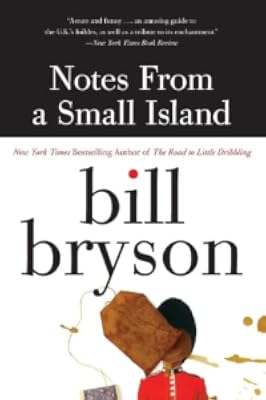






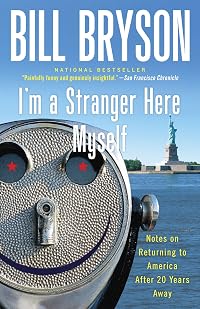



















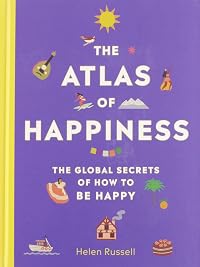
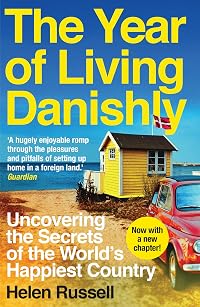











Member Recommendations






Member Reviews
This is maybe a Bill Bryson-like in that it's intelligent, light and fun. And, there is just something inherently entertaining in the idea of going around the world to ask people if they are happy.
Weiner travels to a variety of places and cultures trying to evaluate their "happiness." It's a silly enough idea that it should put the reader off guard, expecting nonsense, then pleasantly surprise the reader when Weiner gets intelligent and into interesting philosophies, and opens ours eyes a bit. Weiner keeps it entertaining, filling in space with clever lines and ideas, and asking (but not answering) some more difficult questions like is there more to life than happiness and should we be even asking about happiness. But, Weiner really show more only wants to know what makes some cultures happier than others and why.
One mixed aspect: He keeps the point-of-view American by mixing in American references and relating back to an American mindset. But, when he finally gets to the US, in what could be a great conclusive chapter, he doesn't cover all that much ground.
(originally written 04/22/08; edited 05/09/08) show less
Weiner travels to a variety of places and cultures trying to evaluate their "happiness." It's a silly enough idea that it should put the reader off guard, expecting nonsense, then pleasantly surprise the reader when Weiner gets intelligent and into interesting philosophies, and opens ours eyes a bit. Weiner keeps it entertaining, filling in space with clever lines and ideas, and asking (but not answering) some more difficult questions like is there more to life than happiness and should we be even asking about happiness. But, Weiner really show more only wants to know what makes some cultures happier than others and why.
One mixed aspect: He keeps the point-of-view American by mixing in American references and relating back to an American mindset. But, when he finally gets to the US, in what could be a great conclusive chapter, he doesn't cover all that much ground.
(originally written 04/22/08; edited 05/09/08) show less
What makes you happy? Eric Weiner, a foreign correspondent for National Public Radio, attempted to find out. He traveled to 10 countries of the world in search of this elusive feeling. His travelogue in pursuit of happiness answers the five critical ‘W’ questions any news story must answer? What? Where? When? Who? Why?
He started his search in Netherlands, where the World Database of Happiness (WDH) is located. I kid you not. It even has a website: http://worlddatabaseofhappiness.eur.nl/ and a publication, Journal of Happiness Studies. According to this database, Netherlands rate high on the scales of happiness, but Weiner’s personal happiness barometer needed more than the lauded Dutch tolerance. His investigation took him next to show more another European country high on the same scales—Switzerland.
The Swiss live by their rules, their watches, and of course, tons of chocolate. One Swiss blogger confided: “Maybe happiness is this: not feeling like you should be elsewhere, doing something else, being someone else.” It is happiness, Weiner agreed, but he needed more. He continued his search.
In his quest for happiness, he visited some of the happiest places on the planet: Bhutan, a tiny Himalayan country, Iceland, steeped in darkness for six months a year but awash in creative people, and Thailand, where the way to happiness is paved with fun. He also visited a few of the unhappiest countries—for contrast.
Some of his conclusions are totally expected from the first page. Others are not so transparent, leading you, a reader, on a journey of self-discovery. Are religious people happier than agnostics? Are rich people happier than paupers? What if the policemen of a country are fatter than its other citizens? Can you be too clever? The answers are not always as obvious as you might think.
Like any research paper, the book is peppered with keen quotes and philosophical references but it is not in the least boring. Quite the opposite: it is permeated with humour and irony. Weiner is measuring every place’s specific happiness to his own size and invites you to do the same.
The book is addictive; you don’t want it to end. It envelopes you, seduces you with its rich prose and the wealth of vocabulary. The abundant details help you witness the author’s escapades and eavesdrop on his conversations in every exotic location on his itinerary. You can’t swallow this book like a fluffy romance. No, you savour it, immerse yourself in its luxurious chapters, and enjoy its verbal pleasures.
On my personal happiness dial, this book rated very high. Reading it made me happy. show less
He started his search in Netherlands, where the World Database of Happiness (WDH) is located. I kid you not. It even has a website: http://worlddatabaseofhappiness.eur.nl/ and a publication, Journal of Happiness Studies. According to this database, Netherlands rate high on the scales of happiness, but Weiner’s personal happiness barometer needed more than the lauded Dutch tolerance. His investigation took him next to show more another European country high on the same scales—Switzerland.
The Swiss live by their rules, their watches, and of course, tons of chocolate. One Swiss blogger confided: “Maybe happiness is this: not feeling like you should be elsewhere, doing something else, being someone else.” It is happiness, Weiner agreed, but he needed more. He continued his search.
In his quest for happiness, he visited some of the happiest places on the planet: Bhutan, a tiny Himalayan country, Iceland, steeped in darkness for six months a year but awash in creative people, and Thailand, where the way to happiness is paved with fun. He also visited a few of the unhappiest countries—for contrast.
Some of his conclusions are totally expected from the first page. Others are not so transparent, leading you, a reader, on a journey of self-discovery. Are religious people happier than agnostics? Are rich people happier than paupers? What if the policemen of a country are fatter than its other citizens? Can you be too clever? The answers are not always as obvious as you might think.
Like any research paper, the book is peppered with keen quotes and philosophical references but it is not in the least boring. Quite the opposite: it is permeated with humour and irony. Weiner is measuring every place’s specific happiness to his own size and invites you to do the same.
The book is addictive; you don’t want it to end. It envelopes you, seduces you with its rich prose and the wealth of vocabulary. The abundant details help you witness the author’s escapades and eavesdrop on his conversations in every exotic location on his itinerary. You can’t swallow this book like a fluffy romance. No, you savour it, immerse yourself in its luxurious chapters, and enjoy its verbal pleasures.
On my personal happiness dial, this book rated very high. Reading it made me happy. show less
This book sat on my shelf a shamefully long time before I decided to read it. I was afraid it was a self-help book, that all important promise on how to be happy. I hate self help books. Either they are painfully obvious or leave you racked with guilt. And apparently, it's a uniquely American trait to constantly analyze if we are happy or not, and constantly question what would make us happier.
In either case, I put this one off. I wish I hadn't.
This is most definitely NOT a self help book on how to be happy. It's a study of the world's happiest places, by country, and the author, a correspondent for NPR, explores the regions and tries to assess why these places are noted for their happiness (he also visits places that rank low on the show more happiness scale). He visits, in which must be the coolest job ever, the Netherlands, Switzerland, Qatar, Bhutan, India, Iceland, Moldova, Thailand, the UK, and finally the US.
He goes out, meets people, explores their culture, and really gets into their real life. He doesn't stay in hotels, he tries to room with people he either knows or friends of friends. I have yet to find other books by this author, but I'm going to look. His style is breezy, sarcastic, and much of his research is backed by studies that he quotes extensively. Lots of insights on what makes people happy, and it's definitely not money.
He surmises from his experiences that it is the culture of a locale, the history that the residents exist in, that make their lives happier and more meaningful. Being aware of their place in history, the significance of their architecture and geography, and a pride in their language contributes much towards personal satisfaction (which he explains by the example of Qatar that has money but no culture to speak of). Interaction with each other rather than isolation accounts for much of the happiness they experience (again, so much for my hermit-like theory of happiness!). This is really a must read book, if not for the insights on joy, at least for this man's entertaining writing and wit.
One insight that he has is my favorite quote of the book, something he discovered in Switzerland: "Trusting your neighbors is especially important. Simply knowing them can make a real difference in your quality of life. One study found that, of all the factors that affect the crime rate for a given area, the one that made the biggest difference was not the number of police patrols or anything like that but, rather, how many people you know within a fifteen-minute walk of your house." show less
In either case, I put this one off. I wish I hadn't.
This is most definitely NOT a self help book on how to be happy. It's a study of the world's happiest places, by country, and the author, a correspondent for NPR, explores the regions and tries to assess why these places are noted for their happiness (he also visits places that rank low on the show more happiness scale). He visits, in which must be the coolest job ever, the Netherlands, Switzerland, Qatar, Bhutan, India, Iceland, Moldova, Thailand, the UK, and finally the US.
He goes out, meets people, explores their culture, and really gets into their real life. He doesn't stay in hotels, he tries to room with people he either knows or friends of friends. I have yet to find other books by this author, but I'm going to look. His style is breezy, sarcastic, and much of his research is backed by studies that he quotes extensively. Lots of insights on what makes people happy, and it's definitely not money.
He surmises from his experiences that it is the culture of a locale, the history that the residents exist in, that make their lives happier and more meaningful. Being aware of their place in history, the significance of their architecture and geography, and a pride in their language contributes much towards personal satisfaction (which he explains by the example of Qatar that has money but no culture to speak of). Interaction with each other rather than isolation accounts for much of the happiness they experience (again, so much for my hermit-like theory of happiness!). This is really a must read book, if not for the insights on joy, at least for this man's entertaining writing and wit.
One insight that he has is my favorite quote of the book, something he discovered in Switzerland: "Trusting your neighbors is especially important. Simply knowing them can make a real difference in your quality of life. One study found that, of all the factors that affect the crime rate for a given area, the one that made the biggest difference was not the number of police patrols or anything like that but, rather, how many people you know within a fifteen-minute walk of your house." show less
The notion that happiness can be found somewhere else is at least as old as the saying that the grass is always greener on the other side of the fence. It is why immigrants still flock to the United States, why pioneers went west and why retirees head south. But are some places really happier than other places? Eric Weiner, a self-confessed grump, seeks to find out in his 2009 book "The Geography of Bliss."
Weiner's unscientific research takes him to 10 countries, including the Netherlands, the center of truly scientific research into happiness; Iceland, Switzerland, Bhutan and Thailand, where people really do appear to be happier than those in most places, if for very different reasons; Moldova, where unhappiness abounds; Great Britain, show more where a project was conducted to attempt to make one town, Slough, happier; and the United States, where people may think they are happier than they really are. He also traveled to Qatar, one of the wealthiest nations on earth per capita, to see if money really can buy happiness, and to India, which despite its great poverty, draws people seeking happiness.
People in different cultures, Weiner finds, view happiness differently. Trust plays a big role in whether one feels happy or not. "Trusting your neighbors is especially important," he writes. "Simply knowing them can make a real difference in your quality of life." Diversity, while considered among the greatest virtues in today's world, tends not to enhance happiness. Most people feel happier among others like themselves, he discovers.
He concludes, "Money matters, but less than we think and not in the way that we think. Family is important. So are friends. Envy is toxic. So is excessive thinking. Beaches are optional. Trust is not. Neither is gratitude." Notice that his summary, except for the mention of beaches, ignores geography.
Weiner writes with such wit and charm that you will feel happier, at least temporarily, just for reading his book. show less
Weiner's unscientific research takes him to 10 countries, including the Netherlands, the center of truly scientific research into happiness; Iceland, Switzerland, Bhutan and Thailand, where people really do appear to be happier than those in most places, if for very different reasons; Moldova, where unhappiness abounds; Great Britain, show more where a project was conducted to attempt to make one town, Slough, happier; and the United States, where people may think they are happier than they really are. He also traveled to Qatar, one of the wealthiest nations on earth per capita, to see if money really can buy happiness, and to India, which despite its great poverty, draws people seeking happiness.
People in different cultures, Weiner finds, view happiness differently. Trust plays a big role in whether one feels happy or not. "Trusting your neighbors is especially important," he writes. "Simply knowing them can make a real difference in your quality of life." Diversity, while considered among the greatest virtues in today's world, tends not to enhance happiness. Most people feel happier among others like themselves, he discovers.
He concludes, "Money matters, but less than we think and not in the way that we think. Family is important. So are friends. Envy is toxic. So is excessive thinking. Beaches are optional. Trust is not. Neither is gratitude." Notice that his summary, except for the mention of beaches, ignores geography.
Weiner writes with such wit and charm that you will feel happier, at least temporarily, just for reading his book. show less
A blurb on the title page describes this book as “One Grump’s Search for the Happiest Places in the World.” Doesn’t sound too exciting, and I admit I had some trepidation, but if ever the warning not to judge a book by its cover should be heeded, this one provides a perfect example.
Eric Weiner, a foreign correspondent for NPR, traveled the world visiting places indexed by a Dutch researcher as “the happiest places on earth.” For control, he visits one country near the bottom of the list. At each place he stopped, he gathered some clues as to what makes those inhabitants feel a certain level of euphoria about their country. One interesting feature of this journey concerns the wide variety of terms he uses to express show more happiness. Needless to say, he comes to some rather unusual conclusions. For example, Eric must have some personal bias toward chocolate, since it pops up over and over.
The delightful style of Weiner’s (pronounced “Whiner” he tells us) reminds me of so many detailed stories on NPR, although some of these might be rated PG-13. This wonderful book will make you want to pack up and head off to your idea of a happy place. Also, have your PC warmed up and ready to Google many of the places, food, restaurants, coffee houses, and museums he mentions. One member of our book club said Weiner needed pictures. She then proceeded to pass around a dozen or so images associated with the book. “Bliss” will give your reading group as much fun as ours had last night. 6 stars out of 5
--Jim, 9/24/09 show less
Eric Weiner, a foreign correspondent for NPR, traveled the world visiting places indexed by a Dutch researcher as “the happiest places on earth.” For control, he visits one country near the bottom of the list. At each place he stopped, he gathered some clues as to what makes those inhabitants feel a certain level of euphoria about their country. One interesting feature of this journey concerns the wide variety of terms he uses to express show more happiness. Needless to say, he comes to some rather unusual conclusions. For example, Eric must have some personal bias toward chocolate, since it pops up over and over.
The delightful style of Weiner’s (pronounced “Whiner” he tells us) reminds me of so many detailed stories on NPR, although some of these might be rated PG-13. This wonderful book will make you want to pack up and head off to your idea of a happy place. Also, have your PC warmed up and ready to Google many of the places, food, restaurants, coffee houses, and museums he mentions. One member of our book club said Weiner needed pictures. She then proceeded to pass around a dozen or so images associated with the book. “Bliss” will give your reading group as much fun as ours had last night. 6 stars out of 5
--Jim, 9/24/09 show less
I should note at the outset, that this review is based on a Blinkist summary of the whole book. So it comes with limitations. Though, I have found the Blinkist summaries, very good in capturing the essence of the full book. But one is always going to miss the detail and the nuances of the full book. Nevertheless here are a few extracts from the summary that caught my attention:
IF you’re looking for the latest research on happiness, the best place to start is the Netherlands, where annual happiness conferences are held for researchers to compare their notes and methodologies. They keep a database which is a collection of statistics and results from research conducted around the world, and by bringing this information together, a great show more deal of insight can be obtained. For example, the database makes it quite clear that married people are happier than singles, Democrats are less happy than Republicans, the rich are happier than the poor and women are just as happy as men.
Though it also shows that in many of the world’s happiest countries, for instance, suicide rates are higher than average. And apparently religion makes one happier but it is the secular countries that are ranked the happiest.
How does one measure happiness anyway? Well, there are many methods, some of which are highly dubious–to put it nicely.
Everything operates like clockwork in Switzerland, with trains running on a strict schedule, roads clear of potholes and bathrooms and sidewalks alike kept clean and spotless. Methods like this aren’t going to be the cause of happy celebrations, but they do succeed in removing any cause for being unhappy.......The Swiss avoid dressing or acting in any way that might be perceived as flaunting wealth [unlike attitudes in the USA].
In 1984, psychologist Roger Ulrich studied patients recovering from gallbladder surgery, and he noted how patients with a view of nature from their bed would heal at a faster rate than patients with no such view. “The Swiss have done for boredom what the French did for wine and the Germans for beer: perfected it, mass-produced it.”
If you’ve ever dreamed of living like a monk and spending your days devoted to the peace and quiet of meditation, Bhutan is the place for you.....supposedly the happiest country.
The United States and other Western nations place an emphasis on Gross National Product and the pursuit of economic growth, but Bhutan’s government is more interested in Gross National Happiness (yes this is an actual policy!).......The World Database of Happiness reveals many places where spirituality increases happiness, and it’s definitely the case in Bhutan, where the lines between reality and fantasy happily blur. Part of Buddhism is a belief in reincarnation,........which the author saw in a woman who proudly refers to her husband as being a brother of Dalai Lama–in a previous life.......They recognize that the efforts of one life are quite insignificant in the grand scheme of things. Bhutan is an upside-down country. Bhutanese greet with “bye-bye,” 13 is a lucky number, and the king wants to abolish the monarchy. [Though my friend Roger, after visiting Bhutan commented that the young people there were keen to get away to places like Australia].
Unlike other wealthy nations, Qatar has used this money to create the ultimate welfare state. Everything from water, electricity, health care and education are free and no one pays taxes. Also, upon getting married, every Qatari husband gets a plot of land and some $7,000 per month......But wealth has been a burden for Qatar, much like the stories of lottery winners who grow saddened by the loss of friends and the lifestyle change that comes with so much money......Since most Qataris don’t have jobs, they’re also missing the satisfaction that comes after a hard day’s work........From the Qatari perspective, whether you’re happy or miserable, it’s God’s will and out of the control of humans.
What Iceland may lack in pleasant weather, it makes up for in creativity. Every other building in the capital city of Reykjavík is either a bookstore, a record shop, an art gallery or a café filled with poets and painters.........Writing is one of the best ways for a person to stay busy during the endless stretches of dark winter. It’s certainly a big reason why Iceland’s taxi drivers, fishermen and hotel clerks are all writers.......And, Iceland is another country with an inspirational landscape, thanks to its dramatic geysers, hot springs, glaciers and volcanic rock.
No one in Iceland will discourage you from trying your hand at painting, sculpting or writing; instead, they’ll encourage you to try and see what happens.
According to Veenhoven’s World Database of Happiness, the world’s true hub of misery is a small strip of Eastern European land located between Romania and the Ukraine, known as Moldova.......The root cause of unhappiness is the simple fact that there’s no money, which is supported by data that shows the average per capita annual income is only $880.
since the nation is surrounded by wealthy neighbours, their world standing stings a bit more. It’s like living in poverty on a street full of rich people......The closest thing Moldovans have to culture is a pervasive pessimism that is filled with both resignation and envy.......McDonald’s is prohibitively expensive for most Moldovans. Only wealthy oligarchs and the Russian mafia can afford eating there.
The Thais have a variety of words for different kinds of smiles. There’s “yim cheun chom,” the smile that expresses admiration; there’s “yim thak thaan,” the smile that says “I dislike your idea but go ahead;” and let’s not forget “yim sao,” the sad smile.
In Thai society, ignorance really is bliss and too much thinking or questioning only leads to problems, not happiness.....Even unpleasant activities like mowing the lawn are treated like jolly good fun. [I can’t escape the feeling that the author is overgeneralising and that Thailand...like any other country has the whole spectrum op people and not everyone makes mowing the lawn a fun job]. ...Thais generally accept their fortunes, for better or for worse, and if it’s not so great, well, then there’s always the next
lifetime.
In 2005, the BBC aired a reality television series called Make Slough Happy, and its basic idea was that if Slough can become happy, any place can. The show followed six “happiness experts” giving a 12-week “happiness training” course to 50 volunteers. These 50 people then went on to be a positive influence in their part of Slough and viewers would see if their happiness could be passed on to others, who would then continue passing it on, until Slough became a changed place.....The 50 volunteers concluded by reporting that Slough’s happiness increased by 33 percent following the experiment.....[Well, they would say that wouldn’t they? But how was it measured and did it last].
Unlike Americans, who consider the pursuit of happiness as part of their national identity, British folks look at life as something one must get through with a stiff upper lip and some determination.
When the author went to India, he went to hear the guru Sri Sri Ravi Shankar speak to an audience about eternal bliss, but found that his words rang hollow......For example, when asked about what happens after death, Shankar’s cheeky reply was that he could provide answers, but he doesn’t want to ruin the suspense.
According to Hinduism, striving to be happy is futile since unhappiness is a result of powerful forces such as fate and karma, and trying to fight this is basically like trying to defy the will of the gods.
there are a lot of researchers who place the United States relatively low on the joy scale.
Wealth has tripled in the United States since 1950, but research shows that their happiness has not matched this progress. In fact, happiness levels have been on a steady decline.
Depression, anxiety and other mental health problems are rising, while divorce rates have doubled, violent crime rates have quadrupled and teen suicide rates have tripled.
Americans also spend more time at work and less time with family and friends, which is a factor that the World Database of Health suggests is directly related to happiness.
Even if they’re not happy now, two-thirds of Americans still believe that happiness awaits them in the future.
The key message in this book: The world is home to happy people and unhappy people, and everything in between–although the factors contributing to happiness may not be what we expect. Some populations find happiness by not focusing on it at all, while certain nations try too hard to make their citizens happy and end up failing miserably. While there’s no perfect recipe for a happy nation, there are certain trends that lead us to believe happiness is not something that can be bought.
My take on the book. I think his basic premise is flawed. There is the assumption that happiness can be localised by geography, but whilst there is certainly some cultural factors playing out with happiness, there are also individual issues and happy and miserable people can be found in all societies. Will a great view of nature make you happy? Well it might improve your mood but just because you live in the mountains in Appalachia doesn’t mean that you are going to be happy.....(probably the reverse if you are dirt poor). And the happiness index wasn’t new to me....nor the fact that the Bhutanese were supposedly the happiest ....though there is that comment from my friend that a lot of the young people are itching to get out of the place. So maybe his ideas about geography and culture do have something to do with happiness but there are also the issues with how it’s measured ...and against what standard. And what about the variability within countries? And, finally, what does it mean for me? So a few outstanding issues there for me. I give it two stars. show less
IF you’re looking for the latest research on happiness, the best place to start is the Netherlands, where annual happiness conferences are held for researchers to compare their notes and methodologies. They keep a database which is a collection of statistics and results from research conducted around the world, and by bringing this information together, a great show more deal of insight can be obtained. For example, the database makes it quite clear that married people are happier than singles, Democrats are less happy than Republicans, the rich are happier than the poor and women are just as happy as men.
Though it also shows that in many of the world’s happiest countries, for instance, suicide rates are higher than average. And apparently religion makes one happier but it is the secular countries that are ranked the happiest.
How does one measure happiness anyway? Well, there are many methods, some of which are highly dubious–to put it nicely.
Everything operates like clockwork in Switzerland, with trains running on a strict schedule, roads clear of potholes and bathrooms and sidewalks alike kept clean and spotless. Methods like this aren’t going to be the cause of happy celebrations, but they do succeed in removing any cause for being unhappy.......The Swiss avoid dressing or acting in any way that might be perceived as flaunting wealth [unlike attitudes in the USA].
In 1984, psychologist Roger Ulrich studied patients recovering from gallbladder surgery, and he noted how patients with a view of nature from their bed would heal at a faster rate than patients with no such view. “The Swiss have done for boredom what the French did for wine and the Germans for beer: perfected it, mass-produced it.”
If you’ve ever dreamed of living like a monk and spending your days devoted to the peace and quiet of meditation, Bhutan is the place for you.....supposedly the happiest country.
The United States and other Western nations place an emphasis on Gross National Product and the pursuit of economic growth, but Bhutan’s government is more interested in Gross National Happiness (yes this is an actual policy!).......The World Database of Happiness reveals many places where spirituality increases happiness, and it’s definitely the case in Bhutan, where the lines between reality and fantasy happily blur. Part of Buddhism is a belief in reincarnation,........which the author saw in a woman who proudly refers to her husband as being a brother of Dalai Lama–in a previous life.......They recognize that the efforts of one life are quite insignificant in the grand scheme of things. Bhutan is an upside-down country. Bhutanese greet with “bye-bye,” 13 is a lucky number, and the king wants to abolish the monarchy. [Though my friend Roger, after visiting Bhutan commented that the young people there were keen to get away to places like Australia].
Unlike other wealthy nations, Qatar has used this money to create the ultimate welfare state. Everything from water, electricity, health care and education are free and no one pays taxes. Also, upon getting married, every Qatari husband gets a plot of land and some $7,000 per month......But wealth has been a burden for Qatar, much like the stories of lottery winners who grow saddened by the loss of friends and the lifestyle change that comes with so much money......Since most Qataris don’t have jobs, they’re also missing the satisfaction that comes after a hard day’s work........From the Qatari perspective, whether you’re happy or miserable, it’s God’s will and out of the control of humans.
What Iceland may lack in pleasant weather, it makes up for in creativity. Every other building in the capital city of Reykjavík is either a bookstore, a record shop, an art gallery or a café filled with poets and painters.........Writing is one of the best ways for a person to stay busy during the endless stretches of dark winter. It’s certainly a big reason why Iceland’s taxi drivers, fishermen and hotel clerks are all writers.......And, Iceland is another country with an inspirational landscape, thanks to its dramatic geysers, hot springs, glaciers and volcanic rock.
No one in Iceland will discourage you from trying your hand at painting, sculpting or writing; instead, they’ll encourage you to try and see what happens.
According to Veenhoven’s World Database of Happiness, the world’s true hub of misery is a small strip of Eastern European land located between Romania and the Ukraine, known as Moldova.......The root cause of unhappiness is the simple fact that there’s no money, which is supported by data that shows the average per capita annual income is only $880.
since the nation is surrounded by wealthy neighbours, their world standing stings a bit more. It’s like living in poverty on a street full of rich people......The closest thing Moldovans have to culture is a pervasive pessimism that is filled with both resignation and envy.......McDonald’s is prohibitively expensive for most Moldovans. Only wealthy oligarchs and the Russian mafia can afford eating there.
The Thais have a variety of words for different kinds of smiles. There’s “yim cheun chom,” the smile that expresses admiration; there’s “yim thak thaan,” the smile that says “I dislike your idea but go ahead;” and let’s not forget “yim sao,” the sad smile.
In Thai society, ignorance really is bliss and too much thinking or questioning only leads to problems, not happiness.....Even unpleasant activities like mowing the lawn are treated like jolly good fun. [I can’t escape the feeling that the author is overgeneralising and that Thailand...like any other country has the whole spectrum op people and not everyone makes mowing the lawn a fun job]. ...Thais generally accept their fortunes, for better or for worse, and if it’s not so great, well, then there’s always the next
lifetime.
In 2005, the BBC aired a reality television series called Make Slough Happy, and its basic idea was that if Slough can become happy, any place can. The show followed six “happiness experts” giving a 12-week “happiness training” course to 50 volunteers. These 50 people then went on to be a positive influence in their part of Slough and viewers would see if their happiness could be passed on to others, who would then continue passing it on, until Slough became a changed place.....The 50 volunteers concluded by reporting that Slough’s happiness increased by 33 percent following the experiment.....[Well, they would say that wouldn’t they? But how was it measured and did it last].
Unlike Americans, who consider the pursuit of happiness as part of their national identity, British folks look at life as something one must get through with a stiff upper lip and some determination.
When the author went to India, he went to hear the guru Sri Sri Ravi Shankar speak to an audience about eternal bliss, but found that his words rang hollow......For example, when asked about what happens after death, Shankar’s cheeky reply was that he could provide answers, but he doesn’t want to ruin the suspense.
According to Hinduism, striving to be happy is futile since unhappiness is a result of powerful forces such as fate and karma, and trying to fight this is basically like trying to defy the will of the gods.
there are a lot of researchers who place the United States relatively low on the joy scale.
Wealth has tripled in the United States since 1950, but research shows that their happiness has not matched this progress. In fact, happiness levels have been on a steady decline.
Depression, anxiety and other mental health problems are rising, while divorce rates have doubled, violent crime rates have quadrupled and teen suicide rates have tripled.
Americans also spend more time at work and less time with family and friends, which is a factor that the World Database of Health suggests is directly related to happiness.
Even if they’re not happy now, two-thirds of Americans still believe that happiness awaits them in the future.
The key message in this book: The world is home to happy people and unhappy people, and everything in between–although the factors contributing to happiness may not be what we expect. Some populations find happiness by not focusing on it at all, while certain nations try too hard to make their citizens happy and end up failing miserably. While there’s no perfect recipe for a happy nation, there are certain trends that lead us to believe happiness is not something that can be bought.
My take on the book. I think his basic premise is flawed. There is the assumption that happiness can be localised by geography, but whilst there is certainly some cultural factors playing out with happiness, there are also individual issues and happy and miserable people can be found in all societies. Will a great view of nature make you happy? Well it might improve your mood but just because you live in the mountains in Appalachia doesn’t mean that you are going to be happy.....(probably the reverse if you are dirt poor). And the happiness index wasn’t new to me....nor the fact that the Bhutanese were supposedly the happiest ....though there is that comment from my friend that a lot of the young people are itching to get out of the place. So maybe his ideas about geography and culture do have something to do with happiness but there are also the issues with how it’s measured ...and against what standard. And what about the variability within countries? And, finally, what does it mean for me? So a few outstanding issues there for me. I give it two stars. show less
Weiner is a presumptuous American tourist. He is self-absorbed and dismissive of the cultures he is purportedly examining. According to him, Qatar has no culture and has to buy one. That's pretty snide. I'm disappointed that someone so narrow would have a spot on NPR, an organization that I generally admire.
His logic is faulty and his conclusions are inaccurate. On page 3, he quotes the philosopher, Alan Watts, and then interprets the quote in a particularly childish way in order to support his book's premise. The further I go in the book, the less I can stand spending time with this jerk. The Museum of Lisa? That was offensive and added nothing to his story except for filling air time.
I may continue just to catalog the obnoxious.
His logic is faulty and his conclusions are inaccurate. On page 3, he quotes the philosopher, Alan Watts, and then interprets the quote in a particularly childish way in order to support his book's premise. The further I go in the book, the less I can stand spending time with this jerk. The Museum of Lisa? That was offensive and added nothing to his story except for filling air time.
I may continue just to catalog the obnoxious.
Members
- Recently Added By
Lists

Recommend the 20 best books you've read in the last five years
2,168 works; 606 members

Research/Inquiry - mentor texts
43 works; 2 members
Author Information

5+ Works 3,340 Members
Eric Weiner is an award-winning journalist, bestselling author, and speaker. His books include The Geography of Bliss and The Geography of Genius, as well as the spiritual memoir Man Seeks God. His books have been translated into more than twenty languages. Weiner is a former foreign correspondent for NPR and reporter for the New York Times. He is show more a regular contributor to the Washington Post and AFAR, among other publications. show less
Awards and Honors
Common Knowledge
- Canonical title
- The Geography of Bliss: One Grump's Search for the Happiest Places in the World
- Original publication date
- 2008
- People/Characters
- Eric Weiner
- Important places
- The Netherlands; Switzerland; Thailand; Moldova; Iceland; Qatar (show all 14); Asheville, North Carolina, USA; North Carolina, USA; India; Bhutan; Florida, USA; Miami, Florida, USA; Bangkok, Thailand; United Kingdom
- Epigraph
- In these days of wars and rumors of wars, haven't you ever dreamed of a place where there was peace and security, where living was not a struggle but a lasting delight? - Lost Horizon, directed by Frank Capra, 1937
- Dedication
- for Sharon
- First words
- My bags were packed and my provisions loaded.
- Quotations
- (in Bhutan, with the Home Minister)
Him, a tremendously important person from an insignificant nation. Me, an insignificant person from a tremendously important nation.
The emir of Qatar, ruler of the land, is determined to do something about his country's missing culture. In true Qatari fashion, he plans to buy a culture and, while he's at it, some history as well. - Last words
- (Click to show. Warning: May contain spoilers.)No, not bad at all.
- Blurbers
- Alford, Henry; Bronson, Po; Horwitz, Tony
Classifications
- Genres
- Travel, General Nonfiction, Nonfiction, Biography & Memoir
- DDC/MDS
- 910.4 — History & geography Geography & travel modified standard subdivisions of Geography and travel Pirates & Shipwrecks
- LCC
- G465 .W435 — Geography, Anthropology and Recreation Geography (General) Special voyages and travels
- BISAC
Statistics
- Members
- 2,391
- Popularity
- 8,164
- Reviews
- 110
- Rating
- (3.79)
- Languages
- 6 — English, German, Hebrew, Icelandic, Portuguese, Spanish
- Media
- Paper, Audiobook, Ebook
- ISBNs
- 23
- ASINs
- 16