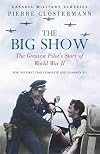
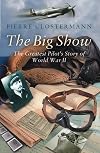
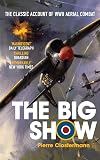
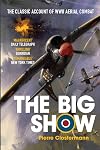
The Big Show
by Pierre Clostermann
On This Page
Description
Pierre Clostermann DFC was one of the outstanding Allied aces of the Second World War. A Frenchman who flew with the RAF, he survived over 420 operational sorties, shooting down scores of enemy aircraft while friends and comrades lost their lives in the deadly skies above Europe. The Big Show, his extraordinary account of the war, has been described as the greatest pilot's memoir of WWII.Tags
Recommendations















Member Reviews
Phenomenal from start to finish, Clo Clo doesn't shy away from the hard facts of the deadly day to day. The chapter on how fear works alone would be worth the price of entry.
This is the story of France's leading ace as told by himself, Pierre Clostermann. His English is very good. He flew 420 missions with the RAF as a fighter pilot and shot down 33 German planes.
We begin following his story after he started with the RAF. When the war started he was in America studying engineering. His father sent him a telegram telling him to join up with De Gaulle or he was no son of his. So he traveled to England, let it be know he built his own plane at 17 and already knew how to fly. The RAF picked him up sent him for some additional training and put him in the Spitfire. While friends and fellow squadron pilots when down in flames around him he survived despite being shot many time and crash landing on multiple show more occasions.
After many missions towards the end of the war he wrote this description of what it was like to be a fighter pilot fighting to free France after they had liberated Paris: "We of the Free French Air Forces, to whom the Armee de l"Air owed everything, especially honour, we who rushed into the holocaust one after the other, as happy as kids all the same-we, who were proud to start all over again, to mock the odds against us, wangling extra tours of ops, fagged out, dead beat, nerves in tatters, lungs burnt out with oxygen-we always got the thick end of the stick.
The rare survivors of this four year long effort had wanted more than anything else to go home, to tread French soil again, to see their loved ones again, to live again the life of the Paris streets, or of their peaceful native town. But they had quickly come back bemused and uncomprehending, though as yet unembittered. They had been overwhelmed with Resistance stories, with tales of heroic deeds; the same words that had been dinned into their ears a hundred times over: "How lucky you were to be in London. Here we suffered. If you only knew what risks we ran! In spite of all this we kicked the Huns out. You can't understand what it was like. So-and-so was shot, so-and so was tortured, deported. What? You're a pilot? It's easy to see decorations weren't hard to come by in London!"
Pilots didn't understand all this. They had done their best. They didn't want flowers or jollifications. They expected no reward, except to see their homes again, even if they were in ruins. They preferred to keep quiet, but deep down their was a profound feeling of injustice. What had they gone through? They had only risked being roasted alive, trapped under the blazing remains of a Spitfire, or seeing the earth surge up before them, imprisoned in the narrow metal coffin of a cockpit with it's hood jammed, you count the four, three, two, second you have left to live. Three times a day for months on end, they had hurled their poor shrinking bodies into the flak, missing death by a hairs breath, each time, until the last....
War, for us was not the desperate bayonet charge of a thousand human beings, sweating with fear, supporting and sustaining each other in a helpless anonymous massacre. For us, it was a deliberate act, individual act, a conscience, scientific sacrifice. Unaided, alone, each one of us had every day to conquer the stab of fear in our breast, to preserve, reform, our ebbing store of will power. We had to do all that ten times, a hundred times, a thousand times, and then after each mission, take up again a normal healthy life-an appalling strain. The moment we stepped down from our planes, we found other human beings like us, the same flesh and blood, but who walked about, made love, went to the pictures, listened to the wireless as they smoked their pipes and read a book-and who knew if they would be alive the next day? What human nerves could go on standing up to this?" show less
We begin following his story after he started with the RAF. When the war started he was in America studying engineering. His father sent him a telegram telling him to join up with De Gaulle or he was no son of his. So he traveled to England, let it be know he built his own plane at 17 and already knew how to fly. The RAF picked him up sent him for some additional training and put him in the Spitfire. While friends and fellow squadron pilots when down in flames around him he survived despite being shot many time and crash landing on multiple show more occasions.
After many missions towards the end of the war he wrote this description of what it was like to be a fighter pilot fighting to free France after they had liberated Paris: "We of the Free French Air Forces, to whom the Armee de l"Air owed everything, especially honour, we who rushed into the holocaust one after the other, as happy as kids all the same-we, who were proud to start all over again, to mock the odds against us, wangling extra tours of ops, fagged out, dead beat, nerves in tatters, lungs burnt out with oxygen-we always got the thick end of the stick.
The rare survivors of this four year long effort had wanted more than anything else to go home, to tread French soil again, to see their loved ones again, to live again the life of the Paris streets, or of their peaceful native town. But they had quickly come back bemused and uncomprehending, though as yet unembittered. They had been overwhelmed with Resistance stories, with tales of heroic deeds; the same words that had been dinned into their ears a hundred times over: "How lucky you were to be in London. Here we suffered. If you only knew what risks we ran! In spite of all this we kicked the Huns out. You can't understand what it was like. So-and-so was shot, so-and so was tortured, deported. What? You're a pilot? It's easy to see decorations weren't hard to come by in London!"
Pilots didn't understand all this. They had done their best. They didn't want flowers or jollifications. They expected no reward, except to see their homes again, even if they were in ruins. They preferred to keep quiet, but deep down their was a profound feeling of injustice. What had they gone through? They had only risked being roasted alive, trapped under the blazing remains of a Spitfire, or seeing the earth surge up before them, imprisoned in the narrow metal coffin of a cockpit with it's hood jammed, you count the four, three, two, second you have left to live. Three times a day for months on end, they had hurled their poor shrinking bodies into the flak, missing death by a hairs breath, each time, until the last....
War, for us was not the desperate bayonet charge of a thousand human beings, sweating with fear, supporting and sustaining each other in a helpless anonymous massacre. For us, it was a deliberate act, individual act, a conscience, scientific sacrifice. Unaided, alone, each one of us had every day to conquer the stab of fear in our breast, to preserve, reform, our ebbing store of will power. We had to do all that ten times, a hundred times, a thousand times, and then after each mission, take up again a normal healthy life-an appalling strain. The moment we stepped down from our planes, we found other human beings like us, the same flesh and blood, but who walked about, made love, went to the pictures, listened to the wireless as they smoked their pipes and read a book-and who knew if they would be alive the next day? What human nerves could go on standing up to this?" show less
The Big Show was published in 1951 not long after the events it describes. French pilot Pierre Clostermann, who was flying for the RAF, kept a detailed daily diary and claims he made few revisions and thus events are as fresh as the day they happened. William Faulkner called it the finest book of its type from the war, and it sold millions of copies in the 50s. Clostermann comes across as quiet character just doing his job. After the war he earned the accolade "France's First Fighter" from General Charles de Gaulle, he was their number one ace. Nowhere is this said in the book, nowhere is he called an ace or anything special, just a regular guy.
The book is largely made up of combat scenes. They are various: long range bomber escort, dog show more fights against many German plane types including jets, raids on airports, dodging flak, raids on moving trains, ships, beaches. Hidden facilities, lone-wolf attacks. The descriptions of the violence are intense, but he also keeps an optimistic cheery attitude, life is easy come and go. His seems to have a sixth sense of when to attack and when to stay out of the fracas. He fought four long years on 100s of missions was shot up and down many times. Remarkable story. He lived a long life and took an anti-war stance during the 1991 Gulf War - he made the right move one last time. show less
The book is largely made up of combat scenes. They are various: long range bomber escort, dog show more fights against many German plane types including jets, raids on airports, dodging flak, raids on moving trains, ships, beaches. Hidden facilities, lone-wolf attacks. The descriptions of the violence are intense, but he also keeps an optimistic cheery attitude, life is easy come and go. His seems to have a sixth sense of when to attack and when to stay out of the fracas. He fought four long years on 100s of missions was shot up and down many times. Remarkable story. He lived a long life and took an anti-war stance during the 1991 Gulf War - he made the right move one last time. show less
One of the best of the accounts I've read of WW2 in the air written by a pilot. This ranks alongside Wellum's First Light in my opinion.
Don't be put off by the fact that the writer is French or that his story begins well after the Battle of Britain.
Don't be put off by the fact that the writer is French or that his story begins well after the Battle of Britain.
Good insights from a participant soon after WW2. As expected, lots of factual inaccuracies.
One of the lesser-known pilot memoirs of World War II, but interesting for two reasons: First, because it's written by one of the many European refugee-pilots who joined the British air force after German troops overran their homelands; second, because it's the only memoir I know of by a pilot who flew Britain's great late-war ground-attack fighters: the Hawker Typhoon and Tempest.
I reread this after an absence of about 40 years and enjoyed enormously again. A great read and informative and as my fellow reviewer said informative especially about the Tempest - the mark Vi being the fastest piston fighter of the war.
Members
- Recently Added By
Author Information

16+ Works 529 Members
Some Editions
Series
Belongs to Publisher Series
Common Knowledge
- Canonical title
- The Big Show
- Original title
- Le Grand Cirque
- Alternate titles
- The Big Show: Some Experiences of a French Fighter Pilot in the R.A.F.; The Big Show: A Fighter Pilot's Epic Day By Day Story of 400 Battles in the Sky
- Original publication date
- 1951
- People/Characters
- Pierre Clostermann
- Important events
- World War II (1939 | 1945)
- Epigraph
- Fighter pilot...
"War, for us, was not the desperate charge of a
thousand human beings, sweating with fear, sup-
porting and sustaining each other in a helpless
anonymous massacre. For us, it was a deliberate,
... (show all)individual act, a conscious, scientific sacrifice. Un-
aided, alone, each of us had every day to conquer
the stab of fear in his breast, to preserve, re-form,
his ebbing store of will power. Three times a day,
for months on end, into the flack, missing death by
a hair's breadth each time, until the last.
What merely human nerves could go on standing
up to this?" - Blurbers
- Slessor, John
Classifications
- Genres
- Nonfiction, Biography & Memoir, History, General Nonfiction
- DDC/MDS
- 940.544944092 — History & geography History of Europe History of Europe 1918- Military history of World War II Air operations Operations of specific countries Europe
- LCC
- D786 .C6313 — History of Europe, Asia, Africa and Oceania History (General) World War II (1939-1945)
- BISAC
Statistics
- Members
- 398
- Popularity
- 78,174
- Reviews
- 19
- Rating
- (4.24)
- Languages
- 10 — Czech, Danish, English, Finnish, French, German, Italian, Norwegian (Bokmål), Slovenian, Swedish
- Media
- Paper, Audiobook, Ebook
- ISBNs
- 34
- ASINs
- 24