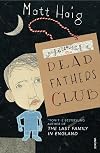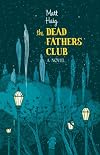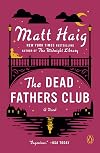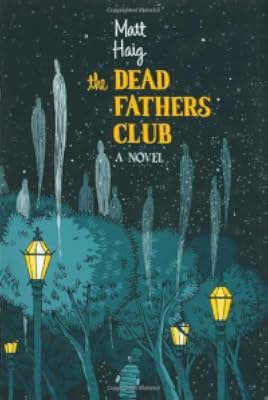
The Dead Fathers Club
by Matt Haig
On This Page
Description
Eleven-year-old Philip Noble has a big problem. His dad has appeared to him as a member of the Dead Fathers Club, a club for "ghost dads" whose murders are unavenged. His father's road accident, it turns out, was no accident at all. Uncle Alan is responsible for his dad's death, and if Philip doesn't succeed in killing his uncle before his dad's birthday, just ten weeks away, his dad's spirit will never rest. So begins Philip's quest to avenge his dad and to save his mum from the greasy show more clutches of Uncle Alan, who seems intent on taking his dad's place in their lives. But Philip finds himself both uneasy of his mission and distrustful of the ghost that claims to be his father. Plus, he's distracted by Leah Polonius, the gorgeous daughter of Uncle Alan's Bible-bashing business partner. What's a young lad to do? show lessTags
Recommendations



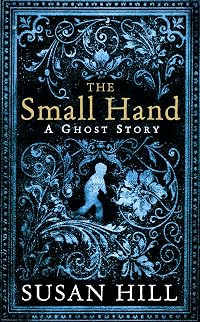
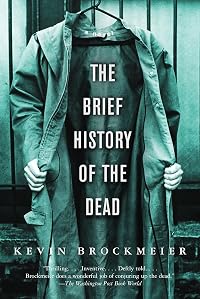
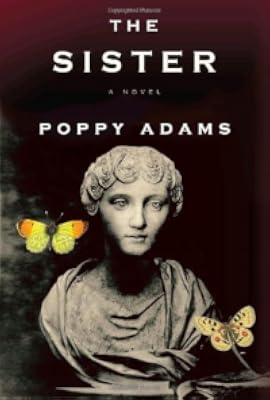

Member Recommendations
Member Reviews
When first-person narration is discussed in literary circles, the subject of unreliable narrators often crops up. Should you believe everything the narrator tells you or not?
In Matt Haig's 2006 novel “The Dead Fathers Club,” there is no question but that the narrator is unreliable. Philip Noble is just 11 years old, and how many 11-year-olds really understand everything that is going on around them? His father has just died in a traffic accident, making the boy emotionally unstable. As the story unfolds it appears Philip may have psychiatric problems in addition to the current stress.
Told in a stream-of-consciousness style, the story finds Philip haunted by his father's ghost. The ghost, part of a dead fathers club in the spirit show more world, tells Philip he was murdered by his brother because Uncle Alan wants both the boy's mother and the pub the dead man had owned and where Philip and his mother live. The ghost tells Philip he must kill Uncle Alan within 77 days.
Philip's struggles to obey his father's ghost against his own conscience. The fact that Uncle Alan quickly moves into his mother's bedroom and takes over management of the pub strengthens the boy's commitment to actually commit the murder. Yet how can an 11-year-old boy kill a man and get away with it?
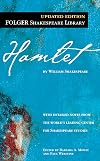
Readers may find a hint of Shakespeare's Hamlet in this novel, yet Haig's work remains strikingly original. show less
In Matt Haig's 2006 novel “The Dead Fathers Club,” there is no question but that the narrator is unreliable. Philip Noble is just 11 years old, and how many 11-year-olds really understand everything that is going on around them? His father has just died in a traffic accident, making the boy emotionally unstable. As the story unfolds it appears Philip may have psychiatric problems in addition to the current stress.
Told in a stream-of-consciousness style, the story finds Philip haunted by his father's ghost. The ghost, part of a dead fathers club in the spirit show more world, tells Philip he was murdered by his brother because Uncle Alan wants both the boy's mother and the pub the dead man had owned and where Philip and his mother live. The ghost tells Philip he must kill Uncle Alan within 77 days.
Philip's struggles to obey his father's ghost against his own conscience. The fact that Uncle Alan quickly moves into his mother's bedroom and takes over management of the pub strengthens the boy's commitment to actually commit the murder. Yet how can an 11-year-old boy kill a man and get away with it?
Readers may find a hint of Shakespeare's Hamlet in this novel, yet Haig's work remains strikingly original. show less
Philip Noble is thirteen years old. He lives with his mum above the pub--the Castle and Falcon--that she and his dad ran together before his dad was killed in a car accident. Philip keeps fish and is interested in Roman history. Philip's a pretty normal kid, until his Dad's Ghost (Philip always capitalizes Important Nouns) appears to him at his own funeral. Dad's Ghost tells Philip that his death wasn't an accident, but rather, murder, and that dad's own brother, Uncle Alan, did it. Not only that, but Uncle Alan has designs on Philip's mum.
Does that last bit sound familiar? Yes, The Dead Fathers Club takes its major plot ideas from Hamlet, up to and including Dad's Ghost's plea to Philip--thirteen year old Philip!--to kill Uncle Alan so show more that Dad can rest in peace. Dad's Ghost tells Philip about the Dead Fathers Club, and shows him the pathetic ghosts of murdered fathers, waiting for their loved ones to exact revenge so they can move on. Oh, and not to put too much pressure on you, son, but dad will suffer The Terrors for all eternity if you don't take care of this.
Kind of a tall order for a scrawny and insecure kid.
The publisher's dust jacket copy calls The Dead Fathers Club "incredibly funny, imaginative, and quirky," and I will grant them imaginative and quirky. Haig has pulled off a real tour de force with this first person narrative; it's perfectly, painfully believable as coming from the mind of a scared little kid. The punctuation is minimal, and the lack of commas and quotation marks create a breathless, headlong rush of a read. Philip's voice is fresh and charming, his use of ALL CAPITALS for emphasis and phonetic renderings of how he hears words or expressions with which he's unfamiliar are sometimes startling and often delightful.
However, this book is only funny if the spectacle of a possibly unhinged child who believes his father's ghost is telling him to commit murder is funny to you. I spent nearly the entire time I was reading hoping fervently that Philip would heed his teacher's advice to "Trust the living Philip. Trust the living." show less
Does that last bit sound familiar? Yes, The Dead Fathers Club takes its major plot ideas from Hamlet, up to and including Dad's Ghost's plea to Philip--thirteen year old Philip!--to kill Uncle Alan so show more that Dad can rest in peace. Dad's Ghost tells Philip about the Dead Fathers Club, and shows him the pathetic ghosts of murdered fathers, waiting for their loved ones to exact revenge so they can move on. Oh, and not to put too much pressure on you, son, but dad will suffer The Terrors for all eternity if you don't take care of this.
Kind of a tall order for a scrawny and insecure kid.
The publisher's dust jacket copy calls The Dead Fathers Club "incredibly funny, imaginative, and quirky," and I will grant them imaginative and quirky. Haig has pulled off a real tour de force with this first person narrative; it's perfectly, painfully believable as coming from the mind of a scared little kid. The punctuation is minimal, and the lack of commas and quotation marks create a breathless, headlong rush of a read. Philip's voice is fresh and charming, his use of ALL CAPITALS for emphasis and phonetic renderings of how he hears words or expressions with which he's unfamiliar are sometimes startling and often delightful.
However, this book is only funny if the spectacle of a possibly unhinged child who believes his father's ghost is telling him to commit murder is funny to you. I spent nearly the entire time I was reading hoping fervently that Philip would heed his teacher's advice to "Trust the living Philip. Trust the living." show less
This creative contemporary retelling of "Hamlet" is delightful and, for the most part, engrossing. As a big fan of "The Curious Incident of the Dog in the Night-time," it's probably no surprise that I loved the narrative voice Matt Haig created for Philip, his young protagonist. Viewing the world and its many sad twists through the eyes of a kid provides some neat insights. Some of Philip's observations are downright hilarious.
Adding to my enjoyment was the fact that I chose to experience this story via audiobook. Reader Andrew Dennis, a 12-year-old British boy, did a stellar job. In fact, I think it's one of the best narrations of a book that I've experienced in several years -- and I've listened to at least a couple hundred.
I tried show more not to over-analyze the "Hamlet" twists that permeate the saga, choosing instead to enjoy this action-packed story on its own contemporary merits. The ending left me wondering how Philip would cope with one particular tragedy, a loose end that I found unsettling. But overall, "The Dead Fathers Club" is inventive and well-executed. show less
Adding to my enjoyment was the fact that I chose to experience this story via audiobook. Reader Andrew Dennis, a 12-year-old British boy, did a stellar job. In fact, I think it's one of the best narrations of a book that I've experienced in several years -- and I've listened to at least a couple hundred.
I tried show more not to over-analyze the "Hamlet" twists that permeate the saga, choosing instead to enjoy this action-packed story on its own contemporary merits. The ending left me wondering how Philip would cope with one particular tragedy, a loose end that I found unsettling. But overall, "The Dead Fathers Club" is inventive and well-executed. show less
This story, set in modern-day England and narrated by an eleven year-old boy, is a clever and subtle retelling of Shakespeare's Hamlet. The story opens when Philip, the Hamlet-narrator, sees his father's ghost after the funeral. His father's ghost informs him that he was murdered by Uncle Alan, and that he will be stuck in eternal torment unless Philip kills his uncle before his father's next birthday in a few months. When I say that I don't want to give more than that away, you may think to yourself "but it's Hamlet! I know what happens!" Trust me, the story is unique enough that it caught me off guard and made me question the plot more than once. In the end, it's Philip that makes this book so worth reading. The writing style really show more makes you feel like you're listening to an eleven year-old tell a story, and it didn't take long for me to really worry for this poor, young, grief-stricken kid. This is one book that really stuck with me. Be warned, though. The ending has a cliff-hanger feel, so if you like all your ends tied up neatly, you might not enjoy this particular book. show less
When Philip Noble's father dies, he has trouble adjusting even before his mother starts dating his uncle and he begins to see his father's ghost. Plot sound a bit familiar? It should, as author Matt Haig has taken as his jumping off point the bare bones of Shakespeare's Hamlet. However, it is what he does with those bones that makes this a truly enjoyable read. In his eleven-year old protagonist, Haig has created one of the most authentic voices in recent memory. It amazed me that an adult can so clearly remember (or mimic) how one felt and acted and talked as a child, but Haig does this amazingly well. Philip is obviously grieving for his father and resents the changes that his father's death cause in his life. Not the least of these show more changes is that his uncle moves in and starts dating his mother. When Philip starts to see visions of his dead father that tell him to avenge his death, we know he is in troubled waters. The questions surrounding the death of Philip's father add an element of mystery to the book. In a way, this echoed The Curious Case of the Dog in the Night-time for me, both for its family relations and pseudo-mystery to be solved. Philip is like a non-autistic version of that book's hero, Christopher Boone. Paying homage to Hamlet without being boxed in by a rigid retelling, Dead Father's Club is a great book. show less
Let me say at the outset that I am dubious of anyone who tries to revisit Shakespeare. The author invites comparison and is inevitably found lacking. I was pleasantly suprised to find that this is not the case for the Dead Fathers Club. Haig essentially retells the story of Hamlet but Hamlet is now an 11 year-old, modern, British Boy. He starts having visions of his dead father who tells him to kill his Uncle Alan who is slowly trying to take over his father's pub, The Castle and Falcon. Haig creates convincing voices while winking at Shakespeare. For example, when Uncle Alan has new ideas for running the pub he describes local ales as "flat, stale and unprofitable." He dots the text through out with these references to Hamlet and does show more an interesting spin on the ending. Some may find the lack of punctuation and typographical choices a little precious but I didn't mind them. It was an entertaining read. show less
Philip is understandably distraught after his father dies. He is even more so when his father's ghost starts talking to him and telling him things about his uncle. According to the ghost, his uncle killed his father and now Philip has to kill the uncle to get his father's revenge and keep him from descending into the "terrors". Philip is unsure about this, but he doesn't like his uncle moving in on his mum and so he may just go through with it. If this sounds familiar, it is as this is an adaptation of Shakespear's Hamlet.
Philip narrates the story in the very authentic voice of a confused 11 year old. It really felt like you were in his head experiencing it with him and hoping it wouldn't end as badly as the real Hamlet does. Haig does show more a masterful job of recreating this old story in a new way. I highly reccomend this book, though some of the heavy stuff dealt with can make it a bit of a downer in places so keep that in mind. show less
Philip narrates the story in the very authentic voice of a confused 11 year old. It really felt like you were in his head experiencing it with him and hoping it wouldn't end as badly as the real Hamlet does. Haig does show more a masterful job of recreating this old story in a new way. I highly reccomend this book, though some of the heavy stuff dealt with can make it a bit of a downer in places so keep that in mind. show less
Members
- Recently Added By
Lists

Top Five Books of 2018
802 works; 265 members

Books Read in 2022
5,226 works; 115 members

Retellings of Shakespeare Plays
42 works; 12 members
Author Information

42+ Works 34,528 Members
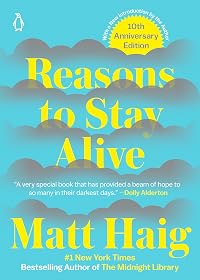
Matt Haig was born on July 3, 1975 in Sheffield. He attended the University of Hull where he studied English and History. He has since become a British novelist and journalist. He has authored both fiction and non-fiction for children and adults. His non-fiction title "Reasons to Stay Alive" became a Sunday Times bestseller. His bestselling show more children's novel, A Boy Called Christmas is now being adapted for film. His other works include: The Last Family in England, The Dead Fathers Club, Shadow Forest, The Possession of Mr. Cave, How to Stop Time and Runaway Troll. (Bowker Author Biography) show less
Work Relationships
Was inspired by
Common Knowledge
- Original publication date
- 2006
- Important places
- England
Classifications
Statistics
- Members
- 873
- Popularity
- 31,221
- Reviews
- 40
- Rating
- (3.32)
- Languages
- 6 — English, German, Italian, Korean, Lithuanian, Portuguese
- Media
- Paper, Audiobook, Ebook
- ISBNs
- 28
- UPCs
- 1
- ASINs
- 9