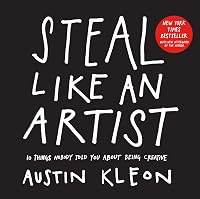
Steal Like an Artist: 10 Things Nobody Told You about Being Creative
by Austin Kleon
On This Page
Description
Unlock your creativity.An inspiring guide to creativity in the digital age, Steal Like an Artist presents ten transformative principles that will help readers discover their artistic side and build a more creative life.
Nothing is original, so embrace influence, school yourself through the work of others, remix and reimagine to discover your own path. Follow interests wherever they take you—what feels like a hobby may turn into you life's work. Forget the old cliché about writing what show more you know: Instead, write the book you want to read, make the movie you want to watch.
And finally, stay Smart, stay out of debt, and risk being boring in the everyday world so that you have the space to be wild and daring in your imagination and your work.
"Brilliant and real and true."—Rosanne Cash
. show less
Tags
Recommendations
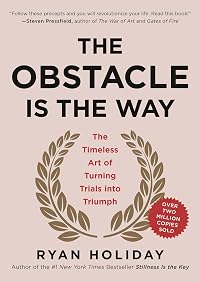
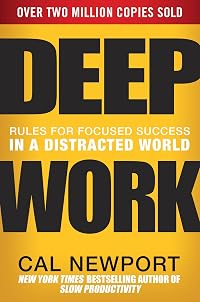
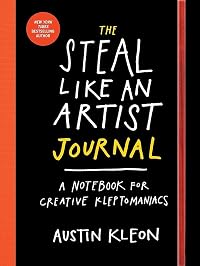
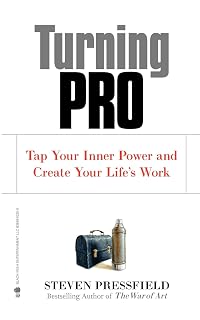
Member Recommendations
Member Reviews
What a fabulous little book! It might be short on content, but it's long on wisdom - and that's exactly what I was hoping for when I picked it up. This is the kind of book I'll be reading over and over again. I got through it in under an hour, and that includes all the times I stopped to take notes, but I found myself nodding and smiling along every time I turned the page. Austin Kleon offers the kind of advice all artists would benefit from. It's straight-forward, no-nonsense advice, but with a touch of whimsy and humor. Basically, Austin gets us because he IS one of us. The book is both practical and inspirational, and it's found a permanent place on my keeper shelf.
This is the book that frees you up to be the artist you want to be, even--or especially--if that means you are imitating (what Kleon calls "stealing") your heroes. Don't let criticism, finances, or fear get in the way. Just create that thing, stealing from the greats along the way, and make your mark on the world.
I've read a lot of books on writing, from Stephen King's "On Writing" (indispensable) to "The War of Art" by Steven Pressfield (I love this book), Jeff Vandermeer's "Wonderbook" (weird and inspirational) to a "Reading Like a Writer" by Francis Prose, and a whole host of practical books on mechanics (think "The Scribner Handbook for Writers," for example). There are a plethora of books on writing out there. So why do we need show more one more?
Trust me, we need one more. Or at least, it doesn't hurt. Kleon's is so light and accessible, you could almost forget that writing is actually hard, that it requires effort, and that the ideas don't just flow out of your fingers. But you might feel that way after you read it. You might remember the idea you had while reading an article last week, or the inspiration that came while sitting in traffic, or the feelings that a certain novel created as you read past your bedtime.
Yeah, it's got that effect. It might make you want to go out and create something.
Maybe even something you've stolen from one of the greats. show less
I've read a lot of books on writing, from Stephen King's "On Writing" (indispensable) to "The War of Art" by Steven Pressfield (I love this book), Jeff Vandermeer's "Wonderbook" (weird and inspirational) to a "Reading Like a Writer" by Francis Prose, and a whole host of practical books on mechanics (think "The Scribner Handbook for Writers," for example). There are a plethora of books on writing out there. So why do we need show more one more?
Trust me, we need one more. Or at least, it doesn't hurt. Kleon's is so light and accessible, you could almost forget that writing is actually hard, that it requires effort, and that the ideas don't just flow out of your fingers. But you might feel that way after you read it. You might remember the idea you had while reading an article last week, or the inspiration that came while sitting in traffic, or the feelings that a certain novel created as you read past your bedtime.
Yeah, it's got that effect. It might make you want to go out and create something.
Maybe even something you've stolen from one of the greats. show less
This is really fabulous.
He is funny, wise as hell, and every small page glows with powerful inspiration. Not cheesy, but right to the heart. I hate turning it back in to the library, so might have to break down and get a copy to dip into, in those times of weirdness and doubt that all creators slog through.
He is funny, wise as hell, and every small page glows with powerful inspiration. Not cheesy, but right to the heart. I hate turning it back in to the library, so might have to break down and get a copy to dip into, in those times of weirdness and doubt that all creators slog through.
Yeah, I liked it. Because art is all about taking what you find in life and using it to make your own stuff. There is no such thing as cultural appropriation in art, IMHO. It's all grist for the mill.
This book has a great overall message and provides a general set of guidelines that's worth applying to your creative process. As someone struggling with writer's block pretty much every day, I found some of the reminders well-timed and refreshing. But that's why I also think the title is inaccurate, if not pretentious - the "10 things nobody told you" are most likely things you've heard of or told yourself before, things you might have forgotten for a moment while desperately searching for new ideas.
On another note, writing-wise, the book feels like it lacks some critical essence. There's a lot of sayings from famous people sprinkled throughout, and even paraphrased in every other (very short) paragraph, and I found myself paying more show more attention to the quotes themselves than what the author himself had to say. And there wasn't much of the latter. Sure, perhaps it's in the spirit of the book that he's deriving his message from those of the greats, because no one comes up with anything from scratch, but after a point I just felt like I was reading an unceasing sequence of quotes with a little filler holding them together, like scrolling through a bunch of inspirational pins on Pinterest. It's almost as though the author himself didn't make it through step 1 of his list - he still seems to be "stealing" from the words of others as a crutch, and has not yet discovered his own voice.
I'm not sure if there's a recommended age for this book - admittedly, I've had it for a few years myself and just never got around to it - but having finally read it, I'd personally recommend it to kids or young teens just beginning their creative pursuits. The text is short and easy to understand, and provides a bit of encouragement to beginning artists, etc.; it therefore serves as a good starting point if you're feeling lost, but doesn't do much else beyond that. Granted, a general direction is about all a self-help book can provide. I just wasn't a fan of the way this one was written - I'd rather read an entire memoir on the author's creative journey than a jumbled collection of advice from famous people. Perhaps he too could take a page from his own book, and evolve his creative process so that it no longer hinges strictly on the words and deeds of others. show less
On another note, writing-wise, the book feels like it lacks some critical essence. There's a lot of sayings from famous people sprinkled throughout, and even paraphrased in every other (very short) paragraph, and I found myself paying more show more attention to the quotes themselves than what the author himself had to say. And there wasn't much of the latter. Sure, perhaps it's in the spirit of the book that he's deriving his message from those of the greats, because no one comes up with anything from scratch, but after a point I just felt like I was reading an unceasing sequence of quotes with a little filler holding them together, like scrolling through a bunch of inspirational pins on Pinterest. It's almost as though the author himself didn't make it through step 1 of his list - he still seems to be "stealing" from the words of others as a crutch, and has not yet discovered his own voice.
I'm not sure if there's a recommended age for this book - admittedly, I've had it for a few years myself and just never got around to it - but having finally read it, I'd personally recommend it to kids or young teens just beginning their creative pursuits. The text is short and easy to understand, and provides a bit of encouragement to beginning artists, etc.; it therefore serves as a good starting point if you're feeling lost, but doesn't do much else beyond that. Granted, a general direction is about all a self-help book can provide. I just wasn't a fan of the way this one was written - I'd rather read an entire memoir on the author's creative journey than a jumbled collection of advice from famous people. Perhaps he too could take a page from his own book, and evolve his creative process so that it no longer hinges strictly on the words and deeds of others. show less
A great little book and a quick read for non-artists who would like to get in touch with their creative side. For artists, I don't think this is all that useful since I figure most of us already do all of these things intuitively (at least, this is true for myself and all my artist friends-- maybe we just figured out all these things early on in life).
However, with these kinds of books (such as Pressfield's The War of Art: Break Through the Blocks & Win Your Inner Creative Battles, Bayle & Orland's Art and Fear: Observations on the Perils (and Rewards) of Artmaking, and the likes), I always feel like while the ideas in them are pretty spot-on, there's really only one real "secret" to being creative and doing good work: it is to JUST DO show more IT. As a child, when I was learning how to draw, I didn't read these kinds of books or think about how I can be more creative. I just scribbled and doodled and copied and coloured and drew and drew and drew until one day, years later, I discovered I had come to a point where I could be considered pretty good and I had some pretty good ideas. The issue of creativity didn't even cross my mind, and to this day, it still doesn't (other people can call me "creative", but frankly, I never really think about whether I am or not). I believe all people are creative, but perhaps some people lost that knack for accessing their creativity as they got older.
But do these kinds of books really help? I guess I'm at the point in my life where I've become really skeptical of these kinds of motivational, self-help type books. I've read a lot over the last 5 years, but nothing was as helpful as just getting off my butt and taking real action, rather than sitting around reading these things and trying to think my way through them or trying to figure everything out. (But maybe that says more about me than it does about self-help books.) Less thinking, more doing-- that's kind of my philosophy these days.
That said, I still enjoyed this book, and I do think it will be helpful to those who may have lost touch with their creative inner child. I think some of the advice could be a little more practical, but there are some gems in here. (And I suppose, for practical advice, you'd probably want a book on drawing techniques or how to read music or something like that.) I really like what the author says about making things in order to figure out who you are, instead of waiting to know who you are and then making things. This is so incredibly true to my experience-- each painting/book/whatever you make will tell you about yourself and bring to light things about you that you perhaps didn't see before. That's also where you'll find the seeds for your next piece-- so often the ideas I uncovered while making one painting go into the next painting I do.
I also like that the author interprets the phrase "fake it 'til you make it" (so often repeated in modern media) in two ways: the first is that you pretend that you are an artist until you actually become one, and the second is that you pretend you are making something until you actually make something. Brilliant.
Here is the list of the book's main points:
1. Steal like an artist
2. Don't wait until you know who you are to get started
3. Write the book you want to read
4. Use your hands
5. Side projects and hobbies are important
6. Do good work and share it with people
7. Geography is no longer our master
8. Be nice (the world is a small town)
9. Be boring (it's the only way to get work done)
10. Creativity is subtraction show less
However, with these kinds of books (such as Pressfield's The War of Art: Break Through the Blocks & Win Your Inner Creative Battles, Bayle & Orland's Art and Fear: Observations on the Perils (and Rewards) of Artmaking, and the likes), I always feel like while the ideas in them are pretty spot-on, there's really only one real "secret" to being creative and doing good work: it is to JUST DO show more IT. As a child, when I was learning how to draw, I didn't read these kinds of books or think about how I can be more creative. I just scribbled and doodled and copied and coloured and drew and drew and drew until one day, years later, I discovered I had come to a point where I could be considered pretty good and I had some pretty good ideas. The issue of creativity didn't even cross my mind, and to this day, it still doesn't (other people can call me "creative", but frankly, I never really think about whether I am or not). I believe all people are creative, but perhaps some people lost that knack for accessing their creativity as they got older.
But do these kinds of books really help? I guess I'm at the point in my life where I've become really skeptical of these kinds of motivational, self-help type books. I've read a lot over the last 5 years, but nothing was as helpful as just getting off my butt and taking real action, rather than sitting around reading these things and trying to think my way through them or trying to figure everything out. (But maybe that says more about me than it does about self-help books.) Less thinking, more doing-- that's kind of my philosophy these days.
That said, I still enjoyed this book, and I do think it will be helpful to those who may have lost touch with their creative inner child. I think some of the advice could be a little more practical, but there are some gems in here. (And I suppose, for practical advice, you'd probably want a book on drawing techniques or how to read music or something like that.) I really like what the author says about making things in order to figure out who you are, instead of waiting to know who you are and then making things. This is so incredibly true to my experience-- each painting/book/whatever you make will tell you about yourself and bring to light things about you that you perhaps didn't see before. That's also where you'll find the seeds for your next piece-- so often the ideas I uncovered while making one painting go into the next painting I do.
I also like that the author interprets the phrase "fake it 'til you make it" (so often repeated in modern media) in two ways: the first is that you pretend that you are an artist until you actually become one, and the second is that you pretend you are making something until you actually make something. Brilliant.
Here is the list of the book's main points:
1. Steal like an artist
2. Don't wait until you know who you are to get started
3. Write the book you want to read
4. Use your hands
5. Side projects and hobbies are important
6. Do good work and share it with people
7. Geography is no longer our master
8. Be nice (the world is a small town)
9. Be boring (it's the only way to get work done)
10. Creativity is subtraction show less
Elegant in simplicity and self-effacing in tone, Kleon's collected wisdom on the creative life left me wishing I'd written something just like it! Thankfully, I did the next best thing: read it. After digesting it myself, I shared it with Ken. Like me, he found the book satisfying and wants to add a copy to our personal library.
What word -- unlike encouraging or inspiring -- is fresh? If you think of it let me know because I want to add it to my review.
Favorite support quote (of many laced into Kleon's spare text):
"Everything that needs to be said has already been said. But, since no one was listening, everthing must be said again." ~ Andre Gide
True. So in case you weren't listening -- or, like me, took a mouthful of crunchy granola show more just as sage life lessons were intoned -- take heart. Austin Kleon was not eating or napping and wrote them all down in a nifty book that's available at most bookstores (and public libraries). show less
What word -- unlike encouraging or inspiring -- is fresh? If you think of it let me know because I want to add it to my review.
Favorite support quote (of many laced into Kleon's spare text):
"Everything that needs to be said has already been said. But, since no one was listening, everthing must be said again." ~ Andre Gide
True. So in case you weren't listening -- or, like me, took a mouthful of crunchy granola show more just as sage life lessons were intoned -- take heart. Austin Kleon was not eating or napping and wrote them all down in a nifty book that's available at most bookstores (and public libraries). show less
Members
- Recently Added By
Lists

Books Read in 2015
3,299 works; 129 members

Creativity and the Creative Process
20 works; 4 members

Books With Complete Sentence Titles
503 works; 17 members

The Great Courses: Visual Literacy Skills
53 works; 1 member

Mind Expanding Books by hackerkid
581 works; 8 members

Books Read in 2025
4,128 works; 98 members
Author Information

13+ Works 5,314 Members
Some Editions
Awards and Honors
Distinctions
Work Relationships
Common Knowledge
- Canonical title
- Steal Like an Artist: 10 Things Nobody Told You about Being Creative
- Original title
- Steal Like an Artist: 10 Things Nobody Told You about Being Creative
- Original publication date
- 2012-02-28
- People/Characters
- Austin Kleon
- Important places
- Austin, Texas, USA
- Epigraph
- "Art is theft."
-Pablo Picasso
"Immature poets imitate; mature poets steal; bad poets deface what they take, and good poets make it into something better, or at least something different. The good poet welds his theft into a whole of feeling which is uni... (show all)que, utterly different from that from which it was torn."
-T. S. Eliot - Dedication
- For Boom--
whenever Boom gets here - First words
- ALL ADVICE IS AUTOBIOGRAPHICAL.
It's one of my theories that when people give you advice, they're really just talking to themselves in the past.
1: STEAL LIKE AN ARTIST
HOW TO LOOK AT THE WORLD (LIKE AN ARTIST)
Every artist gets asked the question,"Where do you get your ideas?"The honest artist answers,"I steal them." - Quotations
- The writer Jonathan Lethem has said that when people call something "original," nine out of ten times they just don't know the reference or the original sources involved.
- Last words
- (Click to show. Warning: May contain spoilers.)Choose wisely.
And have fun. - Blurbers
- Anderson, Chris
Classifications
Statistics
- Members
- 2,982
- Popularity
- 6,003
- Reviews
- 101
- Rating
- (4.06)
- Languages
- 14 — Chinese, Czech, Dutch, English, Finnish, French, German, Greek, Italian, Portuguese, Russian, Spanish, Swedish, Turkish
- Media
- Paper, Ebook
- ISBNs
- 25
- ASINs
- 10