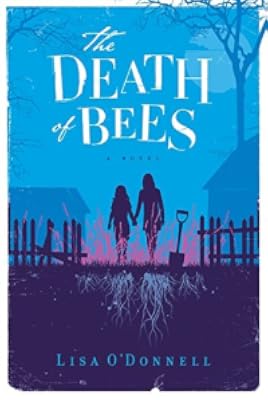
The Death of Bees
by Lisa O'Donnell
On This Page
Description
A riveting, brilliantly written debut novel, The Death of Bees is a coming-of-age story in which two young sisters attempt to hold the world at bay after the mysterious death of their parentsMarnie and Nelly, left on their own in Glasgow's Hazlehurst housing estate, attempt to avoid suspicion until Marnie can become a legal guardian for her younger sister.
Written with fierce sympathy and beautiful precision, and told in alternating voices, The Death of Bees is an enchanting, grimly comic show more tale of lost souls who, unable to answer for themselves, can answer only for each other.
. show less
Tags
Recommendations



















Member Recommendations
Member Reviews
Lisa O’Donnell’s novel is a wonderful coming-of-age novel depicting the harrowing lives of female siblings living in the projects of Glasgow, Scotland. As the novels open, Marnie and Nelly have just buried their parents in their back garden. While only they know why they have done what they have, a suspicion harboring neighbor and the neighborhood drug dealer are asking plenty of questions- in addition to truant officers and other government officials who would separate their family of two. As the girls face that their parents are gone for good, they slowly start to form a new life for themselves but to protect its fragile bond they have to examine their assumptions about the world, and the basis of who they are in order to show more survive.
The Death of Bees is told from the perspectives of the sisters Marnie and Nelly, and Lennie, their elderly and lonely neighbor. The strength and distinctiveness of their voices is so certain that at any given moment I could have flipped to a page and know immediately who was speaking. O’Donnell writes a compelling novel about the lives of kids who have to raise themselves, but the warmth and humor she injects into her splendid characterizations provide a levity that makes a novel that could be a grim piece of reading, heartfelt and illumining. show less
The Death of Bees is told from the perspectives of the sisters Marnie and Nelly, and Lennie, their elderly and lonely neighbor. The strength and distinctiveness of their voices is so certain that at any given moment I could have flipped to a page and know immediately who was speaking. O’Donnell writes a compelling novel about the lives of kids who have to raise themselves, but the warmth and humor she injects into her splendid characterizations provide a levity that makes a novel that could be a grim piece of reading, heartfelt and illumining. show less
Marnie and Nelly's neglectful parents have both died, and they know that if they go to Social, they will likely be separated and put in foster care. So, they bury them in the back yard and hope no one finds out they're gone until after Marnie turns 16, the age at which she is considered an adult and can be responsible for Nelly. They are helped along the way by Lennie, a neighbor who is a registered sex offender but so much more than that, and Vlado, an illegal immigrant drug dealer who is also more than he seems. When the girls' grandfather, who abused their mother as a girl, comes back into their life and wants to make amends, it seems they might be saved...or are they really in more danger than ever?
From the very first page I fell in love with The Death of Bees, the debut novel of Lisa O’Donnell. Fifteen year old Marnie decides not to report the death of her parents and instead she and her sister, eleven year old Nellie, bury them in the back garden. The girls do not want to be separated or go into foster care. They tell everyone that their parents have gone to Turkey and this lie is easily accepted as the parents are druggies that have left their children alone before. The girls are haunted by their experience and while Nellie has nightmares, Marnie takes to drinking, and casual sex. Eventually the girls are befriended by Lennie, the elderly gay man next door and these three, along with Bobby the dog, bond together as a family. show more All is well until their grandfather shows up demanding explanations and wanting the girls to come live with him.
One of the things I absolutely loved about this book were the voices of the two girls, Marne in her own way was sensible and practical with very modern sensibilities while Nellie was romantic, hilarious and old-fashioned. What was very clear was that these girls loved and cared about each other. Although rather gruesome in places, the author had a light, sympathetic style and although the subject matter was at times appalling there was an element of black humor that made this story really appealing to me.
While this book won’t appeal to everyone, it was a stellar read for me. I found it both original and imaginative. My emotions were quickly engaged and The Death of Bees became a book that I couldn’t put down and one of my favorite reads of 2016. show less
One of the things I absolutely loved about this book were the voices of the two girls, Marne in her own way was sensible and practical with very modern sensibilities while Nellie was romantic, hilarious and old-fashioned. What was very clear was that these girls loved and cared about each other. Although rather gruesome in places, the author had a light, sympathetic style and although the subject matter was at times appalling there was an element of black humor that made this story really appealing to me.
While this book won’t appeal to everyone, it was a stellar read for me. I found it both original and imaginative. My emotions were quickly engaged and The Death of Bees became a book that I couldn’t put down and one of my favorite reads of 2016. show less
I was surprised at how quickly The Death of Bees by Lisa O'Donnell grabbed my attention. I mean, well, I guess a story that begins with two young girls burying their parents in the backyard will do that to you. But where do you go from there?
The Death of Bees is told from several different perspectives: an older sister, Marnie, who is quite jaded for being as young as she is; a younger sister, Nelly, who sees the world from a completely different perspective; and Lennie, the old man next door who has been labeled a sex offender.
But don't worry - the book doesn't take you in that direction. Instead, it introduces something entirely different.
What this book does is take a good hard look at the social system here. It's telling that young show more girls, upon the death of the parents, would so fear being split up that they would go through immense horror to avoid that particular horror. The Death of Bees examines how we view child abuse, neglect, sexual predators, and rebellious children. Although the story is rather too neatly wrapped in a bow and handed over on a platter, it does provide an interesting springboard to start conversations about these hard topics. Lisa O'Donnell does an admirable job of bringing them to light, and although I wish she'd left things a bit more open-ended (as you cannot solve all of these issues in a mere 300ish pages) I understand why she finished the book the way she did. show less
The Death of Bees is told from several different perspectives: an older sister, Marnie, who is quite jaded for being as young as she is; a younger sister, Nelly, who sees the world from a completely different perspective; and Lennie, the old man next door who has been labeled a sex offender.
But don't worry - the book doesn't take you in that direction. Instead, it introduces something entirely different.
What this book does is take a good hard look at the social system here. It's telling that young show more girls, upon the death of the parents, would so fear being split up that they would go through immense horror to avoid that particular horror. The Death of Bees examines how we view child abuse, neglect, sexual predators, and rebellious children. Although the story is rather too neatly wrapped in a bow and handed over on a platter, it does provide an interesting springboard to start conversations about these hard topics. Lisa O'Donnell does an admirable job of bringing them to light, and although I wish she'd left things a bit more open-ended (as you cannot solve all of these issues in a mere 300ish pages) I understand why she finished the book the way she did. show less
Marnie is fifteen years old, and her sister Nelly is twelve. Their parents are dead now, but they were horribly neglectful when they were alive, and the girls have always more or less had to take care of themselves, so it doesn't really make all that much difference. Well, except for the difficulties involved in hiding their parents' deaths and the fact that they're buried in the back yard, to avoid being sent to foster care.
I really enjoyed this one. Which seems a little odd to say, because it's about kids who've led an awful, awful life doing things no kid should ever have to do, and it's full of misery after misery. But it never felt entirely depressing. Mostly it just kept me concerned for these kids and tensely focused on my hope show more that things would work out for them in the end, somehow. show less
I really enjoyed this one. Which seems a little odd to say, because it's about kids who've led an awful, awful life doing things no kid should ever have to do, and it's full of misery after misery. But it never felt entirely depressing. Mostly it just kept me concerned for these kids and tensely focused on my hope show more that things would work out for them in the end, somehow. show less
Marnie, 15, and Nelly, 12, are sisters who have just buried their parents, Gene and Izzy, in the backyard in The Death of Bees by Lisa O'Donnell. When their father is discovered dead by their mother, who then hangs herself in the shed, the girls decide to bury them both in the backyard so Marnie and Nelly can stay together and won't be sent to foster care. Once Marnie is sixteen she can legally be on her own and take care of Nelly, guaranteeing that they will both be safe.
Even when their drug addicted, alcoholic, neglectful, and irresponsible parents were alive, the girls were often on their own, fending for themselves. What the girls weren't counting on was Lenny, their elderly gay next-door neighbor in their Glasgow, Scotland, housing show more estate noticing their parents had, by all appearances, abandoned them. He steps up to offer some measure of stability and support for them. He believes the girls when they tell him that their parents have left the country for an extended trip in Turkey. With Lenny, the trio form an odd family-like relationship - until their grandfather enters the picture.
Although the details of the circumstances that cause the girls to accept Lenny's companionship are gruesome, they make an endearing set of misfits. The chapters are all in Marnie, Nelly, or Lenny's voice. Marnie's chapters are hard. She's drinking, smoking, promiscuous, and seemingly headed down the same destructive path as her parents, even though she is an intelligent teen who could potentially overcome her circumstances. She's a realist, tough talking, and brutally blunt and to the point. Nelly's chapters are often short. She is a violin prodigy, who is most certainly on the autism spectrum. She often speaks in a stilted old-fashioned manner and is socially awkward. Lenny's chapters are all written as if he is talking to his longtime companion and lover who recently died. He's been labeled the neighborhood pervert, but he is longing for redemption. He wants to care for another person again and he slowly takes the girls under his wing, caring for them as best he can even while he doesn't quite understand the extent of the psychological damage that has already been done to them.
What you might not expect is the humor mixed in with the grim in this coming-of-age story that also deals with normal adolescence pressures. The characters are believable and well developed. To be honest, the beginning chapters, when the girls are burying their parents, are repulsive and gruesome. But as the book continues it is painfully clear that all of these characters are wounded in some way. By the time the girls and Lenny connect, it is slowly becoming more and more apparent just how much they all need each other. Since we get to hear each of their individual voices, I felt a connection to all three of them and wanted desperately for everything to be okay - even though they were all in an impossible situation where a good ending seemed highly unlikely.
The writing was also incredible. Even when relating the most appalling details, O'Donnell manages to insert bits of humor. The bond between sisters is palatable, even when they are feuding, we know that they will eventually reunite and forgive. I appreciated the unspoken message that we can decide what will constitute a family; even an unconventional family is still a family and can offer love, support and stability. While O'Donnell is an accomplished screenwriter, this is her debut novel - and what a glorious debut it is. Grim, yes, but also very well crafted. I'll be looking forward to another novel from Lisa O'Donnell. (The trade paperback of The Death of Bee was just released on October 22, 2013.)
Very Highly Recommended
Disclosure: I received an advanced reading copy of this book from HarperCollins and TLC for review purposes. show less
Even when their drug addicted, alcoholic, neglectful, and irresponsible parents were alive, the girls were often on their own, fending for themselves. What the girls weren't counting on was Lenny, their elderly gay next-door neighbor in their Glasgow, Scotland, housing show more estate noticing their parents had, by all appearances, abandoned them. He steps up to offer some measure of stability and support for them. He believes the girls when they tell him that their parents have left the country for an extended trip in Turkey. With Lenny, the trio form an odd family-like relationship - until their grandfather enters the picture.
Although the details of the circumstances that cause the girls to accept Lenny's companionship are gruesome, they make an endearing set of misfits. The chapters are all in Marnie, Nelly, or Lenny's voice. Marnie's chapters are hard. She's drinking, smoking, promiscuous, and seemingly headed down the same destructive path as her parents, even though she is an intelligent teen who could potentially overcome her circumstances. She's a realist, tough talking, and brutally blunt and to the point. Nelly's chapters are often short. She is a violin prodigy, who is most certainly on the autism spectrum. She often speaks in a stilted old-fashioned manner and is socially awkward. Lenny's chapters are all written as if he is talking to his longtime companion and lover who recently died. He's been labeled the neighborhood pervert, but he is longing for redemption. He wants to care for another person again and he slowly takes the girls under his wing, caring for them as best he can even while he doesn't quite understand the extent of the psychological damage that has already been done to them.
What you might not expect is the humor mixed in with the grim in this coming-of-age story that also deals with normal adolescence pressures. The characters are believable and well developed. To be honest, the beginning chapters, when the girls are burying their parents, are repulsive and gruesome. But as the book continues it is painfully clear that all of these characters are wounded in some way. By the time the girls and Lenny connect, it is slowly becoming more and more apparent just how much they all need each other. Since we get to hear each of their individual voices, I felt a connection to all three of them and wanted desperately for everything to be okay - even though they were all in an impossible situation where a good ending seemed highly unlikely.
The writing was also incredible. Even when relating the most appalling details, O'Donnell manages to insert bits of humor. The bond between sisters is palatable, even when they are feuding, we know that they will eventually reunite and forgive. I appreciated the unspoken message that we can decide what will constitute a family; even an unconventional family is still a family and can offer love, support and stability. While O'Donnell is an accomplished screenwriter, this is her debut novel - and what a glorious debut it is. Grim, yes, but also very well crafted. I'll be looking forward to another novel from Lisa O'Donnell. (The trade paperback of The Death of Bee was just released on October 22, 2013.)
Very Highly Recommended
Disclosure: I received an advanced reading copy of this book from HarperCollins and TLC for review purposes. show less
Lisa O'Donnell is my new favorite writer. She sets her novels in Scotland, though their origins are universal: children struggling in a world where loathsome and/or incompetent adults hold sway.
Marnie and Nelly are Glaswegians whose parents are drug addled and criminally neglectful. When they get their just desserts, the girls try to stay together and to avoid detection. This is a common theme, but here, in alternating voices, is a story of uniqueness, courage, strength, and powerful love.
The girls' next door neighbor is an older gay man, Lennie, whose lover had recently died. He is by nature a nurturer and saves the girls in every possible way, especially when their missing maternal grandfather returns to claim them, and Marnie knows show more right away that he's "off".
This book made my heart hurt and heal. Most highly recommended. show less
Marnie and Nelly are Glaswegians whose parents are drug addled and criminally neglectful. When they get their just desserts, the girls try to stay together and to avoid detection. This is a common theme, but here, in alternating voices, is a story of uniqueness, courage, strength, and powerful love.
The girls' next door neighbor is an older gay man, Lennie, whose lover had recently died. He is by nature a nurturer and saves the girls in every possible way, especially when their missing maternal grandfather returns to claim them, and Marnie knows show more right away that he's "off".
This book made my heart hurt and heal. Most highly recommended. show less
Members
- Recently Added By
Lists

Top Five Books of 2013
1,562 works; 721 members

Top Five Books of 2016
795 works; 229 members

Powell's Indiespensable
79 works; 6 members

Powell's Indiespensable
15 works; 1 member

KayStJ's to-read list
1,616 works; 11 members

Animals in the Title
498 works; 11 members

To Read
617 works; 7 members
Author Information

2 Works 1,156 Members
Some Editions
Awards and Honors
Awards
Distinctions
Series
Belongs to Publisher Series
dumont taschenbücher (6292)
Common Knowledge
- Canonical title
- The Death of Bees
- Original title
- The Death of Bees
- Original publication date
- 2013-01-02
- People/Characters
- Marnie; Nelly; Lennie; Gene (Eugene); Elizabeth (Izzy)
- Important places
- Glasgow, Scotland, UK
- Dedication
- To my children Max and Christie
- First words
- Izzy called me Marnie after her mother. She's dead now, actually they're both dead.
- Last words
- (Click to show. Warning: May contain spoilers.)I hope to know it always.
Classifications
Statistics
- Members
- 1,031
- Popularity
- 25,156
- Reviews
- 95
- Rating
- (3.88)
- Languages
- 7 — English, Finnish, French, German, Italian, Norwegian (Bokmål), Norwegian
- Media
- Paper, Ebook
- ISBNs
- 15
- ASINs
- 5