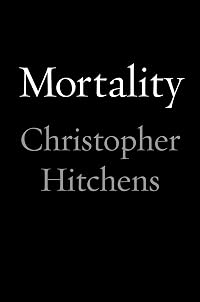
Mortality
by Christopher Hitchens
On This Page
Description
"Courageous, insightful and candid thoughts on malady and mortality from one of our most celebrated writers"--Provided by the publisher.Tags
Recommendations

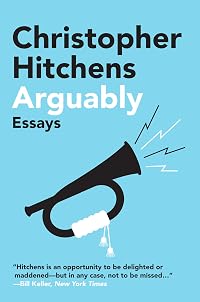
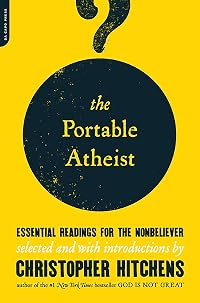
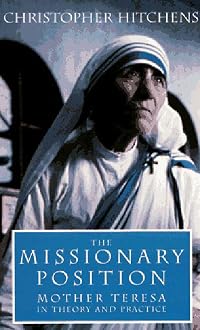
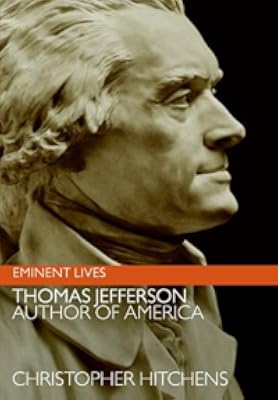
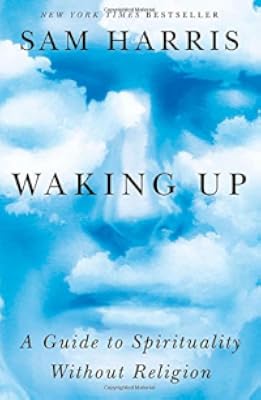
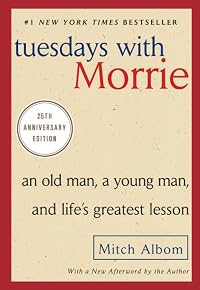




Member Recommendations
Member Reviews
This brief memoir of dying (he died in the process of writing) is devastating, beautiful, and utterly intellectually honest (as one expects from Hitchens.) Hitchens tells us about cancer battling him, and his fight to stay standing. His passionate atheism does not flicker in the face of death, and he slices to smithereens the "what doesn't kill you makes you stronger" cliche. He relates the indignity and pain of diminishing, of losing his ability to eat, to feel sexual desire, and worst of all to speak. It is all painful in every sense of the word, but at no point does he roll over and accept. This is a man who loved life, loved his family and his friends, was grateful for every medical professional who worked to save him no matter how show more painful the attempted cure. He was dying, and he wanted to live, and he never turned to God for a miracle or for succor. He was Hitch to the end. The Forward by Graydon Carther and the Afterword by Hitchens' beloved wife Carol Blue are also moving and edifying. He loved and was loved. May he rest in peace. show less
A slim and unfinished volume that has an abrupt ending much like the life of its author, somehow more poignant in dissolving into stray notes and quotes towards the end. “Next stop: terminal”. As some of them reappear in the more polished text it gives a certain insight in how Hitch snatched a turn of phrase, a reference or a thought, to form the spine of a text.
He speedruns through denial and bargaining to reach some form of acceptance while evidently both he and his family thought there would be more runway still for some final thoughts. Is it overly sentimental to regret not rating it higher? The true remembrance of the man is just not found here, it's in his completed body of work. Perhaps no completed thoughts on mortality show more could better express its stark reality than just ending in medias res. show less
He speedruns through denial and bargaining to reach some form of acceptance while evidently both he and his family thought there would be more runway still for some final thoughts. Is it overly sentimental to regret not rating it higher? The true remembrance of the man is just not found here, it's in his completed body of work. Perhaps no completed thoughts on mortality show more could better express its stark reality than just ending in medias res. show less
It is difficult not to be moved by the words of a dying man, but it's even harder when those words come from a man who is so eloquent in his writing. These are the final writings of the late Christopher Hitchens and they hold very little back when describing exactly what it is to go through the attempt at fighting the cancer killing you from the inside. The words bring home the feeling of what it really means to face your own mortality, and I'm not sure anyone else could have put the open face on it the way only Christopher Hitchens did. While not always as uplifting and positive in the way Randy Pausch’s 'The Last Lecture' was, it is extremely honest.
This should be a must read for anyone who cares about the human condition while show more facing our mortality. It is a short read and does not require a large amount of time to complete. Included at the end are notes and snippets left behind that had not yet been turned into full writings and a final chapter from Chrostopher Hitchens wife. As she admits, in the end, Christopher Hitchens always had the last word, and does so again with this book. show less
This should be a must read for anyone who cares about the human condition while show more facing our mortality. It is a short read and does not require a large amount of time to complete. Included at the end are notes and snippets left behind that had not yet been turned into full writings and a final chapter from Chrostopher Hitchens wife. As she admits, in the end, Christopher Hitchens always had the last word, and does so again with this book. show less
short little collection of essays on his illness and dying followed up by a sweet tribute from his wife. some of the essays are particularly poignant and some miss the mark in my estimation, but this is the first of his books i've read so i've started in the wrong place and don't understand what he's doing as much as another reader might.
this makes me really wish i had seen him speak, and i will seek out more of his writing and also videos of his lectures and debates. i didn't know before quite what we had lost.
a quote from ambrose bierce and then his own words:
"'Prayer: A petition that the laws of nature be suspended in favor of the petitioner; himself confessed unworthy.'
Everybody can see the joke that is lodged within this entry: The show more man who prays is the one who thinks that god has arranged matters all wrong, but who also thinks that he can instruct god how to put them right. Half-buried in the contradiction is the distressing idea that nobody is in charge, or nobody with any moral authority. The call to prayer is self-cancelling."
i still haven't given a lot of deep thought or virtually any research to my atheism as yet, so while this argument is likely quite basic, it was new to me and i found it wonderful:
"Now, it can be asserted with some confidence, first, that its [Christianity's] deity is all-wise and all-powerful and, second, that its congregants stand in desperate need of that deity's infinite wisdom and power. Just to give some elementary quotations, it is stated in the book of Philippians, 4:6, 'Be careful for nothing; but in everything by prayer and supplication and thanksgiving, let your requests be known to God.' Deuteronomy 32:4 proclaims that 'he is the rock, his work is perfect,' and Isaiah 64:8 tells us, 'Now O Lord, thou art our father; we art clay and thou our potter; and we are all the work of thy hand.' Note then, that Christianity insists on the absolute dependence of its flock, and then only on the offering of undiluted praise and thanks. A person using prayer time to ask for the world to be set to rights, or to beseech god to bestow a favor upon himself, would in effect be guilty of a profound blasphemy or at the very least a pathetic misunderstanding. It is not for the mere human to be presuming that he or she can advise the divine." show less
this makes me really wish i had seen him speak, and i will seek out more of his writing and also videos of his lectures and debates. i didn't know before quite what we had lost.
a quote from ambrose bierce and then his own words:
"'Prayer: A petition that the laws of nature be suspended in favor of the petitioner; himself confessed unworthy.'
Everybody can see the joke that is lodged within this entry: The show more man who prays is the one who thinks that god has arranged matters all wrong, but who also thinks that he can instruct god how to put them right. Half-buried in the contradiction is the distressing idea that nobody is in charge, or nobody with any moral authority. The call to prayer is self-cancelling."
i still haven't given a lot of deep thought or virtually any research to my atheism as yet, so while this argument is likely quite basic, it was new to me and i found it wonderful:
"Now, it can be asserted with some confidence, first, that its [Christianity's] deity is all-wise and all-powerful and, second, that its congregants stand in desperate need of that deity's infinite wisdom and power. Just to give some elementary quotations, it is stated in the book of Philippians, 4:6, 'Be careful for nothing; but in everything by prayer and supplication and thanksgiving, let your requests be known to God.' Deuteronomy 32:4 proclaims that 'he is the rock, his work is perfect,' and Isaiah 64:8 tells us, 'Now O Lord, thou art our father; we art clay and thou our potter; and we are all the work of thy hand.' Note then, that Christianity insists on the absolute dependence of its flock, and then only on the offering of undiluted praise and thanks. A person using prayer time to ask for the world to be set to rights, or to beseech god to bestow a favor upon himself, would in effect be guilty of a profound blasphemy or at the very least a pathetic misunderstanding. It is not for the mere human to be presuming that he or she can advise the divine." show less
It is odd that I chose Christopher Hitchens' last book as the first of his to read, since I have known about him and been interested in his ideas for a long time. I have a bit of a thing for books about death, I guess, and this difficult, thoughtful, and interesting little one did not disappoint. But having finished it, I mostly feel eager to read some of his earlier, probably more purposefully crafted writings. I don't think I share the same joie de vivre that Hitchens did, because I came away from Mortality mostly feeling renewed in my resolve (developed during my father's treatment for and death from cancer more than 20 years ago) to decline treatment if ever similarly stricken. Chemotherapy and radiation are vicious approaches to an show more intractable problem, and Hitchens writes about his experience of them as good-humoredly and philosophically and brutally honestly as seems possible. He lived for 19 months from diagnosis to death, which, his widow says, came unexpectedly. Would he choose the same path from point a to b if he had it to do over again? That's a book I'd like to read. If anyone is capable of delivering dispatches from the grave, Hitchens would seem to be a good candidate, but I'm not holding my breath. I am grateful, though, that he penned these few words before he left this life, and that I had the opportunity to read them. show less
And now, a return to a question I've addressed before: do you give a book more credit for the circumstances in which it was written? Because here again, we have a book written by a well-known and respected author, Hitchens, as he was dying, in this case of esophageal cancer. This is a book that's in part about the processing of dying, and in part about the thoughts that come to one along the road to their final resting place. There are essays on losing one's voice, on how what doesn't kill you certainly doesn't make you stronger in many cases, on the topic of religion and how the whole cancer deal hasn't changed Hitchens's views on the absence of a god, among a few others.
All of the essays are well-written, and a small fragmentary show more section at the end collects Hitchens's last jottings from the end of his life before he'd been able to turn them into a full piece. Even if Hitchens had lost his physical voice, his writing voice remained intact to the end, it seems. There's a real and honest undertaking of describing what it's like to be dying, and what one might think of. So as a small valedictory piece, this isn't a bad little book to try. Emphasis on little, though. The book is quite short - slightly over a hundred pages with foreword and afterword, and in quite large type to boot. You can knock the thing off in a couple of hours tops; I'm really glad I got it out of the library.
On the whole, if you want to hear the last words of a distinctive writer, and what he wanted us to last take from him on the way out, this is an interesting read, and thought-provoking, but I daresay it's not really worth the hardcover price. If this had been someone besides Hitchens, I very much doubt this would be a book. Now that it's there, though, it's worth the quick read. This time, I think I do give the credit to the book: it's inspiring, knowing how the book was written, and seeing the final output. Not enjoyable, no, but inspiring. And I like that. show less
All of the essays are well-written, and a small fragmentary show more section at the end collects Hitchens's last jottings from the end of his life before he'd been able to turn them into a full piece. Even if Hitchens had lost his physical voice, his writing voice remained intact to the end, it seems. There's a real and honest undertaking of describing what it's like to be dying, and what one might think of. So as a small valedictory piece, this isn't a bad little book to try. Emphasis on little, though. The book is quite short - slightly over a hundred pages with foreword and afterword, and in quite large type to boot. You can knock the thing off in a couple of hours tops; I'm really glad I got it out of the library.
On the whole, if you want to hear the last words of a distinctive writer, and what he wanted us to last take from him on the way out, this is an interesting read, and thought-provoking, but I daresay it's not really worth the hardcover price. If this had been someone besides Hitchens, I very much doubt this would be a book. Now that it's there, though, it's worth the quick read. This time, I think I do give the credit to the book: it's inspiring, knowing how the book was written, and seeing the final output. Not enjoyable, no, but inspiring. And I like that. show less
Christopher Hitchens was a remarkable and fearless man who remained true to himself and his beliefs right up until the moment that esophageal cancer claimed his life in December 2011. Admittedly, Hitchens was a man of excesses, and his lifestyle largely contributed to his death at the relatively young age of sixty-two. But it is unlikely that he gave much thought to the destructiveness of such a lifestyle until the 2010 book tour during which he was suddenly hospitalized because of the agonizing pain he experienced around his chest and thorax. Eighteen months later, Hitchens would be dead, but he spent much of his remaining time writing about his personal journey through what he called “Tumorville.” That work is captured in show more Mortality, the little 104-page memoir on dying he left behind.
Christopher Hitchens was, of course, not a man without enemies – thousands of them – and, early in his struggle to rid himself of the tumor that killed him, he became aware that “some who have long wished me ill” were rooting for the “blind, emotionless alien” of a tumor that was killing him. If he had not been so outspoken about his atheism and disillusionment with liberal politics, it is likely that far fewer would have openly gloated about his illness. But if the effectiveness of a man’s arguments can be measured by the number of his enemies, Christopher Hitchens was an extremely effective debater. The man knew he had enemies – and he loved it.
I do suspect that admirers of Christopher Hitchens will have already read some of what is in Mortality because portions of the book were published previously as Vanity Fair magazine essays. Although this might disappoint some readers, keep in mind that the observations Hitchens makes about living with cancer, enduring months of chemotherapy, and the specific “etiquette” of the disease are so frankly presented that they remain as powerful on subsequent readings as they are on the first. And, capturing the essays in one volume the way Mortality does, makes it easy to keep them together for re-reading.
Hitchens was well aware that many people were wondering whether he would turn to religion before his death. He even stumbled upon a “Place Bets” video inviting people to bet on whether he would “repudiate (his) atheism and embrace religion by a certain date or continue to affirm unbelief and take the hellish consequences.” While he generally found this kind of thing to be more amusing than annoying, Hitchens offers a rather poignant thought about all those prayers supposedly being said on his behalf:
“Suppose I ditch the principles I have held for a lifetime, in the hope of gaining favor at the last minute? I hope and trust that no serious person would be at all impressed by such a hucksterish choice. Meanwhile, the god who would reward cowardice and dishonesty and punish irreconcilable doubt is among the many gods in which (whom?) I do not believe. I don’t mean to be churlish about any kind intentions, but when September 20 comes (the official “Everybody Pray for Hitchens” day), please do not trouble deaf heaven with your bootless cries. Unless, of course, it makes you feel better.”
Pure Hitchens…all the way to the end.
Rated at 5.0 show less
Christopher Hitchens was, of course, not a man without enemies – thousands of them – and, early in his struggle to rid himself of the tumor that killed him, he became aware that “some who have long wished me ill” were rooting for the “blind, emotionless alien” of a tumor that was killing him. If he had not been so outspoken about his atheism and disillusionment with liberal politics, it is likely that far fewer would have openly gloated about his illness. But if the effectiveness of a man’s arguments can be measured by the number of his enemies, Christopher Hitchens was an extremely effective debater. The man knew he had enemies – and he loved it.
I do suspect that admirers of Christopher Hitchens will have already read some of what is in Mortality because portions of the book were published previously as Vanity Fair magazine essays. Although this might disappoint some readers, keep in mind that the observations Hitchens makes about living with cancer, enduring months of chemotherapy, and the specific “etiquette” of the disease are so frankly presented that they remain as powerful on subsequent readings as they are on the first. And, capturing the essays in one volume the way Mortality does, makes it easy to keep them together for re-reading.
Hitchens was well aware that many people were wondering whether he would turn to religion before his death. He even stumbled upon a “Place Bets” video inviting people to bet on whether he would “repudiate (his) atheism and embrace religion by a certain date or continue to affirm unbelief and take the hellish consequences.” While he generally found this kind of thing to be more amusing than annoying, Hitchens offers a rather poignant thought about all those prayers supposedly being said on his behalf:
“Suppose I ditch the principles I have held for a lifetime, in the hope of gaining favor at the last minute? I hope and trust that no serious person would be at all impressed by such a hucksterish choice. Meanwhile, the god who would reward cowardice and dishonesty and punish irreconcilable doubt is among the many gods in which (whom?) I do not believe. I don’t mean to be churlish about any kind intentions, but when September 20 comes (the official “Everybody Pray for Hitchens” day), please do not trouble deaf heaven with your bootless cries. Unless, of course, it makes you feel better.”
Pure Hitchens…all the way to the end.
Rated at 5.0 show less
Members
- Recently Added By
Published Reviews
ThingScore 100
The book takes us on the journey from June of 2010 (when Hitchens was diagnosed) to December of 2011 (when he died). What a beautiful, awful journey it was. Samuel Johnson said that "The prospect of being hanged focuses the mind wonderfully." Hitchens was not being hanged, unless you mean that metaphorically, but his literate mind stayed focused and articulate. He goes into the rich detail of show more his body becoming a "reservoir of pain," meditates on the old wheeze that pain makes us better people, offers thoughts on whether the phrase "the war on cancer" is appropriate, and reveals that near the end he became a willing morphine junky: "How happily I measured off my day as I saw the injection being readied." show less
added by jimroberts
Being in Christopher’s company was rarely sobering, but always exhilarating. It is, however, sobering and grief-inducing to read this brave and harrowing account of his “year of living dyingly” in the grip of the alien that succeeded where none of his debate opponents had in bringing him down.
added by jimroberts
Lists

100 Biographies & Memoirs to Read in a Lifetime
42 works; 18 members

2010s
241 works; 3 members

Atheism, humanism, freethought, &c. — Best nonfiction books in favour of
167 works; 14 members

100 Biographies and Memoirs to Read in a (Single) Lifetime
98 works; 12 members

Short Nonfiction Collections
51 works; 4 members
Author Information

88+ Works 29,848 Members
Christopher Hitchens was born in Portsmouth, England on April 13, 1949. He was a contributing editor to Vanity Fair and wrote for numerous other publications throughout his lifetime. He was the author of numerous books including No One Left to Lie To, For the Sake of Argument, Prepared for the Worst, God Is Not Great, Hitch-22: A Memoir, and show more Arguably. He died due to complication from esophageal cancer on December 15, 2011 at the age of 62. (Bowker Author Biography) show less
Some Editions
Awards and Honors
Awards
Distinctions
Notable Lists
Common Knowledge
- Canonical title
- Mortality
- Original title
- Mortality
- Original publication date
- 2012
- People/Characters
- Christopher Hitchens; Carol Blue; Graydon Carter; Pauline Kael; Frederick Smith; Sidney Hook (show all 9); Leonard Cohen; Simon Hoggart; Nietzsche, Friedrich Wilhelm, 1844-1900
- First words
- Foreword
At a dinner in Los Angeles this spring, a young actor named Emile Hirsch came up to me in a state of high excitement.
—Graydon Carter
I have more than once in my time woken up feeling like death.
Afterword
Onstage, my husband was an impossible act to follow.
—Carol Blue - Last words
- (Click to show. Warning: May contain spoilers.)Foreword
They are also among his best.
—Graydon Carter
(Click to show. Warning: May contain spoilers.)No person is free.
(Click to show. Warning: May contain spoilers.)Afterword
Time after time, Christopher has the last word.
—Carol Blue - Blurbers
- Buckley, Christopher
- Original language
- English
- Canonical DDC/MDS
- 920.5
Classifications
Statistics
- Members
- 1,837
- Popularity
- 11,817
- Reviews
- 82
- Rating
- (4.05)
- Languages
- 10 — Danish, Dutch, English, Finnish, German, Italian, Polish, Portuguese, Spanish, Swedish
- Media
- Paper, Audiobook, Ebook
- ISBNs
- 36
- ASINs
- 13