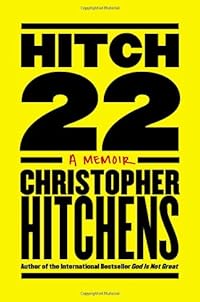
Hitch-22
by Christopher Hitchens
On This Page
Description
Over the course of his 60 years, Christopher Hitchens has been a citizen of both the United States and the United Kingdom. He has been both a socialist opposed to the war in Vietnam and a supporter of the U.S. war against Islamic extremism in Iraq. He has been both a foreign correspondent in some of the world's most dangerous places and a legendary bon vivant with an unquenchable thirst for alcohol and literature. He is a fervent atheist, raised as a Christian, by a mother whose Jewish show more heritage was not revealed to him until her suicide.In other words, Christopher Hitchens contains multitudes. He sees all sides of an argument. And he believes the personal is political.
This is the story of his life, lived large.
. show less
Tags
Recommendations
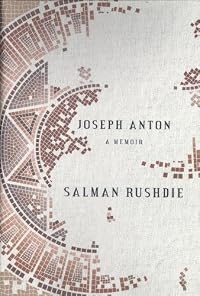
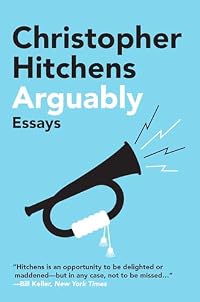
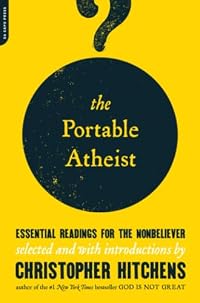
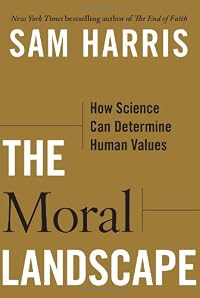



Member Recommendations
Member Reviews
Hitch 22 is more of a survey and opinion of modern history than a memoir. In part this is due to the spectacular public life that Hitchens has led, but it doesn't feel like an account from someone who has led a life at all. For someone who holds passionate and often (though not always) beautifully supported opinions, Hitchens presents his own life in a very detached manner. There is bountiful name dropping of really only public figures. His family of origin is sparsely mentioned, his current wife and children could be missed in a blink, and the mother of two children is omitted. Fair enough, he perhaps intends to maintain privacy, but it is just one symptom of the book's overall sense of detachment. Whether Hitchens discusses pivotal, show more personal events or prurient events like a visit to a brothel, there is a lack of introspection and inner dialogue. It's almost as though an automaton was designed to live a radical, amazing life and report on it eloquently but without feeling. The only occasion where this didn't entirely hold true is when Hitchens discusses his mother and when he takes a personal interest in the death of a soldier he had influenced. Even in these instances, you only get the mere sense of a depth of emotion. The fact of Hitchens' life is much more enjoyable than its recounting. show less
Hitch 22 is more of a survey and opinion of modern history than a memoir. In part this is due to the spectacular public life that Hitchens has led, but it doesn't feel like an account from someone who has led a life at all. For someone who holds passionate and often (though not always) beautifully supported opinions, Hitchens presents his own life in a very detached manner. There is bountiful name dropping of really only public figures. His family of origin is sparsely mentioned, his current wife and children could be missed in a blink, and the mother of two children is omitted. Fair enough, he perhaps intends to maintain privacy, but it is just one symptom of the book's overall sense of detachment. Whether Hitchens discusses pivotal, show more personal events or prurient events like a visit to a brothel, there is a lack of introspection and inner dialogue. It's almost as though an automaton was designed to live a radical, amazing life and report on it eloquently but without feeling. The only occasion where this didn't entirely hold true is when Hitchens discusses his mother and when he takes a personal interest in the death of a soldier he had influenced. Even in these instances, you only get the mere sense of a depth of emotion. The fact of Hitchens' life is much more enjoyable than its recounting. show less
A quite incredible memoir, not only because it does much of what a memoir should do but because it does much more besides. Hitchens recognizes as early as page 22 in his life's narrative how often "the private and the political had intersected", and proceeds accordingly. Consequently, alongside raw passages about his mother's death and witty anecdotes from his youth, you also get a wealth of literary allusions and quotations, clear-eyed insights into matters of principle and enduring opinions about politics. He infuses passages with humour without cheapening them, with candidness without sordidness and with emotion without becoming sentimental. He is particularly powerful on the pull of American values and on the Salman Rushdie show more business, but in truth he is fascinating to read on just about everything, because he is well-read and writes well, and doesn't criticize anything which he hasn't at first endeavoured to research and understand. There is a bracing quality to all of Hitchens' opinions and a wealth to the prose which is undeniable.
If there is one criticism to be made, it is that the political gradually comes to overshadow the personal. Later chapters, fine as they are, could just as easily have come from his collections of essays (indeed, some, like the powerful lines about Mark Daily, have). I remained completely sated by the content but it is remarkable to realize that, after the school and university years where he accounts for his relationship with Martin Amis, there's very little on the development of Hitchens' personal life. This life is, as I have mentioned, deeply connected with the political and so when he details his travels in Mesopotamia and so on, you are still getting interesting personal insights. But even upon finishing the book you have no idea about his wife, Carol, or how they met or learned to live together. She is only mentioned a few times in passing, and it was only by a bit of low-level detective work and dot-connecting that I even know it is his wife who is the 'Carol Blue' in some of the illustrative photographs. His children get slightly more attention (and even then, only one – Alexander – gets an anecdote all to himself), but are still only bit-part players, as is his brother Peter. Maybe Hitchens would consider this to be all dull family-life stuff unworthy of the reader's attention, but it is rather odd for a memoir or autobiography to omit such stuff to such a glaring extent.
That said, Hitch-22 is a fantastic account precisely because you don't want it to end. You want to stay in this man's company, which is the sign of an effective memoir and the best compliment one can pay. You just want him to carry on delivering interesting anecdotes, dropping literary references and balling you out for any intellectual laziness on matters of principle. The man and the book are a perfect storm of humility and ego, calmness and cantankerousness, humour and grave seriousness. There are other raconteurs, other principled men, other intellectuals, other front-line journalists and other engrossing and readable writers, but Hitchens brought all such qualities into a mixture, bound together perhaps by smoke and whisky and raunch, which would be hard for any man to replicate. A real one-off. show less
If there is one criticism to be made, it is that the political gradually comes to overshadow the personal. Later chapters, fine as they are, could just as easily have come from his collections of essays (indeed, some, like the powerful lines about Mark Daily, have). I remained completely sated by the content but it is remarkable to realize that, after the school and university years where he accounts for his relationship with Martin Amis, there's very little on the development of Hitchens' personal life. This life is, as I have mentioned, deeply connected with the political and so when he details his travels in Mesopotamia and so on, you are still getting interesting personal insights. But even upon finishing the book you have no idea about his wife, Carol, or how they met or learned to live together. She is only mentioned a few times in passing, and it was only by a bit of low-level detective work and dot-connecting that I even know it is his wife who is the 'Carol Blue' in some of the illustrative photographs. His children get slightly more attention (and even then, only one – Alexander – gets an anecdote all to himself), but are still only bit-part players, as is his brother Peter. Maybe Hitchens would consider this to be all dull family-life stuff unworthy of the reader's attention, but it is rather odd for a memoir or autobiography to omit such stuff to such a glaring extent.
That said, Hitch-22 is a fantastic account precisely because you don't want it to end. You want to stay in this man's company, which is the sign of an effective memoir and the best compliment one can pay. You just want him to carry on delivering interesting anecdotes, dropping literary references and balling you out for any intellectual laziness on matters of principle. The man and the book are a perfect storm of humility and ego, calmness and cantankerousness, humour and grave seriousness. There are other raconteurs, other principled men, other intellectuals, other front-line journalists and other engrossing and readable writers, but Hitchens brought all such qualities into a mixture, bound together perhaps by smoke and whisky and raunch, which would be hard for any man to replicate. A real one-off. show less
I'm a fan of Christopher Hitchens, mainly from his debates and magazine articles, having discovered him through the "New Atheists" (Dawkins, Sam Harris, etc.), but I've not yet read a full book of his.
I really enjoyed listening to this (and the audiobook, read by Hitch himself, is definitely the best form), learned a bit about the Left, English middle-class life, and his differences with most of the left on the war on Islamofascism. I definitely disagree with a lot of his politics (in fact, a lot of the right wing leaders he despises were people I think saved the western world; glory to the helicopters...), but post-9/11, a lot of his views were quite reasonable. This seems like a case of patriotic dissent (combined with being left show more mainly as a product of that being kind of the default among English intellectuals of his formative years), and I'd certainly take more Hitchens types vs. blind followers on the right. It was particularly interesting learning how he reconciled himself to learning his mother's family was Jewish (and she had concealed this from him), as well as his relationships with parents, schools, and other figures on the left.
It does drag on a bit; something you can listen to while doing other things and miss sections without really missing much critical content. show less
I really enjoyed listening to this (and the audiobook, read by Hitch himself, is definitely the best form), learned a bit about the Left, English middle-class life, and his differences with most of the left on the war on Islamofascism. I definitely disagree with a lot of his politics (in fact, a lot of the right wing leaders he despises were people I think saved the western world; glory to the helicopters...), but post-9/11, a lot of his views were quite reasonable. This seems like a case of patriotic dissent (combined with being left show more mainly as a product of that being kind of the default among English intellectuals of his formative years), and I'd certainly take more Hitchens types vs. blind followers on the right. It was particularly interesting learning how he reconciled himself to learning his mother's family was Jewish (and she had concealed this from him), as well as his relationships with parents, schools, and other figures on the left.
It does drag on a bit; something you can listen to while doing other things and miss sections without really missing much critical content. show less
Christopher Hitchens's memoirs, like his other writings, is remarkably satisfying in its breadth of content and its approach to reporting on a life well and truly lived. In fact, Hitchens lived so much that I was almost depressed by reading of his adventures, especially considering that he did so much so young, and what do I have to say for myself?
However, one should know before reading this volume that these are Hitchens's memoirs, not an autobiography of such. Although he discusses his relationship with his parents at length, and the late-in-life revelation of his Jewish ancestry, he manages to avoid for the most part mentioning either of his wives (or at least how his marriage came to have a sequel) or his relationship with his show more brother. There is still much work available for any would-be biographer, though the prose here is so faultless that the task should not be taken on lightly.
In all, a magnificent work, and I feel truly better for having read it. show less
However, one should know before reading this volume that these are Hitchens's memoirs, not an autobiography of such. Although he discusses his relationship with his parents at length, and the late-in-life revelation of his Jewish ancestry, he manages to avoid for the most part mentioning either of his wives (or at least how his marriage came to have a sequel) or his relationship with his show more brother. There is still much work available for any would-be biographer, though the prose here is so faultless that the task should not be taken on lightly.
In all, a magnificent work, and I feel truly better for having read it. show less
After years of reading small quotes by Hitch I was happy to finally read this autobiography to get more of a feel for what he was like. At times very personal, but at other times he wants to project his public image. A recurrent theme- the two faces, a holding of two very different positions at one time. Though it is unstated, I get the impression he was not only charming but used his charm (and bisexuality) to enable his wide familiarity with the movers and shakers of his time to both satisfy himself and his career goals. I'm OK with him upholding seemingly incongruent positions, but I can see where some people have accused him of changing his position over the years. I always enjoy his skewering of those he despised! Even if I might show more not agree with all of his opinions. show less
You can pretty much start a fight with anyone over anything in society today, but few topics are more touchy than religion and politics and few people are more outspoken on both of those items than Christopher Hitchens. His wit, intellectual acumen and brash tone have been on display for years, but in Hitch-22 – A Memoir you see behind the curtain at the beginnings, the innocent moments that led this young boy to become one of the most fiery orators and debaters of his time.
What starts off as a slow boil in his younger days, quickly leads to his schooling and the sparks which set his mind racing. His also finds himself surrounded by other thinkers, radicals who challenged the status quo and who would eventually become lifelong allies show more in the struggles Hitchens participated in. Those who chose the other side of the arguments often found themselves deflecting brash and sometimes caustic lines of attack, but they would never deny Hitchens passion for the cause (whatever that cause may be.) He battled throughout his life against what he saw as hypocrisy and blind devotion to order, laying out essay after essay calling for the extension and protection of freedom, fairness and equality, which at various points found him a home in the Communist Party and other leftist factions; some peaceful, others less so. You get to read about the many internal struggles within the various resistances, revolutionaries all vying for power and point in what they saw as the new future, but Hitchens would never waver from his main cause, which was to write about what he saw and what he believed. Exposing the various underbellies of governments and power structures became almost an obsession for the gifted linguist.
The book is full of memorable lines and heavy points, but this one in particular stuck out to me:
“… but once a bogus story has been printed for the first time, it will be reprinted again and again by the lazy and/or the malicious.”
The strikes to the heart of Hitchens, the search for the truth based on your own experiences and investigation, not relying on the media or the people in power to deliver it for you. Because there are always machinations working behind the scenes, motives and desires tipping the story one way or the other, disguising and obscuring the truth. Of course, the same can be said about Hitchens himself and it would be true. He does have a motive, but the motive seems to be to expose other motives, almost in a self-destructive fashion, begging you to challenge him as well.
He’s been called every name in the book, from blasphemer (due to his atheism) to traitor (due to his political views), but he talks in the book about a great love and respect for the United States, which he considers an incredible idea:
“And what a subject America was: an inexhaustible one in fact, begun by written proclamations and assertions that were open to rewriting and amendment, and thus constituting an enormous “work-in-progress” which one might have to play a tiny part.”
His writing, and his life in itself, is a clarion call to those on the sidelines, begging them to look at what is going on and take part, whether you are for or against. Question everything. Again, from the book:
“It is not that there are no certainties, it is that it is an absolute certainty that there are no certainties.” (from which you can see his inherent opposition to something like the Bible or any religious text.)
When you reach the end of the book it feels as though the biggest sin undercutting the whole story is ambivalence to your life and your world. He screams to take notice, take part and just plain take a look around. You might be surprised what you find. show less
What starts off as a slow boil in his younger days, quickly leads to his schooling and the sparks which set his mind racing. His also finds himself surrounded by other thinkers, radicals who challenged the status quo and who would eventually become lifelong allies show more in the struggles Hitchens participated in. Those who chose the other side of the arguments often found themselves deflecting brash and sometimes caustic lines of attack, but they would never deny Hitchens passion for the cause (whatever that cause may be.) He battled throughout his life against what he saw as hypocrisy and blind devotion to order, laying out essay after essay calling for the extension and protection of freedom, fairness and equality, which at various points found him a home in the Communist Party and other leftist factions; some peaceful, others less so. You get to read about the many internal struggles within the various resistances, revolutionaries all vying for power and point in what they saw as the new future, but Hitchens would never waver from his main cause, which was to write about what he saw and what he believed. Exposing the various underbellies of governments and power structures became almost an obsession for the gifted linguist.
The book is full of memorable lines and heavy points, but this one in particular stuck out to me:
“… but once a bogus story has been printed for the first time, it will be reprinted again and again by the lazy and/or the malicious.”
The strikes to the heart of Hitchens, the search for the truth based on your own experiences and investigation, not relying on the media or the people in power to deliver it for you. Because there are always machinations working behind the scenes, motives and desires tipping the story one way or the other, disguising and obscuring the truth. Of course, the same can be said about Hitchens himself and it would be true. He does have a motive, but the motive seems to be to expose other motives, almost in a self-destructive fashion, begging you to challenge him as well.
He’s been called every name in the book, from blasphemer (due to his atheism) to traitor (due to his political views), but he talks in the book about a great love and respect for the United States, which he considers an incredible idea:
“And what a subject America was: an inexhaustible one in fact, begun by written proclamations and assertions that were open to rewriting and amendment, and thus constituting an enormous “work-in-progress” which one might have to play a tiny part.”
His writing, and his life in itself, is a clarion call to those on the sidelines, begging them to look at what is going on and take part, whether you are for or against. Question everything. Again, from the book:
“It is not that there are no certainties, it is that it is an absolute certainty that there are no certainties.” (from which you can see his inherent opposition to something like the Bible or any religious text.)
When you reach the end of the book it feels as though the biggest sin undercutting the whole story is ambivalence to your life and your world. He screams to take notice, take part and just plain take a look around. You might be surprised what you find. show less
Members
- Recently Added By
Published Reviews
ThingScore 45
Christopher Hitchens became dazzled by his “friendships” with the rich and powerful and turned into an apologist for war on Iraq. Terry Eagleton reads his new memoir –– and finds a man in conflict with every one of his own instincts.
Oedipus wrecked
The Oedipal children of the establishment have always proved useful to the left. Such ruling-class renegades have the grit, chutzpah, show more inside knowledge, effortless self-assurance, stylishness, fair conscience and bloody-mindedness of their social background, but can turn these patrician virtues to radical ends. The only trouble is that they tend to revert to type as they grow older, not least when political times are lean. The Paul Foots and Perry Andersons of this world are a rare breed. Men and women who began by bellowing "Out, out, out!" end up humiliating waiters and overrating Evelyn Waugh. Those who, like Christopher Hitchens, detest a cliché turn into one of the dreariest types of them all: the revolutionary hothead who learns how to stop worrying about imperialism and love Paul Wolfowitz.
That Hitchens represents a grievous loss to the left is beyond doubt. He is a superb writer, superior in wit and elegance to his hero George Orwell, and an unstanchably eloquent speaker. He has an insatiable curiosity about the modern world and an encyclopaedic knowledge of it, as well as an unflagging fascination with himself. Through getting to know all the right people, an instinct as inbuilt as his pancreas, he could tell you without missing a beat whom best to consult in Rabat about education policy in the Atlas Mountains. The same instinct leads to chummy lunches with Bill Deedes and Peregrine Worsthorne. In his younger days, he was not averse to dining with repulsive fat cats while giving them a piece of his political mind. Nowadays, one imagines, he just dines with repulsive fat cats. . . . show less
Oedipus wrecked
The Oedipal children of the establishment have always proved useful to the left. Such ruling-class renegades have the grit, chutzpah, show more inside knowledge, effortless self-assurance, stylishness, fair conscience and bloody-mindedness of their social background, but can turn these patrician virtues to radical ends. The only trouble is that they tend to revert to type as they grow older, not least when political times are lean. The Paul Foots and Perry Andersons of this world are a rare breed. Men and women who began by bellowing "Out, out, out!" end up humiliating waiters and overrating Evelyn Waugh. Those who, like Christopher Hitchens, detest a cliché turn into one of the dreariest types of them all: the revolutionary hothead who learns how to stop worrying about imperialism and love Paul Wolfowitz.
That Hitchens represents a grievous loss to the left is beyond doubt. He is a superb writer, superior in wit and elegance to his hero George Orwell, and an unstanchably eloquent speaker. He has an insatiable curiosity about the modern world and an encyclopaedic knowledge of it, as well as an unflagging fascination with himself. Through getting to know all the right people, an instinct as inbuilt as his pancreas, he could tell you without missing a beat whom best to consult in Rabat about education policy in the Atlas Mountains. The same instinct leads to chummy lunches with Bill Deedes and Peregrine Worsthorne. In his younger days, he was not averse to dining with repulsive fat cats while giving them a piece of his political mind. Nowadays, one imagines, he just dines with repulsive fat cats. . . . show less
added by PLReader
Hitchens acknowledges many people for their help, but interestingly no specific editor for this particular book. This is unfortunate: a good editor might have cut out 100 pages, pruned the moments of self-indulgence, reminded Hitchens that abuse is not equivalent to analysis and asked for a little more introspection. Read Christopher Hitchens, certainly, but not necessarily Hitch-22.
added by Shortride
A generous friend, Mr. Hitchens gives most of his book’s good lines (and there are many, a good deal of them unprintable here) to the people he loves. Those good lines including this one, from Clive James, who began a review of a Leonid Brezhnev memoir this way: “Here is a book so dull that a whirling dervish could read himself to sleep with it.... If it were read in the open air, birds show more would fall stunned from the sky." Whatever the opposite of that book is, Mr. Hitchens has written it. show less
added by Widsith
Lists

Books referenced in Jim Holt's Why Does the World Exist?
119 works; 1 member
Author Information

88+ Works 29,812 Members
Christopher Hitchens was born in Portsmouth, England on April 13, 1949. He was a contributing editor to Vanity Fair and wrote for numerous other publications throughout his lifetime. He was the author of numerous books including No One Left to Lie To, For the Sake of Argument, Prepared for the Worst, God Is Not Great, Hitch-22: A Memoir, and show more Arguably. He died due to complication from esophageal cancer on December 15, 2011 at the age of 62. (Bowker Author Biography) show less
Awards and Honors
Awards
Distinctions
Common Knowledge
- Canonical title
- Hitch-22
- Original title
- Hitch-22: A Memoir
- Alternate titles
- Hitch 22
- Original publication date
- 2010
- People/Characters
- Christopher Hitchens
- Important places
- USA; United Kingdom
- Epigraph
- The desires of the heart are as crooked as corkscrews,
Not to be born is the best for man;
The second-best is a formal order,
The dance’s pattern; dance while you can.
Dance, dance for the fi... (show all)gure is easy,
The tune is catching and will not stop;
Dance till the stars come down from the rafters;
Dance, dance, dance till you drop.
W. H. Auden’s “Death’s Echo.” - Dedication
- For James Fenton
- Quotations
- "A map of the world that did not show Utopia," said Oscar Wilde, "would not be worth consulting." I used to adore that phrase, but now reflect more upon the shipwrecks and prison islands to which the quest has lead. p.420
Classifications
- Genres
- Biography & Memoir, General Nonfiction, Nonfiction, Religion & Spirituality
- DDC/MDS
- 920.073 — History & geography Biography & genealogy Biography, genealogy, insignia General and collective by localities Of North America United States
- LCC
- CT275 .H62575 .A3 — Auxiliary Sciences of History Biography Biography National biography
- BISAC
Statistics
- Members
- 2,460
- Popularity
- 7,830
- Reviews
- 61
- Rating
- (3.91)
- Languages
- 8 — Dutch, English, French, German, Greek, Italian, Portuguese, Spanish
- Media
- Paper, Audiobook, Ebook
- ISBNs
- 34
- ASINs
- 23