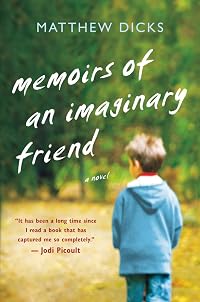
Memoirs of an Imaginary Friend
by Matthew Dicks 
On This Page
Description
Imaginary friend Budo narrates this heartwarming story of love, loyalty, and the power of the imagination—the perfect read for anyone who has ever had a friend . . . real or otherwise.Budo is lucky as imaginary friends go. He's been alive for more than five years, which is positively ancient in the world of imaginary friends. But Budo feels his age, and thinks constantly of the day when eight-year-old Max Delaney will stop believing in him. When that happens, Budo will disappear.
Max is show more different from other children. Some people say that he has Asperger's Syndrome, but most just say he's "on the spectrum." None of this matters to Budo, who loves Max and is charged with protecting him from the class bully, from awkward situations in the cafeteria, and even in the bathroom stalls. But he can't protect Max from Mrs. Patterson, the woman who works with Max in the Learning Center and who believes that she alone is qualified to care for this young boy.
When Mrs. Patterson does the unthinkable and kidnaps Max, it is up to Budo and a team of imaginary friends to save him—and Budo must ultimately decide which is more important: Max's happiness or Budo's very existence.
Narrated by Budo, a character with a unique ability to have a foot in many worlds—imaginary, real, child, and adult— Memoirs of an Imaginary Friend touches on the truths of life, love, and friendship as it races to a heartwarming . . . and heartbreaking conclusion.
. show less
Tags
Recommendations



































Member Recommendations
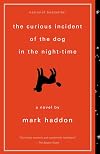
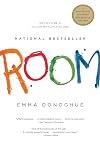
arielfl Both books are abduction stories told from the perspective of a unique narrator.
40

LDVoorberg Both books provide some insight into children who have ASD.
Member Reviews
This was flat-out fascinating!
Budo is Max's best friend. Max is in third grade. Budo is imaginary. Budo is our narrator.
This story is great for those who loved Haddon's A Curious Incident in the Night-Time, as it tells of a child who not labeled, but is definitely on the autism spectrum. Budo has lived longer than most imaginary friends, a fact which he knows because he can see and interact with other imaginary friends. When Max is kidnapped from school, Budo must face his own fears of "fading" in order to help Max survive and escape his captor.
This book inspired a wonderful conversation about imaginary friends, developmental psychology, point of view, and autism.
Highly recommended for teens and up!
Budo is Max's best friend. Max is in third grade. Budo is imaginary. Budo is our narrator.
This story is great for those who loved Haddon's A Curious Incident in the Night-Time, as it tells of a child who not labeled, but is definitely on the autism spectrum. Budo has lived longer than most imaginary friends, a fact which he knows because he can see and interact with other imaginary friends. When Max is kidnapped from school, Budo must face his own fears of "fading" in order to help Max survive and escape his captor.
This book inspired a wonderful conversation about imaginary friends, developmental psychology, point of view, and autism.
Highly recommended for teens and up!
This review and more can be viewed on my blog at: The Muses Circle
"I wish there was a Heaven. If I knew there was a Heaven for me, then I would save Max for sure. I wouldn't be afraid because there would be a place to go after this place. Another place. But I don't think there is a Heaven, and I definitely don't think there is a Heaven for imaginary friends. Heaven is only supposed to be for people who God made, and God didn't make me. Max made me."
I normally don't start my reviews with a quote, but there are so many great, thought provoking lines like this in which Budo delivers throughout Memoirs of an Imaginary Friend, that I just had to share one of my favorites. And some people call this book, or the writing of this book, insipid show more and facile? Yeah, I'll get to that later.
Memoirs of an Imaginary Friend by Matthew Dicks is quite an ambitious novel. My initial first thought? How the author was going to differentiate between "imaginary friends" and "ghosts". After all, on the surface they do have some similarities...or one might think. But I soon discovered I had nothing to fear. In fact, the difference between ghosts and imaginary friends does get addressed in the book by Budo himself. He says, "Ghosts were alive once. Imaginary friends are never alive in the real world."
Dicks did a great job building the world and mythology of "imaginary friends." Every child has a different way of coping with the uncertainties of life, whether it be parents that argue on a daily basis, a life threatening illness, starting school and the social anxieties that comes with it, etc. Perhaps the easiest way to conquer these fears is to share the burden with someone and what better way to do that then to create an imaginary friend. In Matthew Dicks' world, these "friends" can come in many different shapes and sizes and can disappear as quickly as they are imagined. That is why Budo is so very special. Not only does he look like a real human but he is over 5 years old which is unheard of in the world of imaginary friends. This is all thanks to Max, the 8 year old boy who created him.
As the synopsis states above, Max is different then many of the children he goes to school with. While it is never stated what Max's diagnosis is, it doesn't take a genius to figure out that he has a form of autism or Aspergers Syndrome. While this causes turmoil in the lives of his parents, teachers, and even some of his classmates, Budo is the only one who seems to accept and understand Max for who he is. In fact, I originally thought that the book's agenda was to find out what's "wrong"with Max. I couldn't have been more wrong. This is Budo's story and it is told in his perspective. And while he loves Max and knows deep down that Max being "different" is the reason he has been alive for so long, he still fears the day when Max will stop believing in him. Because when that happens, Budo will start to fade away like so many imaginary friends have done before him.
The whole concept of a child's imagination reminds me of the Romantic poets, most specifically William Wordsworth. He believed that children were the closest to God because the depths of their imagination and innocence hadn't been tarnished by the realities of adulthood. But the older a child gets, the more responsibility is placed on his/her shoulders, and the child is forced to "grow up." By the time a child reaches adulthood, he/she has forgotten about imaginary friends, instead replaced with work, paying bills, and trying to fit into society's standards. We see the beginning stages of this theory in Memoirs of an Imaginary Friend. The reason many of the imaginary friends Budo knows disappear before him is because the children that created them are growing up, therefore, they are no longer needed.While Max is very intelligent, he also is introverted and struggles with social skills. This is why Budo is needed, to help Max with fending off bullies like Tommy Swinden, or to stand guard in the bathroom while Max makes a "bonus poop" as Budo likes to call them. Yes, I did say "bonus poop". Did I forget to mention this book is also hilarious??
Now to clear up some things. First and foremost, some people have been confused as to the genre and reading level this book should fall under. Some reviewers have given Memoirs of an Imaginary Friend a 2 star rating because they felt it "struggles to find an audience". This is an ADULT novel that just so happens to have a 5 year old imaginary friend as a narrator. I would go so far as to say that mature young adults would enjoy this novel as well. I'm not sure why people automatically assume that if a child is the narrator or if the language is simple then it is considered a young adult novel.
Speaking of "simple", let's talk about the writing style of this book. Some have complained that the story and writing is "babyish", "insipid", and "facile". Umm...did they miss the fact that the narrator is a 6 year old imaginary friend that was created by an 8 year old boy??? What do they expect, Budo to start talking in flowery Shakespearean prose??? If anything, I think Matthew Dicks did an amazing job creating Budo's voice and making it realistic. And I am confused as to how someone could think the story is shallow or that the author ignores the complexities of the issues. Everyone is entitled to their opinion, but I wonder if they realize what the "issues" of the story actually are. I think people are going into this book thinking it is going to be all about Max and his "condition" and how the people around him deal with it or try to "fix" him. While Max is vital to the story, it is NOT HIS STORY. Budo is the narrator and this is about his journey as an imaginary friend, his fears as to where "friends" like him go when they fade away.
I will say I agree that some of what Budo says is repetitive and somewhere in the middle, the story does lose a little steam. But as you can see by my rating, it didn't bother me enough to take away a whole star. The ending makes up for the little dry spell and somehow the repetitiveness fits, probably because it is never far from my mind that Budo was thought up by an 8 year old boy with limited social skills. But some of the things Budo ponders are questions that sometimes kids ask that we as adults don't have the patience to answer. It reminds me that sometimes the most honest answers come from small children because their responses aren't clouded with the complexities we are used to as grown-ups.
The last thing I want to point out is my love for Oswald, the only imaginary friend that Budo fears. Without spoiling anything, Budo must find the courage to go to Oswald in order to help Max. The reason I am bringing Oswald up is because I couldn't help but think of the movie Ghost starring Patrick Swayze, Demi Moore, and Whoopi Goldberg. Remember when Patrick Swayze sees the ghost on the train that can actually touch and move things? Well that ghost reminds me of Oswald, and Budo in that moment reminds me of Patrick Swayze. Pretty interesting parallel and I have to wonder if the author was or is aware of it!
Memoirs of an Imaginary Friend is a rare breed of novel that can affect a person on so many different levels. Read it if you want to laugh. Read it if you want to be moved to tears. Read it if you want something to think about long after the last page has been read. Just remember to go into this story with an open mind, remember that this is Budo's story, not Max's, and this is not a doctor's manual on autism or Aspergers. This is a great book for teachers that will prompt many discussions with your students. This is a great book if you are a parent with small children or if you vaguely remember your very own imaginary friend. Whatever the case may be, Memoirs of an Imaginary Friend is a book with heart, and Budo is one character that I will never forget. Well done, Matthew Dicks.
Mia @The Muses Circle show less
"I wish there was a Heaven. If I knew there was a Heaven for me, then I would save Max for sure. I wouldn't be afraid because there would be a place to go after this place. Another place. But I don't think there is a Heaven, and I definitely don't think there is a Heaven for imaginary friends. Heaven is only supposed to be for people who God made, and God didn't make me. Max made me."
I normally don't start my reviews with a quote, but there are so many great, thought provoking lines like this in which Budo delivers throughout Memoirs of an Imaginary Friend, that I just had to share one of my favorites. And some people call this book, or the writing of this book, insipid show more and facile? Yeah, I'll get to that later.
Memoirs of an Imaginary Friend by Matthew Dicks is quite an ambitious novel. My initial first thought? How the author was going to differentiate between "imaginary friends" and "ghosts". After all, on the surface they do have some similarities...or one might think. But I soon discovered I had nothing to fear. In fact, the difference between ghosts and imaginary friends does get addressed in the book by Budo himself. He says, "Ghosts were alive once. Imaginary friends are never alive in the real world."
Dicks did a great job building the world and mythology of "imaginary friends." Every child has a different way of coping with the uncertainties of life, whether it be parents that argue on a daily basis, a life threatening illness, starting school and the social anxieties that comes with it, etc. Perhaps the easiest way to conquer these fears is to share the burden with someone and what better way to do that then to create an imaginary friend. In Matthew Dicks' world, these "friends" can come in many different shapes and sizes and can disappear as quickly as they are imagined. That is why Budo is so very special. Not only does he look like a real human but he is over 5 years old which is unheard of in the world of imaginary friends. This is all thanks to Max, the 8 year old boy who created him.
As the synopsis states above, Max is different then many of the children he goes to school with. While it is never stated what Max's diagnosis is, it doesn't take a genius to figure out that he has a form of autism or Aspergers Syndrome. While this causes turmoil in the lives of his parents, teachers, and even some of his classmates, Budo is the only one who seems to accept and understand Max for who he is. In fact, I originally thought that the book's agenda was to find out what's "wrong"with Max. I couldn't have been more wrong. This is Budo's story and it is told in his perspective. And while he loves Max and knows deep down that Max being "different" is the reason he has been alive for so long, he still fears the day when Max will stop believing in him. Because when that happens, Budo will start to fade away like so many imaginary friends have done before him.
The whole concept of a child's imagination reminds me of the Romantic poets, most specifically William Wordsworth. He believed that children were the closest to God because the depths of their imagination and innocence hadn't been tarnished by the realities of adulthood. But the older a child gets, the more responsibility is placed on his/her shoulders, and the child is forced to "grow up." By the time a child reaches adulthood, he/she has forgotten about imaginary friends, instead replaced with work, paying bills, and trying to fit into society's standards. We see the beginning stages of this theory in Memoirs of an Imaginary Friend. The reason many of the imaginary friends Budo knows disappear before him is because the children that created them are growing up, therefore, they are no longer needed.While Max is very intelligent, he also is introverted and struggles with social skills. This is why Budo is needed, to help Max with fending off bullies like Tommy Swinden, or to stand guard in the bathroom while Max makes a "bonus poop" as Budo likes to call them. Yes, I did say "bonus poop". Did I forget to mention this book is also hilarious??
Now to clear up some things. First and foremost, some people have been confused as to the genre and reading level this book should fall under. Some reviewers have given Memoirs of an Imaginary Friend a 2 star rating because they felt it "struggles to find an audience". This is an ADULT novel that just so happens to have a 5 year old imaginary friend as a narrator. I would go so far as to say that mature young adults would enjoy this novel as well. I'm not sure why people automatically assume that if a child is the narrator or if the language is simple then it is considered a young adult novel.
Speaking of "simple", let's talk about the writing style of this book. Some have complained that the story and writing is "babyish", "insipid", and "facile". Umm...did they miss the fact that the narrator is a 6 year old imaginary friend that was created by an 8 year old boy??? What do they expect, Budo to start talking in flowery Shakespearean prose??? If anything, I think Matthew Dicks did an amazing job creating Budo's voice and making it realistic. And I am confused as to how someone could think the story is shallow or that the author ignores the complexities of the issues. Everyone is entitled to their opinion, but I wonder if they realize what the "issues" of the story actually are. I think people are going into this book thinking it is going to be all about Max and his "condition" and how the people around him deal with it or try to "fix" him. While Max is vital to the story, it is NOT HIS STORY. Budo is the narrator and this is about his journey as an imaginary friend, his fears as to where "friends" like him go when they fade away.
I will say I agree that some of what Budo says is repetitive and somewhere in the middle, the story does lose a little steam. But as you can see by my rating, it didn't bother me enough to take away a whole star. The ending makes up for the little dry spell and somehow the repetitiveness fits, probably because it is never far from my mind that Budo was thought up by an 8 year old boy with limited social skills. But some of the things Budo ponders are questions that sometimes kids ask that we as adults don't have the patience to answer. It reminds me that sometimes the most honest answers come from small children because their responses aren't clouded with the complexities we are used to as grown-ups.
The last thing I want to point out is my love for Oswald, the only imaginary friend that Budo fears. Without spoiling anything, Budo must find the courage to go to Oswald in order to help Max. The reason I am bringing Oswald up is because I couldn't help but think of the movie Ghost starring Patrick Swayze, Demi Moore, and Whoopi Goldberg. Remember when Patrick Swayze sees the ghost on the train that can actually touch and move things? Well that ghost reminds me of Oswald, and Budo in that moment reminds me of Patrick Swayze. Pretty interesting parallel and I have to wonder if the author was or is aware of it!
Memoirs of an Imaginary Friend is a rare breed of novel that can affect a person on so many different levels. Read it if you want to laugh. Read it if you want to be moved to tears. Read it if you want something to think about long after the last page has been read. Just remember to go into this story with an open mind, remember that this is Budo's story, not Max's, and this is not a doctor's manual on autism or Aspergers. This is a great book for teachers that will prompt many discussions with your students. This is a great book if you are a parent with small children or if you vaguely remember your very own imaginary friend. Whatever the case may be, Memoirs of an Imaginary Friend is a book with heart, and Budo is one character that I will never forget. Well done, Matthew Dicks.
Mia @The Muses Circle show less
A beautiful, original story about the power of friendship. I adored this book. Sweet but not sappy, funny but not witty, clever but not too clever, Dicks hits all the right notes. The idea that there's a whole parallel world inhabited by imaginary friends is worth the price of admission all on its own. And there is so much more here. The boy, Max, who is on the Autism Spectrum, is portrayed with skill and love. Even when this story made me sad, and it did, it was a happy sad. You get that, right?
This was such an unusual and creative premise for a story, unlike anything I've seen in ages. It is written in the voice of the imaginary friend of a young autistic boy. Dicks is an elementary school teacher himself, which, I believe, lends an measure of authenticity and understanding to his insights into the characters. But more than that, he manages to create believable dialogue and characters who are honest and innocent in ways that are at once surprising and credible. Humour, empathy and suspense carry this story throughout and in the end, the reader really cares about what happens.
Max and Budo have been best friends for five years. Inseparable. They play at home together and go to school together. Max is nine years old but Budo is stuck at five. Why? Because Budo is imaginary. Max is a special needs kid. He has a form of autism. Very smart but unsociable, which makes Budo an invaluable pal.
One day, Max falls into danger and the only one who knows what happened and can help the boy, is Budo, who becomes very resourceful and calls on the imaginary friends of other kids, (a quirky band of misfits) for assistance.
This is a wonderful and very inventive story. The narrative point of view is all Budos, told with sharp observation and an under-lying fear. An anxiety of suddenly disappearing, once Max is “done” with show more him.
Due to some unnecessary profanity, this is a book directed toward adults but I think it works for the YA crowd too. This is the second book I have read by Dicks and he keeps getting better and better.
This was also a perfect audiobook experience, with an ideal narrator. show less
One day, Max falls into danger and the only one who knows what happened and can help the boy, is Budo, who becomes very resourceful and calls on the imaginary friends of other kids, (a quirky band of misfits) for assistance.
This is a wonderful and very inventive story. The narrative point of view is all Budos, told with sharp observation and an under-lying fear. An anxiety of suddenly disappearing, once Max is “done” with show more him.
Due to some unnecessary profanity, this is a book directed toward adults but I think it works for the YA crowd too. This is the second book I have read by Dicks and he keeps getting better and better.
This was also a perfect audiobook experience, with an ideal narrator. show less
Thank you to Mark for recommending this very unique, very moving book. This is a terrific audio, a format that makes up most of my reading these days. The book is told in a present tense narrative by Budo, the imaginary friend of 9 year-old Max, a third grader who has Budo and other coping mechanisms to get him through his days. Though the book never says so, Max must have a form of autism, and daily interactions, misunderstandings, parental anxieties, cruel classmates, and especially change are struggles for Max. Budo gets him; understands him like no one else. Budo is a completely unique character in literature -- a five year-old friend who is very wise indeed. One plot point I especially loved: the fact that imaginary friends can see show more and talk to other imaginary friends. I love this idea, and also the palpable love and devotion the imaginary friends have for their human friends. A counterpoint to the devotion of imaginary friends is that they fade away and perhaps die when their human friend outgrows them. This worries Budo a lot, but when Max is in serious trouble, Budo, with the help and encouragement of other imaginary friends, do the right thing -- the hard thing -- and join forces to help Max. A great read. show less
Let me say up front that based on the title and cover alone, I probably never would have picked this book up - it's not my typical reading fare. But after reading an excerpt from this book online, I was completely hooked and wanted to keep reading immediately. So much so, that I was willing to read it online using the Kindle app on my iPad - the first book I've ever read using the app.
Budo is Max's imaginary friend - and because Max imagined him as a human boy, he can walk and talk much like you and me. Except that only Max (and other imaginary friends) can hear and see him. Max is in 3rd grade, and is most likely on the autism spectrum (this is never explicitly stated). Which is why Budo has "lived" much longer than most imaginary show more friends.
Budo looks out for Max and helps him cope with the stress of life. However, when something terrible happens (don't want to give away too much here), it is up to Budo to save Max, even if that means sacrificing himself.
The story is told completely from Budo's point of view, in first person. It is this that makes this book so interesting, because we are seeing the world through the child-like eyes of someone who is on the outside looking in. Budo's observations and somewhat skewed understanding of the world he and Max lives in, are both funny and sometimes sad. Budo's descriptions of the other imaginary friends he runs into are one of the best parts of this book - not every child imagines his friend as a human. Some are just a hair bow, or a paper doll (complete with wrinkles and rips and folds from being in the bottom of a backpack), or a bobblehead.
This was a really original story, that suprised me with how much it drew me in and made me care about Budo and Max. And I was sad when it was over. I highly recommend giving this book a try. show less
Budo is Max's imaginary friend - and because Max imagined him as a human boy, he can walk and talk much like you and me. Except that only Max (and other imaginary friends) can hear and see him. Max is in 3rd grade, and is most likely on the autism spectrum (this is never explicitly stated). Which is why Budo has "lived" much longer than most imaginary show more friends.
Budo looks out for Max and helps him cope with the stress of life. However, when something terrible happens (don't want to give away too much here), it is up to Budo to save Max, even if that means sacrificing himself.
The story is told completely from Budo's point of view, in first person. It is this that makes this book so interesting, because we are seeing the world through the child-like eyes of someone who is on the outside looking in. Budo's observations and somewhat skewed understanding of the world he and Max lives in, are both funny and sometimes sad. Budo's descriptions of the other imaginary friends he runs into are one of the best parts of this book - not every child imagines his friend as a human. Some are just a hair bow, or a paper doll (complete with wrinkles and rips and folds from being in the bottom of a backpack), or a bobblehead.
This was a really original story, that suprised me with how much it drew me in and made me care about Budo and Max. And I was sad when it was over. I highly recommend giving this book a try. show less
Members
- Recently Added By
Lists

Top Five Books of 2013
1,562 works; 721 members

Books That Made Me Cry
199 works; 105 members

Top Five Books of 2016
795 works; 229 members

Top Five Books of 2015
811 works; 241 members

My TBR list
38 works; 1 member

Books Read in 2016
4,666 works; 197 members

IMPAC Dublin Literary Award 2014 longlist
150 works; 3 members

BingoDOG - Books About Autism: Fiction
27 works; 14 members

Books With the Most Memorable Titles
478 works; 158 members
Author Information

13 Works 2,317 Members
Matthew Dicks is a bestselling novelist, thirty-Six-time Moth StorySLAM champion, and five-time GrandSLAM champion. In addition to his widespread teaching, writing, and performing, he cofounded (with his wife) Speak Up, which produces sold out storytelling performances throughout Connecticut, Massachusetts, and New York at least once a month. He show more lives in Newington, Connecticut. show less
Matthew Dicks is a LibraryThing Author, an author who lists their personal library on LibraryThing.
Awards and Honors
Common Knowledge
- Canonical title
- Memoirs of an Imaginary Friend
- Original title
- Memoirs of an Imaginary Friend
- Original publication date
- 2012-08-21
- People/Characters
- Max Delaney; Budo; Graham; Tommy Swindon; Mrs. Patterson; Mrs. Gosk (show all 10); Dee; Dan Delaney; Oswald; Teeny
- Important places
- Connecticut, USA
- Dedication
- For Clara
- First words
- Here is what I know: My name is Budo.
- Quotations
- But you have to be the bravest person in the world to go out every day, being yourself when no one likes who you are.
- Last words
- (Click to show. Warning: May contain spoilers.)And then I know.
- Blurbers
- Picoult, Jodi; Brown, Eleanor
- Canonical DDC/MDS
- 813.6
- Canonical LCC
- PS3604.I323
Classifications
Statistics
- Members
- 1,096
- Popularity
- 23,238
- Reviews
- 108
- Rating
- (4.19)
- Languages
- 8 — Chinese, Dutch, English, French, German, Italian, Portuguese, Spanish
- Media
- Paper, Audiobook, Ebook
- ISBNs
- 36
- ASINs
- 8