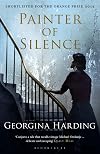
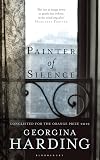
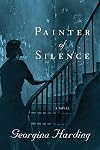
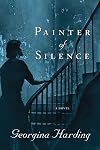
Painter of Silence
by Georgina Harding
On This Page
Description
It is the early 1950s. A nameless man is found on the steps of the hospital in Iasi, Romania. He is deaf and mute, but a young nurse named Safta recognizes him from the past and brings him paper and pencils so that he might draw. Gradually, memories appear on the page: the man is Augustin, the cook's son at the manor house at Poiana where Safta was the privileged daughter. Born six months apart, they had a connection that bypassed words, but while Augustin's world stayed the same size, show more Safta's expanded to embrace languages, society, and a fleeting love one long, hot summer. But then came war, and in its wake a brutal Stalinist regime, and nothing would remain the same.Georgina Harding's kaleidoscopic new novel will appeal to readers of Anne Michaels, Michael Ondaatje, and Sandor Marai. It is as intense and submerging as rain, as steeped in the horrors of our recent history as it is in the intimate passions of the human heart.. show less
Tags
Recommendations

































Member Recommendations


Member Reviews
I found her prose almost painterly, appropriately, in this well written book.
The story moves backwards and forwards in time, with a general forward momentum, covering the relationship between the two protagonists, Elisabeta (Safta) from a wealthy, landowning family and Augustin (Tinu) the deaf-mute (autistic as well?) illegitimate son of her family's cook before and after WWII and some of how they actually experienced it and the advent of Communism. Tinu communicates through his drawings, if at all, makes poor eye contact and is easily overwhelmed, leaving him open to misunderstanding, bullying and abuse.
The story moves backwards and forwards in time, with a general forward momentum, covering the relationship between the two protagonists, Elisabeta (Safta) from a wealthy, landowning family and Augustin (Tinu) the deaf-mute (autistic as well?) illegitimate son of her family's cook before and after WWII and some of how they actually experienced it and the advent of Communism. Tinu communicates through his drawings, if at all, makes poor eye contact and is easily overwhelmed, leaving him open to misunderstanding, bullying and abuse.
Painter of Silence is set in Romania both before, during, and after World War II. It opens in a gray Communist city in the fifties, where a very sick man has traveled by train from the countryside in search of someone, and collapses on the steps of the hospital. When he starts to get better, he is discovered to be deaf and mute. Safta, a nurse, brings him drawing materials to help him communicate—as it turns out, not by accident. Although she never tells anyone, she knows this man well—he is part of a past which she has kept hidden because it would reveal her privileged class upbringing.
The two main characters are Safta, the daughter of wealthy landowners, now a nurse in a city hospital, and Augustin (Tinu), the illegitimate son of show more the family cook. Augustin is deaf and mute but has a remarkable gift for painting. The two were born six months apart, and share a complicated bond.
The story alternates between the present, where Safta and another nurse restore Augustin to health, and the past, which is evoked through Safta’s memories and Augustin’s efforts to communicate to her the things that have happened since she left her home. One picture that emerges is the collapse of the prewar social order and the disappearance of a way of life, and Harding “paints” this world with a beautiful nostalgic quality, that almost makes me think of Tolstoy. (there is even a mushroom party and a brief threshing reference.)
I really loved this book. I loved the quiet, elegant flow of Harding’s language. I loved the book for making real for me a historical time and place which I’ll confess was pretty fuzzy—Romania in the 30’s. And I loved the distinctly original perspective on the horrors of war in the form of Augustin, a careful observer with no access to language. His efforts to depict the events of war as he experienced them give a new twist to the term “senseless.” A sweet ending provides relief from what might otherwise be a story of relentless bleakness--though some might find it contrived. show less
The two main characters are Safta, the daughter of wealthy landowners, now a nurse in a city hospital, and Augustin (Tinu), the illegitimate son of show more the family cook. Augustin is deaf and mute but has a remarkable gift for painting. The two were born six months apart, and share a complicated bond.
The story alternates between the present, where Safta and another nurse restore Augustin to health, and the past, which is evoked through Safta’s memories and Augustin’s efforts to communicate to her the things that have happened since she left her home. One picture that emerges is the collapse of the prewar social order and the disappearance of a way of life, and Harding “paints” this world with a beautiful nostalgic quality, that almost makes me think of Tolstoy. (there is even a mushroom party and a brief threshing reference.)
I really loved this book. I loved the quiet, elegant flow of Harding’s language. I loved the book for making real for me a historical time and place which I’ll confess was pretty fuzzy—Romania in the 30’s. And I loved the distinctly original perspective on the horrors of war in the form of Augustin, a careful observer with no access to language. His efforts to depict the events of war as he experienced them give a new twist to the term “senseless.” A sweet ending provides relief from what might otherwise be a story of relentless bleakness--though some might find it contrived. show less
Painter of Silence has been floating around the edges of my radar for some time – I’d read some good reviews on blogs, then it was listed for this year’s Orange Prize. Then thanks to the lovely people at Bloomsbury, I received a review copy. And now I’ve read it and I feel guilty. Why? Because this book should have been on the centre of my radar – it’s one of those books that you thoroughly enjoy, then curse yourself for not reading the instant it landed in your hands.
Painter of Silence has a gentle tone that builds and sways until you become completely enthralled with it. It does take a little while to get into – sorting out exactly who the characters are, the different time periods (before and after the second World War) show more and where they fit in relation to each other. You’ll find that everything does fit perfectly and each character and their actions have a reason.
The novel brings together two disparate characters – a mute, deaf homeless man who is brought into a hospital suffering from what sounds like a respiratory infection (possibly TB, I like to try to diagnose my characters) and a nurse from another ward who shows him kindness. These two people are the main characters – Augustin (Tinu) and Safta. They grew up together, Safta in the big house and Tinu as the child of one of the workers. Tinu was born deaf (Safta born to make noise) but they complement each other. Tinu has come to the city to tell Safta something she needs to know. By chance, Safta hears of the mute man and comes to see that it is Tinu. She gives him some paper and pencils and he begins to do what he has always done – draw.
Through Tinu’s drawings and flashbacks to their childhoods, we begin to see how this pair and their families have been damaged during the war and the subsequent change in politics within Romania to a communist state. Harding paints exquisite pictures, making the simple sound beautiful and extraordinary. The writing is out of this world – it’s lyrical, vivid and gives the whole novel a sort of nostalgia that’s not tainted by time. Harding also gets deeply into the minds of her characters – Safta, frustrated at the turn of events that changed her life, and Tinu, whose life the war tears apart. The supporting characters are endearing (particularly the nurse Adriana, who looks after Tinu in the hospital and eventually takes him home, naming him Ioan after her dead son).
I found this book beautiful and I’ll definitely read more by this author.
http://samstillreading.wordpress.com show less
Painter of Silence has a gentle tone that builds and sways until you become completely enthralled with it. It does take a little while to get into – sorting out exactly who the characters are, the different time periods (before and after the second World War) show more and where they fit in relation to each other. You’ll find that everything does fit perfectly and each character and their actions have a reason.
The novel brings together two disparate characters – a mute, deaf homeless man who is brought into a hospital suffering from what sounds like a respiratory infection (possibly TB, I like to try to diagnose my characters) and a nurse from another ward who shows him kindness. These two people are the main characters – Augustin (Tinu) and Safta. They grew up together, Safta in the big house and Tinu as the child of one of the workers. Tinu was born deaf (Safta born to make noise) but they complement each other. Tinu has come to the city to tell Safta something she needs to know. By chance, Safta hears of the mute man and comes to see that it is Tinu. She gives him some paper and pencils and he begins to do what he has always done – draw.
Through Tinu’s drawings and flashbacks to their childhoods, we begin to see how this pair and their families have been damaged during the war and the subsequent change in politics within Romania to a communist state. Harding paints exquisite pictures, making the simple sound beautiful and extraordinary. The writing is out of this world – it’s lyrical, vivid and gives the whole novel a sort of nostalgia that’s not tainted by time. Harding also gets deeply into the minds of her characters – Safta, frustrated at the turn of events that changed her life, and Tinu, whose life the war tears apart. The supporting characters are endearing (particularly the nurse Adriana, who looks after Tinu in the hospital and eventually takes him home, naming him Ioan after her dead son).
I found this book beautiful and I’ll definitely read more by this author.
http://samstillreading.wordpress.com show less
Author Georgina Harding takes a unique look at World War II’s effect on a small area of Romania, through the eyes of a deaf mute man, and the effects she achieves are nothing short of spectacular. Well, “spectacular,” may be a poor descriptor – this book is full of subtle touches rendered in gorgeous language, and the accumulating power is spectacular. And the high skill in the prose extends to the intricate plot, as well. No wonder it was short-listed for the 2012 Orange Prize; this book gets my highest recommendation.
Augustin is born to a peasant mother who cooks at a large house in rural Romania. It gradually becomes clear the child cannot hear, but unfortunately not before it is too late to try to teach him. As he reaches show more pubescence his work ethic and kind heart have carved out a niche for him on the estate. Then the war comes and the household splinters; Augustin, nicknamed Tinu ends up relocated and finally imprisoned by the new Communist authorities.
As luck would have it, he ends up in a hospital and one of the nurses is from the family he used to serve. She struggles to bring him out of his shell, and is helped by others on the staff. Tinu touches all he meets; people open up to him in these troubled times and reveal their innermost selves. He becomes a receptacle not only of what people tell him, but of the experiences of the entire country. And through it all, Ms. Harding’s prose contains gift after wondrous gift.
A sample from early in the book:
“Dusk was falling across the garden, the hills, the view of the village. In the river, darkening scraps of colour grew sodden and began to sink unseen. The boy walked home across the grey fields. All colour was gone now; the plank fence about the yard, the barns, the woodpile reduced to a smudged charcoal blackness.”
Another, two thirds through, to show a brilliant image achieved by the author:
“The deaths and the processions press and tangle in his memory. No pattern to them, no chronology either. There are tanks, men, horses, lines of men, dressed in the colours of the soil, of mud and dust; and if they were stripped of their clothes they would be pale and bare like pale stalks that should be concealed beneath the ground, covered over again with soil.”
This stunning image mixes in Augustin’s mind with the figures he has seen on the walls of the churches: “… pale lines of naked men marching up and down the scenes of judgement.” So the war’s all-encompassing devastation takes on the appropriate magnitude: Judgment Day.
Obviously no further judgment on the Second World War was needed, nor on the repressive impulses of the Eastern European regimes that followed it, but Painter of Silence’s contribution is a unique one. It places a young, defenseless man at the center of the storm, and he suffers through it with his unique handicaps and strengths. He accretes a more universal role in his suffering, and the author accomplishes all her grand ambitions in somber, beautiful, even-keel language that suits the subject perfectly.
This book is exceptionally artful, a complete joy to anyone who appreciates deep purposeful prose and lofty ambition. Take this beauty up.
http://bassoprofundo1.blogspot.com/2014/10/painter-of-silence-by-georgina-hardin... show less
Augustin is born to a peasant mother who cooks at a large house in rural Romania. It gradually becomes clear the child cannot hear, but unfortunately not before it is too late to try to teach him. As he reaches show more pubescence his work ethic and kind heart have carved out a niche for him on the estate. Then the war comes and the household splinters; Augustin, nicknamed Tinu ends up relocated and finally imprisoned by the new Communist authorities.
As luck would have it, he ends up in a hospital and one of the nurses is from the family he used to serve. She struggles to bring him out of his shell, and is helped by others on the staff. Tinu touches all he meets; people open up to him in these troubled times and reveal their innermost selves. He becomes a receptacle not only of what people tell him, but of the experiences of the entire country. And through it all, Ms. Harding’s prose contains gift after wondrous gift.
A sample from early in the book:
“Dusk was falling across the garden, the hills, the view of the village. In the river, darkening scraps of colour grew sodden and began to sink unseen. The boy walked home across the grey fields. All colour was gone now; the plank fence about the yard, the barns, the woodpile reduced to a smudged charcoal blackness.”
Another, two thirds through, to show a brilliant image achieved by the author:
“The deaths and the processions press and tangle in his memory. No pattern to them, no chronology either. There are tanks, men, horses, lines of men, dressed in the colours of the soil, of mud and dust; and if they were stripped of their clothes they would be pale and bare like pale stalks that should be concealed beneath the ground, covered over again with soil.”
This stunning image mixes in Augustin’s mind with the figures he has seen on the walls of the churches: “… pale lines of naked men marching up and down the scenes of judgement.” So the war’s all-encompassing devastation takes on the appropriate magnitude: Judgment Day.
Obviously no further judgment on the Second World War was needed, nor on the repressive impulses of the Eastern European regimes that followed it, but Painter of Silence’s contribution is a unique one. It places a young, defenseless man at the center of the storm, and he suffers through it with his unique handicaps and strengths. He accretes a more universal role in his suffering, and the author accomplishes all her grand ambitions in somber, beautiful, even-keel language that suits the subject perfectly.
This book is exceptionally artful, a complete joy to anyone who appreciates deep purposeful prose and lofty ambition. Take this beauty up.
http://bassoprofundo1.blogspot.com/2014/10/painter-of-silence-by-georgina-hardin... show less
This very moving, beautifully written novel really SHOULD have won the Orange Prize. Set in Romania in a period covering roughtly the late 1930s to the early 1950s, Painter of Silence focuses on the life of Augustin, a deaf-mute with an astonishing ability for drawing, and Safta, a young nurse. The two formed a friendship as children, despite their differences in class: Augustin's mother worked as a cook in Safta's family's upper class mansion. At the beginning of the book, the young man, in terrible physical condition, arrives in the city of Iasi, looking for Safta, and collapses on the steps of the hospital where she works. When she hears that a deaf and dumb young man has been admitted, she feels certain that it is Augustin. The show more remainder of the book traces the events of their lives from their first meeting through the horrors of World War II and the Soviet takeover of Romania and, in the end, sets Augustin on his path towards the future.
This could have been just a typical war story, but it is so much more. It's a story about how we communicate, how we see the world, how we continue to strive for our best when those around us fall short. It's a story that is both unique and identifiable, and it's beautifully written. Harding does an excellent job of depicting the details of the landscape and daily lives of her characters, and she creates a voice that is soft yet powerful, a tone that is melancholic yet hopeful. Very highly recommended. show less
This could have been just a typical war story, but it is so much more. It's a story about how we communicate, how we see the world, how we continue to strive for our best when those around us fall short. It's a story that is both unique and identifiable, and it's beautifully written. Harding does an excellent job of depicting the details of the landscape and daily lives of her characters, and she creates a voice that is soft yet powerful, a tone that is melancholic yet hopeful. Very highly recommended. show less
Set against the backdrop of pre- and post-World War II Romania, Painter of Silence is the story of two childhood friends, Safta and Augustin. Safta is the daughter of wealthy Romanian landowners and becomes a nurse during World War II. Augustin is the son of cook who works at Safta's manor; he is deaf and mute, but the two share a communication that transcend speech and hearing.
The story opens with Augustin arriving in Iasi, looking for Safta. He manages to find the hospital where she works and crumbles on its doorstep. Augustin is very ill, and he is rushed inside the hospital for care. Safta learns that a deaf and mute man has been admitted, and her suspicions are confirmed - it is her long lost friend.
The story then goes back and show more forth between Augustin's recovery, and memories of Safta and Augustin's childhood. Augustin communicates through drawing pictures, and Safta gives him paper and pencils so he can tell what happened to him after the war started. Slowly, Harding paints a picture, through Augustin, of how World War II and the arrival of communism affected Romania. In a span of a few years, Romania went through great upheaval, affecting the lives of every citizen - rich and poor.
Painter of Silence starts slowly, working steadily through small crescendos until the reader learns the full histories of Augustin and Safta. The last 100 pages are captivating, and the ending has a small twist that ties a few loose ends. It was a cerebral story, and comparisons to the writing style of Michael Ondaatje are spot on. There is strength in silence, and the quiet aspect of Painter of Silence makes it a novel not easily forgotten. I recommend Painter of Silence to fans of literary fiction and the Orange Prize. show less
The story opens with Augustin arriving in Iasi, looking for Safta. He manages to find the hospital where she works and crumbles on its doorstep. Augustin is very ill, and he is rushed inside the hospital for care. Safta learns that a deaf and mute man has been admitted, and her suspicions are confirmed - it is her long lost friend.
The story then goes back and show more forth between Augustin's recovery, and memories of Safta and Augustin's childhood. Augustin communicates through drawing pictures, and Safta gives him paper and pencils so he can tell what happened to him after the war started. Slowly, Harding paints a picture, through Augustin, of how World War II and the arrival of communism affected Romania. In a span of a few years, Romania went through great upheaval, affecting the lives of every citizen - rich and poor.
Painter of Silence starts slowly, working steadily through small crescendos until the reader learns the full histories of Augustin and Safta. The last 100 pages are captivating, and the ending has a small twist that ties a few loose ends. It was a cerebral story, and comparisons to the writing style of Michael Ondaatje are spot on. There is strength in silence, and the quiet aspect of Painter of Silence makes it a novel not easily forgotten. I recommend Painter of Silence to fans of literary fiction and the Orange Prize. show less
a deep mesmerizing story of a girl and boy who grew up together on an estate in roumani pre WWII, but lived in very different worlds as she was the daughter of the owner of the estate, and he the son of the cook - he was deaf and mute, communicating through intricate drawings of the world as he saw it - after the war they reconnected and we learn of the intervening years through her narration and his drawings -
the language was gorgeous as written, but was even lovelier due to an excellent narrator - the characters were 3 dimensional, the storyline engrossing though slow and deep, and the relationship between the two was very tender - a book to reflect on and appreciate
the language was gorgeous as written, but was even lovelier due to an excellent narrator - the characters were 3 dimensional, the storyline engrossing though slow and deep, and the relationship between the two was very tender - a book to reflect on and appreciate
Members
- Recently Added By
Published Reviews
ThingScore 92
Harding’s writing has a careful, lilting fluency which nourishes a slow-burning momentum. Although there ought to be a law against the now ubiquitous present tense, the post-war scenes in which Harding employs this technique are not entirely egregious, and do add a certain urgency.
There are problems with using Tinu’s point of view – when soldiers come to Poiana, we don’t know what show more they’re there for, which is a little perplexing for the reader. His ability to parrot words also lands him in trouble; which seemed a perfect parable for the chaos of war in which all signs and symbols gain and lose their meanings at a turn of the wheel. And what more salutary message could there be in these days, when a tweet in jest can land you a prison sentence in earnest?
Harding’s book is an adroit examination of our need for a home, and the terrible consequences of its loss. She is a writer to watch. show less
There are problems with using Tinu’s point of view – when soldiers come to Poiana, we don’t know what show more they’re there for, which is a little perplexing for the reader. His ability to parrot words also lands him in trouble; which seemed a perfect parable for the chaos of war in which all signs and symbols gain and lose their meanings at a turn of the wheel. And what more salutary message could there be in these days, when a tweet in jest can land you a prison sentence in earnest?
Harding’s book is an adroit examination of our need for a home, and the terrible consequences of its loss. She is a writer to watch. show less
added by vancouverdeb
Painter of Silence insists on being recommended because of its unassertive orginality, its sense of history, its knowledge of the unsaid and the unsayable, and - not least - its delightfully surprising ending.
added by vancouverdeb
Painter of Silence has recently been longlisted for the Orange prize, an accolade it richly deserves. Harding writes with exquisite restraint, capturing the grim greyness of the communist city with as much delicate tenderness as the idyllic landscape of Poiana. Her deceptively simple prose gives a startling beauty to the ordinary, and evokes great depth of suffering. It is a challenge for any show more writer to conjure the world of the wordless through words and in this Harding triumphantly succeeds, exploring through her silent protagonist profound questions of identity and attachment, of the inadequacy of language and the baffling inconsistencies of humankind.
....– Andrei, the young man with the green car, is a frustratingly sketchy character, while the improbable neatness of the ending undermines the novel's subtle complexity – but these are decisively outweighed by its pleasures. show less
....– Andrei, the young man with the green car, is a frustratingly sketchy character, while the improbable neatness of the ending undermines the novel's subtle complexity – but these are decisively outweighed by its pleasures. show less
added by vancouverdeb
Lists

Favourite books from the 2012 Orange Prize for fiction longlist
20 works; 15 members

IMPAC Dublin Literary Award 2014 longlist
150 works; 3 members

BingoDOG - Language in Fiction
35 works; 12 members
Author Information

8+ Works 757 Members
Awards and Honors
Awards
Common Knowledge
- Canonical title
- Painter of Silence
- Original title
- Painter of Silence
- Original publication date
- 2012-03-01 (UK) (UK)
- People/Characters
- Augustin; Safta
- Important places
- Iaşi, Romania; Poiana, Romania
- First words
- Though he has seen photographs of the cities he has never been in one before.
- Last words
- (Click to show. Warning: May contain spoilers.)He could not understand why the soldiers had attacked the trees.
- Blurbers
- House, Christian; Freud, Esther; Bailey, Paul
Classifications
Statistics
- Members
- 310
- Popularity
- 103,189
- Reviews
- 19
- Rating
- (3.77)
- Languages
- Dutch, English, French, Italian
- Media
- Paper, Audiobook, Ebook
- ISBNs
- 16
- ASINs
- 3