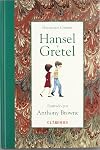
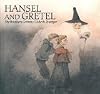
Hansel and Gretel
by Jacob Grimm, Wilhelm Grimm
On This Page
Description
When they are left in the woods by their parents, two children find their way home despite an encounter with a wicked witch.Tags
Recommendations
















Member Reviews
I had a set of these Lisbeth Zwerger books when I was a kid, and remember being both delighted and frightened by the exquisite illustrations. Of course, I was a small child who didn't think to remember the illustrator, so it took me a long time and lots of googling to track them down again, and have managed to re-acquire all the ones I had and a few others over the last few years.
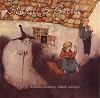
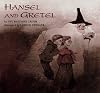
Hansel and Gretel is certainly one of my favorite fairy tales, thanks in large part to the influence this book had on my imagination as a kid. The text and translation is amusing and quirky, but the real star here is Lisbeth Zwerger's soft, expressive, and at times quite creepy artwork.
I remember having nightmares about Zwerger's witch of the candy cottage. I show more doubt I'll have nightmares now, but even as an adult there's something unsettling about her glowing red eyes, broad and bony face, and amorphous body. The pluckiness of the children in this tale always appealed to me, and this remains true here.
My favorite thing about Zwerger's style is the way she paints clothes and faces, and especially in this one I loved Gretel's clothes - the patterns on her scarf and skirt, and the movement of the skirt – I can almost feel the fabric and hear the swish and flutter of them.
The only thing that really jumped out at me as an adult that never occurred to me as child wassome – in my opinion – rather swift and undeserved forgiveness at the end, which only added to the amusement and quirkiness for me, and made for a genuinely sweet illustration.
I can't pretend that this is a terribly objective review, but I truly believe this to be real treasure of children's literature and illustration. It's worth it alone just to look at the pictures. I think that the way it captivated my wee sprouting imagination as a child is part of the magic, rather than something to disregarded with adult retrospection.
If you ever find this, or any of the Zwerger's other books, when poking around a charity shop or 2nd hand bookstore, do yourself a favor and snap it up; I'd be shocked if you regret it. show less
Hansel and Gretel is certainly one of my favorite fairy tales, thanks in large part to the influence this book had on my imagination as a kid. The text and translation is amusing and quirky, but the real star here is Lisbeth Zwerger's soft, expressive, and at times quite creepy artwork.
I remember having nightmares about Zwerger's witch of the candy cottage. I show more doubt I'll have nightmares now, but even as an adult there's something unsettling about her glowing red eyes, broad and bony face, and amorphous body. The pluckiness of the children in this tale always appealed to me, and this remains true here.
My favorite thing about Zwerger's style is the way she paints clothes and faces, and especially in this one I loved Gretel's clothes - the patterns on her scarf and skirt, and the movement of the skirt – I can almost feel the fabric and hear the swish and flutter of them.
The only thing that really jumped out at me as an adult that never occurred to me as child was
I can't pretend that this is a terribly objective review, but I truly believe this to be real treasure of children's literature and illustration. It's worth it alone just to look at the pictures. I think that the way it captivated my wee sprouting imagination as a child is part of the magic, rather than something to disregarded with adult retrospection.
If you ever find this, or any of the Zwerger's other books, when poking around a charity shop or 2nd hand bookstore, do yourself a favor and snap it up; I'd be shocked if you regret it. show less
Luisa's version relegates the father and the witch to superstructure in favour of an extended meditation on the brother-sister bond. Hänsel's manic insanity plays off of Gretel's fluttery heart and cold nervous hands; again and again you tell yourself you won't get taken in by Hänsel's cheeky self-reliance, that programmatic pluck that so easily becomes Todestrieb; again and again, you tell yourself you'll make it out of this one to listen to Gretel-two-score-years-hence chainsmoking and telling Hänsel's grandkids about her nerve damage. But against your better judgment, you'd follow Hänsel into any witch's hut in any forest in the land, because he never stopped being your hero--as long as Gretel was there like a complaining left show more leg to complete you. It's an ouroboros. Sibling love, unity, and respect! (You know, the ill-considered acronym SLUR.) show less
(Included in the Blue Fairy Book)
This is a classic that has been retold into various forms, I am certain that most English-speaking people have come across this story in a movie, or graphic novel, or TV show or the like - I have come across all of these. The story can be pretty messed up, with the parents leaving the kids in the forest to die because they're so damn poor.
However, I can't help but feel that the witch was a dumbass. She welcomes the kids into her home one night, but then the next morning starts abusing them, locking Hansel up so she can fatten him up while putting Gretel to doing chores around the house. Personally, if I was looking to fatten up kids to eat, I'd just put both kids to doing chores but treat them decently show more and feed them well, so that I would have TWO plump kids to eat, and get household help out of it.
Just to be clear, I have no intention of eating anyone. But looking at the actions of a lot of these villains, some of them act in such a clownishly evil way, ensuring their downfall.
Which is what happens here, as Gretel tricks the witch into getting close enough to the oven so she can shove the old bitch in there. Mind you, this is AFTER said old bitch locks up Hansel, and brags to Gretel how she will eat Hansel, and this treatment goes on for about a month before the witch decides to finally cook Hansel, all this time she has bullied and abused Gretel. Pride really does go before a fall. show less
This is a classic that has been retold into various forms, I am certain that most English-speaking people have come across this story in a movie, or graphic novel, or TV show or the like - I have come across all of these. The story can be pretty messed up, with the parents leaving the kids in the forest to die because they're so damn poor.
However, I can't help but feel that the witch was a dumbass. She welcomes the kids into her home one night, but then the next morning starts abusing them, locking Hansel up so she can fatten him up while putting Gretel to doing chores around the house. Personally, if I was looking to fatten up kids to eat, I'd just put both kids to doing chores but treat them decently show more and feed them well, so that I would have TWO plump kids to eat, and get household help out of it.
Just to be clear, I have no intention of eating anyone. But looking at the actions of a lot of these villains, some of them act in such a clownishly evil way, ensuring their downfall.
Which is what happens here, as Gretel tricks the witch into getting close enough to the oven so she can shove the old bitch in there. Mind you, this is AFTER said old bitch locks up Hansel, and brags to Gretel how she will eat Hansel, and this treatment goes on for about a month before the witch decides to finally cook Hansel, all this time she has bullied and abused Gretel. Pride really does go before a fall. show less
This is the classic Grimm’s tale of Hansel and Gretel who are led into the forest to die by their father and his wife because they are a poor family and running out of food. They find their way back the first time but get lost the second time and end up finding a gingerbread house made out of candy in the woods owned by an old witch that wants to fatten them up and eat them.
This story surprised me a bit because the gruesomeness of the tale was something I didn’t really take note of as a child, but is quite horrible compared to stories made for young children today. The illustrations in this book are also extremely well done and not only support the story but add to it for both creating the fearful and dark mood and provide many show more interesting fantastic asides. One of the more notable asides are the pieces of bread strategically placed in most of the outdoor forest scenes to look like trees, which is an interesting contrast to the fact that this story is about a family torn apart by hunger . Also, some of the earlier pictures are highly surreal and symbolic such as the miniature wolves surrounding the miniature children on the fathers lap as the wife explains her ideas to abandon them and the changing foliage that appears to be growing out of the father’s hat. The story by itself is quite good, but when you add the vision of this illustrator you get something that is truly art. show less
This story surprised me a bit because the gruesomeness of the tale was something I didn’t really take note of as a child, but is quite horrible compared to stories made for young children today. The illustrations in this book are also extremely well done and not only support the story but add to it for both creating the fearful and dark mood and provide many show more interesting fantastic asides. One of the more notable asides are the pieces of bread strategically placed in most of the outdoor forest scenes to look like trees, which is an interesting contrast to the fact that this story is about a family torn apart by hunger . Also, some of the earlier pictures are highly surreal and symbolic such as the miniature wolves surrounding the miniature children on the fathers lap as the wife explains her ideas to abandon them and the changing foliage that appears to be growing out of the father’s hat. The story by itself is quite good, but when you add the vision of this illustrator you get something that is truly art. show less
While previously familiar with the story, Lizbeth Zwerger's illustrative talents add more of a ominous and dreary tone to the book. The grainy and weathered style of the art brings the characters, specifically the old witch, into a more dreadful and eery realm.
I must say, I don't remember Hansel and Gretel being this dark. This is a story about a family who couldn't afford to feed themselves and the children, so the stepmother decides they should lead them into the woods to die. How horrifying! In the end the children return home and finds the stepmother is dead and is reunited with their father. I would probably read this book around Halloween time, since it's a little spooky.
This Grimm’s tale of Hansel and Gretel very different from many fairy tales I have read. This story is about two kids who were abandoned in the woods. Their father feels bad about the decision he agreed to go through with, but he does it anyways as his wife told him to. This family is poor and decide to get rid of the children because they cannot afford to feed them. Once being left alone in the forest the two kids find their way to a gingerbread house. Which is ironic to me because they came from a starving house, to a house made of things to eat. The kids nibble on the house and are greeted by an old witch. The witch to me in this story is their step mother, who is the reason they are abandoned. The ending of this story is the only show more good part of this grim tale. The kids are reunited with their father and bring him many jewels from the witch’s house. This family will surely never be poor again.
For me this story was about sacrificing one’s life. The father thought that his children he abandoned would never return home. One day, the children made their way home and rewarded their father with such a great blessing. The kids were the light in the story, as the stones were that lead them home. I am not sure if I would bring this to my classroom for a reading, only because of the grimness of the text. I would have to read several versions of this to find one that I find appropriate for children, in my opinion. I did find that the images were very detailed and the colors were fitting to each page. When the kids were being left alone in the woods, the colors were dark and grey. As they approached the gingerbread house the pages were filled with color. The colors were brighter when they finally found their way back home. I would say that this story can be a tale of overcoming evil and making the best out of the worst. show less
For me this story was about sacrificing one’s life. The father thought that his children he abandoned would never return home. One day, the children made their way home and rewarded their father with such a great blessing. The kids were the light in the story, as the stones were that lead them home. I am not sure if I would bring this to my classroom for a reading, only because of the grimness of the text. I would have to read several versions of this to find one that I find appropriate for children, in my opinion. I did find that the images were very detailed and the colors were fitting to each page. When the kids were being left alone in the woods, the colors were dark and grey. As they approached the gingerbread house the pages were filled with color. The colors were brighter when they finally found their way back home. I would say that this story can be a tale of overcoming evil and making the best out of the worst. show less
Members
- Recently Added By
Author Information

1,892+ Works 49,745 Members
Jacob W. Grimm (1785-1863) and his brother Wilhelm K. Grimm (1786-1859) pioneered the study of German philosophy, law, mythology and folklore, but they are best known for their collection of fairy tales. These include such popular stories as Red Riding Hood, Sleeping Beauty and The Frog Prince. Commonly referred to now as Grimm's Fairy Tales, show more their collection was published as Kinder-und-Hausmarchen (Children's and Household Tales, 1812-15). The brothers were born thirteen months apart in the German province of Hesse, and were inseparable from childhood. Throughout their lives they showed a marked lack of sibling rivalry. Most of their works were written together, a practice begun in childhood when they shared a desk and sustained throughout their adult lives. Since their lives and work were so collaborative, it is difficult now to differentiate between them, but of course there were differences.- Jacob, who studied for a time in Paris, was fascinated with variant spellings of older words. He articulated "Grimm's Law," the rules of which are still used today to determine correspondences between the consonants of German and languages in the Indo-European family. Jacob was bolder and more experimental than Wilhelm, and was rumored to be a lively dancer. Throughout his life, Jacob kept rigidly to schedule and could be extremely focused on work that demanded close attention to detail. He never married, but was a loving uncle to Wilhelm's children. Jacob and Wilhelm Grimm are buried side by side in Berlin. (Bowker Author Biography) show less

393+ Works 42,282 Members
Some Editions
Awards and Honors
Awards
Notable Lists
Series
Belongs to Publisher Series
Work Relationships
Is contained in
Is retold in
Has the adaptation
Is parodied in
Inspired
Has as a commentary on the text
Common Knowledge
- Canonical title
- Hansel and Gretel
- Original title
- Hänsel und Gretel
- Alternate titles*
- Hänsel & Gretel
- Original publication date
- 1812
- People/Characters
- Hansel; Gretel
- Related movies
- Hansel and Gretel (1987 | IMDb)
- First words*
- Vor einem grossen Walde wohnte ein armer Holzhacker mit seiner Frau und seinen zwei Kindern; das Bübchen hiess Hänsel und das Mädchen Gretel.
- Last words*
- (Click to show. Warning: May contain spoilers.)Da hatten alle Sorgen ein Ende, und sie lebten in lauter Freude zusammen.
- Original language*
- Deutsch
*Some information comes from Common Knowledge in other languages. Click "Edit" for more information.
Classifications
Statistics
- Members
- 743
- Popularity
- 37,963
- Reviews
- 35
- Rating
- (3.92)
- Languages
- 8 — Arabic, English, French, German, Greek, Italian, Slovenian, Spanish
- Media
- Paper, Audiobook, Ebook
- ISBNs
- 161
- UPCs
- 1
- ASINs
- 32