
Bernadette Watts
Author of The Lion and the Mouse
About the Author
Image credit: Bernadette Watts
Series
Works by Bernadette Watts
Cinderella 1 copy
Postkartenset »Bernadette« 1 copy
Associated Works
Y Mabinogi : Pedair Cainc i Ddysgwyr (The Four Branches of the Mabinogi for Learners). (1982) — Illustrator — 8 copies, 1 review
Tagged
Common Knowledge
- Birthdate
- 1942-05-13
- Gender
- female
- Education
- Maidstone College of Art
- Occupations
- picture book illustrator
- Nationality
- UK
- Birthplace
- Northampton, England, UK
- Places of residence
- Kent, England, UK
London, England, UK - Associated Place (for map)
- England, UK
Members
Reviews

Taking the beloved Christmas song as an inspiration, celebrated British children's author and artist Bernadette Watts spins a lovely tale about an impoverished young drummer boy who thinks he has nothing to offer the newborn king that everyone else is rushing to see. Resisting the urgings of the three richly-clad strangers who arrive in his town, as well as that of the local shepherds, who have also come to see this miraculous baby, Benjamin is eventually convinced by his friend Rachel to show more visit the stable where this king is to be found. Here, in the peace and quiet, he finds something he can give after all: his drumming...
I have a fondness for Christmas picture-books, particularly ones that adapt or use Christmas carols and songs for their story, so when I saw The Little Drummer Boy I was quite excited to pick it up - all the more so since I do enjoy Watt's artwork. The story here is simply but evocatively told, and the artwork lovely, capturing the wintry charm of the setting quite beautifully. Although this is a Nativity story of sorts, the setting is clearly northern European, rather than Middle Eastern. I'm not really sure why the back dust jacket blurb references the Brother Grimm, as The Little Drummer Boy is an American composition - it was written by Katherine Kennicott Davis in 1941, and was apparently based on an unknown Czech carol - and not based on any of the Grimms' fairy-tales. It does bear some resemblance to the classic medieval French legend concerning a juggler who entertains the Christ child, retold by Barbara Cooney in The Little Juggler and Tomie DePaola in (his Italianized retelling) The Clown of God, although I don't believe those stories are set at Christmas. Leaving that oddity aside, this was an appealing holiday picture-book, perhaps a little heavy on text, but beautifully told and illustrated. show less
I have a fondness for Christmas picture-books, particularly ones that adapt or use Christmas carols and songs for their story, so when I saw The Little Drummer Boy I was quite excited to pick it up - all the more so since I do enjoy Watt's artwork. The story here is simply but evocatively told, and the artwork lovely, capturing the wintry charm of the setting quite beautifully. Although this is a Nativity story of sorts, the setting is clearly northern European, rather than Middle Eastern. I'm not really sure why the back dust jacket blurb references the Brother Grimm, as The Little Drummer Boy is an American composition - it was written by Katherine Kennicott Davis in 1941, and was apparently based on an unknown Czech carol - and not based on any of the Grimms' fairy-tales. It does bear some resemblance to the classic medieval French legend concerning a juggler who entertains the Christ child, retold by Barbara Cooney in The Little Juggler and Tomie DePaola in (his Italianized retelling) The Clown of God, although I don't believe those stories are set at Christmas. Leaving that oddity aside, this was an appealing holiday picture-book, perhaps a little heavy on text, but beautifully told and illustrated. show less
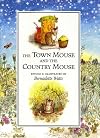
Not surprisingly, artist Bernadette Watts has produced a very attractive, albeit anthropomorphized, version of this common fable from Aesop. It’s a gentler rendition of the story. In it, neither envy nor dissatisfaction (induced by the descriptions of a town-dwelling relative) prompt the female country mouse to check out life in town, but curiosity. Watts also doesn’t have her main character transported to town in a fancy conveyance, a train, car, or cart—as is the case in many show more versions of this story. In this story, the humble little country mouse simply walks.
Once in town, she’s nervous: “the tall buildings rearing up on both sides” look “sinister to her.” Just as she considers turning back, she’s pulled into a crack in the wall by an alarmed town mouse who is well aware of the dangers out there. Those dangers aren’t visible to the reader, but the streets are certainly dirty and littered.
Inside, the town mouse brings the country mouse to a very messy kitchen with all sorts of food lying about. While the cheese pleases the visitor, she ends up developing a stomach ache and quickly decides to return home. As mentioned, Watts’s is a gentler telling; there are no fierce, sharp-toothed cats, nasty sniffing dogs, or threatening humans about, but there’s enough of a difference for the country mouse to miss her simpler way of life.
Later, the town mouse makes a reciprocal visit. She finds that the country mouse’s furnished little den among a tree’s roots smells strange and damp. Everything is so small. This town mouse isn’t disdainful about the simple fare of nuts and berries offered up by her rural friend; she just prefers her own home. The two agree to meet again soon.
Watts’s version lacks the more moralistic tone of many others. No lesson here about “poverty with security” being “ better than plenty in the midst of fear and uncertainty.” This is a toned-down narrative, basically about different strokes for different folks.
It’s a nice enough picture book—you really can’t go wrong with Bernadette Watts—but definitely not my favourite take on the old fable from Aesop. That honour goes to Helen Ward for her rich, lovely, and decidedly non-anthropomorphic telling. show less
Once in town, she’s nervous: “the tall buildings rearing up on both sides” look “sinister to her.” Just as she considers turning back, she’s pulled into a crack in the wall by an alarmed town mouse who is well aware of the dangers out there. Those dangers aren’t visible to the reader, but the streets are certainly dirty and littered.
Inside, the town mouse brings the country mouse to a very messy kitchen with all sorts of food lying about. While the cheese pleases the visitor, she ends up developing a stomach ache and quickly decides to return home. As mentioned, Watts’s is a gentler telling; there are no fierce, sharp-toothed cats, nasty sniffing dogs, or threatening humans about, but there’s enough of a difference for the country mouse to miss her simpler way of life.
Later, the town mouse makes a reciprocal visit. She finds that the country mouse’s furnished little den among a tree’s roots smells strange and damp. Everything is so small. This town mouse isn’t disdainful about the simple fare of nuts and berries offered up by her rural friend; she just prefers her own home. The two agree to meet again soon.
Watts’s version lacks the more moralistic tone of many others. No lesson here about “poverty with security” being “ better than plenty in the midst of fear and uncertainty.” This is a toned-down narrative, basically about different strokes for different folks.
It’s a nice enough picture book—you really can’t go wrong with Bernadette Watts—but definitely not my favourite take on the old fable from Aesop. That honour goes to Helen Ward for her rich, lovely, and decidedly non-anthropomorphic telling. show less
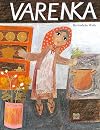
First published in 1971, Varenka, has recently been reissued by North South Books, a Swiss publisher of beautiful, high-quality children’s literature. It’s a timely decision, as Bernadette Watts’s traditionally structured narrative, set in a Russian forest, concerns the impact of war. The text is accompanied by simple, childlike illustrations, apparently rendered in crayon, pencil crayon, and/or pastel. They are quite unlike the art that typically appears in Watts’s stories, though show more she reliably attends to details, here creating the feeling of an authentic Eastern-European tale. (A samovar is included in one picture. Khokhloma folk art colours—red, black, and gold— are used, and designs of berries, leaves and flowers appear on the cupboards in images of the main character’s little house. The characters themselves look like figures from Orthodox icons.) I think it’s safe to say that this book is something of a departure for Watts, who is known for her retellings of traditional tales and fables. While Varenka has the characteristic structure and repetition of a folktale, it appears to be wholly original.
The plot is simple. Varenka is a widow who lives in a cottage deep in a Russian forest. She subsists by foraging and growing her own food. A war is being fought in the west. She first learns of it from refugees who urge her to flee with them. Varenka, however, feels it is her role in life to take in travellers, lost children, and birds and animals in winter. Who will do this if she leaves?
The sound of the guns and cannons moves ever closer. The head-scarfed widow prays nightly in her icon corner, begging God to build a wall around her cottage so that the soldiers won’t detect her. God appears to have other plans. Soon the kindly Varenka is taking in one refugee after another: Peter, the goatherd, who’s been able to rescue only a single goat (the soldiers have burned his home and taken his other animals); Stepan, an artist, whose sole possessions are a painting and a white flower; and Bodula Mietkova, a hungry, orphaned little girl, who carries a dove. As the number of inhabitants in the cottage increases and a new little family is formed, Varenka continues with her nightly devotions. Peter, Stepan, and Bodula join in, begging for God’s protection. Finally, one night, a quietness descends upon the forest, and the friends are given the safety they’ve prayed for.Heavy snow falls, blanketing the forest and Varenka’s little cottage. The four hear the muffled sound of the soldiers who pass by, entirely unaware of the cottage and the frightened humans within.
Real wars don’t work like this, of course. But the idea of a humble woman taking in distressed people, offering them food, warmth, and kindness is a hopeful one. The story ends with spring: the goat bears a kid; the white flower produces seeds; the dove is released to spread the message that peace has come; the artist paints the story of what happened in the little cottage, and Varenka holds up her arms in joy. show less
The plot is simple. Varenka is a widow who lives in a cottage deep in a Russian forest. She subsists by foraging and growing her own food. A war is being fought in the west. She first learns of it from refugees who urge her to flee with them. Varenka, however, feels it is her role in life to take in travellers, lost children, and birds and animals in winter. Who will do this if she leaves?
The sound of the guns and cannons moves ever closer. The head-scarfed widow prays nightly in her icon corner, begging God to build a wall around her cottage so that the soldiers won’t detect her. God appears to have other plans. Soon the kindly Varenka is taking in one refugee after another: Peter, the goatherd, who’s been able to rescue only a single goat (the soldiers have burned his home and taken his other animals); Stepan, an artist, whose sole possessions are a painting and a white flower; and Bodula Mietkova, a hungry, orphaned little girl, who carries a dove. As the number of inhabitants in the cottage increases and a new little family is formed, Varenka continues with her nightly devotions. Peter, Stepan, and Bodula join in, begging for God’s protection. Finally, one night, a quietness descends upon the forest, and the friends are given the safety they’ve prayed for.
Real wars don’t work like this, of course. But the idea of a humble woman taking in distressed people, offering them food, warmth, and kindness is a hopeful one. The story ends with spring: the goat bears a kid; the white flower produces seeds; the dove is released to spread the message that peace has come; the artist paints the story of what happened in the little cottage, and Varenka holds up her arms in joy. show less
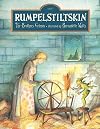
(Included in the Blue Fairy Book)
Two things have bothered me about this story for the longest time.
1. What the fuck does Rumpelstiltskin need a baby for?
(It's too bad that the show 'Once Upon A Time' jumped the shark. Thought Rumpelstiltskin's backstory was interesting up to a point before it got silly)
2. What kind of asshole jerkwad makes up a story about his daughter spinning straw into gold? Did it never occur to him that someone might call him out on it?
Two things have bothered me about this story for the longest time.
1. What the fuck does Rumpelstiltskin need a baby for?
(It's too bad that the show 'Once Upon A Time' jumped the shark. Thought Rumpelstiltskin's backstory was interesting up to a point before it got silly)
2. What kind of asshole jerkwad makes up a story about his daughter spinning straw into gold? Did it never occur to him that someone might call him out on it?
Lists
Awards


You May Also Like


Associated Authors
Statistics
- Works
- 52
- Also by
- 22
- Members
- 1,780
- Popularity
- #14,465
- Rating
- 3.9
- Reviews
- 96
- ISBNs
- 182
- Languages
- 7