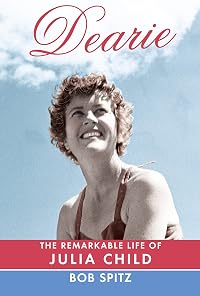
Dearie: The Remarkable Life of Julia Child
by Bob Spitz
On This Page
Description
Biography & Autobiography. Cooking & Food. History. Nonfiction. HTML:It’s rare for someone to emerge in America who can change our attitudes, our beliefs, and our very culture. It’s even rarer when that someone is a middle-aged, six-foot three-inch woman whose first exposure to an unsuspecting public is cooking an omelet on a hot plate on a local TV station. And yet, that’s exactly what Julia Child did. The warble-voiced doyenne of television cookery became an iconic cult figure show more and joyous rule-breaker as she touched off the food revolution that has gripped America for more than fifty years.Now, in Bob Spitz’s definitive, wonderfully affectionate biography, the Julia we know and love comes vividly — and surprisingly — to life. In Dearie, Spitz employs the same skill he brought to his best-selling, critically acclaimed book The Beatles, providing a clear-eyed portrait of one of the most fascinating and influential Americans of our time — a woman known to all, yet known by only a few.
At its heart, Dearie is a story about a woman’s search for her own unique expression. Julia Child was a directionless, gawky young woman who ran off halfway around the world to join a spy agency during World War II. She eventually settled in Paris, where she learned to cook and collaborated on the writing of what would become Mastering the Art of French Cooking, a book that changed the food culture of America. She was already fifty when The French Chef went on the air — at a time in our history when women weren’t making those leaps. Julia became the first educational TV star, virtually launching PBS as we know it today; her marriage to Paul Child formed a decades-long love story that was romantic, touching, and quite extraordinary.
A fearless, ambitious, supremely confident woman, Julia took on all the pretensions that embellished tony French cuisine and fricasseed them to a fare-thee-well, paving the way for everything that has happened since in American cooking, from TV dinners and Big Macs to sea urchin foam and the Food Channel. Julia Child’s story, however, is more than the tale of a talented woman and her sumptuous craft. It is also a saga of America’s coming of age and growing sophistication, from the Depression Era to the turbulent sixties and the excesses of the eighties to the greening of the American kitchen. Julia had an effect on and was equally affected by the baby boom, the sexual revolution, and the start of the women’s liberation movement.
On the centenary of her birth, Julia finally gets the biography she richly deserves. An in-depth, intimate narrative, full of fresh information and insights, Dearie is an entertaining, all-out adventure story of one of our most fascinating and beloved figures. show less
Tags
Recommendations





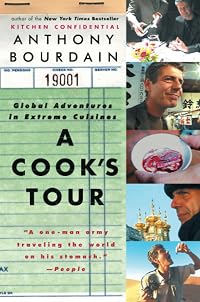
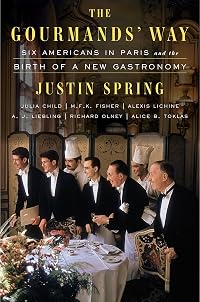
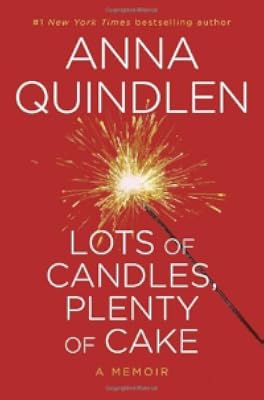
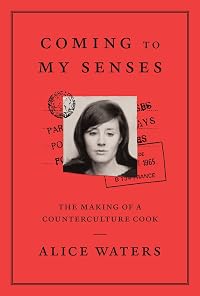





Member Recommendations
Member Reviews
Fundamentally this is a lesson in how doing what you enjoy can make a life worth living. This is a great biography of the woman who, against some odds, made an indelible mark on the face of cooking (and eating) in America. Funny, charming and a natural ham, Julia Child took over as the cook who brought us out of the tired, pre-packaged age of can opening and frozen food. Though the beginning of the book is a bit dry, the rest moved me to tears several times (though I admit to being overly tearful).
What a woman.
I've long been intrigued by Julia Child and not only because we share a name. I grew up watching her cook on public television, and her high-pitched, warbly fluting voice (a result of unusually long vocal cords, Spitz reveals) and her tall (6 feet 3 inches tall), ramrod-straight posture made a definite impression. She did not manage to inspire in me a passion to learn how to cook, sadly, but she was the beginning of my fascination in watching other people cook.
What I didn't grasp at the time, of course, was just how revolutionary she was. She along with James Beard revolutionized the way Americans look at food and food preparation — not to mention public television itself, which was in its infancy when her show, The show more French Chef began airing in 1963. That and her seminal cookbook [Mastering the Art of French Cooking] were unlike anything that had ever been seen before in this country. And to think she didn't even embark on that career until she was in her 40s.
Fair warning: This is a huge book, more than 700 pages when you include the acknowledgments, notes, index, etc. But it is not at all a slow read. The first 450 pages especially just flew by. I hated having to stop reading to go to work in the morning, and could not wait to get back to it at night. Author Spitz takes us from pre-birth to death with the amazing Julia, and you'd be hard-pressed to think of anything he left out.
It turns out that the outgoing personality we saw on TV was the real Julia: She was always gregarious, prone to troublemaking as a child, and fearless. But she didn't know what she wanted her life's work to be — it was easier for her to figure out what she didn't want to be, which was a conventional housewife. In the 1930s, that was a tall order. Before she latched on to cooking as her life's work (that happened when she and her husband were posted to Paris after World War II), she had a whole other career as a senior civilian intelligence officer with the OSS (Office of Strategic Services, the precursor to the CIA) during World War II, posted first in Ceylon (now Sri Lanka) and then China and was in charge of processing and routing all the intelligence reports coming in from the field of the Pacific theater. Even so, she chafed against what she thought of as "filing, filing, filing" and still longed for more.
I was pleased to read in the acknowledgments that Spitz knew Julia Child personally, having accompanied her to Sicily on a trip while he was profiling her for a magazine. And she knew of his intention to write a biography of her and planned to assist him, although she died before that collaboration got off the ground. Still, Spitz interviewed many of the prominent people in the Childs' life and made extensive use of primary sources such as letters and other documents that Julia donated to the archives at Harvard University. The book is well-grounded in evidence-based fact, and he makes no attempt to sugarcoat or gloss over some of the more difficult elements in Julia's life or personality.
The only quibble I could make is that the tone is a bit too breezy and gee-whiz for my taste. He could have reduced his exclamation-point usage by one-third and still expressed an appropriate amount of enthusiasm, for example. And he occasionally got fixated on certain words or phrases that made the reading a bit odd, like "finchy," which seems to mean "touchy or sensitive" about something or someone. Again and again he refers to "Paul's finchy nature" and "audiences were particularly finchy when it came to drinking alcohol" and women who were "finchy types with degrees in stupefying disciplines." I don't really know what the word means because it's not in any dictionary I've consulted. It was a weird tic but not enough to mar enjoyment of the book overall.
Julia Child, for all her patrician accent and affinity for France, was as American as apple pie. Her life story is an amazing journey, one that I think would be enjoyed even by people who have never contemplated the proper way to bone a duck or what the "correct" types of fish are for true bouillabaisse.
Bon appétit! show less
I've long been intrigued by Julia Child and not only because we share a name. I grew up watching her cook on public television, and her high-pitched, warbly fluting voice (a result of unusually long vocal cords, Spitz reveals) and her tall (6 feet 3 inches tall), ramrod-straight posture made a definite impression. She did not manage to inspire in me a passion to learn how to cook, sadly, but she was the beginning of my fascination in watching other people cook.
What I didn't grasp at the time, of course, was just how revolutionary she was. She along with James Beard revolutionized the way Americans look at food and food preparation — not to mention public television itself, which was in its infancy when her show, The show more French Chef began airing in 1963. That and her seminal cookbook [Mastering the Art of French Cooking] were unlike anything that had ever been seen before in this country. And to think she didn't even embark on that career until she was in her 40s.
Fair warning: This is a huge book, more than 700 pages when you include the acknowledgments, notes, index, etc. But it is not at all a slow read. The first 450 pages especially just flew by. I hated having to stop reading to go to work in the morning, and could not wait to get back to it at night. Author Spitz takes us from pre-birth to death with the amazing Julia, and you'd be hard-pressed to think of anything he left out.
It turns out that the outgoing personality we saw on TV was the real Julia: She was always gregarious, prone to troublemaking as a child, and fearless. But she didn't know what she wanted her life's work to be — it was easier for her to figure out what she didn't want to be, which was a conventional housewife. In the 1930s, that was a tall order. Before she latched on to cooking as her life's work (that happened when she and her husband were posted to Paris after World War II), she had a whole other career as a senior civilian intelligence officer with the OSS (Office of Strategic Services, the precursor to the CIA) during World War II, posted first in Ceylon (now Sri Lanka) and then China and was in charge of processing and routing all the intelligence reports coming in from the field of the Pacific theater. Even so, she chafed against what she thought of as "filing, filing, filing" and still longed for more.
I was pleased to read in the acknowledgments that Spitz knew Julia Child personally, having accompanied her to Sicily on a trip while he was profiling her for a magazine. And she knew of his intention to write a biography of her and planned to assist him, although she died before that collaboration got off the ground. Still, Spitz interviewed many of the prominent people in the Childs' life and made extensive use of primary sources such as letters and other documents that Julia donated to the archives at Harvard University. The book is well-grounded in evidence-based fact, and he makes no attempt to sugarcoat or gloss over some of the more difficult elements in Julia's life or personality.
The only quibble I could make is that the tone is a bit too breezy and gee-whiz for my taste. He could have reduced his exclamation-point usage by one-third and still expressed an appropriate amount of enthusiasm, for example. And he occasionally got fixated on certain words or phrases that made the reading a bit odd, like "finchy," which seems to mean "touchy or sensitive" about something or someone. Again and again he refers to "Paul's finchy nature" and "audiences were particularly finchy when it came to drinking alcohol" and women who were "finchy types with degrees in stupefying disciplines." I don't really know what the word means because it's not in any dictionary I've consulted. It was a weird tic but not enough to mar enjoyment of the book overall.
Julia Child, for all her patrician accent and affinity for France, was as American as apple pie. Her life story is an amazing journey, one that I think would be enjoyed even by people who have never contemplated the proper way to bone a duck or what the "correct" types of fish are for true bouillabaisse.
Bon appétit! show less
"Dearie" covers Julia Child's *entire* life, accomplishments, and relationships, to a degree I would not have previously thought to be interesting - the author is clearly a big fan, without being fawning, and covers some fairly dark topics in a respectful manner. I grew up with Julia Child being part of what TV *was* and it was fascinating to see how much that impression was sheer force of will on her part - and how much of an outright *troublemaker* she was :-) It also gets across the ludicrous amount of work that went into producing those "effortless" presentations, balanced with the self confidence to be able to carry off "disasters" on live TV - "Never apologize for the food!"
I would also recommend the book to any fan of modern show more cooking shows, there's a great deal of information on how we got where we are today. But primarily, if you "grew up with Julia" and haven't dug in to her life before, I found this book to be an excellent place to start.
Bon apetit! show less
I would also recommend the book to any fan of modern show more cooking shows, there's a great deal of information on how we got where we are today. But primarily, if you "grew up with Julia" and haven't dug in to her life before, I found this book to be an excellent place to start.
Bon apetit! show less
I'll start out by saying I love to cook and bake. To the point that when I was packing up to move, a friend took one look at the row of boxes marked "Kitchen" and said, "It looks like Julia Child is moving."
So I was glad to find such a detailed biography. I didn't know until now that during World War 2 she worked in Sri Lanka for the OSS, which was the forerunner of the CIA. If you're like me and spend too much time watching Food Network, an organization quite different from the spy agency may come to mind - the Culinary Institute of America - but Julia Child worked for the spy agency. I also didn't know that she didn't start out caring all that much about food or in learning how to cook. It was her husband (whom she met in Sri Lanka) show more who was the foodie, and she started becoming interested in food so that she could cook for him. It didn't start out well - once she forgot to prick the skin of a duck to let the fat out and it exploded in the oven - but she gradually started improving as her sister-in-law started teaching her how to cook.
After her husband (who worked for the Department of State) was assigned to Paris, she signed up for cooking lessons at Le Cordon Bleu. While she was in Paris, she also made friends with several French women who loved to cook, and they helped her compile "Mastering the Art of French Cooking."
I was also struck with how much has changed with food since then. When Julia was working on her cookbook, shallots, leeks, and Gruyere were all unavailable in the United States, but now it's easy to find shallots and leeks at the supermarket, and I can usually find Gruyere near the deli section, with other imported specialty cheeses as well. And there has been another change for the better: no more insane combinations of processed food. During the fifties, "an editor's suggestion for a "Harvest Luncheon" included a recipe for Twenty Minute Roast, which featured slabs of Spam slathered with orange marmalade and a layer of Vienna sausages broiled with canned peaches." (Page 280). Just reading about that combination made me sick. Even worse, when Julia's husband was reassigned to Oslo, the welcome luncheon the embassy wives put on included "a cluster of grapes and sliced mushrooms floating in a kind of pink-gelatin amniotic sac with a crown of frozen whipped cream crusted with rock-hard fruit," with a cake-mix banana cake and lime Jell-O for dessert! Whoever came up with those must have had no taste buds, and I'm having difficulty imagining who thought it was a good idea to serve such things to Julia Child. Well, actually, to anyone...
I also found it interesting to read about the emergence of nouvelle cuisine: "Heavy cream sauces and overworked recipes were replaced with imagination and ingenuity. Fresh flavors were emphasized, new combinations encouraged. The revolutionary concept...called for far lighter and delicate fare - a white wine reduction, say, instead of flour and butter and cream, an infused oil, maybe, instead of, well, flour and butter and cream. Sauces underneath instead of obscuring the main attraction. Perhaps Asian accents, more spices and herbs; vegetables cooked only long enough to release their flavor, crisp to the bite." (Page 400). In other words, exactly what you see on "Chopped" right now.
This book also told the story of how the Smithsonian National Museum of American History got Julia Child's kitchen, which is now on permanent display, and which I got to see there.
However, the book is also very long and somewhat repetitive, and near the end I started getting the feeling of, "I just want to finish this." But I did enjoy it overall. show less
So I was glad to find such a detailed biography. I didn't know until now that during World War 2 she worked in Sri Lanka for the OSS, which was the forerunner of the CIA. If you're like me and spend too much time watching Food Network, an organization quite different from the spy agency may come to mind - the Culinary Institute of America - but Julia Child worked for the spy agency. I also didn't know that she didn't start out caring all that much about food or in learning how to cook. It was her husband (whom she met in Sri Lanka) show more who was the foodie, and she started becoming interested in food so that she could cook for him. It didn't start out well - once she forgot to prick the skin of a duck to let the fat out and it exploded in the oven - but she gradually started improving as her sister-in-law started teaching her how to cook.
After her husband (who worked for the Department of State) was assigned to Paris, she signed up for cooking lessons at Le Cordon Bleu. While she was in Paris, she also made friends with several French women who loved to cook, and they helped her compile "Mastering the Art of French Cooking."
I was also struck with how much has changed with food since then. When Julia was working on her cookbook, shallots, leeks, and Gruyere were all unavailable in the United States, but now it's easy to find shallots and leeks at the supermarket, and I can usually find Gruyere near the deli section, with other imported specialty cheeses as well. And there has been another change for the better: no more insane combinations of processed food. During the fifties, "an editor's suggestion for a "Harvest Luncheon" included a recipe for Twenty Minute Roast, which featured slabs of Spam slathered with orange marmalade and a layer of Vienna sausages broiled with canned peaches." (Page 280). Just reading about that combination made me sick. Even worse, when Julia's husband was reassigned to Oslo, the welcome luncheon the embassy wives put on included "a cluster of grapes and sliced mushrooms floating in a kind of pink-gelatin amniotic sac with a crown of frozen whipped cream crusted with rock-hard fruit," with a cake-mix banana cake and lime Jell-O for dessert! Whoever came up with those must have had no taste buds, and I'm having difficulty imagining who thought it was a good idea to serve such things to Julia Child. Well, actually, to anyone...
I also found it interesting to read about the emergence of nouvelle cuisine: "Heavy cream sauces and overworked recipes were replaced with imagination and ingenuity. Fresh flavors were emphasized, new combinations encouraged. The revolutionary concept...called for far lighter and delicate fare - a white wine reduction, say, instead of flour and butter and cream, an infused oil, maybe, instead of, well, flour and butter and cream. Sauces underneath instead of obscuring the main attraction. Perhaps Asian accents, more spices and herbs; vegetables cooked only long enough to release their flavor, crisp to the bite." (Page 400). In other words, exactly what you see on "Chopped" right now.
This book also told the story of how the Smithsonian National Museum of American History got Julia Child's kitchen, which is now on permanent display, and which I got to see there.
However, the book is also very long and somewhat repetitive, and near the end I started getting the feeling of, "I just want to finish this." But I did enjoy it overall. show less
I'll start out by saying I love to cook and bake. To the point that when I was packing up to move, a friend took one look at the row of boxes marked "Kitchen" and said, "It looks like Julia Child is moving."
So I was glad to find such a detailed biography. I didn't know until now that during World War 2 she worked in Sri Lanka for the OSS, which was the forerunner of the CIA. If you're like me and spend too much time watching Food Network, an organization quite different from the spy agency may come to mind - the Culinary Institute of America - but Julia Child worked for the spy agency. I also didn't know that she didn't start out caring all that much about food or in learning how to cook. It was her husband (whom she met in Sri Lanka) show more who was the foodie, and she started becoming interested in food so that she could cook for him. It didn't start out well - once she forgot to prick the skin of a duck to let the fat out and it exploded in the oven - but she gradually started improving as her sister-in-law started teaching her how to cook.
After her husband (who worked for the Department of State) was assigned to Paris, she signed up for cooking lessons at Le Cordon Bleu. While she was in Paris, she also made friends with several French women who loved to cook, and they helped her compile "Mastering the Art of French Cooking."
I was also struck with how much has changed with food since then. When Julia was working on her cookbook, shallots, leeks, and Gruyere were all unavailable in the United States, but now it's easy to find shallots and leeks at the supermarket, and I can usually find Gruyere near the deli section, with other imported specialty cheeses as well. And there has been another change for the better: no more insane combinations of processed food. During the fifties, "an editor's suggestion for a "Harvest Luncheon" included a recipe for Twenty Minute Roast, which featured slabs of Spam slathered with orange marmalade and a layer of Vienna sausages broiled with canned peaches." (Page 280). Just reading about that combination made me sick. Even worse, when Julia's husband was reassigned to Oslo, the welcome luncheon the embassy wives put on included "a cluster of grapes and sliced mushrooms floating in a kind of pink-gelatin amniotic sac with a crown of frozen whipped cream crusted with rock-hard fruit," with a cake-mix banana cake and lime Jell-O for dessert! Whoever came up with those must have had no taste buds, and I'm having difficulty imagining who thought it was a good idea to serve such things to Julia Child. Well, actually, to anyone...
I also found it interesting to read about the emergence of nouvelle cuisine: "Heavy cream sauces and overworked recipes were replaced with imagination and ingenuity. Fresh flavors were emphasized, new combinations encouraged. The revolutionary concept...called for far lighter and delicate fare - a white wine reduction, say, instead of flour and butter and cream, an infused oil, maybe, instead of, well, flour and butter and cream. Sauces underneath instead of obscuring the main attraction. Perhaps Asian accents, more spices and herbs; vegetables cooked only long enough to release their flavor, crisp to the bite." (Page 400). In other words, exactly what you see on "Chopped" right now.
This book also told the story of how the Smithsonian National Museum of American History got Julia Child's kitchen, which is now on permanent display, and which I got to see there.
However, the book is also very long and somewhat repetitive, and near the end I started getting the feeling of, "I just want to finish this." But I did enjoy it overall. show less
So I was glad to find such a detailed biography. I didn't know until now that during World War 2 she worked in Sri Lanka for the OSS, which was the forerunner of the CIA. If you're like me and spend too much time watching Food Network, an organization quite different from the spy agency may come to mind - the Culinary Institute of America - but Julia Child worked for the spy agency. I also didn't know that she didn't start out caring all that much about food or in learning how to cook. It was her husband (whom she met in Sri Lanka) show more who was the foodie, and she started becoming interested in food so that she could cook for him. It didn't start out well - once she forgot to prick the skin of a duck to let the fat out and it exploded in the oven - but she gradually started improving as her sister-in-law started teaching her how to cook.
After her husband (who worked for the Department of State) was assigned to Paris, she signed up for cooking lessons at Le Cordon Bleu. While she was in Paris, she also made friends with several French women who loved to cook, and they helped her compile "Mastering the Art of French Cooking."
I was also struck with how much has changed with food since then. When Julia was working on her cookbook, shallots, leeks, and Gruyere were all unavailable in the United States, but now it's easy to find shallots and leeks at the supermarket, and I can usually find Gruyere near the deli section, with other imported specialty cheeses as well. And there has been another change for the better: no more insane combinations of processed food. During the fifties, "an editor's suggestion for a "Harvest Luncheon" included a recipe for Twenty Minute Roast, which featured slabs of Spam slathered with orange marmalade and a layer of Vienna sausages broiled with canned peaches." (Page 280). Just reading about that combination made me sick. Even worse, when Julia's husband was reassigned to Oslo, the welcome luncheon the embassy wives put on included "a cluster of grapes and sliced mushrooms floating in a kind of pink-gelatin amniotic sac with a crown of frozen whipped cream crusted with rock-hard fruit," with a cake-mix banana cake and lime Jell-O for dessert! Whoever came up with those must have had no taste buds, and I'm having difficulty imagining who thought it was a good idea to serve such things to Julia Child. Well, actually, to anyone...
I also found it interesting to read about the emergence of nouvelle cuisine: "Heavy cream sauces and overworked recipes were replaced with imagination and ingenuity. Fresh flavors were emphasized, new combinations encouraged. The revolutionary concept...called for far lighter and delicate fare - a white wine reduction, say, instead of flour and butter and cream, an infused oil, maybe, instead of, well, flour and butter and cream. Sauces underneath instead of obscuring the main attraction. Perhaps Asian accents, more spices and herbs; vegetables cooked only long enough to release their flavor, crisp to the bite." (Page 400). In other words, exactly what you see on "Chopped" right now.
This book also told the story of how the Smithsonian National Museum of American History got Julia Child's kitchen, which is now on permanent display, and which I got to see there.
However, the book is also very long and somewhat repetitive, and near the end I started getting the feeling of, "I just want to finish this." But I did enjoy it overall. show less
At this point in time this is the definitive biography of Julia Child. I listened to the recorded version of this work and found it rewarding and entertaining. The narrator does a great job. She makes no attempt to imitate that distinctive voice and yet manages to convey Julia's verve and zest. Because Julia Child is such a famous twentieth century personality everybody thinks they know all about her, but this book might prove that they don't. For instance, she was the child of luxury and privilege. She was not dependent on her income from her books and TV shows. A large part of the book explores her family background and her childhood in Pasadena, CA., that I found fascinating. Her college life and her early professional career was a show more disappointment to her and only with the advent of WWII did she find something to fill her time and make her feel worthwhile. Her romance with Paul Child was a slow burn that provided her with a satisfying and sustaining romantic life that stayed with her until Paul's dementia became too much for her to handle.
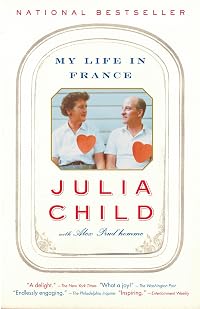
This biography is not the same as her autobiography "My Life in France." It does not speak with Julia's voice, but it covers her life honestly and as dispassionately as possible. These are ways that only a biography can speak. All in all, a very thorough and enjoyable biography for those who want to read a biography of this fascinating arbiter of Twentieth Century taste. show less
This biography is not the same as her autobiography "My Life in France." It does not speak with Julia's voice, but it covers her life honestly and as dispassionately as possible. These are ways that only a biography can speak. All in all, a very thorough and enjoyable biography for those who want to read a biography of this fascinating arbiter of Twentieth Century taste. show less
Dearie: The Remarkable Life of Julia Child by Bob Spitz is a 2012 Knopf publication.
Julia Child, maybe the first wildly successful ‘celebrity’ chefs, has never really gone out of style. Her popularity has waxed and waned, but somehow, over the years she has become a pop culture staple and her life is endlessly fascinating.
That said, despite how liked and respected Julia was, a book with over a thousand pages dedicated to one person, who isn’t a world leader, or something, is perhaps a wee bit overboard.
This book is incredibly comprehensive, but unnecessarily so, for the most part. The approach is one of effusive positivity, portraying Julia in the best possible light, but is obviously researched- though, as with any biography, show more especially those in which the author hasn’t included many of the subject’s less than flattering aspects, one should always be careful about taking everything at face value. I do believe some of Julia's politics caused backlash the book sort of glossed over.
Beyond those quibbles, Julia’s story is certainly an interesting one. She was a late bloomer in many ways, proving it is never too late to achieve success- as she didn’t hit her stride until she was over fifty. She began with writing cookbooks, which morphed into her wildly popular cooking show on PBS, and eventually became a household name, a celebrity, and even brand.
I enjoyed the new HBO series about her segue into becoming a television chef and understand there will be a second season of the show- If you haven’t seen it, it’s simply delightful and very well acted. This book fills in some of the blanks- such as Julia’s difficult relationship with her father- a right wing conservative who disliked Julia’s more liberal opinions and made no secret he disliked her husband, Paul.
This book also details Julia’s life beyond her days on PBS, her complicated relationship with Simca,(Simone Beck), the French chef who co-wrote many of Julia’s cookbooks, but didn’t enjoy the same celebrity, as well as offering further details of her work during the second world war, which has been slightly over exaggerated, but intriguing all the same.
It’s incredible that Julia is still a top draw, that she became an icon of sorts, and that her life has been the subject of so much scrutiny and imagination.
The people she influenced, the market she pretty much invented, has become a part of our everyday lives now. I think Julia showed everyone, not just women, who were the primary cooks in families during the early sixties, that cooking doesn’t necessarily have to be a chore. It can be a source of, or outlet for creativity, imagination, and pride. It can bring people together, be a source of joy and comfort and I also think Julia, not being afraid to make mistakes, to laugh off her goofs and missteps, gave everyone the confidence to get in the kitchen and try something new and different and to keep at it until you’ve mastered it. She also proved it could be a lucrative career choice as well.
Julia didn’t fit inside any mold and used that to her advantage. We owe a lot to Julia and it’s good to see that her legacy lives on…
Overall, even with someone as charismatic as Julia Child- there can be too much of a good thing- and unfortunately, this book is a good example of that.
That said, I found Julia to be an inspiration- although, I didn’t always agree with her approach, her opinions, or decisions. She did indeed live quite a remarkable life, though, and there is no doubt she was a quite a character…. With butter and cream on top!! show less
Julia Child, maybe the first wildly successful ‘celebrity’ chefs, has never really gone out of style. Her popularity has waxed and waned, but somehow, over the years she has become a pop culture staple and her life is endlessly fascinating.
That said, despite how liked and respected Julia was, a book with over a thousand pages dedicated to one person, who isn’t a world leader, or something, is perhaps a wee bit overboard.
This book is incredibly comprehensive, but unnecessarily so, for the most part. The approach is one of effusive positivity, portraying Julia in the best possible light, but is obviously researched- though, as with any biography, show more especially those in which the author hasn’t included many of the subject’s less than flattering aspects, one should always be careful about taking everything at face value. I do believe some of Julia's politics caused backlash the book sort of glossed over.
Beyond those quibbles, Julia’s story is certainly an interesting one. She was a late bloomer in many ways, proving it is never too late to achieve success- as she didn’t hit her stride until she was over fifty. She began with writing cookbooks, which morphed into her wildly popular cooking show on PBS, and eventually became a household name, a celebrity, and even brand.
I enjoyed the new HBO series about her segue into becoming a television chef and understand there will be a second season of the show- If you haven’t seen it, it’s simply delightful and very well acted. This book fills in some of the blanks- such as Julia’s difficult relationship with her father- a right wing conservative who disliked Julia’s more liberal opinions and made no secret he disliked her husband, Paul.
This book also details Julia’s life beyond her days on PBS, her complicated relationship with Simca,(Simone Beck), the French chef who co-wrote many of Julia’s cookbooks, but didn’t enjoy the same celebrity, as well as offering further details of her work during the second world war, which has been slightly over exaggerated, but intriguing all the same.
It’s incredible that Julia is still a top draw, that she became an icon of sorts, and that her life has been the subject of so much scrutiny and imagination.
The people she influenced, the market she pretty much invented, has become a part of our everyday lives now. I think Julia showed everyone, not just women, who were the primary cooks in families during the early sixties, that cooking doesn’t necessarily have to be a chore. It can be a source of, or outlet for creativity, imagination, and pride. It can bring people together, be a source of joy and comfort and I also think Julia, not being afraid to make mistakes, to laugh off her goofs and missteps, gave everyone the confidence to get in the kitchen and try something new and different and to keep at it until you’ve mastered it. She also proved it could be a lucrative career choice as well.
Julia didn’t fit inside any mold and used that to her advantage. We owe a lot to Julia and it’s good to see that her legacy lives on…
Overall, even with someone as charismatic as Julia Child- there can be too much of a good thing- and unfortunately, this book is a good example of that.
That said, I found Julia to be an inspiration- although, I didn’t always agree with her approach, her opinions, or decisions. She did indeed live quite a remarkable life, though, and there is no doubt she was a quite a character…. With butter and cream on top!! show less
Members
- Recently Added By
Lists

Recommend the 20 best books you've read in the last five years
2,168 works; 607 members

To read: Celebrity Biographies/Memoirs
39 works; 2 members

Favorite Books Published in 2012
57 works; 17 members
Author Information

18+ Works 2,595 Members
Bob Spitz is an American journalist and author best known for his celebrity biographies, including the New York Times best seller The Beatles: The Biography. Articles by Spitz appear regularly in The New York Times Magazine, GQ, Conde Nast Traveler, Men's Journal, In Style, Esquire and The Washington Post. Some of his non-fiction titles include show more The Saucier's Apprentice: One Long Strange Trip through the Great Cooking Schools of Europe, Barefoot in Babylon: The Creation of the Woodstock Music Festival and Dylan: A Biography. His title Dearie: The Remarkable Life of Julia Child made the New York Times Best Seller List for 2012. (Bowker Author Biography) show less
Awards and Honors
Distinctions
Notable Lists
Common Knowledge
- Original title
- Dearie: The Remarkable Life of Julia Child
- Original publication date
- 2012
- People/Characters
- Julia Child; Louisette Bertholle; Paul Child; Avis De Voto; Simone Beck; Dorothy McWilliams (show all 8); Judith Jones; Jacques Pepin
- Important places
- France; Santa Barbara, California, USA; Pasadena, California, USA; Norway; Washington, D.C., USA; Cambridge, Massachusetts, USA
Classifications
- Genres
- Biography & Memoir, Nonfiction, Food & Cooking, General Nonfiction, History
- DDC/MDS
- 641.5092 — Applied science & technology Home economics & family management Food, Cooking & Recipes / Meals, Picnics Cooking; cookbooks > Biography And History Biography
- LCC
- TX649 .C47 .S65 — Technology Home economics Home economics Cooking
- BISAC
Statistics
- Members
- 671
- Popularity
- 42,956
- Reviews
- 26
- Rating
- (3.97)
- Languages
- English
- Media
- Paper, Audiobook, Ebook
- ISBNs
- 8
- ASINs
- 3