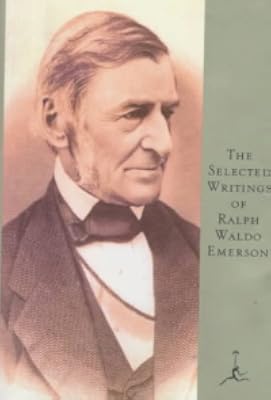
The Selected Writings of Ralph Waldo Emerson
by Ralph Waldo Emerson 
On This Page
Description
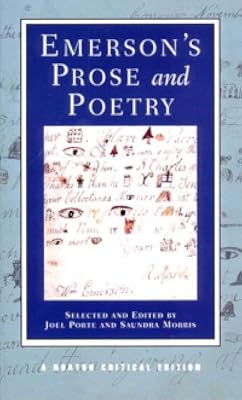
Essayist, lecturer, poet, and America's first "public intellectual," Ralph Waldo Emerson (1803-82) is the central figure in nineteenth-century American letters and the leader (albeit reluctantly) of the Transcendental group. A literary mover and shaker, Emerson directed his unpopular early radicalism toward social institutions (the Church, education, literary conventions); by his death in 1882, however, his reputation was already solidifying as a national icon. Somewhere between the iconic show more sage and the speculative idealist lies an Emerson that students don't often encounter, a flesh-and-blood figure whose writings testify to his continuing exploration of the individual's place in an increasingly conformist and crowded world. In its selections and its apparatus, this Broadview edition bridges the gap between Emerson and students by stressing his real-world engagements. The collection contains a range of prose and poetry addressing some of Emerson's major concerns--nature and the self, imagination and the poet, religion and social reform--as he explores the enduring question "How shall I live?" Historical appendices include primary materials on Transcendentalism; the contemporary debate about the nature of biblical miracles; other authors' responses to Emerson as a writer and thinker; and the development of his complex reputation as a representative American. Copy-texts in this edition are the first published versions of each text, restored here as Emerson's initial audience would have read them. show lessTags
Recommendations























Member Reviews
Writings range from homely descriptions of daily life to polished meditations on human purpose and destiny
Did not read entire book, some essays, some poetry. Just didn't convey any great truths to me.
Ratings
Members
- Recently Added By
Author Information

797+ Works 21,110 Members
Known primarily as the leader of the philosophical movement transcendentalism, which stresses the ties of humans to nature, Ralph Waldo Emerson, American poet and essayist, was born in Boston in 1803. From a long line of religious leaders, Emerson became the minister of the Second Church (Unitarian) in 1829. He left the church in 1832 because of show more profound differences in interpretation and doubts about church doctrine. He visited England and met with British writers and philosophers. It was during this first excursion abroad that Emerson formulated his ideas for Self-Reliance. He returned to the United States in 1833 and settled in Concord, Massachusetts. He began lecturing in Boston. His first book, Nature (1836), published anonymously, detailed his belief and has come to be regarded as his most significant original work on the essence of his philosophy of transcendentalism. The first volume of Essays (1841) contained some of Emerson's most popular works, including the renowned Self-Reliance. Emerson befriended and influenced a number of American authors including Henry David Thoreau. It was Emerson's practice of keeping a journal that inspired Thoreau to do the same and set the stage for Thoreau's experiences at Walden Pond. Emerson married twice (his first wife Ellen died in 1831 of tuberculosis) and had four children (two boys and two girls) with his second wife, Lydia. His first born, Waldo, died at age six. Emerson died in Concord on April 27, 1882 at the age of 78 due to pneumonia and is buried in Sleepy Hollow Cemetery in Concord, Massachusetts. (Bowker Author Biography) show less
Ralph Waldo Emerson has a Legacy Library. Legacy libraries are the personal libraries of famous readers, entered by LibraryThing members from the Legacy Libraries group.
Some Editions
Awards and Honors
Notable Lists
Series
Belongs to Publisher Series
Work Relationships
Contains
Common Knowledge
- Canonical title
- The Selected Writings of Ralph Waldo Emerson
Classifications
Statistics
- Members
- 551
- Popularity
- 53,987
- Reviews
- 2
- Rating
- (4.09)
- Languages
- English
- Media
- Paper, Ebook
- ISBNs
- 13
- ASINs
- 10