On This Page
Description
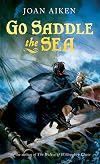
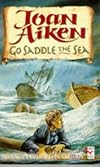
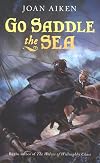
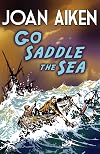
In 1821, an orphaned twelve-year-old boy runs away from his unhappy home in Spain to England where he tries to find his father's family.Tags
Recommendations
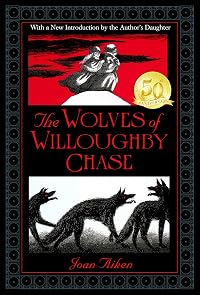
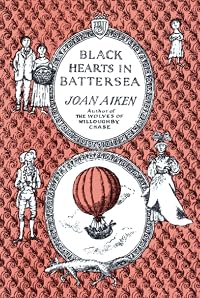






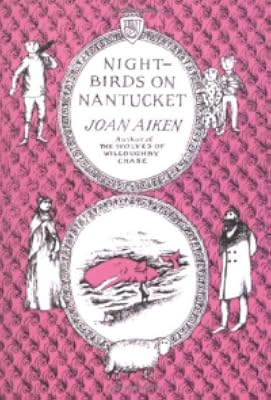
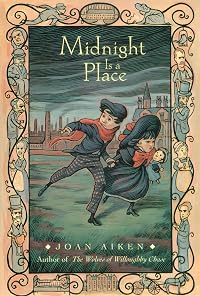














Member Recommendations
themulhern I have a theory that each book in the Felix Brooke series is an homage to some work of Robert Louis Stevenson's. This one is clearly an homage to "Kidnapped"; there's the kidnapping, of course, but also the shipwreck, the somewhat mysterious parentage, the nefarious relative, the stalwart and canny friend.
Member Reviews
Twelve-year-old Felix Brooke, ill-treated at home in Northwest Spain, resolves to travel to England to find out the truth about his father. Thus begins a young adult novel, set after the Peninsular Wars in the early 19th century, that is enjoyable both on its own merits but also for its many references, influences and intricacies. Joan Aiken wrote this after field trips to Galicia and her careful research and attention to detail add weight to the seeming authenticity of the story told by its young hero, whom one implicitly believes is a thoroughly reliable narrator.
Initially Felix recalls Jim Hawkins in Treasure Island in that there is a document (a letter from his father in place of the map of Stevenson’s novel) which initiates a show more quest from home to a port and thence by sea to the sought destination. But Felix (whose father’s middle names are, significantly, Robert Lewis) though no less resourceful is a more reflective character than Stevenson’s Jim. There are also aspects which remind one of Dickens’ rags-to-riches tales of young men, such as Oliver Twist or Pip in Great Expectations. There is even a school setting that could have been partly inspired by Dotheboys Hall in Nicholas Nickleby by way of Tom Brown’s Schooldays, but which could just have easily reflected the experiences of the 12-year-old Joan at Wychwood Boarding School in Oxford in 1936; a similar scenario is depicted in Aiken’s The Shadow Guests.
However, the text that may have most influenced the plot of Go Saddle the Sea is arguably Northanger Abbey, by the author who shared the same initials as Joan Aiken. Aiken proposes that the first draft of this novel, originally titled Susan, was – unbeknown to Austen – actually published, a treasured copy finding its way to Spain via his Felix’s father. Both novels start from the protagonist’s fictional home, Fullerton in Wiltshire for the tomboy Catherine and Villaverde in Galicia for Felix. Both youngsters travel across country, Catherine across southern English counties and Felix across northern Spain, largely traceable on the map. Both arrive in the Somerset spa town of Bath, where extant roads and buildings supply verisimilitude to the two tales. The second volume of Austen’s novel then takes us to the fictional Gloucestershire residence of Northanger Abbey where Catherine’s expectations are finally overturned, not least by the boorish behaviour of General Tilney and her enforced return to Fullerton. At the end of Go Saddle the Sea Felix is no less disappointed by his reception by the Duke of Wells and Taunton at the fictional Asshe House, setting the scene for a planned return to Galicia in the sequel.
Still, despite the fiction, Aiken manages to introduce further real places, albeit under different names. Asshe, where Felix’s English grandfather lives, is probably a compound of several genuine localities. First, the stables are based on Arno’s Castle in the Bristol suburb of Brislington; this is a Gothic-style folly built from copper-slag giving it its more familiar name of the Black Castle (the author of The Castle of Otranto, Horace Walpole, called it “the Devil’s Cathedral”). There was even a tunnel linking it to the nearby Arno’s Court Mansion, which may thus be the model for Asshe; or it may be the more imposing Ashton Court further west, the name of which is at least suggestive. (There is also, as Aiken will have known, a village called Ashe, the neighbour of Steventon where Austen revised Northanger Abbey.) Of course modern Bristol also encompasses Blaise – Austen’s Blaize – Castle, the folly that Austen mentions early on in her novel though planned visits there never materialise, and so her concept of Asshe may be another way of referencing the earlier novel by choosing a similar setting.
The sending-up of Gothic romances in Northanger Abbey is however reversed in Aiken’s novel. Where Catherine’s fears are mostly self-generated, Felix’s are real. Law and order can’t be taken for granted in a Europe suffering from the aftermath of the Napoleonic conflicts. The individual may fall prey to brigands, conniving relatives, corrupt officials or even kidnappers of the most sinister kind: as described by Victor Hugo, the Comprachicos were in the habit, using surgery and potions, of deforming children who fell into their clutches. This evil practice is apparently referred to in Shakespeare’s Midsummer Night’s Dream when a character is told Get you gone, dwarf; | You minimus, of hindering knot-grass made. This is Gothic horror indeed. So many villains stalk the pages that Felix, lucky by name and nature, is fortunate to fall in with decent human beings in almost equal measure.
Go Saddle the Sea is full of Aiken trademarks in her use of tropes and themes. In her fiction, especially in The Wolves of Willoughby Chase sequence, villains often meet their downfall by drowning, villainesses are much in evidence as is folklore in the form of songs, instrumental music, doggerel and traditional proverbs, and storms at sea and wolves running free are ever a danger. (Other animals though get a mention here including a cat, horse, pig, mule, ox, parrot and, obliquely, a ring-dove.) Aiken also introduces potential McGuffins: like the slip of paper in the closet of Catherine’s bedroom in the Abbey which turns out to not reveal a secret, we wonder if the treasured letter from Felix’s father is a false lead; another possible red herring is the gold of General Moore’s army lost in the Spanish hills, the goal it seems of every adventurer and opportunist in North Spain whose path Felix happens to cross.
Joan Aiken is a delightful writer, offering us a yarn which is neither parody nor pastiche but instead a homage to nineteenth century adventure stories, with their wrongdoers, derring-do and cliffhangers. But she is also more subtle than that: with her use of authentic language and convincing recreation of period and place you can relax and enjoy the unfolding chronicle without fear of anachronism. And while Victorian authors often serialised their novels in instalments before publication in book form, the chapter headings here retain an older descriptive style, such as Chapter 2 “In which I encounter dangers from swamp, fire and wolves; & am enabled by God’s help to foil some Assassins”, or the final “In which I am sent to School, and come to a Decision”.
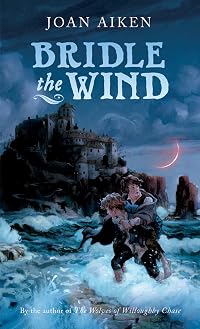
And as always, the more you examine what she writes the more you are rewarded. For example, Felix’s Spanish grandfather rules with a tight rein. You won’t be surprised then to learn that Cabezada, the family name, is Spanish for ‘bridle’; and that the next novel in the sequence is Bridle the Wind.
http://wp.me/s2oNj1-saddle show less
Initially Felix recalls Jim Hawkins in Treasure Island in that there is a document (a letter from his father in place of the map of Stevenson’s novel) which initiates a show more quest from home to a port and thence by sea to the sought destination. But Felix (whose father’s middle names are, significantly, Robert Lewis) though no less resourceful is a more reflective character than Stevenson’s Jim. There are also aspects which remind one of Dickens’ rags-to-riches tales of young men, such as Oliver Twist or Pip in Great Expectations. There is even a school setting that could have been partly inspired by Dotheboys Hall in Nicholas Nickleby by way of Tom Brown’s Schooldays, but which could just have easily reflected the experiences of the 12-year-old Joan at Wychwood Boarding School in Oxford in 1936; a similar scenario is depicted in Aiken’s The Shadow Guests.
However, the text that may have most influenced the plot of Go Saddle the Sea is arguably Northanger Abbey, by the author who shared the same initials as Joan Aiken. Aiken proposes that the first draft of this novel, originally titled Susan, was – unbeknown to Austen – actually published, a treasured copy finding its way to Spain via his Felix’s father. Both novels start from the protagonist’s fictional home, Fullerton in Wiltshire for the tomboy Catherine and Villaverde in Galicia for Felix. Both youngsters travel across country, Catherine across southern English counties and Felix across northern Spain, largely traceable on the map. Both arrive in the Somerset spa town of Bath, where extant roads and buildings supply verisimilitude to the two tales. The second volume of Austen’s novel then takes us to the fictional Gloucestershire residence of Northanger Abbey where Catherine’s expectations are finally overturned, not least by the boorish behaviour of General Tilney and her enforced return to Fullerton. At the end of Go Saddle the Sea Felix is no less disappointed by his reception by the Duke of Wells and Taunton at the fictional Asshe House, setting the scene for a planned return to Galicia in the sequel.
Still, despite the fiction, Aiken manages to introduce further real places, albeit under different names. Asshe, where Felix’s English grandfather lives, is probably a compound of several genuine localities. First, the stables are based on Arno’s Castle in the Bristol suburb of Brislington; this is a Gothic-style folly built from copper-slag giving it its more familiar name of the Black Castle (the author of The Castle of Otranto, Horace Walpole, called it “the Devil’s Cathedral”). There was even a tunnel linking it to the nearby Arno’s Court Mansion, which may thus be the model for Asshe; or it may be the more imposing Ashton Court further west, the name of which is at least suggestive. (There is also, as Aiken will have known, a village called Ashe, the neighbour of Steventon where Austen revised Northanger Abbey.) Of course modern Bristol also encompasses Blaise – Austen’s Blaize – Castle, the folly that Austen mentions early on in her novel though planned visits there never materialise, and so her concept of Asshe may be another way of referencing the earlier novel by choosing a similar setting.
The sending-up of Gothic romances in Northanger Abbey is however reversed in Aiken’s novel. Where Catherine’s fears are mostly self-generated, Felix’s are real. Law and order can’t be taken for granted in a Europe suffering from the aftermath of the Napoleonic conflicts. The individual may fall prey to brigands, conniving relatives, corrupt officials or even kidnappers of the most sinister kind: as described by Victor Hugo, the Comprachicos were in the habit, using surgery and potions, of deforming children who fell into their clutches. This evil practice is apparently referred to in Shakespeare’s Midsummer Night’s Dream when a character is told Get you gone, dwarf; | You minimus, of hindering knot-grass made. This is Gothic horror indeed. So many villains stalk the pages that Felix, lucky by name and nature, is fortunate to fall in with decent human beings in almost equal measure.
Go Saddle the Sea is full of Aiken trademarks in her use of tropes and themes. In her fiction, especially in The Wolves of Willoughby Chase sequence, villains often meet their downfall by drowning, villainesses are much in evidence as is folklore in the form of songs, instrumental music, doggerel and traditional proverbs, and storms at sea and wolves running free are ever a danger. (Other animals though get a mention here including a cat, horse, pig, mule, ox, parrot and, obliquely, a ring-dove.) Aiken also introduces potential McGuffins: like the slip of paper in the closet of Catherine’s bedroom in the Abbey which turns out to not reveal a secret, we wonder if the treasured letter from Felix’s father is a false lead; another possible red herring is the gold of General Moore’s army lost in the Spanish hills, the goal it seems of every adventurer and opportunist in North Spain whose path Felix happens to cross.
Joan Aiken is a delightful writer, offering us a yarn which is neither parody nor pastiche but instead a homage to nineteenth century adventure stories, with their wrongdoers, derring-do and cliffhangers. But she is also more subtle than that: with her use of authentic language and convincing recreation of period and place you can relax and enjoy the unfolding chronicle without fear of anachronism. And while Victorian authors often serialised their novels in instalments before publication in book form, the chapter headings here retain an older descriptive style, such as Chapter 2 “In which I encounter dangers from swamp, fire and wolves; & am enabled by God’s help to foil some Assassins”, or the final “In which I am sent to School, and come to a Decision”.
And as always, the more you examine what she writes the more you are rewarded. For example, Felix’s Spanish grandfather rules with a tight rein. You won’t be surprised then to learn that Cabezada, the family name, is Spanish for ‘bridle’; and that the next novel in the sequence is Bridle the Wind.
http://wp.me/s2oNj1-saddle show less
I picked this up on a whim as I've always been interested in Joan Aiken and have only read some of the Willoughby Chase stories before.
12 year old Felix, half-Spanish, half-English, is orphaned and living with his unfriendly relatives in Spain. Felix becomes determined to get to England and hopes to find some relatives who actually care about him.... he sets off ill prepared for his travels but is resourceful and bold...
He gets into scrapes, adventures; makes friends... and enemies. It comes doubtful that he will ever make it to England.... and if he gets there, he's not entirely sure what or who he's looking for....
Felix is a very likeable character and I really enjoyed this read. Elements reminded me of Travels with a Donkey by show more Stevenson, Don Quixote, and Treasure Island... all books that Joan Aiken is likely to have known well...
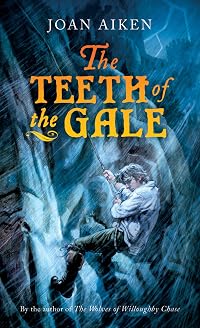
But it is very much its own story too. My vintage puffin edition has the added bonus of some lovely vignette illustrations by Pat Marriott. I didn't realise when I started the book that this is the first of a trilogy about Felix. The next book is Bridle the Wind, concluding with The Teeth of the Gale. I'll keep a look out for them next. show less
12 year old Felix, half-Spanish, half-English, is orphaned and living with his unfriendly relatives in Spain. Felix becomes determined to get to England and hopes to find some relatives who actually care about him.... he sets off ill prepared for his travels but is resourceful and bold...
He gets into scrapes, adventures; makes friends... and enemies. It comes doubtful that he will ever make it to England.... and if he gets there, he's not entirely sure what or who he's looking for....
Felix is a very likeable character and I really enjoyed this read. Elements reminded me of Travels with a Donkey by show more Stevenson, Don Quixote, and Treasure Island... all books that Joan Aiken is likely to have known well...
But it is very much its own story too. My vintage puffin edition has the added bonus of some lovely vignette illustrations by Pat Marriott. I didn't realise when I started the book that this is the first of a trilogy about Felix. The next book is Bridle the Wind, concluding with The Teeth of the Gale. I'll keep a look out for them next. show less
Felix sets out from his unhappy home in northern Spain to travel to England in search of his father's family with nothing more than a handful of words deciphered from his Father's unreadable letter. With only a stubborn mule for company he crosses the mountains and has one adventure after another, with only his wits and ingenuity and a talent for music to win him through. From feuding villages to trapped oxen to a forbidden duel, from jail to a strange mountain village to danger on the sea, this is a thrilling and exciting tale filled with unexpected encounters and marvelous characters.
Felix Brooke, the orphaned son of an English soldier and an aristocratic Spanish mother, has been raised in the strict, loveless household of his grandfather in Villaverde, Spain. When Felix gains possession of a letter that contains a clue to the whereabouts of his father’s family, he gladly runs away from home to pursue the trail. His journey from Spain to far-off England begins the adventure of a lifetime.
Felix, a twelve-year-old boy, lives in his grandfather's house in Spain. He is unloved, other than by the cook. When she dies early in the book, Felix sets out alone on a mule to find his mother's family in England. Along the way he experiences exciting and sometimes terrifying adventures, meets some delightful people, and learns a great deal about the world.
This is really a book for younger teenagers, but it's extremely well-written and makes an excellent read-aloud book.
This is really a book for younger teenagers, but it's extremely well-written and makes an excellent read-aloud book.
I loved this series, would love to revisit but I stupidly gave them to charity!
I can't do better than the insightful and informative review[1] by ed.pendragon, although it is "Kidnapped", not "Treasure Island" that I think of when I read this novel.
[1] https://www.librarything.com/work/123828/reviews/94637576
[1] https://www.librarything.com/work/123828/reviews/94637576
Members
- Recently Added By
Lists

Books With Water Words in the Title
186 works; 12 members

Books With the Most Memorable Titles
478 works; 158 members
Author Information

216+ Works 19,832 Members
Joan Delano Aiken was born in Rye, Sussex, England, on September 4, 1924, the daughter of the Pulitzer Prize winner, writer Conrad Aiken. She was raised in a rural area and home schooled by her mother until the age 12. She then attended Wychwood School, a boarding school in Oxford. Her work first appeared in 1941 when the British Broadcasting show more Corporation, where she worked as a librarian, broadcast some of her short stories on their Children's Hour program. Aiken also worked at St. Thomas's Hospital, and in 1943 she moved to the reference department of the London office of the United Nations, where she collected information about resistance movements. She worked for the UN until 1949, all the while continuing to write stories. In 1953 a collection of short fiction called All You've Ever Wanted and Other Stories was published. While writing The Wolves of Willoughby Chase, begun in 1952, her husband became ill and died of lung cancer in 1955. After working for five years as a copy editor at Argosy Magazine, and at the J. Walter Thompson Advertising Firm, she returned and finished the book in 1963. The Wolves of Willoughby Chase won the Lewis Carroll Shelf Award and was made into a successful film in 1988. In 1969 The Whispering Mountain won the Guardian Children's Book Award, and in 1972, Night Fall won America's Edgar Allen Poe Award for juvenile mystery. Aiken is best known for her adult "fantasy" stories. She has received awards for children's fiction and for mystery fiction, and has also written ''sequels'' to Jane Austen books. She collaborated with her daughter to write many episodes of her Arabel and Mortimer the raven series for the BBC. In all, Aiken wrote 92 novels - including 27 for adults - as well as plays, poems and short stories, although she was best known as a writer of children's stories. Joan Aiken died in January of 2004 at the age of 79. (Bowker Author Biography) show less
Some Editions
Series

Common Knowledge
- Original title
- Go Saddle the Sea
- Original publication date
- 1977
Classifications
Statistics
- Members
- 258
- Popularity
- 125,937
- Reviews
- 9
- Rating
- (3.93)
- Languages
- English, German
- Media
- Paper, Ebook
- ISBNs
- 13
- ASINs
- 6