On This Page
Description
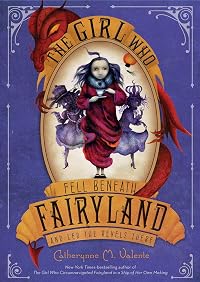
After returning to Fairyland, September discovers that her stolen shadow has become the Hollow Queen, the new ruler of Fairyland Below, who is stealing the magic and shadows from Fairyland folk and refusing to give them back.Tags
Recommendations










Member Recommendations
Member Reviews
September has spent the year since she returned from Fairyland in a fog of desire to return. She misses the friends she made there and if she was different from the kids at school before, it's that much more obvious now. In addition her father still hasn't returned from the war, she feels his absence even more keenly. So when she is reading in the fields near her home and a boat comes sailing through the air, bearing two people who could only be from Fairyland, she immediately sets chase. When she trips across the border between the two, she quickly discovers, that she made a horrible mistake when last she visited and if she doesn't fix it, all of Fairyland may cease to exist.
I know these books are written for children, but I can't show more help but love them. The story is so creative, the characters so likable and well written, the setting both unique and familiar at the same time. And the fact that I wish I was September and could visit Fairyland and have the adventures she is having, well that is just the icing on the cake. There is so much to like about this series of books and this author. Maybe now is a good time to start reading some of her fare that is actually written for an adult. She's a very talented author and I'm so thankful to whomever it was that first brought her to my attention (Cora, I think that was you). show less
I know these books are written for children, but I can't show more help but love them. The story is so creative, the characters so likable and well written, the setting both unique and familiar at the same time. And the fact that I wish I was September and could visit Fairyland and have the adventures she is having, well that is just the icing on the cake. There is so much to like about this series of books and this author. Maybe now is a good time to start reading some of her fare that is actually written for an adult. She's a very talented author and I'm so thankful to whomever it was that first brought her to my attention (Cora, I think that was you). show less
September returns to Fairyland, a year older, to discover that Fairyland has been changed for better and for worse by her previous adventures -- her shadow is now ruling Fairyland-Below -- and that this sojourn is not going to unfold how she’d expected and hoped it would.
As a story about changes, consequences, coming back to a place you love and entering adolescence, this is poignant and astute; it resonated with me so much. I also liked its many nods to the portal fantasy I grew up with.
But I found some of the landscapes, and the people September meets, less appealing than those in The Girl Who Circumnavigated Fairyland in a Ship of Her Own Making. I’m not sure why... They’re darker, shadowy -- but without that, this wouldn’t show more be a story about September discovering that Fairyland has more shadows and complexities than she knew about.
Oh, September! It is so soon for you to lose your friends to good work and strange loves and high ambitions. The sadness of that is too grown-up for you. Like whiskey and voting, it is a dangerous and heady business, as heavy as years. If I could keep your little tribe together forever, I would. I do so want to be generous. But some stories sprout bright vines that tendril off beyond our sight, carrying the folk we love best with them, and if I knew how to accept that with grace, I would share the secret. show less
As a story about changes, consequences, coming back to a place you love and entering adolescence, this is poignant and astute; it resonated with me so much. I also liked its many nods to the portal fantasy I grew up with.
But I found some of the landscapes, and the people September meets, less appealing than those in The Girl Who Circumnavigated Fairyland in a Ship of Her Own Making. I’m not sure why... They’re darker, shadowy -- but without that, this wouldn’t show more be a story about September discovering that Fairyland has more shadows and complexities than she knew about.
Oh, September! It is so soon for you to lose your friends to good work and strange loves and high ambitions. The sadness of that is too grown-up for you. Like whiskey and voting, it is a dangerous and heady business, as heavy as years. If I could keep your little tribe together forever, I would. I do so want to be generous. But some stories sprout bright vines that tendril off beyond our sight, carrying the folk we love best with them, and if I knew how to accept that with grace, I would share the secret. show less
The immediate sequel to The Girl Who Circumnavigated Fairyland in a Boat of Her Own Making continues to draw on tropes from classical children's fantasies, including Alice in Wonderland and the Oz books. But the World War II backdrop and the role of the child protagonist as a recurrent actor in Fairyland's "history" makes these books more kindred to Narnia than any of the others. And yet, it is certainly not the misogynistic Christian otherworld of C.S. Lewis, but a vigorously pagan and feminist one, where Valente's September plays the role of a recurrent redeemer. Riffing on Through the Looking-Glass, this volume finds September promoted from Knight to Bishop, now in her "slantwise" struggle with the Queen of Fairyland-Beneath, who is show more her own own severed shadow.
There seems to be little room for doubt that the author consciously drew on Jungian ideas in this book about the estrangement and reintegration of Fairyland's shadows. In a not-oversubtle psychoanalytic scheme, the first volume involves reflection on September's image of her mother, and this second one on her image of her father. This sequencing, along with the dropping of a second shoe regarding the excision of September's shadow in the first book, helps to grow the sequel directly out of the original story, so that it gives off no sense of superfluity.
A few common structural elements made it seem as if a formulaic approach might have been taken in this book. In particular, the "interludes" in each book concern the flying pursuers of September, who arrive to aid her only at the book's end. There is also a pattern of accumulating a trio of companions, who are then stripped away for the heroine's final feats. The fuller descriptions and more overt involvement of the characters of the Winds at the climax of the story were certainly welcome. On the whole, the book is worthy of its predecessor. show less
There seems to be little room for doubt that the author consciously drew on Jungian ideas in this book about the estrangement and reintegration of Fairyland's shadows. In a not-oversubtle psychoanalytic scheme, the first volume involves reflection on September's image of her mother, and this second one on her image of her father. This sequencing, along with the dropping of a second shoe regarding the excision of September's shadow in the first book, helps to grow the sequel directly out of the original story, so that it gives off no sense of superfluity.
A few common structural elements made it seem as if a formulaic approach might have been taken in this book. In particular, the "interludes" in each book concern the flying pursuers of September, who arrive to aid her only at the book's end. There is also a pattern of accumulating a trio of companions, who are then stripped away for the heroine's final feats. The fuller descriptions and more overt involvement of the characters of the Winds at the climax of the story were certainly welcome. On the whole, the book is worthy of its predecessor. show less
This book was simply delicious in every way possible.
I loved the first book in the series, but felt hesitant about the rest of the series: sometimes a great first book is every good idea that the author had, and the rest of the series merely tries to scramble along on the coat tails. Moreover, one of the things that I loved about The Girl Who Circumnavigated Fairyland in a Ship of Her Own Making was its depiction of childhood, and I worried it couldn't be continued in a sustainable way and also have the heroine grow.
I should have put more faith in Catherynne M. Valente. First of all: I am insane with jealousy over her imagination. Every page of The Girl Who Fell Beneath Fairyland... was just as inventive as the page before, and it all show more seemed to flow effortlessly. We met characters that I never would have thought of: a beautifully inventive family of coffee and tea people, and turquoise kangaroos that wear their memories in pouches, and allusions to classic mythology that seem Just Right, only no one's ever thought of them before, like Valente's take on the minotaur, and what seems like it will one day be classic mythology, like Queer, Questing and Quiet Physicks and in between are beautifully depicted characters, who are neither deeply inventive, nor cleverly allusive so much as they are wonderfully depicted, almost real people, who are flawed, and brave and everything else I could ever ask for.
One of the things I love about Valente, as mentioned above, is her depiction of childhood. Her depiction of young adulthood/early teen years is just as spot on. She treats it with Valente whimsy, talking about how September has a Heart, but it is new and raw. And underneath the whimsy she is just so spot-on about the ways that Right and Wrong feel so intense in those early years, and how raw betrayal feels, because you aren't emotionally scarred down from years of them same yet. It's a magical combination of lovely prose and deep insight. I love how it flows clearly from her depiction of child September.
I can't review this book properly without talking about the shadows. I loved this plot: that Fairyland needed its shadows in order to have magic, but the shadows needed to be free and not have to do the bidding of their person. I felt the moral tug in both directions, and I loved that September felt equally torn. I won't give away the ending, but I will say that I worried that it was going to end uncomfortably: I felt like Valente had set up an unsolvable quandary and that any solution would either be morally offensive or seem like a deus ex machina to the beautifully set up puzzle. Again, I need to learn to have faith: Valente did not disappoint.
Although these are young adult books, they are challenging in terms of the morals they present, both in the world-savingly large, and in the romantically-inclined small and they examine teen-years in a way that I'm not sure I would have tolerated from up-close. I think that they are books that absolutely should be read in adult years, but I think there is probably much to be enjoyed here by young readers as well. I know I plan on reading them to my daughter early and often. But before that: must read book #3. Preferably right now. show less
I loved the first book in the series, but felt hesitant about the rest of the series: sometimes a great first book is every good idea that the author had, and the rest of the series merely tries to scramble along on the coat tails. Moreover, one of the things that I loved about The Girl Who Circumnavigated Fairyland in a Ship of Her Own Making was its depiction of childhood, and I worried it couldn't be continued in a sustainable way and also have the heroine grow.
I should have put more faith in Catherynne M. Valente. First of all: I am insane with jealousy over her imagination. Every page of The Girl Who Fell Beneath Fairyland... was just as inventive as the page before, and it all show more seemed to flow effortlessly. We met characters that I never would have thought of: a beautifully inventive family of coffee and tea people, and turquoise kangaroos that wear their memories in pouches, and allusions to classic mythology that seem Just Right, only no one's ever thought of them before, like Valente's take on the minotaur, and what seems like it will one day be classic mythology, like Queer, Questing and Quiet Physicks and in between are beautifully depicted characters, who are neither deeply inventive, nor cleverly allusive so much as they are wonderfully depicted, almost real people, who are flawed, and brave and everything else I could ever ask for.
One of the things I love about Valente, as mentioned above, is her depiction of childhood. Her depiction of young adulthood/early teen years is just as spot on. She treats it with Valente whimsy, talking about how September has a Heart, but it is new and raw. And underneath the whimsy she is just so spot-on about the ways that Right and Wrong feel so intense in those early years, and how raw betrayal feels, because you aren't emotionally scarred down from years of them same yet. It's a magical combination of lovely prose and deep insight. I love how it flows clearly from her depiction of child September.
I can't review this book properly without talking about the shadows. I loved this plot: that Fairyland needed its shadows in order to have magic, but the shadows needed to be free and not have to do the bidding of their person. I felt the moral tug in both directions, and I loved that September felt equally torn. I won't give away the ending, but I will say that I worried that it was going to end uncomfortably: I felt like Valente had set up an unsolvable quandary and that any solution would either be morally offensive or seem like a deus ex machina to the beautifully set up puzzle. Again, I need to learn to have faith: Valente did not disappoint.
Although these are young adult books, they are challenging in terms of the morals they present, both in the world-savingly large, and in the romantically-inclined small and they examine teen-years in a way that I'm not sure I would have tolerated from up-close. I think that they are books that absolutely should be read in adult years, but I think there is probably much to be enjoyed here by young readers as well. I know I plan on reading them to my daughter early and often. But before that: must read book #3. Preferably right now. show less
“A book is a door into another place and another heart and another world.”
It's been almost a year since September returned from Fairyland and things haven't been easy. No one has noticed that she's missing her shadow, but her classmates can see that she's even stranger than she used to be. The mean girls at school target her for her otherness. And then September turns 13 and begins to grow a heart:
“For though, as we have said, all children are heartless, this is not precisely true of teenagers. Teenage hearts are raw and new, fast and fierce, and they do not know their own strength. Neither do they know reason or restraint, and if you want to know the truth, a goodly number of grown-up hearts never learn it.”
On her birthday, show more she finds a way back to Fairyland, but things aren't going well there, either. Someone is stealing shadows and with them, all the magic from Fairyland Above. It's up to September to find the culprit and bring the shadows back. Along the way, she'll meet some new friends, including a melancholy, magical Night Dodo. She'll also be reunited with a few of her old friends, Saturday and A-through-L, except they're not really her old friends, but their shadows, and as we learn:
"...sometimes people keep parts of themselves hidden and secret, sometimes wicked and unkind parts, but often brave or wild or colorful parts, cunning or powerful or even marvelous, beautiful parts, just locked up away at the bottom of their hearts. They do this because they are afraid of the world and of being stared at, or relied upon to do feats of bravery or boldness. And all of those brave and wild and cunning and marvelous and beautiful parts they hid away and left in the dark to grow strange mushrooms—and yes, sometimes those wicked and unkind parts, too—end up in their shadow.”
Worst of all, it's September's stolen shadow, who calls herself Halloween, the Hollow Queen, who has established herself as ruler of Fairyland Below. The only way to dethrone Halloween is to journey to the very, very bottom of Fairyland Below to free a sleeping prince who may be the rightful ruler.
“Just as there are different types of stars—red and white and brown and blue and dwarf and giant and all that lot—there are different types of Quests, and if we determine what type you face, we shall have a much easier time managing the whole business. We’re doing very well. Already we know that Prince Myrrh is an Endgame Object Type W—that’s Wonderful, since we have yet to see if he will be any Use in governing. He sleeps suspended in a Theseus-type narrative matrix, however he does seem to have some gravitational pull on events, which is unusual for a T-Type. After all, we still remember him even after all these years. It’s far easier to forget something than to remember it. Remembering takes all kinds of magic. No one knows who he is or what he looks like or where to find him, and yet we all know of him. We all know he sleeps in an unopenable box on an unbreakable bower. That’s a frightfully strong E.K.T. Field for one little creature!”
I love this sequel just as much as the original, with it's charming blend of classic and modern, all nestled in some of the loveliest prose descriptions I've ever read. Without giving away too much of September's quest, I have to close to with a list of the pantry contents in the cellar of Fairyland Below:
Idun's Apple Butter
Bacchus's Best Blackberry Wine
Eve's Blue Ribbon Fig Jelly
Kali's Red-Hot Pickled Peppers
Coyote's Extra-Fine Cornmeal Flour
Ratatosk's High-Yield World-Tree Seeds
Anansi's No-Weight Silk Yarn
Erishkegal's Black Label Whiskey
Pluto's Fancy Mushrooms
Now, that's clever. show less
It's been almost a year since September returned from Fairyland and things haven't been easy. No one has noticed that she's missing her shadow, but her classmates can see that she's even stranger than she used to be. The mean girls at school target her for her otherness. And then September turns 13 and begins to grow a heart:
“For though, as we have said, all children are heartless, this is not precisely true of teenagers. Teenage hearts are raw and new, fast and fierce, and they do not know their own strength. Neither do they know reason or restraint, and if you want to know the truth, a goodly number of grown-up hearts never learn it.”
On her birthday, show more she finds a way back to Fairyland, but things aren't going well there, either. Someone is stealing shadows and with them, all the magic from Fairyland Above. It's up to September to find the culprit and bring the shadows back. Along the way, she'll meet some new friends, including a melancholy, magical Night Dodo. She'll also be reunited with a few of her old friends, Saturday and A-through-L, except they're not really her old friends, but their shadows, and as we learn:
"...sometimes people keep parts of themselves hidden and secret, sometimes wicked and unkind parts, but often brave or wild or colorful parts, cunning or powerful or even marvelous, beautiful parts, just locked up away at the bottom of their hearts. They do this because they are afraid of the world and of being stared at, or relied upon to do feats of bravery or boldness. And all of those brave and wild and cunning and marvelous and beautiful parts they hid away and left in the dark to grow strange mushrooms—and yes, sometimes those wicked and unkind parts, too—end up in their shadow.”
Worst of all, it's September's stolen shadow, who calls herself Halloween, the Hollow Queen, who has established herself as ruler of Fairyland Below. The only way to dethrone Halloween is to journey to the very, very bottom of Fairyland Below to free a sleeping prince who may be the rightful ruler.
“Just as there are different types of stars—red and white and brown and blue and dwarf and giant and all that lot—there are different types of Quests, and if we determine what type you face, we shall have a much easier time managing the whole business. We’re doing very well. Already we know that Prince Myrrh is an Endgame Object Type W—that’s Wonderful, since we have yet to see if he will be any Use in governing. He sleeps suspended in a Theseus-type narrative matrix, however he does seem to have some gravitational pull on events, which is unusual for a T-Type. After all, we still remember him even after all these years. It’s far easier to forget something than to remember it. Remembering takes all kinds of magic. No one knows who he is or what he looks like or where to find him, and yet we all know of him. We all know he sleeps in an unopenable box on an unbreakable bower. That’s a frightfully strong E.K.T. Field for one little creature!”
I love this sequel just as much as the original, with it's charming blend of classic and modern, all nestled in some of the loveliest prose descriptions I've ever read. Without giving away too much of September's quest, I have to close to with a list of the pantry contents in the cellar of Fairyland Below:
Idun's Apple Butter
Bacchus's Best Blackberry Wine
Eve's Blue Ribbon Fig Jelly
Kali's Red-Hot Pickled Peppers
Coyote's Extra-Fine Cornmeal Flour
Ratatosk's High-Yield World-Tree Seeds
Anansi's No-Weight Silk Yarn
Erishkegal's Black Label Whiskey
Pluto's Fancy Mushrooms
Now, that's clever. show less
What an amazingly and gloriously smart YA.
It's not only a fun and delightful quest and beautiful flight of imagination, but it's also rife with tons and tons of literary and mythical allusions, whether oblique or referenced almost directly. It's keeping my adult brain most occupied and thrilled and slathered in smarts.
And how in the world can such a tale also be written so smoothly and cleverly that a young child can follow it without a care in the world?
Answer: Catherynne M. Valente.
Seriously, people. She writes as if her pen were Michaels fiery sword or as if she were drawing from the long-brilliant tradition of the best snarky English authors, and Valente is American. *gasp*
Shadows are magic and allow you to have magic, you know, show more and the lady of teas and the mister of coffees have a way of masterfully messing up your drink.
One word of warning, though. The Revels don't actually happen until the very end. Sorry for the spoilers. The rest of the book is sheer adventure. show less
It's not only a fun and delightful quest and beautiful flight of imagination, but it's also rife with tons and tons of literary and mythical allusions, whether oblique or referenced almost directly. It's keeping my adult brain most occupied and thrilled and slathered in smarts.
And how in the world can such a tale also be written so smoothly and cleverly that a young child can follow it without a care in the world?
Answer: Catherynne M. Valente.
Seriously, people. She writes as if her pen were Michaels fiery sword or as if she were drawing from the long-brilliant tradition of the best snarky English authors, and Valente is American. *gasp*
Shadows are magic and allow you to have magic, you know, show more and the lady of teas and the mister of coffees have a way of masterfully messing up your drink.
One word of warning, though. The Revels don't actually happen until the very end. Sorry for the spoilers. The rest of the book is sheer adventure. show less
It cracked me open, then put me back together - all with a gentle soothing hand and iron grip.
To get this out of the way first.
That thing at the end, (you know the one, right?) it slew me good and proper. It threw me off quite a splendid cliff. NOW I NEED. TO. KNOW! But that's for later books, I suspect. Bother...
September grows up. Not completely, mind you. And she does grow a heart - for all the good and ill that befalls such a hazardous possession and its owner.
It's such a relief to read about a multifaceted world of neither black nor white. Such relief, let me tell you! And it is truly a splendid and heartening thing to be reminded that one always has a choice - and that NOT choosing is too a choice. Ought to remember thus in the show more darkest and most shining hours both, to carve thus deep: We can be anything and everything - all at once.
RECOMMENDED show less
To get this out of the way first.
That thing at the end, (you know the one, right?) it slew me good and proper. It threw me off quite a splendid cliff. NOW I NEED. TO. KNOW! But that's for later books, I suspect. Bother...
September grows up. Not completely, mind you. And she does grow a heart - for all the good and ill that befalls such a hazardous possession and its owner.
It's such a relief to read about a multifaceted world of neither black nor white. Such relief, let me tell you! And it is truly a splendid and heartening thing to be reminded that one always has a choice - and that NOT choosing is too a choice. Ought to remember thus in the show more darkest and most shining hours both, to carve thus deep: We can be anything and everything - all at once.
RECOMMENDED show less
Members
- Recently Added By
Lists

Books with "Living Chess"
17 works; 12 members

KayStJ's to-read list
1,616 works; 11 members

Books Read in 2021
5,361 works; 114 members
Author Information

173+ Works 22,590 Members
Some Editions
Awards and Honors
Awards
Series

Work Relationships
Common Knowledge
- Canonical title
- The Girl Who Fell Beneath Fairyland and Led the Revels There
- Original title
- The Girl Who Fell Beneath Fairyland and Led the Revels There
- Original publication date
- 2012-10-02
- People/Characters
- September (a Young Girl); A-Through-L (a Wyvern); Saturday (a Marid); Halloween (a Shadow); Taiga (a Hreinn); Neep (a Hreinn) (show all 33); Charlie Crunchcrab (a Fairy); Slant (a Sibyl); The Vicereine of Coffee; The Duke of Teatime; Wit (a Crow); Study (a Crow); Glasswort Groof (a Goblin); Aubergine (a Night-Dodo); Gleam (a Lamp); The Alleyman (a Lutin); Avogadra (a Monaciello); Gneiss (a Jä | rlhopp); The Onion-Man; The Oak Knight (a Glashtyn); Belinda Cabbage (a Fairy Physickist); Maud (a Shadow); Iago (the Panther of Rough Storms); Left (a Minotaur); Prince Myrrh (a Boy); Nod (a Dream-Eating Tapir); The Silver Wind (a Following Wind); The Black Wind (a Fierce Wind); The Red Wind (a War Wind); The Green Wind (a Harsh Air); Cymbeline (the Tiger of Wild Flurries); Banquo (the Lynx of Gentle Showers); Imogen (the Leopard of Little Breezes)
- Important places
- Omaha, Nebraska, USA; Nebraska, USA; Fairyland; Fairyland-Below
- Dedication
- For everyone who has taken a chance on a girl with a funny name and her flying Library. Let the Revel begin.
- First words
- Once upon a time, a girl named September had a secret.
- Last words
- (Click to show. Warning: May contain spoilers.)But she could be almost certain that her daughter's shadow had gone a deep, profound shade of green -- just the color of the smoking jacket of a man she'd known long ago, when she was just a small girl.
- Original language
- English
Classifications
Statistics
- Members
- 1,285
- Popularity
- 18,960
- Reviews
- 80
- Rating
- (4.05)
- Languages
- 6 — Chinese, English, Finnish, German, Hungarian, Italian
- Media
- Paper, Audiobook, Ebook
- ISBNs
- 26
- ASINs
- 7