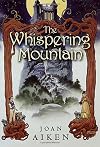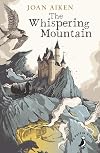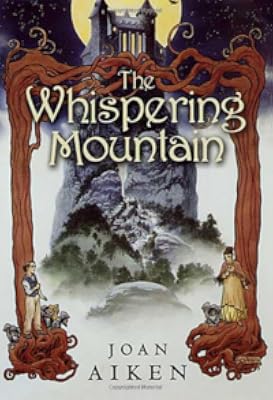
The Whispering Mountain
by Joan Aiken
On This Page
Description
With the help of some unusual friends, a young boy tries to restore the Golden Harp of Teirtu to its rightful owner.Tags
Recommendations










Member Reviews
'The Whispering Mountain' was one of my favourite books as a child. I must have read it quite a few times when I was young, but not since, and when I came to read it again I found I had completely forgotten the plot, other than it was an adventure story set in Wales and there was a mountain in it! But rereading it has reminded me why I loved the book so much in the first place.
Set in the same alternative nineteenth century world as 'The Wolves of Willoughby Chase', 'The Whispering Mountain' follows the adventures of Owen Hughes, wrongly accused of stealing the fabled Harp of Teirtu, (including by his own grandfather). But as Owen tries to clear his name by recapturing the harp, he discovers that there are other people apart from the show more original thieves who are interested in finding it, from the Marquess of Malyn in his castle on the coast to the Seljuk of the far-off land of Rum who is showing a surprising interest in a remote corner of Wales. But once the harp is found who is its legal owner? The marquess is convinced that it should be him, as the harp was found in the ruins of the old monastery of St. Ennodawg, on land owned by the Marquess, but Owen's grandfather, curator of the local museum, has different ideas:
This was the only Joan Aiken] that I read as a child (although I've read 'The Wolves of Willoughby Chase' since) and it's one that deserves to be much better known. It's really got everything that a children's adventure story needs: adventure, close shaves with danger, an evil marquess and some real sadness too. Highly recommended. show less
Set in the same alternative nineteenth century world as 'The Wolves of Willoughby Chase', 'The Whispering Mountain' follows the adventures of Owen Hughes, wrongly accused of stealing the fabled Harp of Teirtu, (including by his own grandfather). But as Owen tries to clear his name by recapturing the harp, he discovers that there are other people apart from the show more original thieves who are interested in finding it, from the Marquess of Malyn in his castle on the coast to the Seljuk of the far-off land of Rum who is showing a surprising interest in a remote corner of Wales. But once the harp is found who is its legal owner? The marquess is convinced that it should be him, as the harp was found in the ruins of the old monastery of St. Ennodawg, on land owned by the Marquess, but Owen's grandfather, curator of the local museum, has different ideas:
''I am sure your legal knowledge is of the highest excellence,’ said the Marquess with a disdainful smile. ‘But in this instance it will not be needed. The deed says, in the plainest manner, that the grant of the island is made, not in perpetuity, but merely “so long as the Order of Ennodawg shall continue”. But where is the Order now, Mr Hughes? I think you will not dispute that the monastery is in ruins and has been so for the last fifty years? What has become of its gardens, its cattle, its furnishings? Gone, burned, stolen, decayed. Where are its monks, pray?’
‘In China,’ said Mr Hughes unexpectedly.
‘What?’ The Marquess, for once, was quite taken aback. ‘In China?’ he repeated. ‘What do you mean?’'
This was the only Joan Aiken] that I read as a child (although I've read 'The Wolves of Willoughby Chase' since) and it's one that deserves to be much better known. It's really got everything that a children's adventure story needs: adventure, close shaves with danger, an evil marquess and some real sadness too. Highly recommended. show less
This was the fourth book in Aiken's James III sequence, but chronologically, it's a prequel, self-contained and entirely satisfying all on its ownsome. Full of wonderful Welsh dialect and phrases, it's an adventure set in the valleys and mountains and caves around Fig Hat Ben, the Whispering Mountain of the title.
We join the action more or less in full swing. Our hero Owen Hughes is bracing himself for a confrontation with some bullies, but soon has a lot more on his mind as the local Marquess has taken a hankering to take possession of the battered old golden harp found by Owen's grandfather, the curator of the local museum. Two thieves hired for the task make off with the harp, kidnapping Owen and making it look as though he is show more responsible. Aided by his friend, the herbalist daughter of an itinerant poet and an old wandering monk, Owen must retrieve the harp, capture the thieves, defeat the evil nobleman, help the mysterious people who live in the caves, rescue the Prince Of Wales and persuade his crotchety grandfather that he's not himself a villain.
Pure joyful adventure and escapism, this is thrilling and exciting and adventurous and packed with characters and incidents and ideas and mystery and atmosphere and all manner of good things. Fantastic. show less
We join the action more or less in full swing. Our hero Owen Hughes is bracing himself for a confrontation with some bullies, but soon has a lot more on his mind as the local Marquess has taken a hankering to take possession of the battered old golden harp found by Owen's grandfather, the curator of the local museum. Two thieves hired for the task make off with the harp, kidnapping Owen and making it look as though he is show more responsible. Aided by his friend, the herbalist daughter of an itinerant poet and an old wandering monk, Owen must retrieve the harp, capture the thieves, defeat the evil nobleman, help the mysterious people who live in the caves, rescue the Prince Of Wales and persuade his crotchety grandfather that he's not himself a villain.
Pure joyful adventure and escapism, this is thrilling and exciting and adventurous and packed with characters and incidents and ideas and mystery and atmosphere and all manner of good things. Fantastic. show less
After a legendary harp is discovered in a ruined Welsh monastery by his grandfather, young Owen Hughes must brave wild beasts, lost tribes, and desperate men to save the harp from a murderous lord.
This was charming and non-precious YA fantasy. I especially liked the process by which people initially antipathetic toward Owen (his grandfather, his school mates, the universe at large) become his allies. Instead of blinding (and vocalized) character epiphanies, they become grudgingly sympathetic only after Owen repeatedly demonstrates pluck and compassion -- and even then, it's just a conscious suppression of their innate dislike.
This was charming and non-precious YA fantasy. I especially liked the process by which people initially antipathetic toward Owen (his grandfather, his school mates, the universe at large) become his allies. Instead of blinding (and vocalized) character epiphanies, they become grudgingly sympathetic only after Owen repeatedly demonstrates pluck and compassion -- and even then, it's just a conscious suppression of their innate dislike.
Not strictly a prequel to the Wolves of Willoughby Chase sequence (our young hero Owen Hughes re-appears around the time of the plot to slide St Paul’s Cathedral into the Thames at a coronation, in The Cuckoo Tree), The Whispering Mountain can nevertheless be enjoyed as a standalone novel. It also adds to our knowledge and understanding of Joan Aiken’s alternative history of the world in the early 19th century, sometimes called the James III sequence or, as I prefer to call it, the Dido Twite series (from the most endearing character featured in most of the books).
Set in and around the western coast of Wales, the tale features elements of Welsh mythology, Dark Age history and traditions of Nonconformism and mining, along with show more several other typical Aiken themes – such as Arthurian legend (revisited in The Stolen Lake), slavery underground (as in Is), mistaken identities (as in The Cuckoo Tree) and dastardly villains (as in all the titles of the sequence). Although convoluted, the plot draws you along to the inevitable conclusion, and as always Aiken doesn’t shy away from death even when writing for a youngish audience.
Of especial interest is the Welsh setting and use of language and traditions away from Aiken’s usual specialities such as the southeast of England. Living in West Wales, I was particularly intrigued to see aspects of different real localities transmogrified to suit the story and the conceit of an alternative geography of Britain (Malyn Castle is like Harlech Castle transferred to the region of Aberystwyth); and the use of Welsh phrases and idioms (there is a glossary at the end) when characters speak English struck chords even for someone like me with only a passing acquaintance with the language. I also loved the puns, such as the placename Pennygaff which, although it has a Welsh look to it (real placenames include Pen-y-Fan and Pen-y-Bont, literally ‘Mountain Top’ and ‘Bridgend’ respectively), is actually taken from the name for a type of popular but seedy early Victorian theatrical show. Malyn Castle (and its Marquess of Malyn) is a wonderful composite of malign (a good description of the marquess), melyn (Welsh for ‘yellow’, perhaps a reference to the marquess’ love of gold) and Malin Head (the most northerly point in Ireland, famous from the BBC Shipping Forecast, with its 1805 Martello tower looking very castle-like).
And the story? This is the tale of Owen Hughes, son of Captain Hughes of the Thrush and the grandson of another Owen Hughes, keeper of the Pennygaff museum. Bullied at school, young Owen falls in with heroes, villains and bystanders: who to trust with the ancient harp kept in the museum? The villains are often the most memorable, ruffians like Toby Bilk (slang for ‘cheat’) and Elijah Prigman (‘thief’), and blackguards like the Marquess himself. To right the balance there are kind monks, a future king, a travelling poet and his daughter by a Maltese beauty, Arabis Camilleri. The daughter, also called Arabis (a kind of rockcress; also Welsh arabus means ‘witty’) is the same age as Owen. And we mustn’t forget a mysterious Eastern potentate and the equally mysterious cave-dwelling troglodytes under the eponymous Whispering Mountain. Which does more than whisper in the denouement, in an underground version of the famous Devil’s Bridge inland from Aberystwyth.
As I hope this account suggests, this a book worth reading for its spirited liveliness and sheer inventiveness even if you’re not a dyed-in-the-wool Aiken fan. Maybe after sampling The Whispering Mountain you may be tempted to try the other alternate histories in the series. There’s even a chance you might not be disappointed. To add to the delight there’s a map but, sadly, only a handful of illustrations by the inestimable Pat Marriott in the original hardback and the Puffin paperbacks. Later issues, such as the Red Fox edition, include neither map nor illustrations, a miscalculation especially with books aimed at a young adult market but no less a mistake with readers of all ages.
http://wp.me/p2oNj1-t show less
Set in and around the western coast of Wales, the tale features elements of Welsh mythology, Dark Age history and traditions of Nonconformism and mining, along with show more several other typical Aiken themes – such as Arthurian legend (revisited in The Stolen Lake), slavery underground (as in Is), mistaken identities (as in The Cuckoo Tree) and dastardly villains (as in all the titles of the sequence). Although convoluted, the plot draws you along to the inevitable conclusion, and as always Aiken doesn’t shy away from death even when writing for a youngish audience.
Of especial interest is the Welsh setting and use of language and traditions away from Aiken’s usual specialities such as the southeast of England. Living in West Wales, I was particularly intrigued to see aspects of different real localities transmogrified to suit the story and the conceit of an alternative geography of Britain (Malyn Castle is like Harlech Castle transferred to the region of Aberystwyth); and the use of Welsh phrases and idioms (there is a glossary at the end) when characters speak English struck chords even for someone like me with only a passing acquaintance with the language. I also loved the puns, such as the placename Pennygaff which, although it has a Welsh look to it (real placenames include Pen-y-Fan and Pen-y-Bont, literally ‘Mountain Top’ and ‘Bridgend’ respectively), is actually taken from the name for a type of popular but seedy early Victorian theatrical show. Malyn Castle (and its Marquess of Malyn) is a wonderful composite of malign (a good description of the marquess), melyn (Welsh for ‘yellow’, perhaps a reference to the marquess’ love of gold) and Malin Head (the most northerly point in Ireland, famous from the BBC Shipping Forecast, with its 1805 Martello tower looking very castle-like).
And the story? This is the tale of Owen Hughes, son of Captain Hughes of the Thrush and the grandson of another Owen Hughes, keeper of the Pennygaff museum. Bullied at school, young Owen falls in with heroes, villains and bystanders: who to trust with the ancient harp kept in the museum? The villains are often the most memorable, ruffians like Toby Bilk (slang for ‘cheat’) and Elijah Prigman (‘thief’), and blackguards like the Marquess himself. To right the balance there are kind monks, a future king, a travelling poet and his daughter by a Maltese beauty, Arabis Camilleri. The daughter, also called Arabis (a kind of rockcress; also Welsh arabus means ‘witty’) is the same age as Owen. And we mustn’t forget a mysterious Eastern potentate and the equally mysterious cave-dwelling troglodytes under the eponymous Whispering Mountain. Which does more than whisper in the denouement, in an underground version of the famous Devil’s Bridge inland from Aberystwyth.
As I hope this account suggests, this a book worth reading for its spirited liveliness and sheer inventiveness even if you’re not a dyed-in-the-wool Aiken fan. Maybe after sampling The Whispering Mountain you may be tempted to try the other alternate histories in the series. There’s even a chance you might not be disappointed. To add to the delight there’s a map but, sadly, only a handful of illustrations by the inestimable Pat Marriott in the original hardback and the Puffin paperbacks. Later issues, such as the Red Fox edition, include neither map nor illustrations, a miscalculation especially with books aimed at a young adult market but no less a mistake with readers of all ages.
http://wp.me/p2oNj1-t show less
The Whispering Mountain, which John Clute calls an "associate title" in his encyclopedia of supernatural fiction writers, seems at first glance to be unrelated to the previous three in Aiken's Wolves Chronicles, except for the fact that it is set in the same alternative Britain. Much like Susan Cooper's Over Sea Under Stone and The Dark is Rising however, it introduces characters that enter the mainstream of the storyline in later titles, though in a much less vital capacity than seen in Cooper's sequence.
When young Owen Hughes comes to stay with his stern, unbending grandfather in the small Welsh village of Pennygaff, he finds himself falsely accused of stealing the Telyn Teirtu, a golden harp with a storied history stretching back to show more the days of King Arthur and before... Setting out to find the lost treasure, Owen must contend with the arrogant Marques of Malyn, a mysterious foreign gentleman calling himself the Seljuk of Rum, and the Tylwyth Teg, the legendary "Fair People" who live inside the Whispering Mountain... A rich and entertaining fantasy, so steeped in the folklore and culture of Wales, that a Welsh glossary is included at the back.
I am fortunate enough to own a first (American) edition of this wonderful title, which includes the black & white illustrations by Frank Bozzo - sadly missing from later editions. show less
When young Owen Hughes comes to stay with his stern, unbending grandfather in the small Welsh village of Pennygaff, he finds himself falsely accused of stealing the Telyn Teirtu, a golden harp with a storied history stretching back to show more the days of King Arthur and before... Setting out to find the lost treasure, Owen must contend with the arrogant Marques of Malyn, a mysterious foreign gentleman calling himself the Seljuk of Rum, and the Tylwyth Teg, the legendary "Fair People" who live inside the Whispering Mountain... A rich and entertaining fantasy, so steeped in the folklore and culture of Wales, that a Welsh glossary is included at the back.
I am fortunate enough to own a first (American) edition of this wonderful title, which includes the black & white illustrations by Frank Bozzo - sadly missing from later editions. show less
This review is also available on my blog, Read Till Dawn.
I love Joan Aiken's books so much. Every year or so I go on an Aiken kick where I read a bunch of books in her amazing Wolves series. The thing about those books is that they always look so boring from the cover description and synopsis, but are actually amazing books full of humor, terror, mischief, and clever plot twists that make things fun. You always know the young main characters won't come to any real harm, but anyone else is fair game. Aiken's books are written for a less sheltered generation of children, where murder and terror are part of the story. This serves to increase the tension, and sweeten the reward.
Now for this specific book. I picked it up for a quarter at a show more flea market, very excited to find a Joan Aiken I hadn't read yet. I read it in one sitting (staying up a bit later than I really should have, more from an unwillingness to go to sleep than any driving desire to finish the book), and - well, and then I fell asleep. It was good, but it wasn't exactly thrilling.
This is a book with many pieces and people and plot devices, all rolled together in a way that makes things seem ridiculously complicated at first, but actually winds up fitting together perfectly in the end. There is a father and daughter team of gypsies, a nerdy-yet-inwardly-strong young boy, two nasty thieves, a prince, an evil Marquess (It took me a while to get it straight in my head that this is a male term), a monk, a foreign Seljuk (apparently some sort of Rajah), a bunch of dwarf-people, and many more wildly different characters. This is a story told in bits and pieces, where everyone pursues the truth from a different angle and then at the end of the book figure out the whole picture by talking to everyone else. This is a very clever way of telling the tale, because there are many "mini books" inside the big book, with the various main characters ducking and weaving throughout the stories of the other characters.
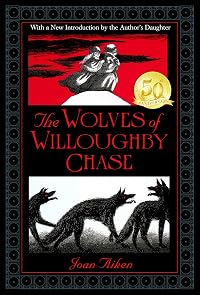
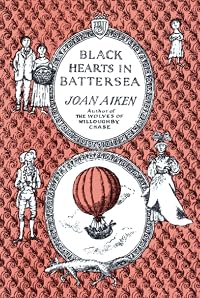
However, it's the story itself that just doesn't really appeal to me. Aiken is a genius at taking seemingly worn-out tales and making them fresh, but it just didn't happen for me with this one. Arabis is like a mix between Aiken's other main female characters, Sophie and Dido, and I have to say I like the others better. Ditto for Owen - I liked him, but I like Simon better. According to Goodreads this is book 0 in the Wolves chronicles (does that mean it's a prequel?). I don't really see how it fits in with the others at all, except for its similar time-setting. I love the later books far, far more, from the wonderful Wolves of Willoughby Chase that I first read in lower elementary school, to Black Hearts in Battersea, which is one of my later-discovered favorites.
If you love old-fashioned adventures full of danger, excitement, humor, and compelling characters, then I wholeheartedly recommend you read this series. I'm sure that many would like this book, but for me at least it just felt a bit too ordinary - and I kept getting flashbacks to George McDonald's The Princess and the Goblins. If you're a fan of the series and haven't gotten around to this one yet, then by all means read it. It's not that it's bad by any definition of the word - it's just not as good as many of the other books in the series. If you have never read a Joan Aiken and you want to, then start with The Wolves of Willoughby Chase or Black Hearts in Battersea. Trust me, you'll be happy you did. show less
I love Joan Aiken's books so much. Every year or so I go on an Aiken kick where I read a bunch of books in her amazing Wolves series. The thing about those books is that they always look so boring from the cover description and synopsis, but are actually amazing books full of humor, terror, mischief, and clever plot twists that make things fun. You always know the young main characters won't come to any real harm, but anyone else is fair game. Aiken's books are written for a less sheltered generation of children, where murder and terror are part of the story. This serves to increase the tension, and sweeten the reward.
Now for this specific book. I picked it up for a quarter at a show more flea market, very excited to find a Joan Aiken I hadn't read yet. I read it in one sitting (staying up a bit later than I really should have, more from an unwillingness to go to sleep than any driving desire to finish the book), and - well, and then I fell asleep. It was good, but it wasn't exactly thrilling.
This is a book with many pieces and people and plot devices, all rolled together in a way that makes things seem ridiculously complicated at first, but actually winds up fitting together perfectly in the end. There is a father and daughter team of gypsies, a nerdy-yet-inwardly-strong young boy, two nasty thieves, a prince, an evil Marquess (It took me a while to get it straight in my head that this is a male term), a monk, a foreign Seljuk (apparently some sort of Rajah), a bunch of dwarf-people, and many more wildly different characters. This is a story told in bits and pieces, where everyone pursues the truth from a different angle and then at the end of the book figure out the whole picture by talking to everyone else. This is a very clever way of telling the tale, because there are many "mini books" inside the big book, with the various main characters ducking and weaving throughout the stories of the other characters.
However, it's the story itself that just doesn't really appeal to me. Aiken is a genius at taking seemingly worn-out tales and making them fresh, but it just didn't happen for me with this one. Arabis is like a mix between Aiken's other main female characters, Sophie and Dido, and I have to say I like the others better. Ditto for Owen - I liked him, but I like Simon better. According to Goodreads this is book 0 in the Wolves chronicles (does that mean it's a prequel?). I don't really see how it fits in with the others at all, except for its similar time-setting. I love the later books far, far more, from the wonderful Wolves of Willoughby Chase that I first read in lower elementary school, to Black Hearts in Battersea, which is one of my later-discovered favorites.
If you love old-fashioned adventures full of danger, excitement, humor, and compelling characters, then I wholeheartedly recommend you read this series. I'm sure that many would like this book, but for me at least it just felt a bit too ordinary - and I kept getting flashbacks to George McDonald's The Princess and the Goblins. If you're a fan of the series and haven't gotten around to this one yet, then by all means read it. It's not that it's bad by any definition of the word - it's just not as good as many of the other books in the series. If you have never read a Joan Aiken and you want to, then start with The Wolves of Willoughby Chase or Black Hearts in Battersea. Trust me, you'll be happy you did. show less
Set in the small town of Pennygaff, the story follows a young boy named Owen Hughes who has been sent to live there after his mother's death. A legendary golden harp, the Harp of Teirtu, is discovered, but a prophecy warns of its potential owner, the evil Lord Mayln. Owen and his friend Arabis are plunged into an adventure to prevent the magical harp from falling into the wrong hands, leading them through intrigue, kidnapping, and an exotic underground world.
Members
- Recently Added By
Lists

Favorite Childhood Books
1,651 works; 519 members

Best Children's Books You've Read
197 works; 75 members

Llyfrau Cymraeg i blant
9 works; 1 member

Kidnapping -- children's/young adult fiction
598 works; 3 members

Top Five Books of 2024
795 works; 264 members
Author Information

216+ Works 19,831 Members
Joan Delano Aiken was born in Rye, Sussex, England, on September 4, 1924, the daughter of the Pulitzer Prize winner, writer Conrad Aiken. She was raised in a rural area and home schooled by her mother until the age 12. She then attended Wychwood School, a boarding school in Oxford. Her work first appeared in 1941 when the British Broadcasting show more Corporation, where she worked as a librarian, broadcast some of her short stories on their Children's Hour program. Aiken also worked at St. Thomas's Hospital, and in 1943 she moved to the reference department of the London office of the United Nations, where she collected information about resistance movements. She worked for the UN until 1949, all the while continuing to write stories. In 1953 a collection of short fiction called All You've Ever Wanted and Other Stories was published. While writing The Wolves of Willoughby Chase, begun in 1952, her husband became ill and died of lung cancer in 1955. After working for five years as a copy editor at Argosy Magazine, and at the J. Walter Thompson Advertising Firm, she returned and finished the book in 1963. The Wolves of Willoughby Chase won the Lewis Carroll Shelf Award and was made into a successful film in 1988. In 1969 The Whispering Mountain won the Guardian Children's Book Award, and in 1972, Night Fall won America's Edgar Allen Poe Award for juvenile mystery. Aiken is best known for her adult "fantasy" stories. She has received awards for children's fiction and for mystery fiction, and has also written ''sequels'' to Jane Austen books. She collaborated with her daughter to write many episodes of her Arabel and Mortimer the raven series for the BBC. In all, Aiken wrote 92 novels - including 27 for adults - as well as plays, poems and short stories, although she was best known as a writer of children's stories. Joan Aiken died in January of 2004 at the age of 79. (Bowker Author Biography) show less
Some Editions
Awards and Honors
Common Knowledge
- Canonical title*
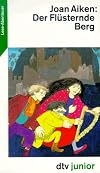
- Der Flüsternde Berg
- Original title
- The Whispering Mountain
- Original publication date
- 1968
- People/Characters
- Owen Hughes
- Dedication
- I wish to express my gratitude to Kitty Norris, who corrected my Welsh, and to the Head Librarian of Brecon Public Library, who let me rummage among his archives.
- First words
- On a sharp autumn evening a boy stood waiting inside the high stone pillars which flanked the gateway of the Jones Academy for the Sons of Gentlemen and Respectable Tradesmen in the small town of Pennygaff.
- Last words
- (Click to show. Warning: May contain spoilers.)Then Fig-hat Ben shall wear a shroud,
Then shall the despoiler, that was so proud,
Plunge headlong down from the Devil's Leap;
Then shall the Children from darkness creep,
And the men of the glen avoid disaster,
And the Harp of Teirtu find her master.
*Some information comes from Common Knowledge in other languages. Click "Edit" for more information.
Classifications
- Genres
- Fiction and Literature, Kids, Fantasy
- DDC/MDS
- 823.914 — Literature & rhetoric English & Old English literatures English fiction 1900- 1901-1999 1945-1999
- LCC
- PZ7 .A2695 .W — Language and Literature Fiction and juvenile belles lettres Fiction and juvenile belles lettres Juvenile belles lettres
- BISAC
Statistics
- Members
- 575
- Popularity
- 51,356
- Reviews
- 13
- Rating
- (3.83)
- Languages
- English, German
- Media
- Paper, Ebook
- ISBNs
- 15
- ASINs
- 10