Charles Vess
Author of Stardust [Graphic]
About the Author
Series
Works by Charles Vess
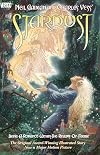
The Art of Neil Gaiman and Charles Vess's Stardust: An Informal History by Charles Vess (2021) 30 copies
The Sandman #19 (Dream Country: A Midsummer Night's Dream) (1990) — Illustrator — 22 copies, 1 review
A Charles Vess Coloring Book 8 copies
The Book of Night #2 2 copies
The Book of Ballads and Sagas #s 1-3 2 copies
Prince Valiant #2 1 copy
The Book of Night #3 1 copy
Hook #3 (of 4) 1 copy
Dreamweavers 1 copy
Hook #4 (of 4) 1 copy
Charles Vess Portfolio 1 copy
Associated Works
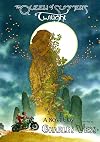
The Ladies of Grace Adieu and Other Stories (2006) — Illustrator, some editions — 4,588 copies, 136 reviews
The Books of Earthsea: The Complete Illustrated Edition (2018) — Illustrator; Cover artist — 1,610 copies, 7 reviews
The Faery Reel: Tales from the Twilight Realm (2004) — Illustrator, some editions; Cover artist, some editions — 1,088 copies, 15 reviews
Firebirds: An Anthology of Original Fantasy and Science Fiction (2003) — Illustrator — 851 copies, 24 reviews
Seven Wild Sisters: A Modern Fairy Tale (2002) — Illustrator, some editions — 402 copies, 12 reviews
The Year's Best Fantasy and Horror: Fifteenth Annual Collection (2002) — Contributor — 275 copies, 4 reviews
The Year's Best Fantasy & Horror 2006: 19th Annual Collection (2006) — Contributor — 244 copies, 4 reviews
The Year's Best Fantasy and Horror: Seventeenth Annual Collection (2004) — Contributor — 241 copies, 9 reviews
The Year's Best Fantasy and Horror: Sixteenth Annual Collection (2003) — Contributor — 240 copies, 2 reviews
The Beastly Bride: Tales of the Animal People (2010) — Illustrator, some editions — 232 copies, 5 reviews
The Year's Best Fantasy and Horror: Eighteenth Annual Collection (2005) — Contributor — 231 copies, 5 reviews
Swamp Thing Annual #7 (A Child's Garden Revisited/Rise and Fall/Beauty and the Beast) (1993) — Cover artist — 13 copies
Spectre #5 — Cover artist — 2 copies
THE FACE OF FEAR AND OTHER POEMS. Compiled by Steve Eng and Introduced by Joseph Payne Brennan. (1982) — Cover artist — 2 copies
Peter Pan [Conversation Tree Press] — Illustrator, some editions — 1 copy
The Lost Day [short story] — Illustrator, some editions — 1 copy
The World Fantasy Convention 2011: Sailing the Seas of the Imagination — Contributor — 1 copy
FenCon X: Infinite Possibilities — Contributor; Cover artist — 1 copy
Tales from the Heart #10 — Cover artist, some editions — 1 copy
Tagged
Common Knowledge
- Legal name
- Vess, Charles Dana
- Other names
- Vess, Charles D.
- Birthdate
- 1951-06-10
- Gender
- male
- Education
- Virginia Commonwealth University (1974, BFA)
- Occupations
- fantasy artist
comic book creator - Awards and honors
- Inkpot Award (1990)
Eisner Award ( [1991, 1997, 2002])
World Fantasy Award ( [1991, 1999])
Comic Creator's Guild (1993)
Comics Industry Silver Award (1995)
Locus Award (Artist, 2019) (show all 7)
Locus Award Finalist (Artist, 2026) - Nationality
- USA
- Places of residence
- Abingdon, Virginia, USA
New York, New York, USA - Associated Place (for map)
- USA
Members
Reviews
Neil Gaiman is one of my favorite authors and one of my favorite things about him is his unabashed, genuine, passionate love of story and myth. The Sandman is his greatest work because it allowed him to delve deep into this love and while I love or at least enjoy almost all of his other work, The Books of Magic is really the only thing I've read that captures that same magical enthusiasm that made The Sandman so captivating and thought-provoking so long ago.
In typical Sandman fashion this show more story is low on conflict but high on powerful themes. Basically, a group of DC characters with magical leanings decide that it's time to teach a boy about magic, because he could be the greatest magician of his age, and because others are eyeing the boy with envy and they want to make sure he knows all the choices laid out before him (obviously hoping that he will choose to use his magic for good).
What follows is, quite simply, magic. Pardon the pun, but really, it is. Between the illustrations, the themes, and Gaiman's beautiful prose this book made me feel like Alice, tumbling down the rabbit hole.
They show the boy how the universe was born, and how it ends. They show him the various planes of existence that exist beside our own: Faerie, Hell, The Dreaming, etc. Dream, Death, Destiny, Cain, and Abel from The Sandman all make an appearance. Many other DC characters I wasn't familiar with do as well.
My favorite line from the book was from Titania, queen of faerie, and perfectly shows off Gaiman's masterful prose which washes over you like a waterfall and smashes into you like a tsunami:
"You wish to see the distant realms? Very well. But know this first: the places you will visit, the places that you will see, do not exist. For there are only two worlds--your world, which is the real world, and other worlds, the fantasy...These worlds provide an alternative. Provide an escape. Provide a threat. Provide a dream, and power, provide refuge, and pain. They give your world meaning. They do not exist; and thus they are all that matters." show less
In typical Sandman fashion this show more story is low on conflict but high on powerful themes. Basically, a group of DC characters with magical leanings decide that it's time to teach a boy about magic, because he could be the greatest magician of his age, and because others are eyeing the boy with envy and they want to make sure he knows all the choices laid out before him (obviously hoping that he will choose to use his magic for good).
What follows is, quite simply, magic. Pardon the pun, but really, it is. Between the illustrations, the themes, and Gaiman's beautiful prose this book made me feel like Alice, tumbling down the rabbit hole.
They show the boy how the universe was born, and how it ends. They show him the various planes of existence that exist beside our own: Faerie, Hell, The Dreaming, etc. Dream, Death, Destiny, Cain, and Abel from The Sandman all make an appearance. Many other DC characters I wasn't familiar with do as well.
My favorite line from the book was from Titania, queen of faerie, and perfectly shows off Gaiman's masterful prose which washes over you like a waterfall and smashes into you like a tsunami:
"You wish to see the distant realms? Very well. But know this first: the places you will visit, the places that you will see, do not exist. For there are only two worlds--your world, which is the real world, and other worlds, the fantasy...These worlds provide an alternative. Provide an escape. Provide a threat. Provide a dream, and power, provide refuge, and pain. They give your world meaning. They do not exist; and thus they are all that matters." show less
Overall, this was just an okay story. At the end of the book, you get a bit of background from Vess as to why and how this story came about (spoiler alert: it's because he fell in love with that area of Scotland).
And while that's lovely and all, and it allows Vess to write all those lovely Scottish lines of dialogue, and draw all those lovely settings, the secret to Spider-Man is having a kickass story that drives the entire thing. And that's not here.
There's some vague comments toward the show more titular Spirits of the Earth, but they're soon dismissed. And while it's fun to see the web-slinger stuck in a place where he can't exactly swing all that well, so it's essentially a standard fish out of water story (or as Vess puts it, the City Mouse and the Country Mouse, but in reverse), some more lead up, and some more exposition was definitely required to help this mess make a bit of sense.
Instead, we get a standard baddie, with a bolted-on history that is provided in the standard stilted dialogue of all villains just before they think they're going to win, but they always lose.
So, yeah, that's the story. But what about the art?
Well, the setting stuff is lovely, but Vess should try and stay away from humans. MJ in particular, the super-model of the book, ends up with her eyes drawn so far apart at times, she appears fishlike.
Now, gimme a Lovecraftian story with MJ and the townsfolk turning into H.P.'s fish people, and Spidey trying to fight that? Good enough. But this story? This art?
Nah. show less
And while that's lovely and all, and it allows Vess to write all those lovely Scottish lines of dialogue, and draw all those lovely settings, the secret to Spider-Man is having a kickass story that drives the entire thing. And that's not here.
There's some vague comments toward the show more titular Spirits of the Earth, but they're soon dismissed. And while it's fun to see the web-slinger stuck in a place where he can't exactly swing all that well, so it's essentially a standard fish out of water story (or as Vess puts it, the City Mouse and the Country Mouse, but in reverse), some more lead up, and some more exposition was definitely required to help this mess make a bit of sense.
Instead, we get a standard baddie, with a bolted-on history that is provided in the standard stilted dialogue of all villains just before they think they're going to win, but they always lose.
So, yeah, that's the story. But what about the art?
Well, the setting stuff is lovely, but Vess should try and stay away from humans. MJ in particular, the super-model of the book, ends up with her eyes drawn so far apart at times, she appears fishlike.
Now, gimme a Lovecraftian story with MJ and the townsfolk turning into H.P.'s fish people, and Spidey trying to fight that? Good enough. But this story? This art?
Nah. show less
This edition of "Stardust" was the first I've read & truly loved of Gaiman's works. It touched the child in me & got me interested in the fantasy genre once more. What's more it's graced with Charles Vess's exquisite 175 illustrations -- delicate, colorful, ethereal, and full of little details and shadowy corners. He captures every shred of the magic that Gaiman's words are able to conjure, and a little bit more than that.
What is intriguing is the proposition that some time ago, mortal men & show more faerie creatures are involved in commerce, even though it's only every 9 years. An apt description of the Faerie Market: (There were wonders for sale, and marvels, and miracles; there were things undreamed-of and objects unimagined)
"Bottled dreams, a shilling a bottle!"
"Coats of night! Coats of twilight! Coats of dusk!"
"Swords of fortune! Wands of power! Rings of Eternity!"
Now, if you're mortal, would you pass up the opportunity to go & visit such a wonderful place? Never mind the caution of old, of not indulging in any faerie food & drink. I absolutely devoured the whole page spread of Vess' illustration of the Faerie Market....think of all the possibilities that could occur at such a place (reminiscent of the Floating Market as mentioned in Gaiman's "Neverwhere").
We met the slave girl in disguise who falls in love with the simple Dunstan (helped along with the gift of finding one's Heart's Desire by members of the Fellowship of the Castle). I laughed out loud at her sharp tongue, when she chastised Dunstan's imitation of a little owl's hoot as a signal of his arrival: "That is nothing like a little owl. If my ears were stopped up with twigs perhaps I'd imagine an eagle owl. But it's not a little owl." :)
One cannot help but cringe at what men would do in order to seize power to rule a kingdom, in this case, the Power of Stormhold. I thought that Primus would gain that right to rule, but ahh, be wary of those who are more cunning than you are.
The Three Ladies who are the Lilim can be traced back to old folklore; I don't know how they kept themselves sane having that mirror which reflects a warped version of their personal reality or longing (I can't decide which). In the end, I felt sorry for the oldest of the Lilim, knowing that her sisters await her return with cruel punishment:
Yvaine realized that she felt nothing but pity for the creature who had wanted her dead, so she said, "Could it be that the heart that you seek is no longer my own? I have given my heart to another."
"The boy? The one in the inn? With the unicorn?"
"Yes."
"Your boy will break it, or waste it, or lose it. They all do."
"Nonetheless, he has my heart."
When you read the book you don't realize how big a role the little hairy man plays in Tristran's life, but with Vess' illustrations, you see him popping up everywhere, slyly hidden. The two become fast friends when Tristran first entered Faerie, the former instructing him on the best way to deal with the locals & how not to give away his goal since others are also seeking the fallen star for their own purpose. I particularly liked how the hairy creature gave Tristran the candle-wax to aid him in finding the star ("Can I get there by candlelight? There and back again.")
You find yourself feeling for the characters, no matter the way they were introduced to the story. I rather felt that the unicorn deserved better, since I was appalled by the violent way its life ended. The captain of the ship Free Ship Perdita proved that ships can be airborne, on a lightning-hunting expedition & can later dock on a huge tree with other skyships. You should see Vess' illustration of this.
But the most romantic is of course the colored painting of Tristran & Yvaine realizing that they truly care for each other: (They kissed for the first time then in the cold spring rain; and neither one of them knew that it was raining). And the saddest, is the last illustration of Yvaine who stares "upward into the dark sky and watches, with sad yes, the slow dance of the infinite stars.")
Book Details:
Title Stardust: Being A Romance Within the Realms of Faerie (signed copy)
Author Neil Gaiman & Charles Vess
Reviewed By Purplycookie show less
What is intriguing is the proposition that some time ago, mortal men & show more faerie creatures are involved in commerce, even though it's only every 9 years. An apt description of the Faerie Market: (There were wonders for sale, and marvels, and miracles; there were things undreamed-of and objects unimagined)
"Bottled dreams, a shilling a bottle!"
"Coats of night! Coats of twilight! Coats of dusk!"
"Swords of fortune! Wands of power! Rings of Eternity!"
Now, if you're mortal, would you pass up the opportunity to go & visit such a wonderful place? Never mind the caution of old, of not indulging in any faerie food & drink. I absolutely devoured the whole page spread of Vess' illustration of the Faerie Market....think of all the possibilities that could occur at such a place (reminiscent of the Floating Market as mentioned in Gaiman's "Neverwhere").
We met the slave girl in disguise who falls in love with the simple Dunstan (helped along with the gift of finding one's Heart's Desire by members of the Fellowship of the Castle). I laughed out loud at her sharp tongue, when she chastised Dunstan's imitation of a little owl's hoot as a signal of his arrival: "That is nothing like a little owl. If my ears were stopped up with twigs perhaps I'd imagine an eagle owl. But it's not a little owl." :)
One cannot help but cringe at what men would do in order to seize power to rule a kingdom, in this case, the Power of Stormhold. I thought that Primus would gain that right to rule, but ahh, be wary of those who are more cunning than you are.
The Three Ladies who are the Lilim can be traced back to old folklore; I don't know how they kept themselves sane having that mirror which reflects a warped version of their personal reality or longing (I can't decide which). In the end, I felt sorry for the oldest of the Lilim, knowing that her sisters await her return with cruel punishment:
Yvaine realized that she felt nothing but pity for the creature who had wanted her dead, so she said, "Could it be that the heart that you seek is no longer my own? I have given my heart to another."
"The boy? The one in the inn? With the unicorn?"
"Yes."
"Your boy will break it, or waste it, or lose it. They all do."
"Nonetheless, he has my heart."
When you read the book you don't realize how big a role the little hairy man plays in Tristran's life, but with Vess' illustrations, you see him popping up everywhere, slyly hidden. The two become fast friends when Tristran first entered Faerie, the former instructing him on the best way to deal with the locals & how not to give away his goal since others are also seeking the fallen star for their own purpose. I particularly liked how the hairy creature gave Tristran the candle-wax to aid him in finding the star ("Can I get there by candlelight? There and back again.")
You find yourself feeling for the characters, no matter the way they were introduced to the story. I rather felt that the unicorn deserved better, since I was appalled by the violent way its life ended. The captain of the ship Free Ship Perdita proved that ships can be airborne, on a lightning-hunting expedition & can later dock on a huge tree with other skyships. You should see Vess' illustration of this.
But the most romantic is of course the colored painting of Tristran & Yvaine realizing that they truly care for each other: (They kissed for the first time then in the cold spring rain; and neither one of them knew that it was raining). And the saddest, is the last illustration of Yvaine who stares "upward into the dark sky and watches, with sad yes, the slow dance of the infinite stars.")
Book Details:
Title Stardust: Being A Romance Within the Realms of Faerie (signed copy)
Author Neil Gaiman & Charles Vess
Reviewed By Purplycookie show less
Considering that I jumped at the opportunity to buy my own copy of this book when I spotted it in a comic store in Saskatoon when I first moved to the Prairies (showing my true nerd colours to my coworkers, who were less than surprised) it makes me incredibly annoyed that I then allowed it to languish unread on my bookshelf for approximately 3 years… Not that there aren’t books that have been waiting longer, but none could possibly be as much of a delight as the definitive collection show more (incomplete as it is, due to the impossibility of collecting the full range of Vess’ work) of one of my favourite artists. I first became familiar with Charles Vess through his collaborations with Neil Gaiman and Charles de Lint (my pair of favourite authors), and I was well aware that he had worked as a cover illustrator and a fine fantasy artist, but his work in traditional superhero comics came as a complete surprise. If anything, this collection of art widened my perspective and makes me want to seek out more of his less mainstream work so that I can see the full range! show less
Lists
Awards
You May Also Like
Associated Authors
Statistics
- Works
- 61
- Also by
- 93
- Members
- 8,613
- Popularity
- #2,791
- Rating
- 4.2
- Reviews
- 218
- ISBNs
- 113
- Languages
- 12
- Favorited
- 9