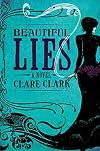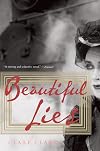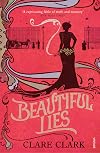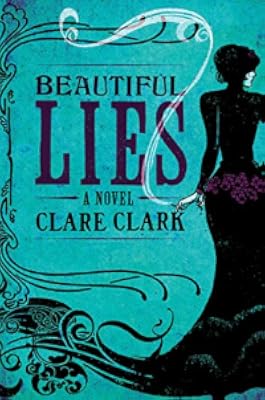
Beautiful Lies
by Clare Clark
On This Page
Description
London 1887. For Maribel Campbell Lowe, the beautiful bohemian wife of a maverick politician, it is the year to make something of herself. A self-proclaimed Chilean heiress educated in Paris, she is torn between poetry and the new art of photography. But it is soon plain that Maribel's choices are not so simple. As her husband's career hangs by a thread, her real past, and the family she abandoned, come back to haunt them both. When the notorious newspaper editor Alfred Webster begins to show more take an uncommon interest in Maribel, she fears he will not only destroy Edward's career but both of their reputations.. show less
Tags
Recommendations





Member Reviews
Despite how enigmatic and unsympathetic the protagonist Maribel is, her story is strangely entrancing. Clare Clark's beautifully woven descriptions draw the reader in, urging one to keep reading and attempt to understand the mysterious character and her past, even if the explanations are ultimately unsatisfactory.
The basics: Set in 1887 London, Beautiful Lies is the story of Maribel Campbell Lowe, whose husband Edward Campbell Lowe is a politician. Maribel was born in Chile and educated in Paris. When a letter arrives from her estranged mother asking to meet in London, their picture perfect life begins to unravel.
My thoughts: One challenge with historical fiction can be making characters both true to their time and accessibly to contemporary readers. Writing about female characters can pose a particular challenge, especially in the case of Maribel Campbell Lowe, who pushed against the gender boundaries of the 1880s. Clark masterfully sets the stage of Victorian London through her descriptive and detailed writing, but it was the dialogue and show more inner thoughts of Maribel that most impressed me. It was fascinating to read the different ways Maribel spoke to her husband, society equals, and the hired help. Through these distinctions, Clark gave Maribel her defiant voice yet stayed true to history.
It's clear from the title of this novel there are lies, and I won't spoil the pleasure of deciphering the truths from the lies here. Clark bases this novel on the real life story of Gabriela and Robert Cunninghame Graham. Knowing the story is based on real people made it even more suspenseful. As eager as I was to discover Maribel's lies, I was also eager to see how this story matched reality (Clark has a lengthy--and fabulous--author's note at the end.) I'm fascinated by political history, as the perspective of history gives us enough distance to see the big picture, and I loved the detail of this turbulent political time. What is perhaps most impressive, however, is how Clark ties all of the details and issues of Victorian London to today. As I read, I was immersed in the world of Maribel, but I couldn't help realizing how many parallels there are to other times.
Favorite passage: "I am not interested in the Indians as curiosities. If I am to photograph them it should be as they really are. The truth, not the myth-making."
The verdict: Beautiful Lies transported me to Victorian England. Clark made the politics and culture of the time come alive and feel familiar, and I'll state my prediction now: look for this title on the 2013 Orange Prize longlist in March. show less
My thoughts: One challenge with historical fiction can be making characters both true to their time and accessibly to contemporary readers. Writing about female characters can pose a particular challenge, especially in the case of Maribel Campbell Lowe, who pushed against the gender boundaries of the 1880s. Clark masterfully sets the stage of Victorian London through her descriptive and detailed writing, but it was the dialogue and show more inner thoughts of Maribel that most impressed me. It was fascinating to read the different ways Maribel spoke to her husband, society equals, and the hired help. Through these distinctions, Clark gave Maribel her defiant voice yet stayed true to history.
It's clear from the title of this novel there are lies, and I won't spoil the pleasure of deciphering the truths from the lies here. Clark bases this novel on the real life story of Gabriela and Robert Cunninghame Graham. Knowing the story is based on real people made it even more suspenseful. As eager as I was to discover Maribel's lies, I was also eager to see how this story matched reality (Clark has a lengthy--and fabulous--author's note at the end.) I'm fascinated by political history, as the perspective of history gives us enough distance to see the big picture, and I loved the detail of this turbulent political time. What is perhaps most impressive, however, is how Clark ties all of the details and issues of Victorian London to today. As I read, I was immersed in the world of Maribel, but I couldn't help realizing how many parallels there are to other times.
Favorite passage: "I am not interested in the Indians as curiosities. If I am to photograph them it should be as they really are. The truth, not the myth-making."
The verdict: Beautiful Lies transported me to Victorian England. Clark made the politics and culture of the time come alive and feel familiar, and I'll state my prediction now: look for this title on the 2013 Orange Prize longlist in March. show less
In Victorian London, scandal can so easily ruin your life. And Mirabel and her husband have a very big secret to hide! Dealing with a creepy newpaper reporter’s sudden interest in Mirabel and her abandoned family’s sudden reappearance in her life, Mirabel is an awesome, independent, heroine who refuses to conform to societal norms. She’s also an artist, with an artist’s fascinating observations on life and the meaning of art.
I know I said this already, but I’ll say it again for effect: I loved this book. What really sold it for me was the writing style, which reminded me of The House of Mirth or something by Austen. I felt like we were reading Mirabel’s memoirs, since it could have been written by someone in her time period, show more which made her feel more real. I also particularly enjoyed her musings on art and life. Again, the thoughtfulness added depth which made her feel like a real person. And while Mirabel was by far my favorite part of the book, a lot of the secondary characters were well fleshed out too. We discover more about their interests and their flaws with Mirabel, leading to several very well delivered subplots which played nicely with the main plot.
The slow revelation of Mirabel’s past was also done very well. It made the book a little bit of a mystery and kept me turning pages quickly! Mirabel has a highly unusual history, which made her later breaking of societal conventions and the decisive action she took to solve her own problems feel quite in character. My only problem with the book was a few minor typos and since my copy was clearly labeled as an ARC, I’m not sure that even counts. The writing was superb at showing situations instead of telling. The period feel of the writing rocked my socks. And I just can’t resist a great female protagonist. Highly recommended!
This review first published on Doing Dewey. show less
I know I said this already, but I’ll say it again for effect: I loved this book. What really sold it for me was the writing style, which reminded me of The House of Mirth or something by Austen. I felt like we were reading Mirabel’s memoirs, since it could have been written by someone in her time period, show more which made her feel more real. I also particularly enjoyed her musings on art and life. Again, the thoughtfulness added depth which made her feel like a real person. And while Mirabel was by far my favorite part of the book, a lot of the secondary characters were well fleshed out too. We discover more about their interests and their flaws with Mirabel, leading to several very well delivered subplots which played nicely with the main plot.
The slow revelation of Mirabel’s past was also done very well. It made the book a little bit of a mystery and kept me turning pages quickly! Mirabel has a highly unusual history, which made her later breaking of societal conventions and the decisive action she took to solve her own problems feel quite in character. My only problem with the book was a few minor typos and since my copy was clearly labeled as an ARC, I’m not sure that even counts. The writing was superb at showing situations instead of telling. The period feel of the writing rocked my socks. And I just can’t resist a great female protagonist. Highly recommended!
This review first published on Doing Dewey. show less
Words always fail when I'm really in love with a novel; a problem made worse when the novel in question is written in lush, lovely, dense, tangled, photographic, poetic prose. How do I compete?? Here's my try:
Set in the late 1880s, the novel follows Maribel Campbell Lowe, a stunning foreign beauty who smokes too much (in an era when only 'loose women' smoked!), is married to a radical Member of Parliament who supports socialism and reform, who yearns for the passion and inspiration that comes from an artistic life while performing her social obligations as an MP's wife.
Inspired by a real life couple, Robert Cunninghame Graham (who was the first socialist MP) and his wife Gabriela Cunninghame Graham, Clark's novel is hefty and rich, show more loaded with historical details about a Victorian London I'm unfamiliar with. Buffalo Bill Cody and his entourage are visiting, loaded with tons of gravel and rocks to replicate the Rocky Mountains in their performances. Queen Victoria's Jubilee is underway. The government and public are wrestling with suffrage, the right to assemble, the values they wish to embody -- and legalize -- while remaining safe.
Initially, I had a hard time getting into the book -- the novel opens with a game of charades, with our heroine and other side characters -- but within forty pages or so, I was hooked. Maribel has a secret, and I wanted to know what it was.
Clark's writing style is ... amazing. I'm prone to hyperbole, I know, and I'm pretty gushy in most of my reviews, so what do I mean by 'amazing'? The narrative is meaty, with flavor -- wry, sarcastic, dry, historical, detailed, emotional -- and the characters confusingly human. There's so much loaded into every sentence, but I wasn't aware of reading.
I was reminded of An Ideal Husband -- especially the lovely 1999 film version with Julianne Moore and Cate Blanchett (those dresses and hairstyles, the clever repartee and layers of secrets!) -- and I admit it: I want this to be a BBC miniseries stat. Maribel moves in Wilde's circle, so the connection was likely intentional, and I'm sure there's numerous nods to literary and artistic influences of the era that I missed but others might see.
This is historical fiction for anyone who hates romantic historical novels -- there's a strong current of love here, but it's not a bodice ripper -- and those who enjoy savoring strong women, strong writing, strong setting will be very, very happy to dig in. show less
Set in the late 1880s, the novel follows Maribel Campbell Lowe, a stunning foreign beauty who smokes too much (in an era when only 'loose women' smoked!), is married to a radical Member of Parliament who supports socialism and reform, who yearns for the passion and inspiration that comes from an artistic life while performing her social obligations as an MP's wife.
Inspired by a real life couple, Robert Cunninghame Graham (who was the first socialist MP) and his wife Gabriela Cunninghame Graham, Clark's novel is hefty and rich, show more loaded with historical details about a Victorian London I'm unfamiliar with. Buffalo Bill Cody and his entourage are visiting, loaded with tons of gravel and rocks to replicate the Rocky Mountains in their performances. Queen Victoria's Jubilee is underway. The government and public are wrestling with suffrage, the right to assemble, the values they wish to embody -- and legalize -- while remaining safe.
Initially, I had a hard time getting into the book -- the novel opens with a game of charades, with our heroine and other side characters -- but within forty pages or so, I was hooked. Maribel has a secret, and I wanted to know what it was.
Clark's writing style is ... amazing. I'm prone to hyperbole, I know, and I'm pretty gushy in most of my reviews, so what do I mean by 'amazing'? The narrative is meaty, with flavor -- wry, sarcastic, dry, historical, detailed, emotional -- and the characters confusingly human. There's so much loaded into every sentence, but I wasn't aware of reading.
I was reminded of An Ideal Husband -- especially the lovely 1999 film version with Julianne Moore and Cate Blanchett (those dresses and hairstyles, the clever repartee and layers of secrets!) -- and I admit it: I want this to be a BBC miniseries stat. Maribel moves in Wilde's circle, so the connection was likely intentional, and I'm sure there's numerous nods to literary and artistic influences of the era that I missed but others might see.
This is historical fiction for anyone who hates romantic historical novels -- there's a strong current of love here, but it's not a bodice ripper -- and those who enjoy savoring strong women, strong writing, strong setting will be very, very happy to dig in. show less
Maribel Campbell-Lowe (half French, half Spanish, raised in Chile) is the embodiment of the late-Victorian New Woman; her husband, Edward, inheritor of an impoverished Scottish estate, is the radical rising star of the Socialist Party - but as we soon find out, Maribel has secrets that only her husband knows, and that if these should be made public, it would be disgrace for her, and the end of his political career. So far, she has lived out this "beautiful lie", but now she fears journalist Alfred Webster could be about to expose her, partly to bring down her husband.
This is a meticulously researched, meticulously evocative portrait of the late 1880s, beautifully characterised and beautifully written. Clare Clark plays with may levels show more of deception and pretence throughout - Buffalo Bill and his Wild West Show, which is taking London by storm, Maribel's passion for photography (and the vogue for "spirit" photographs), the rise of investigative journalism, the young Maribel's passion to go on the stage and its consequences, a possible gold mine in Spain that could save the family estate ... (if I have a niggle, there seemed perhaps to be "too much" being drawn in to the narrative).
All in all though, this is a glorious slice of Victoriana, richly characterised and extremely moving in chronicling Maribel's story and how her whole life .
becomes her greatest role
And it is based on fact, Edward and Maribel Campbell-Lowe have real-life counterparts in the Socialist MP and founder member of the Labour Party, Robert Cunninghame-Graham, and his "French / Spanish" wife, Gabriela. Alfred Webster is a possibly more unpleasant version of the famous campaigning journalist, William Stead (who brought to light a number of MP's scandalous liaisons) show less
This is a meticulously researched, meticulously evocative portrait of the late 1880s, beautifully characterised and beautifully written. Clare Clark plays with may levels show more of deception and pretence throughout - Buffalo Bill and his Wild West Show, which is taking London by storm, Maribel's passion for photography (and the vogue for "spirit" photographs), the rise of investigative journalism, the young Maribel's passion to go on the stage and its consequences, a possible gold mine in Spain that could save the family estate ... (if I have a niggle, there seemed perhaps to be "too much" being drawn in to the narrative).
All in all though, this is a glorious slice of Victoriana, richly characterised and extremely moving in chronicling Maribel's story and how her whole life .
becomes her greatest role
And it is based on fact, Edward and Maribel Campbell-Lowe have real-life counterparts in the Socialist MP and founder member of the Labour Party, Robert Cunninghame-Graham, and his "French / Spanish" wife, Gabriela. Alfred Webster is a possibly more unpleasant version of the famous campaigning journalist, William Stead (who brought to light a number of MP's scandalous liaisons) show less
I don't read a lot of historical fiction and, admittedly, I'm not a huge fan of the genre which is probably why I picked up and put down this book three or four times before I managed to settle into it this time around. It had languished on my bookshelf unread since Christmas of 2014 - two years - but, since it was a gift from Mark, it was high priority on my to-read list. He's not a reader and yet supports my reading habit; how could I not read the book he had chosen for me?
In the end, pushing on with this book was incredibly worthwhile. It was a slow start, but a third of the way through, I found myself fascinated by Maribel's character, a woman with twists and turns in her past, carefully hidden from the public eye. Halfway through I show more found myself fascinated by the political atmosphere of the setting; the climate of unrest felt so parallel to the climate of unrest we have found ourselves in the last few months. Now at the end, I find myself grateful to have read this book now, and not immediately after I read it. History repeats itself over and over again; this book clearly highlighted that for me.
My biggest complaint about the story? It was looong. It didn't have to be nearly so long. It was well written, but not gripping enough for nearly 500 pages. There were long passages that involved not much more than wealthy women lingering over tea in stuffy parlours. Accurate, I'm sure, but not the most exciting to read. But, perhaps someone who consistently gravitates to historical fiction would disagree. show less
In the end, pushing on with this book was incredibly worthwhile. It was a slow start, but a third of the way through, I found myself fascinated by Maribel's character, a woman with twists and turns in her past, carefully hidden from the public eye. Halfway through I show more found myself fascinated by the political atmosphere of the setting; the climate of unrest felt so parallel to the climate of unrest we have found ourselves in the last few months. Now at the end, I find myself grateful to have read this book now, and not immediately after I read it. History repeats itself over and over again; this book clearly highlighted that for me.
My biggest complaint about the story? It was looong. It didn't have to be nearly so long. It was well written, but not gripping enough for nearly 500 pages. There were long passages that involved not much more than wealthy women lingering over tea in stuffy parlours. Accurate, I'm sure, but not the most exciting to read. But, perhaps someone who consistently gravitates to historical fiction would disagree. show less
This is a novel based on fact and knowing that makes the reading all the more interesting. Edward Campbell Lowe is a member of Parliament fighting for the rights of the poor at a time in England's history where there is a great divide between the rich and the downtrodden. He is married to Maribel, a woman with a mysterious past. She is dabbling in poetry and exploring photography but in reality she is running from the demons of her true background that are slowly catching up to her threatening to bring Edward's career and their status to a fiery end.
The book is written with rich details of the lives and times of Victorian Britains so that one feels as if there. Maribel is not completely likable as a character but I suspect it is because show more she has to hold her secrets so close. She only becomes her true self with Edward because he knows most of them. Edward is truly passionate about his causes even when they land him in jail. A sleazy newspaperman, Webster starts to support, then undermine Edward and to show an abnormal interest in Maribel. Does he know more about her than he should? All of the mystery makes for a dark read but Ms. Clark's way with words does not drag but rather keeps the reader turning pages to see exactly how it will all play out. I didn't understand, though her almost constant focus on Maribel's smoking? Did she just quit and this was a way of having a cigarette vicariously? It really got annoying . . .
I found Maribel's tale fascinating. She is a complex character and Edward is a good balance for her and together they made a good pair. The ancillary characters are well developed with the exception of Maribel's friend Charlotte - she was all sweetness and light. No one is that sweet - unless she was medicated. I don't know. But she did bring a welcome comic relief. I was satisfied with the ending, as mysterious as it was. show less
The book is written with rich details of the lives and times of Victorian Britains so that one feels as if there. Maribel is not completely likable as a character but I suspect it is because show more she has to hold her secrets so close. She only becomes her true self with Edward because he knows most of them. Edward is truly passionate about his causes even when they land him in jail. A sleazy newspaperman, Webster starts to support, then undermine Edward and to show an abnormal interest in Maribel. Does he know more about her than he should? All of the mystery makes for a dark read but Ms. Clark's way with words does not drag but rather keeps the reader turning pages to see exactly how it will all play out. I didn't understand, though her almost constant focus on Maribel's smoking? Did she just quit and this was a way of having a cigarette vicariously? It really got annoying . . .
I found Maribel's tale fascinating. She is a complex character and Edward is a good balance for her and together they made a good pair. The ancillary characters are well developed with the exception of Maribel's friend Charlotte - she was all sweetness and light. No one is that sweet - unless she was medicated. I don't know. But she did bring a welcome comic relief. I was satisfied with the ending, as mysterious as it was. show less
Members
- Recently Added By
Lists

Historical Fiction Lovers
88 works; 4 members

Authors from England
147 works; 4 members

To Read - Historical Fiction
3 works; 1 member
Author Information

7 Works 2,020 Members
Awards and Honors
Distinctions
Common Knowledge
- Canonical title
- Beautiful Lies
- Original publication date
- 2012
- People/Characters
- Maribel Campbell Lowe; Edward Campbell Lowe; Alfred Webster
- Important places
- London, England, UK
- Epigraph
- Truth is beautiful, without doubt; but so are lies.
-- Ralph Waldo Emerson - Dedication
- For my parents, with much love
- First words
- The room was dark.
- Last words
- (Click to show. Warning: May contain spoilers.)Then, abruptly caught by a sudden gust of wind, it danced across the earth and was gone.
- Disambiguation notice
- "First published in Great Britain by Harvill Secker in 2012." T.p. verso
Classifications
Statistics
- Members
- 150
- Popularity
- 218,445
- Reviews
- 12
- Rating
- (3.31)
- Languages
- English
- Media
- Paper, Audiobook, Ebook
- ISBNs
- 13
- ASINs
- 1