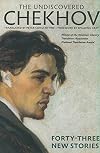
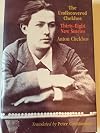
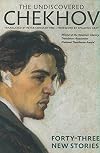
The Undiscovered Chekhov: Forty-Three New Stories
by Anton Chekhov
On This Page
Description
Stories by a 19th century Russian master, written for newspapers and magazines when he was an unknown. In one, a man discovers he does not have the money to pay for the goods he bought, another is on an arranged engagement.Tags
Recommendations










Member Reviews
My first book by Chekhov and I was pleasantly surprised. There's a lot of irony and humour in them, most of which focus on the daily interactions and occurrences in people's lives. Chekhov also uses a variety of different narrative formats (telegrams, epistolary, diary entries) to tell the stories and some of them are only a paragraph long. This made them seem more like fragments of longer tales, they felt incomplete, like little peeks into late 19th century Russian life, but I didn't really mind since I picked up this book specifically for times when I didn't want to read anything too long. But I ended up reading it all in a day anyway, ha!
Ratings
Members
- Recently Added By
Author Information

2,638+ Works 44,748 Members
Anton Pavlovich Chekhov was born in the provincial town of Taganrog, Ukraine, in 1860. In the mid-1880s, Chekhov became a physician, and shortly thereafter he began to write short stories. Chekhov started writing plays a few years later, mainly short comic sketches he called vaudvilles. The first collection of his humorous writings, Motley show more Stories, appeared in 1886, and his first play, Ivanov, was produced in Moscow the next year. In 1896, the Alexandrinsky Theater in St. Petersburg performed his first full- length drama, The Seagull. Some of Chekhov's most successful plays include The Cherry Orchard, Uncle Vanya, and Three Sisters. Chekhov brought believable but complex personalizations to his characters, while exploring the conflict between the landed gentry and the oppressed peasant classes. Chekhov voiced a need for serious, even revolutionary, action, and the social stresses he described prefigured the Communist Revolution in Russia by twenty years. He is considered one of Russia's greatest playwrights. Chekhov contracted tuberculosis in 1884, and was certain he would die an early death. In 1901, he married Olga Knipper, an actress who had played leading roles in several of his plays. Chekhov died in 1904, spending his final years in Yalta. (Bowker Author Biography) show less
Some Editions
Common Knowledge
- Original publication date
- 1998
- Original language
- Russian
Classifications
- Genres
- Fiction and Literature, General Fiction
- DDC/MDS
- 891.73 — Literature & rhetoric Asian Literature East Indo-European and Celtic literatures Russian and East Slavic languages Russian fiction
- LCC
- PG3456 .A15 .C66 — Language and Literature Slavic languages and literatures. Baltic languages. Albanian language Slavic. Baltic. Albanian Russian literature Individual authors and works 1870-1917 Chekhov
- BISAC
Statistics
- Members
- 89
- Popularity
- 358,827
- Reviews
- 1
- Rating
- (4.00)
- Languages
- English
- Media
- Paper, Ebook
- ISBNs
- 4
- ASINs
- 2