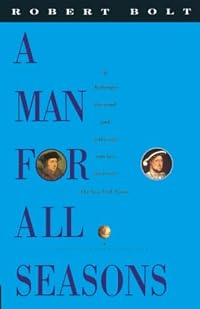
A Man for All Seasons
by Robert Bolt
On This Page
Description
The classic play about Sir Thomas More, the Lord chancellor who refused to compromise and was executed by Henry VIII. The story in play form of the conflict between Sir Thomas More & Henry VIII.Tags
Recommendations
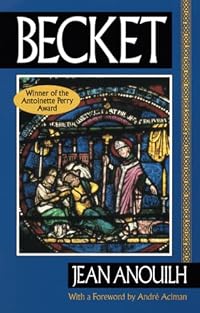
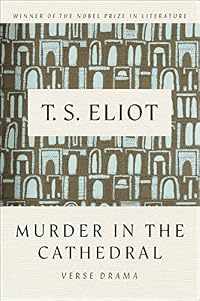
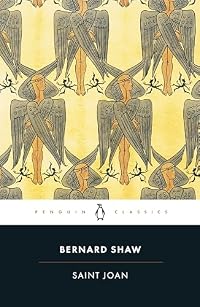




Member Recommendations
Exiles by Ron Hansen
by inge87
Member Reviews
A Man for All Seasons is hands-down my favorite play ever. It is even one of those plays that reads as well in book form as it does not the stage (or screen, the movie's amazing). Telling the story Sir Thomas More and his doomed attempt to serve his country and his conscience at the same time, the play uncovers some of the darker corners of the human psyche, from the psychopathic evil of Cromwell to the weak but ambitious Richard Rich (who memorably sells his soul for Wales) to the entitled demands of King Henry, it is all set out on display for the reader. The use of the Everyman character also allows the less privileged to get their two cents in. More himself comes out as a saint, but a modern one, fit for the times. A light to the show more darkness of the 1960s and today, who knows what is right and refused to bend for money, ambition, or even friendship's sake. I could quote lines from this play forever (but I won't), because you need to go out and read it yourself! Highly, highly recommended. show less
Yesterday I spent 30 minutes grouching to my husband about certain changes being discussed at work that clashed with something in my moral makeup. But, instead of letting that be the end (or the beginning) of the matter/habit, I took it to the manager at lunch. Why? Because it's almost impossible to read this story about More and not want to do something--in the right way-- about wrong things.
But not only that, More (as presented by Bolt) argues for authenticity. Not in the bold, in your face, take it or leave it way that is brandished about on social media, but in the silent, true to beliefs, humbly doing the best that you can way that is seen in the best of men*. He makes the emotional, militant, online petition-signing, show more meme-sharing, armchair activist** seem hollow, volatile, and unstable.
In an unrelated thought, I wonder if this play would have worked quite as well as it did without Paul Scofield. He created this role just as much as Bolt did, embodied him with strength, humor and certainty that few, I believe, could follow. He, and Dame Wendy Hiller, are the reasons I watch the film and will probably never, even if I have the chance, see a live revival of the production. He leaves impossible shoes to fill.
* See the nice guy at the gym on the elliptical on the end, Gordon B. Hinckley, Larry A Call, etc.
**See "Slacktivist." show less
But not only that, More (as presented by Bolt) argues for authenticity. Not in the bold, in your face, take it or leave it way that is brandished about on social media, but in the silent, true to beliefs, humbly doing the best that you can way that is seen in the best of men*. He makes the emotional, militant, online petition-signing, show more meme-sharing, armchair activist** seem hollow, volatile, and unstable.
In an unrelated thought, I wonder if this play would have worked quite as well as it did without Paul Scofield. He created this role just as much as Bolt did, embodied him with strength, humor and certainty that few, I believe, could follow. He, and Dame Wendy Hiller, are the reasons I watch the film and will probably never, even if I have the chance, see a live revival of the production. He leaves impossible shoes to fill.
* See the nice guy at the gym on the elliptical on the end, Gordon B. Hinckley, Larry A Call, etc.
**See "Slacktivist." show less
Somehow, in my mind I had confused this play with "Murder in the Cathedral". Both dramas about important advisers to English kings who met a bad end. So, apart from any other reason, I'm glad that i have at last sorted out that the are two very different plays and two very different kings and principle characters. It's actually a beautifully crafted play with great character development. Though, maybe Thomas More, comes across as just a bit too saintly for a real person. I think he captures Henry rather well ...bluff, sporty, well aware of the demand on him to produce an heir. And Thomas...more or less self made, clever, gentle, prepared to think the best of everybody, but not prepared to compromise on his religious beliefs. I found it show more rather fascinating that, given the turmoil around the catholic church and the role of the pope and the politics surrounding Charles of Spain that Thomas couldn't find it in himself to compromise. It certainly would have been easy to do and easy to justify. So I guess, he had just bought, holus-bolus, the story of Jesus giving the keys to the church to Peter and by succession to the current pope. (Despite the fact that there had been more than one pope simultaneously and the orthodox church had long done away with the authority of the pope).
As far as the bible is concerned, you could pretty much take whatever line you wanted to defend. Either Henry marrying Catherine or having the marriage annulled ......could be justified from biblical verses. What I found especially fascinating was that Thomas More was apparently held in such high respect that when Thomas asks Henry.."Then why does Your Grace need my poor support?" Henry replies: "Because you are honest. What's more to the purpose, you're known to be honest". Not a bad reputation to have.
And he can't say that he wasn't warned by Henry..that he (Henry) "would have no opposition".
Over all I found the play quite captivating and fascinating. A great exposé of those tumultuous times.....as Common Man explains....of those most involved in his trials: Cromwell was found guilty of high treason and executed, Norfolk found guilty of high treason but the king died of syphilis one day before he coud sign the death warrant, and Thomas Cranmer was burned alive. And, of course, Sir Thomas More was executed. (Not a great time to be close to the throne). Five stars from me. show less
As far as the bible is concerned, you could pretty much take whatever line you wanted to defend. Either Henry marrying Catherine or having the marriage annulled ......could be justified from biblical verses. What I found especially fascinating was that Thomas More was apparently held in such high respect that when Thomas asks Henry.."Then why does Your Grace need my poor support?" Henry replies: "Because you are honest. What's more to the purpose, you're known to be honest". Not a bad reputation to have.
And he can't say that he wasn't warned by Henry..that he (Henry) "would have no opposition".
Over all I found the play quite captivating and fascinating. A great exposé of those tumultuous times.....as Common Man explains....of those most involved in his trials: Cromwell was found guilty of high treason and executed, Norfolk found guilty of high treason but the king died of syphilis one day before he coud sign the death warrant, and Thomas Cranmer was burned alive. And, of course, Sir Thomas More was executed. (Not a great time to be close to the throne). Five stars from me. show less
I was first introduced to the movie in history class when I was about thirteen or fourteen, and absolutely adored it; so I sought out the script of the stage play to read as well.
Normally, I am not enamoured by a script when it's merely written words on a page - they usually seem a flat and a dead thing, empty of life and spark. I need to see it enacted and brought to life on the stage or in a movie. Bolt's managed to create a work which succeeds in captivating me on the page alone.
I don't have a very visual imagination - I tend to see in word pictures and verbal associations - so the pared-down, minimalistic approach Bolt uses when it comes to description and place really appealed to me. More than that, though, was the dialogue, which show more is the real joy and heart of this play. It's energetic and engaging, a wonderful mix of intellectual argument and erudition and dry humour. The verbal sparring between More and his opponents was just a joy to read.
More's personality isn't perhaps exactly how I would have pictured him from reading his writings - he comes across as a little more human in the play, I think. A little less steadfastly earnest and pious; and I think the play is the better for it. Bolt knew how to balance historical realism and accuracy with artistic license to create something which is very much both of 16th century England, and which speaks to the timeless dilemma of trying to reconcile personal beliefs with reality.
The ending was... interesting, if highly cynical. Probably the part of it that I'll end up mulling over the most, because of how it impacts on the preceding text and on my own views.
It's a very short work - only a hundred pages in the small edition I have - and you don't really need to know much about the background; so what are you waiting for? Go read! show less
Normally, I am not enamoured by a script when it's merely written words on a page - they usually seem a flat and a dead thing, empty of life and spark. I need to see it enacted and brought to life on the stage or in a movie. Bolt's managed to create a work which succeeds in captivating me on the page alone.
I don't have a very visual imagination - I tend to see in word pictures and verbal associations - so the pared-down, minimalistic approach Bolt uses when it comes to description and place really appealed to me. More than that, though, was the dialogue, which show more is the real joy and heart of this play. It's energetic and engaging, a wonderful mix of intellectual argument and erudition and dry humour. The verbal sparring between More and his opponents was just a joy to read.
More's personality isn't perhaps exactly how I would have pictured him from reading his writings - he comes across as a little more human in the play, I think. A little less steadfastly earnest and pious; and I think the play is the better for it. Bolt knew how to balance historical realism and accuracy with artistic license to create something which is very much both of 16th century England, and which speaks to the timeless dilemma of trying to reconcile personal beliefs with reality.
The ending was... interesting, if highly cynical. Probably the part of it that I'll end up mulling over the most, because of how it impacts on the preceding text and on my own views.
It's a very short work - only a hundred pages in the small edition I have - and you don't really need to know much about the background; so what are you waiting for? Go read! show less
The title reflects 20th century agnostic playwright Robert Bolt’s portrayal of More as the ultimate man of conscience. As one who remains true to himself and his beliefs under all circumstances and at all times, despite external pressure or influence, More represents "a man for all seasons." Bolt borrowed the title from Robert Whittington, a contemporary of More, who in 1520 wrote of him:
"More is a man of an angel's wit and singular learning. I know not his fellow. For where is the man of that gentleness, lowliness and affability? And, as time requireth, a man of marvelous mirth and pastimes, and sometime of as sad gravity. A man for all seasons."
The plot is based on the true story of Sir Thomas More, the 16th-century Chancellor of show more England, who refused to endorse King Henry VIII's wish to divorce his ageing wife Catherine of Aragon, who could not bear him a son, so that he could marry Anne Boleyn, the sister of his former mistress. The play portrays More as a man of principle, envied by rivals such as Thomas Cromwell and loved by the common people and by his family.
I read this with a local Great Books Group, but have also viewed both the stage play and the cinema adaptation. The portrayal of a man of conscience is what makes this one of my favorite works of drama. show less
"More is a man of an angel's wit and singular learning. I know not his fellow. For where is the man of that gentleness, lowliness and affability? And, as time requireth, a man of marvelous mirth and pastimes, and sometime of as sad gravity. A man for all seasons."
The plot is based on the true story of Sir Thomas More, the 16th-century Chancellor of show more England, who refused to endorse King Henry VIII's wish to divorce his ageing wife Catherine of Aragon, who could not bear him a son, so that he could marry Anne Boleyn, the sister of his former mistress. The play portrays More as a man of principle, envied by rivals such as Thomas Cromwell and loved by the common people and by his family.
I read this with a local Great Books Group, but have also viewed both the stage play and the cinema adaptation. The portrayal of a man of conscience is what makes this one of my favorite works of drama. show less
I used a quote from this play in my first academic publication. I first read this play in high school and I would enjoying seeing it performed. Sir Thomas More's integrity is admirable and appealing, yet I cannot help but think it is futile. Bolt captures many themes in a short play that is very clever. While More's lack of political "ability" seems outdated, former Prime Minister the late Gough Whitlam suffered the same fate by believing that the Governor General would follow convention and only act on the advice of the Prime Minister. More thought he cold keep his conscience and placate King Henry VIII. They were both wrong. Honourable, yet in the grand scheme of history, rather pointless. Better to be the Common Man and die in one's show more bed, methinks. show less
Read this play for my playwriting class. Its paired with Antigone. Overall I think its a very good play with many good points about one's conscience and sense of duty to God and self. I think it'd be better to see than read however, because the long stage directions and descriptions really drag it out and would work better just being done on the stage. As a play to read it drags itself out a lot but it provides a lot of good info for the actors so its a half good half bad element, depending on how youre experiencing it.
Members
- Recently Added By
Lists

Biggest Disappointments
606 works; 165 members

1:28 p.m.'s 350 Stage Plays Challenge
94 works; 3 members
Recommendations by Peter Kreeft
45 works; 4 members

School Made Us Read It
380 works; 196 members

Next Plays to Watch
50 works; 1 member
My Play Collection
769 works; 3 members

Ambleside Year 8
80 works; 1 member

The Well-Educated Mind, Susan Wise Bauer, 2016
179 works; 3 members

Books That Made Us Cry
278 works; 145 members

Books We Love to Reread
688 works; 296 members
Essential/Recognized Stage Plays
115 works; 4 members

Well-Educated Mind
150 works; 3 members

Every Non-Musical Play Nominated for a Tony Award
64 works; 3 members

Watched the Movie, Probably Won't Read the Book
185 works; 34 members
Stage Plays/Screenplays/Dialogues/Anything Dialogue-Storytelling Related
81 works; 2 members
1960s, Best books published therein
254 works; 22 members

The Well-Educated Mind Reading Challenge
75 works; 7 members
Mensa for Kids Excellence in Reading Award Program (Grades 9-12)
116 works; 3 members
Mensa for Kids Excellence in Reading Award Program (Grades 9-12)
116 works; 4 members

Set in the 15th and 16th Centuries
28 works; 4 members
Saints and Blesseds
74 works; 4 members
Good, Smart, Clean Fiction
46 works; 4 members

20th Century Literature
1,161 works; 54 members

Books That Made Me Cry
199 works; 105 members
Plays I Like
230 works; 31 members

el
1,139 works; 1 member
Author Information

28+ Works 3,923 Members
Born in Manchester, England, where he attended the university, Robert Bolt was teaching school in 1957 when his play Flowering Cherry, with Ralph Richardson in the title role, was staged in London. The success of the play persuaded Bolt to devote himself to the theater. The Tiger and the Horse (1960) which, like its predecessor, concerns the show more paradoxes of idealism and detachment, appeared three years later. In the meanwhile, Bolt had written for BBC radio the short play about Sir Thomas More, which he was to expand into his international triumph, A Man for All Seasons (1960). The play brought Bolt the New York Drama Critics Circle Award in 1962, and, for the screenplay, an Academy Award. Bolt wrote a series of screenplays for David Lean including Lawrence of Arabia (1962), Doctor Zhivago (1965), and Ryan's Daughter (1970), in which personal melodrama is again played out against romanticized history. The stage work Vivat! Vivat Regina! (1970) confronts Queen Elizabeth's rigidity with the femininity of Mary of Scotland. State of Revolution (1977), written for the National Theatre, is a portrait of Lenin as a sensitive leader imprisoned in his ideals. Some of his other works include The Bounty, The Mission, A Man For All Seasons, and Without Warning: The James Brady Story. He died at age 70, in Petersfield, Hampshire, England, following a long illness. (Bowker Author Biography) show less
Some Editions
Awards and Honors
Awards
Distinctions
Notable Lists
Series
Belongs to Publisher Series
Work Relationships
Has the adaptation
Has as a student's study guide
Common Knowledge
- Canonical title
- A Man for All Seasons
- Original publication date
- 1960
- People/Characters
- Thomas More; Henry VIII, King of England; Thomas Cromwell, 1st Earl of Essex; Margaret Roper; Thomas Wolsey
- Important places
- England, UK
- Related movies
- A Man for All Seasons (1966 | IMDb)
- First words
- When the curtain rises, the set is in darkness but for a single spot on the COMMON MAN, who sits on a big property basket. COMMON MAN: It is perverse!
- Last words
- (Click to show. Warning: May contain spoilers.)If we should bump into one another, recognize me. (He exits)
- Original language
- English
- Disambiguation notice
- play
Classifications
Statistics
- Members
- 3,554
- Popularity
- 4,578
- Reviews
- 35
- Rating
- (3.97)
- Languages
- English, German, Hungarian
- Media
- Paper, Audiobook, Ebook
- ISBNs
- 34
- UPCs
- 2
- ASINs
- 45