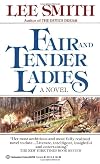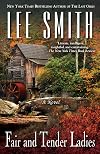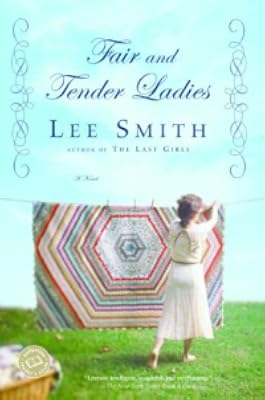
Fair and Tender Ladies
by Lee Smith
On This Page
Description
Author of many novels and short stories, best-selling writer Lee Smith has received numerous awards for her works, including two O Henry Awards. Fair and Tender Ladies is an epistolary novel that traces the life of Ivy Rowe, born in the isolated Virginia mountain community of Sugar Fork. Through births and deaths, marriages and funerals, the decades of Ivy's life are captured in a rich dialect that carries the sounds and sights of the Appalachians in each syllable.Tags
Recommendations
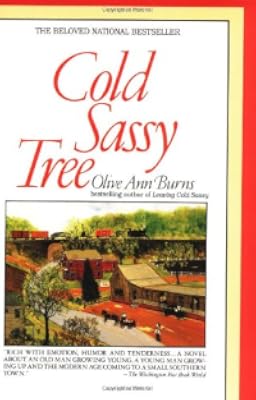
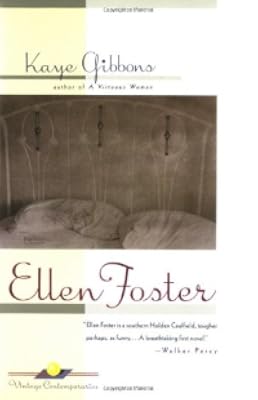
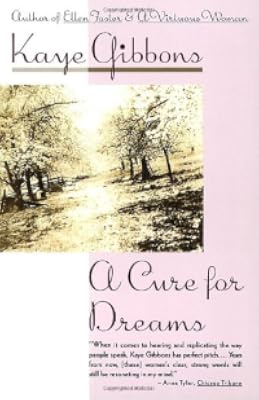
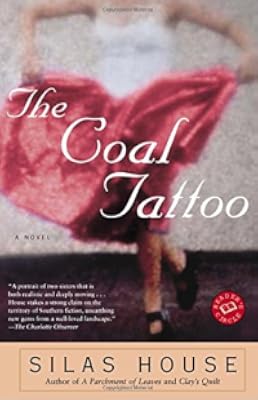




Member Recommendations
Member Reviews
This is a fabulous book with an unforgettable heroine named Ivy Rowe. It is great--believe you me! Set out in letters that begin with a twelve year old Ivy and take us through an entire lifetime, Ivy’s soul is put onto paper, sprinkled with all her hopes, dreams and disappointments. I defy anyone to get past the first letter without loving Ivy unreservedly. She surely made me laugh, cry, rejoice and lament, and she made me remember something of a life that I once had a glimpse of that is now gone forever. If you traveled deep into Appalachia, you might find people still living somewhat the same, but I doubt it. There just isn’t anywhere like Blue Star Mountain anymore.
I have sometimes thought that my own life has a soundtrack. I can show more conjure up specific events and people when I hear certain songs. Apparently, Ivy Rowe’s life had a soundtrack as well. I loved all the references to old songs and, after one of my fine GR friends, Tom, posted one of the songs off of Youtube, I felt compelled to seek out every song that was mentioned and listen to them one by one. It was a surreal experience, since they were songs that conjured my own father and his brothers, who loved nothing better than to get together on the porch with fiddle and guitars and fill the night with folk music, hymns and popular songs of their time.
Ivy dreams of a bigger life, one filled with purpose and travel and adventure, but she finds hers is destined to be a rather simple life, lived primarily at Sugar Fork and circling around a small community and a limited number of people. But, I think she finds, in the end, that simple lives have purpose too, and perhaps as many or more facets than those lived in exotic places or in fancy homes. Like the creek that leads to Sugar Fork, her life meanders and turns and changes, and it is the memory of all that moving water that matters the most.
"I felt a pain shoot through me, like an arrow in my heart. Oh Joli, you get so various as you get old! I have been so many people. And yet I think the most important thing is Don't Forget. Don't ever forget."
Lee Smith is an adroit writer, who almost paints her scenes, like airbrushing with words. I had a true sense of the beauty and wildness of Sugar Fork, the rising mountains, the foliage, and the fields of wildflowers.
"But night comes in slow over Bethel Mountain and we watch it come, like it is sneaking in I reckon, stealing across the mountains ridge by ridge, they go blue and purple before your very eyes, and then the mist will rise."
I could not be happier to have climbed this mountain with Ivy. She is so refreshingly open-minded, so kind, feeling, accepting and imperfect. Like so many of us, she doesn’t always appreciate what she has, she acts rashly, she caves into desires she barely understands, she falls for lines that she knows are not true, but she presses forward, forgives others and often forgives herself. But, through it all, she chooses. She never abdicates the choice to others and the responsibility, credit and the blame, are always hers alone. If, at the end of my life, I could look back and see a life as full of love and meaning as Ivy’s, I think I could be satisfied.
I am always indebted to Diane and The Southern Literary Trail for introducing me to the best authors and the finest books. I have discovered Tom Franklin, Howard Bahr, Tim Gautreaux, Michael Farris Smith, and now Lee Smith. How on earth do you say “thank you” for that? show less
I have sometimes thought that my own life has a soundtrack. I can show more conjure up specific events and people when I hear certain songs. Apparently, Ivy Rowe’s life had a soundtrack as well. I loved all the references to old songs and, after one of my fine GR friends, Tom, posted one of the songs off of Youtube, I felt compelled to seek out every song that was mentioned and listen to them one by one. It was a surreal experience, since they were songs that conjured my own father and his brothers, who loved nothing better than to get together on the porch with fiddle and guitars and fill the night with folk music, hymns and popular songs of their time.
Ivy dreams of a bigger life, one filled with purpose and travel and adventure, but she finds hers is destined to be a rather simple life, lived primarily at Sugar Fork and circling around a small community and a limited number of people. But, I think she finds, in the end, that simple lives have purpose too, and perhaps as many or more facets than those lived in exotic places or in fancy homes. Like the creek that leads to Sugar Fork, her life meanders and turns and changes, and it is the memory of all that moving water that matters the most.
"I felt a pain shoot through me, like an arrow in my heart. Oh Joli, you get so various as you get old! I have been so many people. And yet I think the most important thing is Don't Forget. Don't ever forget."
Lee Smith is an adroit writer, who almost paints her scenes, like airbrushing with words. I had a true sense of the beauty and wildness of Sugar Fork, the rising mountains, the foliage, and the fields of wildflowers.
"But night comes in slow over Bethel Mountain and we watch it come, like it is sneaking in I reckon, stealing across the mountains ridge by ridge, they go blue and purple before your very eyes, and then the mist will rise."
I could not be happier to have climbed this mountain with Ivy. She is so refreshingly open-minded, so kind, feeling, accepting and imperfect. Like so many of us, she doesn’t always appreciate what she has, she acts rashly, she caves into desires she barely understands, she falls for lines that she knows are not true, but she presses forward, forgives others and often forgives herself. But, through it all, she chooses. She never abdicates the choice to others and the responsibility, credit and the blame, are always hers alone. If, at the end of my life, I could look back and see a life as full of love and meaning as Ivy’s, I think I could be satisfied.
I am always indebted to Diane and The Southern Literary Trail for introducing me to the best authors and the finest books. I have discovered Tom Franklin, Howard Bahr, Tim Gautreaux, Michael Farris Smith, and now Lee Smith. How on earth do you say “thank you” for that? show less
Ivy Rowe is born around the beginning of the 20th century in the mountain cabin where her parents have settled. She is in the middle of a pack of eight children and we learn about her life through the letters she writes, beginning at age 12 to a pen pal in Holland, or to her teacher, and continuing through her long life as she writes to her friends and family over the decades.
What a marvelous character! Ivy is curious and adventurous, intelligent if lacking education, forthright, determined, and self-reliant. She makes mistakes and deals with them. She finds love in the wrong places and then with a good man. She observes the workings of the world as it changes around her but remains true to her tiny corner and her mountain ways. She show more raises children – her own, her neighbor’s, her grandkids. She helps her neighbors, advises her siblings, dares to dream big, and resolves to live well and true to herself. And through it all she writes these wonderful letters, full of all the emotions of life – joy, despair, hope, dejection, enthusiasm, resignation and love, always love.
The landscape is vividly portrayed and practically a character. I’ve driven through some of these mountain areas in Virginia, West Virginia, and North Carolina, but even if I had never seen them with my own eyes, I think I would have a clear picture in my head based on Smith’s descriptions. I could hear the bees buzzing, smell the fragrance of a summer meadow, feel the leaves crunch underfoot on an autumn afternoon, or smell the smoke from a chimney fire welcoming me home on a cold winter evening.
Smith also uses a vernacular dialect throughout. However, Ivy’s language (and spelling) improve as she grows from a 12-year-old with limited education to a grown woman who loves to read. There were a few times when I really had to stop to think before I could puzzle out what a word was. For example, Ivy mentions “hunting sang” and continues writing about “sang” … and it wasn’t until she mentioned that it’s only the root, “which looks like a headless man” that I finally realized that she was talking about ginseng. Still, I really enjoyed the colloquialisms Smith used, which gave a definite Southern flavor to the text. show less
What a marvelous character! Ivy is curious and adventurous, intelligent if lacking education, forthright, determined, and self-reliant. She makes mistakes and deals with them. She finds love in the wrong places and then with a good man. She observes the workings of the world as it changes around her but remains true to her tiny corner and her mountain ways. She show more raises children – her own, her neighbor’s, her grandkids. She helps her neighbors, advises her siblings, dares to dream big, and resolves to live well and true to herself. And through it all she writes these wonderful letters, full of all the emotions of life – joy, despair, hope, dejection, enthusiasm, resignation and love, always love.
The landscape is vividly portrayed and practically a character. I’ve driven through some of these mountain areas in Virginia, West Virginia, and North Carolina, but even if I had never seen them with my own eyes, I think I would have a clear picture in my head based on Smith’s descriptions. I could hear the bees buzzing, smell the fragrance of a summer meadow, feel the leaves crunch underfoot on an autumn afternoon, or smell the smoke from a chimney fire welcoming me home on a cold winter evening.
Smith also uses a vernacular dialect throughout. However, Ivy’s language (and spelling) improve as she grows from a 12-year-old with limited education to a grown woman who loves to read. There were a few times when I really had to stop to think before I could puzzle out what a word was. For example, Ivy mentions “hunting sang” and continues writing about “sang” … and it wasn’t until she mentioned that it’s only the root, “which looks like a headless man” that I finally realized that she was talking about ginseng. Still, I really enjoyed the colloquialisms Smith used, which gave a definite Southern flavor to the text. show less
Lee Smith’s Fair and Tender Ladies portrays better than any other book I have ever read, the hopes and joys, and trials and tribulations of a life spent in the hills and hollows of Appalachia. Told in epistolary style using letters written to friends and family of Ivy Rowe, a girl born at the dawn of the 20th century up Sugar Fork on Blue Star Mountain in Western Virginia. Hers is a story rich in the vibrant history of the Scots Irish settlers who carved out a tenuous foothold in the wilderness on the western fringes of a new nation, bringing with them their music, stories, folk traditions and even their love of home-made spirits.
Ivy’s story spans four wars and decades of boom and bust as first the loggers and then the coal show more companies take move in and then pull out once they have taken all they can. It saw the introduction of roads, automobiles, electricity, radios and countless other changes yet it remains a very insular story that tells of childhood, courtships, marriages, births and deaths, all taking place amid the never-ending struggle to make a living in a beautiful but inhospitable land.
It is a story that is reflected in the verses from Ecclesiastes:
To every thing there is a season, and a time to every purpose under the heaven:
A time to be born, and a time to die; a time to plant, and a time to pluck up that which is planted;
A time to kill, and a time to heal; a time to break down, and a time to build up;
A time to weep, and a time to laugh; a time to mourn, and a time to dance;
A time to cast away stones, and a time to gather stones together; a time to embrace, and a time to refrain from embracing;
A time to get, and a time to lose; a time to keep, and a time to cast away;
A time to rend, and a time to sew; a time to keep silence, and a time to speak;
A time to love, and a time to hate; a time of war, and a time of peace.
In closing, Fair and Tender Ladies receives my highest recommendation. If you are wondering whether or not you should read it, stop wondering and start reading It.
BTW: Those who enjoy audio recordings of their books will be very pleased with Kay Forbes’ narration although you will miss out on a lot of Ivy’s creative spelling. show less
Ivy’s story spans four wars and decades of boom and bust as first the loggers and then the coal show more companies take move in and then pull out once they have taken all they can. It saw the introduction of roads, automobiles, electricity, radios and countless other changes yet it remains a very insular story that tells of childhood, courtships, marriages, births and deaths, all taking place amid the never-ending struggle to make a living in a beautiful but inhospitable land.
It is a story that is reflected in the verses from Ecclesiastes:
To every thing there is a season, and a time to every purpose under the heaven:
A time to be born, and a time to die; a time to plant, and a time to pluck up that which is planted;
A time to kill, and a time to heal; a time to break down, and a time to build up;
A time to weep, and a time to laugh; a time to mourn, and a time to dance;
A time to cast away stones, and a time to gather stones together; a time to embrace, and a time to refrain from embracing;
A time to get, and a time to lose; a time to keep, and a time to cast away;
A time to rend, and a time to sew; a time to keep silence, and a time to speak;
A time to love, and a time to hate; a time of war, and a time of peace.
In closing, Fair and Tender Ladies receives my highest recommendation. If you are wondering whether or not you should read it, stop wondering and start reading It.
BTW: Those who enjoy audio recordings of their books will be very pleased with Kay Forbes’ narration although you will miss out on a lot of Ivy’s creative spelling. show less
Ivy Rowe, a poor undereducated girl growing up in Sugar Fork, Virginia, writes a series of letters to teachers, relatives, and friends. Through these letters, dating from the early 1900’s to the 1970’s, she tells her life story as well as the history of the southern Appalachian region. She paints a picture in words of her pastoral life, love of stories, family triumphs and tragedies, relationships, and personal decisions that shape her life.
The author evokes a strong sense of place, describing the weather, plants, animals, and natural beauty of the area. Ivy is a spirited, rebellious, and opinionated character. In keeping with the tradition of oral storytelling, and a sense of authenticity, the letters are written using the local show more dialect, colloquialisms, misspellings, and flawed grammar. The dialect lessens in later chapters, but I found this style bothersome and could only read small portions at a time. Luckily, the epistolary nature of the book makes it easy to read a few letters and come back to it later.
I can only guess that the title is ironic, as there are many strong women found here, and not many “fair and tender ladies.” It is also possible the title refers to the heroines of the books that Ivy loves to read. One of my favorite parts is the sense of immersion into history, as we see Ivy’s family home, farm, and local area become more modernized. Some of these changes pertain to automobiles, coal mines, union disputes, electricity, shopping habits, young men going off to war, and so much more. The author avoids becoming overly sentimental, and I enjoyed it much more than expected. show less
The author evokes a strong sense of place, describing the weather, plants, animals, and natural beauty of the area. Ivy is a spirited, rebellious, and opinionated character. In keeping with the tradition of oral storytelling, and a sense of authenticity, the letters are written using the local show more dialect, colloquialisms, misspellings, and flawed grammar. The dialect lessens in later chapters, but I found this style bothersome and could only read small portions at a time. Luckily, the epistolary nature of the book makes it easy to read a few letters and come back to it later.
I can only guess that the title is ironic, as there are many strong women found here, and not many “fair and tender ladies.” It is also possible the title refers to the heroines of the books that Ivy loves to read. One of my favorite parts is the sense of immersion into history, as we see Ivy’s family home, farm, and local area become more modernized. Some of these changes pertain to automobiles, coal mines, union disputes, electricity, shopping habits, young men going off to war, and so much more. The author avoids becoming overly sentimental, and I enjoyed it much more than expected. show less
I. . .am. . .Ivy. I've never identified so completely with a character. There may be other books as good about mountain people, but there are none that are superior to Lee Smith's epistolary masterpiece. She illuminates, through Ivy's lifetime of letters, a whole panorama of human experiences and relationships. This is quintessential Appalachian literature.
I'm an Appalachian mountain girl. I felt like I knew Ivy from the first sentence. She truly seemed to come to life on the pages. I came along a few generations after her time, but I felt like she could be one of my grandmothers. She talked the way I probably still talk :-) Education was important to her, and she was very smart, but she never really got a chance. I guess, really, I felt like I could have been reading family history. That says a lot about a novel.
Re-read June 28, 2009
There's not all that much to add. This is a book that touches my heart and it's hard for me to write about those.
Ivy Rowe is this book. She's spunky, she makes mistakes, she loves, she lives, she's stubborn, she's wrong sometimes; in short, she just feels show more real to me in a way that very few characters do. Oh, I write fairly often about how I love this or that character, but Ivy feels like someone I know. The novel is written in a series of letters that Ivy writes to others. You get inside her head and stay there. You follow Ivy from the time she's about 10 years old on. There's a whole progression of wide-eyed optimism to teenage carelessness and invincibility to repentance to more carelessness to acceptance and reflection. I live a whole other lifetime when I read this book.
Lee Smith chose to have Ivy write in our southern Appalachian dialect and she gets it just absolutely perfect. I literally "hear" Ivy with my grandmother's voice, and I hear the the preacher Sam Russell Sage as my uncle. Ivy's sister Silvaney doesn't really speak, but she reminds me of my grandmother's sister, Sue. Do you see the connection I make to this book?
It might be a little hard to read at first because Ivy's letters are full of childish mistakes and she spells our dialect phonetically, but don't be put off by that. It gets better and I think you'll understand it anyway. But for a story about a woman who makes her share of mistakes, but lives a life worth living, pick this one up. I think you'll enjoy it. And if you happen to be from the southern Appalachians, I think you'll feel the same strong connection I do. This book has a permanent place in my heart and soul. show less
Re-read June 28, 2009
There's not all that much to add. This is a book that touches my heart and it's hard for me to write about those.
Ivy Rowe is this book. She's spunky, she makes mistakes, she loves, she lives, she's stubborn, she's wrong sometimes; in short, she just feels show more real to me in a way that very few characters do. Oh, I write fairly often about how I love this or that character, but Ivy feels like someone I know. The novel is written in a series of letters that Ivy writes to others. You get inside her head and stay there. You follow Ivy from the time she's about 10 years old on. There's a whole progression of wide-eyed optimism to teenage carelessness and invincibility to repentance to more carelessness to acceptance and reflection. I live a whole other lifetime when I read this book.
Lee Smith chose to have Ivy write in our southern Appalachian dialect and she gets it just absolutely perfect. I literally "hear" Ivy with my grandmother's voice, and I hear the the preacher Sam Russell Sage as my uncle. Ivy's sister Silvaney doesn't really speak, but she reminds me of my grandmother's sister, Sue. Do you see the connection I make to this book?
It might be a little hard to read at first because Ivy's letters are full of childish mistakes and she spells our dialect phonetically, but don't be put off by that. It gets better and I think you'll understand it anyway. But for a story about a woman who makes her share of mistakes, but lives a life worth living, pick this one up. I think you'll enjoy it. And if you happen to be from the southern Appalachians, I think you'll feel the same strong connection I do. This book has a permanent place in my heart and soul. show less
Set in the mountains of Virginia, this sweeping novel tells the story of Ivy Rowe beginning in 1914 when she was a young teenager living on a farm way up on the mountain with her sisters and brothers and her father is lying in front of the fire slowly dying. When he does die her mother does what she can to keep the farm going because the farm had been in the family for generations and she wanted to keep it up for her eldest Victor, who has left to go work in a lumber mill. Her next oldest brother, Clarence Wayne, or Babe, who is half of the twins with the other half being Silvaney, is evil, while Silvaney suffered brain damage after a childhood illness is quite simple and loves to traipse about in the forest. Her older sister Beulah show more dreams of something better, while Ethel is a born talker and saleswoman. Garnie her younger brother is known as the preacher due to his obsession with revivals. Her mother came from a well off family and married for love and was cut off from that family when she did so. Red hair and tempers run in the family.
Beulah becomes pregnant with the town boy Curtis Bostick's child, but whose mother won't let him have anything to do with her. So Beulah has the child and names it John Arthur after their father who was being buried the day the child was born. The description of the funeral and burial rites for a mountain person at this time are very interesting. For example, you are buried in your burial quilt with coins on your eyes.
When Ivy's mother cannot keep the farm going they pack up and move into a bed and breakfast run by Geneva. At this time it's only Ivy and Garnie, because circumstance has led the others in different directions. Garnie come under the influence of a corrupt revival preacher and Ivy at the age of fourteen becomes pregnant, just as she is offered the opportunity to further her education at a nice school in Boston. Now she has to drop out of school to raise her child. When her mother dies, Ivy and Rose go to live with Beulah and it is there that she meets up again with Oakley Fox the first boy she kissed back on Star Mountain. But there's a much more interesting man who has her eye now.
This book is told through a series of letters written to various people in Ivy's life. The unusual thing about this book is that there are no response letters. You are dependent on what Ivy says in her letters to figure out what has happened or is being said by the other person. Also, the language of the book is quite written quite backwoods at the beginning but it improves as her education improves across the novel. It is quite creatively done. Ivy is quite the firecracker and grabs life by the horns and does not let go. She makes mistakes but she does not necessarily regret them. I fell in love with this spirited character who reaches out to the reader connects with you in a very basic way. She will steal your heart away and take it back up into the mountains where she can only live.
Quotes
A body can get used to anything except hanging.
-Lee Smith (Fair and Tender Ladies p 227)
And I will tell you the truth—may be it’s best to be the lover, some ways. Because even if you don’t work out, you are glad. You are glad you done it. You are glad you got to be there, anyway, however long it lasted, whatever it cost you—which is always plenty, I reckon.
-Lee Smith (Fair and Tender Ladies p 272)
I used to be a scandal myself. Now I’m an institution.
-Lee Smith (Fair and Tender Ladies p 281) show less
Beulah becomes pregnant with the town boy Curtis Bostick's child, but whose mother won't let him have anything to do with her. So Beulah has the child and names it John Arthur after their father who was being buried the day the child was born. The description of the funeral and burial rites for a mountain person at this time are very interesting. For example, you are buried in your burial quilt with coins on your eyes.
When Ivy's mother cannot keep the farm going they pack up and move into a bed and breakfast run by Geneva. At this time it's only Ivy and Garnie, because circumstance has led the others in different directions. Garnie come under the influence of a corrupt revival preacher and Ivy at the age of fourteen becomes pregnant, just as she is offered the opportunity to further her education at a nice school in Boston. Now she has to drop out of school to raise her child. When her mother dies, Ivy and Rose go to live with Beulah and it is there that she meets up again with Oakley Fox the first boy she kissed back on Star Mountain. But there's a much more interesting man who has her eye now.
This book is told through a series of letters written to various people in Ivy's life. The unusual thing about this book is that there are no response letters. You are dependent on what Ivy says in her letters to figure out what has happened or is being said by the other person. Also, the language of the book is quite written quite backwoods at the beginning but it improves as her education improves across the novel. It is quite creatively done. Ivy is quite the firecracker and grabs life by the horns and does not let go. She makes mistakes but she does not necessarily regret them. I fell in love with this spirited character who reaches out to the reader connects with you in a very basic way. She will steal your heart away and take it back up into the mountains where she can only live.
Quotes
A body can get used to anything except hanging.
-Lee Smith (Fair and Tender Ladies p 227)
And I will tell you the truth—may be it’s best to be the lover, some ways. Because even if you don’t work out, you are glad. You are glad you done it. You are glad you got to be there, anyway, however long it lasted, whatever it cost you—which is always plenty, I reckon.
-Lee Smith (Fair and Tender Ladies p 272)
I used to be a scandal myself. Now I’m an institution.
-Lee Smith (Fair and Tender Ladies p 281) show less
Members
- Recently Added By
Lists

Books Featured on Readers' Review of the Diane Rehm Show
161 works; 8 members
Author Information

32+ Works 7,045 Members
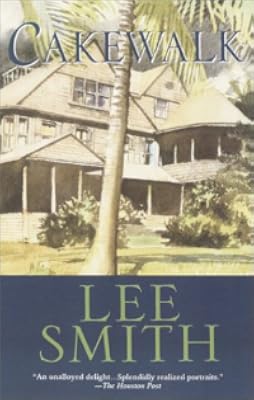
Lee Smith is a novelist, short story writer, and educator. She was born in 1944 in Grundy, Virginia. Smith attended Hollins College in Roanoke, Virginia. In her senior year at Hollins, Smith entered a Book-of-the-Month Club contest, submitting a draft of a novel called The Last Day the Dog Bushes Bloomed. The book, one of 12 entries to receive a show more fellowship, was published in 1968. Smith wrote reviews for local papers and continued to write short stories. Her first collection of short stories, Cakewalk, was published in 1981. Smith taught at North Carolina State University. Her novel, Oral History, published in 1983, was a Book-of-the-Month Club featured selection. She has received two O. Henry Awards, the Robert Penn Warren Prize for Fiction, the North Carolina Award for Fiction, the Lila Wallace/Reader's Digest Award, and the Academy Award in Literature presented by the American Academy of Arts and Letters. (Bowker Author Biography) show less
Awards and Honors
Awards
Distinctions
Notable Lists
Work Relationships
Common Knowledge
- Original publication date
- 1988
- People/Characters
- Ivy Rowe
- Important places
- Appalachia, USA
- Dedication
- For Amity
- First words
- My dear Hanneke,
- Quotations
- Now Ivy, this is how spring tastes. This is the taste of spring.
- Last words
- (Click to show. Warning: May contain spoilers.)oh I was young then, and I walked in my body like a Queen
Classifications
Statistics
- Members
- 993
- Popularity
- 26,457
- Reviews
- 23
- Rating
- (4.06)
- Languages
- English, Korean, Spanish
- Media
- Paper, Audiobook, Ebook
- ISBNs
- 19
- ASINs
- 10