On This Page
Description
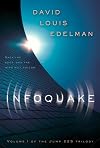
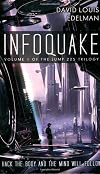
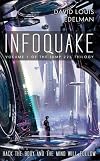
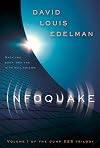
How far should you go to make a profit? Infoquake, the debut novel by David Louis Edelman, takes speculative fiction into alien territory: the corporate boardroom of the far future. It's a stunning trip through the trenches of a technological war fought with product demos, press releases, and sales pitches. Natch is a master of bio/logics, the programming of the human body. He's clawed and scraped his way to the top of the bio/logics market using little more than his wits. Now his sudden show more notoriety has brought him to the attention of Margaret Surina, the owner of a mysterious new technology called MultiReal. Only by enlisting Natch's devious mind can Margaret keep MultiReal out of the hands of High Executive Len Borda and his ruthless armies. To fend off the intricate net of enemies closing in around him, Natch and his apprentices must accomplish the impossible. They must understand this strange new technology, run through the product development cycle, and prepare MultiReal for release to the public—all in three days. Meanwhile, hanging over everything is the specter of the infoquake, a lethal burst of energy that's disrupting the bio/logic networks and threatening to send the world crashing back into the Dark Ages. With Infoquake, David Louis Edelman has created a fully detailed world that's both as imaginative as Dune and as real as today's Wall Street Journal. show lessTags
Recommendations



























Member Reviews
There’s nothing like a slick, smart, well-written science fiction thriller to set the mind buzzing and racing with strange new ideas and brilliant, imaginative, logical leaps into the future. The reader is plunged into a world that is utterly strange and yet oddly familiar, as the old human passions and drives and desires play their old games in this future funhouse.
The future funhouse of Infoquake, gives us a world where technology is literally built into people, turning them into walking iPhones, and the big business is in creating, developing and selling apps for a populace hungry for novelty and innovation. Fiefcorps compete savagely for their share of the market, and one of the youngest, hungriest and most devious of these show more fiefcorps is run by a supremely ambitious young man called Natch, along with his old friend Horvil, an engineer, and an analyst called Jara, who finds her conscience under severe strain thanks to some of Natch’s more underhanded strategies. Their exploits bring them to the attention of Margaret Surina, descendant of one of the genuises who helped create the technology that shaped the world. Rumour has it that she may be set to reshape the world again with a mysterious new technology called Multireal.
With enemies and rivals closing in on all sides, Surina convinces Natch to prepare and develop Multireal for demonstration and release in only a few days. But potentially lethal rivals and a crushing deadline are only minor problems compared to the biggest of all: nobody seems to know what Multireal is.
At heart, Infioquake is a old school corporate thriller full of cut-throat boardroom poilitics, maneuvers and counter-maneuvers, back-stabbing and betrayal, all married to a vividly realised world full of wild technological marvels. It’s an adrenaline-fueled ride from start to finish as Neetch and friends fight to stay alive and stay on top. show less
The future funhouse of Infoquake, gives us a world where technology is literally built into people, turning them into walking iPhones, and the big business is in creating, developing and selling apps for a populace hungry for novelty and innovation. Fiefcorps compete savagely for their share of the market, and one of the youngest, hungriest and most devious of these show more fiefcorps is run by a supremely ambitious young man called Natch, along with his old friend Horvil, an engineer, and an analyst called Jara, who finds her conscience under severe strain thanks to some of Natch’s more underhanded strategies. Their exploits bring them to the attention of Margaret Surina, descendant of one of the genuises who helped create the technology that shaped the world. Rumour has it that she may be set to reshape the world again with a mysterious new technology called Multireal.
With enemies and rivals closing in on all sides, Surina convinces Natch to prepare and develop Multireal for demonstration and release in only a few days. But potentially lethal rivals and a crushing deadline are only minor problems compared to the biggest of all: nobody seems to know what Multireal is.
At heart, Infioquake is a old school corporate thriller full of cut-throat boardroom poilitics, maneuvers and counter-maneuvers, back-stabbing and betrayal, all married to a vividly realised world full of wild technological marvels. It’s an adrenaline-fueled ride from start to finish as Neetch and friends fight to stay alive and stay on top. show less
It's four-hundred-something years in the future, and human beings have merged with information technology to a point where most bodily conditions are regulated by nanotech compters running bio/logic software. Transporting your body is no longer important, either, as everyone is able to project a virtual image of himself to almost any location on earth and the orbital colonies, creating an experience indistinguishable from being present physically.
In this fascinating world of the future, a driven young man named Natch strives to dominate the bio/logic industry. Natch, with his end-justifies-the-means philosophy and unbridled egotism, is a hard protagonist to like at first, but an even harder protagonist to turn away from by the time show more you're midway through the story. We learn that his ambition is the product of a tortured childhood, and his vision and genius the stuff that has relentlessly advanced humankind towards perfection throughout the ages.
Besides creating a rich and believable vision of the future, "Infoquake" generates plenty of suspense without relying on violence and unrealistic plot twists. Instead, David Edelman hooks you with the kind of thinking-person's suspense born of high technology, corporate manuevering, and strong character conflicts. And unlike many technies who butcher the English language in penning their sci-fi visions, Edelman writes gorgeous prose. (His chapters describing Natch's awe for redwoods and his black-code trip are two prime examples.)
"Infoquake" is, in short, the best science fiction book I've read in years. If I had to fault one aspect of it, I would have to mention the slightly flat ending, though this is somewhat forgivable in the first of a trilogy. And with the solid groundwork established here, the next two installments will surely continue this talented author on his ascension towards perfection. show less
In this fascinating world of the future, a driven young man named Natch strives to dominate the bio/logic industry. Natch, with his end-justifies-the-means philosophy and unbridled egotism, is a hard protagonist to like at first, but an even harder protagonist to turn away from by the time show more you're midway through the story. We learn that his ambition is the product of a tortured childhood, and his vision and genius the stuff that has relentlessly advanced humankind towards perfection throughout the ages.
Besides creating a rich and believable vision of the future, "Infoquake" generates plenty of suspense without relying on violence and unrealistic plot twists. Instead, David Edelman hooks you with the kind of thinking-person's suspense born of high technology, corporate manuevering, and strong character conflicts. And unlike many technies who butcher the English language in penning their sci-fi visions, Edelman writes gorgeous prose. (His chapters describing Natch's awe for redwoods and his black-code trip are two prime examples.)
"Infoquake" is, in short, the best science fiction book I've read in years. If I had to fault one aspect of it, I would have to mention the slightly flat ending, though this is somewhat forgivable in the first of a trilogy. And with the solid groundwork established here, the next two installments will surely continue this talented author on his ascension towards perfection. show less
The only way I can see to get your fiction published these days is to write something that no one else is writing. Sure, there are several players in, say, the "vampire space" on the bookshelf, but they've all been around for a while. Try breaking into that now. Not so much. Even in generally evergreen niches with devoted fans, like military SF, you need something different, like John Scalzi.
David Louis Edelman's Infoquake is just that: something different. It's Big Idea Science Fiction. It's dystopic-flavored. It's got the Competent Man. But the most unique thing about it, and what probably got it published in the first place, is that it's about commerce. That's right, not exploration, not the Singularity, not aliens with lasers. It's show more about how you make a living in the future, and how you compete for a big pile of money not a big rock in space. It's the science fiction that James Stewart would write. It's not like anything you've ever read before.
There is so much going on here that it's hard to give a summation, but I'll try. Natch runs a bio/logic programming concern, which makes products that people can buy to enhance or alter their bodies or minds through millions of nanobots lurking in their blood and tissues. Natch is ruthless, brilliant and ambitious, engaging in all manner of subterfuge and cunning to put his small company on top of the bio/logic rankings. His notoriety and resourcefulness earn him the attention of the scion of a powerful, revered and very wealthy family (imagine a woman who is Steve Jobs and Warren Buffett), who wants him to help her bring a new product to market, one that can observe, calculate and reproduce the desired cause and effect of any action from any alternate reality.
It's also not like most popular science fiction in that there is almost no violence in it. There's a thing with a bear, and a scene with a couple of dart guns, but that's about it for on-screen physical threats. Which is why it is all that much more amazing that Edelman managed to raise the stakes high enough to rivet me to the page.
I'm going to get the sequel, MultiReal, as soon as I can get myself to a bookstore. show less
David Louis Edelman's Infoquake is just that: something different. It's Big Idea Science Fiction. It's dystopic-flavored. It's got the Competent Man. But the most unique thing about it, and what probably got it published in the first place, is that it's about commerce. That's right, not exploration, not the Singularity, not aliens with lasers. It's show more about how you make a living in the future, and how you compete for a big pile of money not a big rock in space. It's the science fiction that James Stewart would write. It's not like anything you've ever read before.
There is so much going on here that it's hard to give a summation, but I'll try. Natch runs a bio/logic programming concern, which makes products that people can buy to enhance or alter their bodies or minds through millions of nanobots lurking in their blood and tissues. Natch is ruthless, brilliant and ambitious, engaging in all manner of subterfuge and cunning to put his small company on top of the bio/logic rankings. His notoriety and resourcefulness earn him the attention of the scion of a powerful, revered and very wealthy family (imagine a woman who is Steve Jobs and Warren Buffett), who wants him to help her bring a new product to market, one that can observe, calculate and reproduce the desired cause and effect of any action from any alternate reality.
It's also not like most popular science fiction in that there is almost no violence in it. There's a thing with a bear, and a scene with a couple of dart guns, but that's about it for on-screen physical threats. Which is why it is all that much more amazing that Edelman managed to raise the stakes high enough to rivet me to the page.
I'm going to get the sequel, MultiReal, as soon as I can get myself to a bookstore. show less
Bursting with ideas, set in an undefined medium term science fiction future, in some ways, Infoquake, a first novel by David Louis Edelman, is very much in the classic mode of science fiction. It also has strong elements of the corporate thriller, post-cyberpunk and even post-failed-singularity science fiction.
Oh, and it all takes in a hypercapitalist future.
Some several hundred years after some very bad history for humanity, the world of Infoquake is at once very familiar, with its undeniably human characters, and at the same time, has that alien future feeling that allows a SF reader to dive in and explore a futuristic world. The action centers around Natch. He runs a corporation which develops bio/logics, programs that can hack the show more human body, ones perceptions, abilities, strengths.
Flashbacks in the novel allow us to see how this ruthless and indefatigable competitor was molded into the character we see. Events bring Natch into contact with Margaret Surina, whose family and ancestors are very much responsible for the re-welding together of society after that bad history several centuries back. Margaret has some more and new revolutionary technology, but in this hypercapitalist cutthroat world, she turns to Natch as one of the few people she can trust to deploy and use this technology: Multireal.
And thus hangs a tale.
This world of human-altering software infuses and changes the nature of society, with Edelman following through the implications of how this sort of technology would alter society. We get to see several different types of technology at play here, as well, including a method of virtual porting to other places which makes Second Life look like a primitive toy.
There is a lot going on in this world, and its clear that Edelman had a lot of fun writing this book. There are the titular Infoquakes themselves, for example, the ultimate and deadly crash of the world's equivalent of the Internet, which complicate the plans Natch has set in motion. The novel leaves for sequels what these Infoquakes might actually be and what they mean. The corporate and economic politics in this world are timely. Like the best science fiction, it holds up a mirror to the present by showing an extreme version in the future.
It's difficult to sum up this complex world, but perhaps if I describe it as "Wall Street (the movie) meets Vernor Vinge", I can come close to capturing what the characters and the world is like.
I am surprised that this is Edelman's first novel. It's clear to me that he's been thinking about and working out this universe for quite some time (there are extensive appendices in the back of the novel).
This is definitely not a first novel for those who have never read SF before. Like an old tagline for a collection of Greg Egan's stories, Infoquake is "science fiction for science fiction fans." In a climate where fantasy seems ascendant over SF, and every other book in the F/SF section of the bookstore is yet another new first novel about werewolves / vampires / faeries / demons / ghosts / wendigos in the modern world, Infoquake is unabashedly straight up 200 proof science fiction.
I look forward to reading the second and third volumes of the trilogy. If anything, like when I read Charles Stross' Singularity Sky, I suspect that this first volume is really a novel that Edelman wrote so that he could get himself, and the reader, ready to read the *real* story that he wants to tell. show less
Oh, and it all takes in a hypercapitalist future.
Some several hundred years after some very bad history for humanity, the world of Infoquake is at once very familiar, with its undeniably human characters, and at the same time, has that alien future feeling that allows a SF reader to dive in and explore a futuristic world. The action centers around Natch. He runs a corporation which develops bio/logics, programs that can hack the show more human body, ones perceptions, abilities, strengths.
Flashbacks in the novel allow us to see how this ruthless and indefatigable competitor was molded into the character we see. Events bring Natch into contact with Margaret Surina, whose family and ancestors are very much responsible for the re-welding together of society after that bad history several centuries back. Margaret has some more and new revolutionary technology, but in this hypercapitalist cutthroat world, she turns to Natch as one of the few people she can trust to deploy and use this technology: Multireal.
And thus hangs a tale.
This world of human-altering software infuses and changes the nature of society, with Edelman following through the implications of how this sort of technology would alter society. We get to see several different types of technology at play here, as well, including a method of virtual porting to other places which makes Second Life look like a primitive toy.
There is a lot going on in this world, and its clear that Edelman had a lot of fun writing this book. There are the titular Infoquakes themselves, for example, the ultimate and deadly crash of the world's equivalent of the Internet, which complicate the plans Natch has set in motion. The novel leaves for sequels what these Infoquakes might actually be and what they mean. The corporate and economic politics in this world are timely. Like the best science fiction, it holds up a mirror to the present by showing an extreme version in the future.
It's difficult to sum up this complex world, but perhaps if I describe it as "Wall Street (the movie) meets Vernor Vinge", I can come close to capturing what the characters and the world is like.
I am surprised that this is Edelman's first novel. It's clear to me that he's been thinking about and working out this universe for quite some time (there are extensive appendices in the back of the novel).
This is definitely not a first novel for those who have never read SF before. Like an old tagline for a collection of Greg Egan's stories, Infoquake is "science fiction for science fiction fans." In a climate where fantasy seems ascendant over SF, and every other book in the F/SF section of the bookstore is yet another new first novel about werewolves / vampires / faeries / demons / ghosts / wendigos in the modern world, Infoquake is unabashedly straight up 200 proof science fiction.
I look forward to reading the second and third volumes of the trilogy. If anything, like when I read Charles Stross' Singularity Sky, I suspect that this first volume is really a novel that Edelman wrote so that he could get himself, and the reader, ready to read the *real* story that he wants to tell. show less
David Louis Edelman has recreated the excitement of the world of business in his science fiction novel, Infoquake the first in the Jump 225 trilogy. Set in a far future, where the old nation states no longer exist and all technology is more related to biology than mechanics, Infoquake tells the tale of Natch, a master programmer and CEO of his own business. Natch is skilled, shrewd, and often unscrupulous. These are traits that serve him well in the laissez-faire world in which his business operates. When he is given a business opportunity he can’t pass up he find himself plunged into a political, scientific and economic war with his competitors, the government, and even his own partner.
Edelman has succeeded in making the world of the show more corporate boardroom into an adventure filled narrative. What John Grisham has done with the legal thriller, Edelman has done with business. Drawing on his experiences in marketing and computer programming, Edelman has created a very thorough world, consistent and detailed. (A small portion of the book is appendices explaining the political and social structures of this trilogy, and more information on the setting of the Jump 225 trilogy can be found at Edelman’s website.)
Infoquake is well-written and well-cadenced. The climax is fulfilling and exciting, yet it is only a speech, and a marketing one at that. Edelman has so well woven the elements of his plot together that Natch’s simple speech has a much power and excitement to it as another science fiction story’s destruction of a spaceship or a fantasy’s evil overlord dying hideously at the hands of a hero. That takes skill to write, and Edelman has it in spades. I highly recommend this novel.
Full Review at Grasping for the Wind show less
Edelman has succeeded in making the world of the show more corporate boardroom into an adventure filled narrative. What John Grisham has done with the legal thriller, Edelman has done with business. Drawing on his experiences in marketing and computer programming, Edelman has created a very thorough world, consistent and detailed. (A small portion of the book is appendices explaining the political and social structures of this trilogy, and more information on the setting of the Jump 225 trilogy can be found at Edelman’s website.)
Infoquake is well-written and well-cadenced. The climax is fulfilling and exciting, yet it is only a speech, and a marketing one at that. Edelman has so well woven the elements of his plot together that Natch’s simple speech has a much power and excitement to it as another science fiction story’s destruction of a spaceship or a fantasy’s evil overlord dying hideously at the hands of a hero. That takes skill to write, and Edelman has it in spades. I highly recommend this novel.
Full Review at Grasping for the Wind show less
"Horvil now understood the need for the large workspace; the program took up every square centimeter and extended halfway to the ceiling like a Gothic castle. Connection strands stretched from module to module in startling and intricate patterns, some circumnavigating the whole mass several times. Even an observer who knew nothing about bio/logic coding could lose himself for hours studying the beautiful detail, the interplay of colors, the endless number of aesthetic themes that replicated across the surface of the program. Horvil had seen entire nervous system simulators that were less complex."
In the near-ish future, software that enhances the human mind is a major industry. A frenetic form of market capitalism reigns, and a small show more team of bright coders can make their fortunes quickly. Natch, Horvil, and Jara, our protagonists, are one such group. They're trying to get famous (except for Natch, who's already infamous for incidents in his youth), compete with the big firms, and invent the next big thing. They're doing well enough at this, if not taking the markets by storm, when they're approached by the secretive woman whose family has single-handedly come up with almost all of the major technological breakthroughs that have shaped the world, and many of the political and regulatory systems that manage it as well.
This should have been a book I loved. It's big -- five hundred pages in paperback, for book one of a trilogy -- and the world is detailed and consistent. Edelman throws a lot of science, economics, politics, and technology into his setting, and for the most part it's convincing. Hard science fiction, with thoughtful world-building? Yes, please. That sort of thing is right up my street.
And yet, the book doesn't grip the way it should. Shortly after finishing it, I'd forgotten much of the detail, and had to re-read it for this review.
Part of the problem is with the central character of Natch. A charismatic, driven entrepreneur, it's he who drives almost all of the narrative. He drags his colleagues from one scheme to another, often against their better judgment. But the way he does this doesn't ring true. He gives his stirring speeches, dreams his dreams, comes up with the money, and the others follow him. But most of the time he hasn't actually told them what his schemes really are. Jara and the others go along with far too much, considering the bollocks he's constantly feeding them.
Which is possibly the bigger problem. Not only do the characters have little idea what's going on, neither does the reader. We're halfway through the book before Natch is approached by Margaret Surina with her mysterious new technology. He gets involved in trying to sell it and bring it to market, and the power struggles that this involves. But what exactly is this new technology, how does it work, and what will it be good for? That's not at all clear until near the end of the book (and not entirely so, even then).
This leaves a book that's curiously devoid of hooks to draw the reader in. There's an awful lot that happens, but it never seems to add up to much.
Perhaps the next volumes will improve on this. Certainly the writing is good enough that I'll carry on with the series. I'm just not as eager to as I'd expect to be. show less
In the near-ish future, software that enhances the human mind is a major industry. A frenetic form of market capitalism reigns, and a small show more team of bright coders can make their fortunes quickly. Natch, Horvil, and Jara, our protagonists, are one such group. They're trying to get famous (except for Natch, who's already infamous for incidents in his youth), compete with the big firms, and invent the next big thing. They're doing well enough at this, if not taking the markets by storm, when they're approached by the secretive woman whose family has single-handedly come up with almost all of the major technological breakthroughs that have shaped the world, and many of the political and regulatory systems that manage it as well.
This should have been a book I loved. It's big -- five hundred pages in paperback, for book one of a trilogy -- and the world is detailed and consistent. Edelman throws a lot of science, economics, politics, and technology into his setting, and for the most part it's convincing. Hard science fiction, with thoughtful world-building? Yes, please. That sort of thing is right up my street.
And yet, the book doesn't grip the way it should. Shortly after finishing it, I'd forgotten much of the detail, and had to re-read it for this review.
Part of the problem is with the central character of Natch. A charismatic, driven entrepreneur, it's he who drives almost all of the narrative. He drags his colleagues from one scheme to another, often against their better judgment. But the way he does this doesn't ring true. He gives his stirring speeches, dreams his dreams, comes up with the money, and the others follow him. But most of the time he hasn't actually told them what his schemes really are. Jara and the others go along with far too much, considering the bollocks he's constantly feeding them.
Which is possibly the bigger problem. Not only do the characters have little idea what's going on, neither does the reader. We're halfway through the book before Natch is approached by Margaret Surina with her mysterious new technology. He gets involved in trying to sell it and bring it to market, and the power struggles that this involves. But what exactly is this new technology, how does it work, and what will it be good for? That's not at all clear until near the end of the book (and not entirely so, even then).
This leaves a book that's curiously devoid of hooks to draw the reader in. There's an awful lot that happens, but it never seems to add up to much.
Perhaps the next volumes will improve on this. Certainly the writing is good enough that I'll carry on with the series. I'm just not as eager to as I'd expect to be. show less
 This review was written for LibraryThing Early Reviewers.
On shabbos at the hotel in ridgecrest, ca I finished Infoquake by David Louis Edelman. This book was a random library grab, the good type that will make sure I do NOT fulfill my By the Stacks Winter Challenge. You see, when I walk into a library… I often feel I must have /something/ because the books might not (gasp!) be there the next day when I’m back. So I must take them out. And I often go for the new books, or randomly choose a letter for either title or author. There are so many books out there that we don’t hear about. This will be one we will hear about, but I hadn’t when I took it off the bookshelf and decided to put it in my suitcase instead of any of the other books I’m currently reading ((It won because of its show more size, large, but not too large.
Anyway, this is the first in a trilogy and I will impatiently wait for volume two.
At a distant time in the future (though I see much of this happening in my lifetime) we meet bio/logic master Natch, a gifted programmer/entrepreneur who knows how to pick his enemies. He wants his company (a fiefcorp) to be number one on the listings. He doesn’t necessarily want to play dirty tricks to get there. He wants to be number one NOW. Natch has some tendencies which make his apprentices want to quit yet they also are in awe of his genius. He teams with his hivemate and long-term friend, the programmer Horvil and analyst Jara and dive right into this brand-new technology MultiReal. Natch must face rivals both known and unknown and continue to the top.
Confused about the terminology? Curious about how this story fits into the history of "the" world? Don’t worry, there are some really great resources on Edelman’s website (and in the book).
(first posted 2006-12-25 at penguingirl.com) show less
Anyway, this is the first in a trilogy and I will impatiently wait for volume two.
At a distant time in the future (though I see much of this happening in my lifetime) we meet bio/logic master Natch, a gifted programmer/entrepreneur who knows how to pick his enemies. He wants his company (a fiefcorp) to be number one on the listings. He doesn’t necessarily want to play dirty tricks to get there. He wants to be number one NOW. Natch has some tendencies which make his apprentices want to quit yet they also are in awe of his genius. He teams with his hivemate and long-term friend, the programmer Horvil and analyst Jara and dive right into this brand-new technology MultiReal. Natch must face rivals both known and unknown and continue to the top.
Confused about the terminology? Curious about how this story fits into the history of "the" world? Don’t worry, there are some really great resources on Edelman’s website (and in the book).
(first posted 2006-12-25 at penguingirl.com) show less
Members
- Recently Added By
Lists

io9 Book Club
70 works; 4 members
Talk Discussions
Past Discussions
Science Fiction nanotechnology in Name that Book (April 2013)
Author Information

4+ Works 984 Members

David Louis Edelman is a LibraryThing Author, an author who lists their personal library on LibraryThing.
Some Editions
Awards and Honors
Series

Work Relationships
Has as a commentary on the text
Common Knowledge
- Canonical title
- Infoquake
- Original publication date
- 2006-07-05
- People/Characters
- Natch; Jara; Horvil
- Publisher's editor
- Anders, Lou
- Blurbers
- Buckell, Tobias S.; Elliott, Kate; Roberson, Chris; Williams, Sean
Classifications
Statistics
- Members
- 577
- Popularity
- 50,927
- Reviews
- 32
- Rating
- (3.62)
- Languages
- English, Polish
- Media
- Paper, Audiobook, Ebook
- ISBNs
- 7
- ASINs
- 7