Little Lord Fauntleroy
by Frances Hodgson Burnett
On This Page
Description
Dive into a classic of children's literature from the pen of the author who created The Secret Garden. Little Lord Fauntleroy follows the adventures of the title character, a young American boy who unexpectedly becomes wealthy when he inherits a vast fortune from English relatives and teaches his aristocratic family about the importance of charity and compassion..
Tags
Recommendations














Member Reviews
I am always at something of a loss to explain my abiding love for Little Lord Fauntleroy, which must be included, along with The Secret Garden and A Little Princess, among the author's better known works. Extremely sentimental, with a somewhat more moralistic tone than that found in Burnett's other two classics, it features a child protagonist so angelically good that children everywhere might be forgiven for hating him.
But despite its Victorian trappings - complete with English aristocrats, estranged and disinherited sons, long-lost (not to mention fake) heirs, and the inevitable triumph of the moral and "well-bred" over the deceitful and vulgar - Little Lord Fauntleroy is at heart a satisfying tale of family reconciliation, and the show more transformative power of love. Cedric Errol, the cheerful, good-hearted young hero of the tale, is able to bridge the differences, not just between the generations, but between the nations.
Burnett herself was something of a bridge, born and raised in England, but living most of her adult life in America, and her familiarity with both cultures must have stood her in good stead while writing this tale of a crusty English aristocrat and his American heir. This may also account, in part, for my pleasure in the story, for at a time when few English children's authors had anything good to say about Americans (if they had anything to say at all), Burnett created a lovable character whose virtues - from the ease with which he converses with adults, to his democratic kindness and concern for all - were distinctly alien to British notions of childhood. show less
But despite its Victorian trappings - complete with English aristocrats, estranged and disinherited sons, long-lost (not to mention fake) heirs, and the inevitable triumph of the moral and "well-bred" over the deceitful and vulgar - Little Lord Fauntleroy is at heart a satisfying tale of family reconciliation, and the show more transformative power of love. Cedric Errol, the cheerful, good-hearted young hero of the tale, is able to bridge the differences, not just between the generations, but between the nations.
Burnett herself was something of a bridge, born and raised in England, but living most of her adult life in America, and her familiarity with both cultures must have stood her in good stead while writing this tale of a crusty English aristocrat and his American heir. This may also account, in part, for my pleasure in the story, for at a time when few English children's authors had anything good to say about Americans (if they had anything to say at all), Burnett created a lovable character whose virtues - from the ease with which he converses with adults, to his democratic kindness and concern for all - were distinctly alien to British notions of childhood. show less
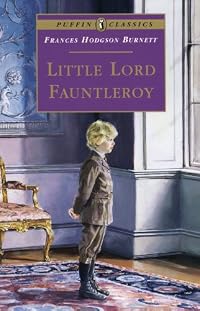
My first encounter with this book was in the 2nd grade. I'd been hospitalized for a tonsillectomy and my mother took me to the hospital library across the hall to find a book. Little Lord Fauntleroy is the one she urged on me. I took one look at the cover, showing the little boy with his long blonde curls and tights, and my reaction was one of revulsion. I sized him up as a perfect little goody goody, and I hated him with irrational passion. I rejected the book with vehement disgust. I don't remember what book we ultimately chose, but that experience has stuck with me.
So, decades later, with a more sophisticated tolerance of the diversity of gender roles, I sought out the book to see what I might missed. As it turns out, my visceral show more reaction was but a childish version of my more mature one. It's a book full of saccharine sentimentality. It features a perfectly perfect little boy with long golden curls, a character that mothers love, and boy readers would like to beat up -- or at least, push into a mud puddle.
Little Cedric, an American boy, is found to be an heir to an English title. His English grandfather (who had disowned his son for marrying an American) sends for Cedric, who moves to England to live with his grandfather. His mother moves to a nearby cottage. Cedric proves to be a sweet little darling, always perfectly good natured and kind. "Oh, the house is so beautiful!" exclaims Little Lord Fauntleroy. That's how he talks. "Oh, Dearest, the pony is so beautiful!" and to his mean and selfish old grandfather, "You are the most wonderful, kindest man I've ever known!" A woman appears with a boy that she claims to be the offspring of the grandfather's older son, and the evil duo attempt to displace Cedric. Grandfather (Lord F), mother, and Cedric expose the imposter, and good triumphs over evil. The author leaves no moral lesson un-emphasized, and good little boys are thereby taught how to conduct themselves in order to be worthy of love and good fortune.
It's a dated tale, one illustrative of a particular time and place, and one that offers a heavy-handed illustration of the values of a bygone age. In surveying the reviews at Amazon, I am surprised to find the tale so well- liked, at least by mothers who have bought it for their little boys, perfect in wistful hopes that they might try to measure up to the high standards of perfect little Cedric. Whether little second grade boys like this book another question entirely. show less
So, decades later, with a more sophisticated tolerance of the diversity of gender roles, I sought out the book to see what I might missed. As it turns out, my visceral show more reaction was but a childish version of my more mature one. It's a book full of saccharine sentimentality. It features a perfectly perfect little boy with long golden curls, a character that mothers love, and boy readers would like to beat up -- or at least, push into a mud puddle.
Little Cedric, an American boy, is found to be an heir to an English title. His English grandfather (who had disowned his son for marrying an American) sends for Cedric, who moves to England to live with his grandfather. His mother moves to a nearby cottage. Cedric proves to be a sweet little darling, always perfectly good natured and kind. "Oh, the house is so beautiful!" exclaims Little Lord Fauntleroy. That's how he talks. "Oh, Dearest, the pony is so beautiful!" and to his mean and selfish old grandfather, "You are the most wonderful, kindest man I've ever known!" A woman appears with a boy that she claims to be the offspring of the grandfather's older son, and the evil duo attempt to displace Cedric. Grandfather (Lord F), mother, and Cedric expose the imposter, and good triumphs over evil. The author leaves no moral lesson un-emphasized, and good little boys are thereby taught how to conduct themselves in order to be worthy of love and good fortune.
It's a dated tale, one illustrative of a particular time and place, and one that offers a heavy-handed illustration of the values of a bygone age. In surveying the reviews at Amazon, I am surprised to find the tale so well- liked, at least by mothers who have bought it for their little boys, perfect in wistful hopes that they might try to measure up to the high standards of perfect little Cedric. Whether little second grade boys like this book another question entirely. show less
Seven-year-old Cedric Errol lives with his mother in New York City and has a decidedly negative view of the British aristocracy. Little does he know, he is a part of that group.
When a lawyer arrives at their home, Cedric learns that due to the death of his uncle, he is now the heir to the Earl of Dorincourt and is to move to England to live with his grandfather. Gaining sudden wealth and moving into a castle might be exciting, but it also means living apart from his mother, whom his grandfather never approved of. And the earl is notorious for being a stingy and heartless leader.
Before long, Cedric's generous nature and open heart begin to change the whole earldom for the better. But his grandfather's character isn't the only challenge show more he'll face, and soon the new life Cedric has built in England is thrown into jeopardy. show less
When a lawyer arrives at their home, Cedric learns that due to the death of his uncle, he is now the heir to the Earl of Dorincourt and is to move to England to live with his grandfather. Gaining sudden wealth and moving into a castle might be exciting, but it also means living apart from his mother, whom his grandfather never approved of. And the earl is notorious for being a stingy and heartless leader.
Before long, Cedric's generous nature and open heart begin to change the whole earldom for the better. But his grandfather's character isn't the only challenge show more he'll face, and soon the new life Cedric has built in England is thrown into jeopardy. show less
Summary: Cedric Errol was for the most part a normal seven-year-old boy. His British father died when he was young, but his American mother and he live a happy, comfortable life together. One day, a lawyer arrives from Britain with some startling news: Cedric's uncles (whom he's never met) are dead, which leaves Cedric as Lord Fauntleroy, and standing to inherit an Earldom. His grandfather, the current Earl, is a nasty, cantankerous, selfish old man, who is still upset about Cedric's father marrying an American. The Earl sends for Cedric to come live with him in England, not for the boy's benefit, but for his own sense of pride. Cedric has been brought up to be unfailingly good, kind, and trusting, but how will such an innocent fare show more when given the privilege and power of nobility?
Review: Well, color me misinformed. For some reason I had in my head that to be called "a little Lord Fauntleroy" was a disparagement, meaning you were acting like a spoiled brat. Turns out, the reality is pretty much the exact opposite. Cedric is almost preternaturally wonderful: kind, cheerful, giving, attractive, selfless, strong, trusting, and only ever seeing the best in people. He's essentially a male version of Sara Crewe from A Little Princess, but even more wonderful; even Sara was allowed one fit of temper. Cedric's extreme naiveté actually makes it somewhat hard to believe him as seven-year-old; in some places, four or five would have seemed to be a better fit. Regardless, this book - and Cedric himself - did charm me. Similarly to A Little Princess, the story is mostly one of the magic that being a good person can work in the world, and as morals go, that's not a bad one. My only real complaint is that Burnett transcribed her dialogue pretty literally, and gave all of her servants and rural people such thick country accents that some of their lines were almost unreadable. Apart from that, though, it's a sweet little story, predictable as all get out, of course, but not overly facile in its resolutions. Not quite as engaging as A Little Princess or The Secret Garden, but a charming little book all the same. 3.5 out of 5 stars.
Recommendation: Best for fans of Burnett's other books, or British children's lit in general. show less
Review: Well, color me misinformed. For some reason I had in my head that to be called "a little Lord Fauntleroy" was a disparagement, meaning you were acting like a spoiled brat. Turns out, the reality is pretty much the exact opposite. Cedric is almost preternaturally wonderful: kind, cheerful, giving, attractive, selfless, strong, trusting, and only ever seeing the best in people. He's essentially a male version of Sara Crewe from A Little Princess, but even more wonderful; even Sara was allowed one fit of temper. Cedric's extreme naiveté actually makes it somewhat hard to believe him as seven-year-old; in some places, four or five would have seemed to be a better fit. Regardless, this book - and Cedric himself - did charm me. Similarly to A Little Princess, the story is mostly one of the magic that being a good person can work in the world, and as morals go, that's not a bad one. My only real complaint is that Burnett transcribed her dialogue pretty literally, and gave all of her servants and rural people such thick country accents that some of their lines were almost unreadable. Apart from that, though, it's a sweet little story, predictable as all get out, of course, but not overly facile in its resolutions. Not quite as engaging as A Little Princess or The Secret Garden, but a charming little book all the same. 3.5 out of 5 stars.
Recommendation: Best for fans of Burnett's other books, or British children's lit in general. show less
This is one of Burnett's most famous books and is another uplifting story of individual redemption, this time not of a child as in The Secret Garden, but by a child, of an adult. Young Cedric Errol, a 7 year old living in genteel poverty in New York with his mother, is stunned to discover he is heir to an earldom in England. The aging, irascible and curmudgeonly Earl of Dorincort has outlived all three of his sons, including his younger son, who was cast off for marrying a pretty American woman. He summons his grandson across the Atlantic and finds, against his will and inclination, that he fond of young Cedric, who is sweet natured and kind. The transformation of the Earl under the boy's influence is amusing and heart-warming, though show more Cedric, like a lot of children in 19th century literature, is too good to be true. This is an uplifting read. show less
Little Lord Fauntleroy is a sweet tale about a father-less, American boy named Cedric who finds himself the heir to an English earldom. The story is sorta in the vein of other classic books, like Anne of Green Gables, Heidi, Pollyanna, and Rebecca of Sunnybrooke farm, in which a sweet, innocent child generally makes people happy. By the end of the story grumpy people are made kind and ungrumpy. I guess you'd say Little Lord Fauntleroy is the male character take on that storyline. Also, Little Lord Fauntleroy (Cedric) is the anti-Tom Sawyer, because Fauntleroy is the perfect, gentleman child.
Four stars because the plot is pretty straight-forward. No shocks or surprises. However, the story is very enduring. Just a sweet, comforting little show more read about a cute little boy doing nice things.
On a personal note, while I enjoyed the story, I hate the title. The name Fauntleroy reminds me of Ben Stiller's character in "Meet the Parents" or Prince Humperdinck from "The Princess Bride." I wish Burnett had titled it "something something Cedric" for the character's real name. show less
Four stars because the plot is pretty straight-forward. No shocks or surprises. However, the story is very enduring. Just a sweet, comforting little show more read about a cute little boy doing nice things.
On a personal note, while I enjoyed the story, I hate the title. The name Fauntleroy reminds me of Ben Stiller's character in "Meet the Parents" or Prince Humperdinck from "The Princess Bride." I wish Burnett had titled it "something something Cedric" for the character's real name. show less
A 'handsome little boy' with 'golden curls' is the son of a exiled Captain and an American woman, who has been living in reduced circumstances, when he discovers that he is, in fact, Lord Fauntleroy, and will one day be Earl of Darincourt in place of his grandfather.
So he must go to England, where the grumpy and bitter old man waits, and leave behind all his 'common' friends. But before he does, he solves all their problems.
And so the sickly sweetness begins. The boy is obviously perfect, not scarred by either the loss of his father or having played with the lower classes of New York, and at the same time can't possibly be spoilt by the money and decadence afforded to him.
The Earl keeps his mother 'Dearest' from him, and yet he is show more still happy. He charms all who meet him. The mother is perfect as well. And the Earl? Well, surely he has to become perfect in the halo of this 'handsome little face'.
I only made it through this because it was the only audiobook I had at the moment, and I needed some sound! There are about a thousand too many mentions of Cedric's 'strong, lithe, graceful little body' and 'lordly little red legs', not to mention his mother's 'sweet young voice'. It was so bad that if I'd rolled my eyes every time I heard some phrase like this, I would have appeared drunk very quickly. This book's descriptions must be a paedophile's ideal.
The basic plot is highly predictable, the characters one dimensional (apart from the Earl, who at least starts off being interestingly bitter and miserable) and at the end I wanted to throttle the whole lot of them.
Perhaps I am just a cynic. In fact, I know I am. And this pushed me nearly over the edge. show less
So he must go to England, where the grumpy and bitter old man waits, and leave behind all his 'common' friends. But before he does, he solves all their problems.
And so the sickly sweetness begins. The boy is obviously perfect, not scarred by either the loss of his father or having played with the lower classes of New York, and at the same time can't possibly be spoilt by the money and decadence afforded to him.
The Earl keeps his mother 'Dearest' from him, and yet he is show more still happy. He charms all who meet him. The mother is perfect as well. And the Earl? Well, surely he has to become perfect in the halo of this 'handsome little face'.
I only made it through this because it was the only audiobook I had at the moment, and I needed some sound! There are about a thousand too many mentions of Cedric's 'strong, lithe, graceful little body' and 'lordly little red legs', not to mention his mother's 'sweet young voice'. It was so bad that if I'd rolled my eyes every time I heard some phrase like this, I would have appeared drunk very quickly. This book's descriptions must be a paedophile's ideal.
The basic plot is highly predictable, the characters one dimensional (apart from the Earl, who at least starts off being interestingly bitter and miserable) and at the end I wanted to throttle the whole lot of them.
Perhaps I am just a cynic. In fact, I know I am. And this pushed me nearly over the edge. show less
Members
- Recently Added By
Lists

Favorite Childhood Books
1,602 works; 516 members
1001 Children's Books You Must Read Before You Grow Up
774 works; 100 members

Hayao Miyazaki's 50 Recommended Children's Books
48 works; 6 members

100 Best Books by American Women During the Past 100 Years, 1833-1933
27 works; 5 members

Christmas Reading
142 works; 5 members
Honey For a Child's Heart
1,152 works; 25 members

CCE 1000 Good Books List
1,033 works; 12 members

Books About Boys
175 works; 15 members

Unshelved Book Clubs
579 works; 5 members

Fiction (Mostly) in Selective Bibliography of American Literature 1775-1900
431 works; 3 members

Books Read in 2020
4,379 works; 123 members

Books Read in 2021
5,361 works; 114 members

Before Austen Comes Aesop
318 works; 9 members

Books Read in 2022
5,164 works; 113 members

HMS: Make Your Child a Lover of Books, Ages 7-9
52 works; 2 members
Author Information

353+ Works 76,365 Members
Frances Hodgson Burnett wrote for children and adults, publishing both plays and novels. She was born in Manchester, England, on November 24, 1849. Her father, who owned a furniture store, died when she was only four years old. Her mother struggled to keep the family business running while trying to raise five children. Finally, because of the show more failing Manchester economy, the family sold the store and immigrated to the United States. In 1865 they settled just outside of Knoxville, Tennessee. Hoping to offset her family's continuing financial troubles, Burnett began to submit her stories to women's magazines. She was immediately successful. In the late 1860s her stories were published in nearly every popular American magazine. Burnett helped to support her family with income from the sale of her stories, even saving enough to finance a trip back to England, where she stayed for over a year. In 1879, Burnett published her first stories for children; two of her most popular are A Little Princess and The Secret Garden. In contrast to an extremely successful career, Burnett's personal life held many challenges. Her son Lionel was diagnosed with tuberculosis at age 15, from which he never recovered. His death inspired several stories about dead or dying children. Burnett lived her later years on Long Island, New York. She died in 1924. (Bowker Author Biography) show less
All Editions
Some Editions
Awards and Honors
Series
Belongs to Publisher Series
Wonder-serie (6)
Corticelli [Mursia] (19)
Work Relationships
Is contained in
Is retold in
Has the adaptation
Is abridged in
Common Knowledge
- Canonical title
- Little Lord Fauntleroy
- Original title
- Little Lord Fauntleroy
- Alternate titles*
- Il piccolo lord Fauntleroy
- Original publication date
- 1886
- People/Characters
- Cedric Errol
- Important places
- New York, New York, USA; England, UK
- Related movies
- Little Lord Fauntleroy (1980 | IMDb); Little Lord Fauntleroy (1936 | IMDb); Little Lord Fauntleroy (1995 | IMDb); Little Lord Fauntleroy (1921 | IMDb); Little Lord Fauntleroy (1976 | IMDb); The Adventures of Little Lord Fauntleroy (1982 | IMDb) (show all 7); Little Lord Fauntleroy (1914 | IMDb)
- First words
- Cedric himself knew nothing whatever about it.
- Quotations*
- Kann ich dein Junge bleiben, auch wenn ich kein Graf werde? Willst du´s, dass ich dein Junge bleibe?
- Last words
- (Click to show. Warning: May contain spoilers.)"There's not an aunt-sister among 'em--nor a earl!"
- Blurbers
- Alcott, Louisa May
- Original language
- English
*Some information comes from Common Knowledge in other languages. Click "Edit" for more information.
Classifications
- Genres
- Children's Books, Fiction and Literature, Kids
- DDC/MDS
- 813.4 — Literature & rhetoric American literature in English American fiction in English Later 19th Century 1861-1900
- LCC
- PZ7 .B934 .L — Language and Literature Fiction and juvenile belles lettres Fiction and juvenile belles lettres Juvenile belles lettres
- BISAC
Statistics
- Members
- 3,823
- Popularity
- 4,124
- Reviews
- 54
- Rating
- (3.65)
- Languages
- 19 — Czech, Danish, Dutch, English, Estonian, Finnish, French, German, Hungarian, Italian, Norwegian (Bokmål), Norwegian, Polish, Portuguese, Romanian, Russian, Croatian, Spanish, Swedish
- Media
- Paper, Audiobook, Ebook
- ISBNs
- 396
- UPCs
- 1
- ASINs
- 159